Why Stem Cell Therapy Matters
Stem cell therapy is a cornerstone of personalized regenerative medicine because it can be tailored to each patient’s biology. Autologous approaches use the individual’s own cells, eliminating immune rejection and graft‑versus‑host disease, while allogeneic products offer off‑the‑shelf availability for rapid intervention. Proactive health‑optimization leverages these therapies to repair early‑stage tissue damage, restore hematopoietic function after high‑dose chemotherapy, and modulate inflammation through mesenchymal stem cells, thereby extending healthspan. By integrating advanced diagnostics—such as HLA matching, multi‑omics profiling, and AI‑driven biomarker discovery—clinicians can select the most effective cell source and timing, reducing relapse rates and improving long‑term survivorship. Ultimately, stem cell interventions support a preventive, longevity‑focused model that maintains organ function, mitigates age‑related disease, and promotes sustainable healthy aging.
Autologous vs. Allogeneic: Core Differences
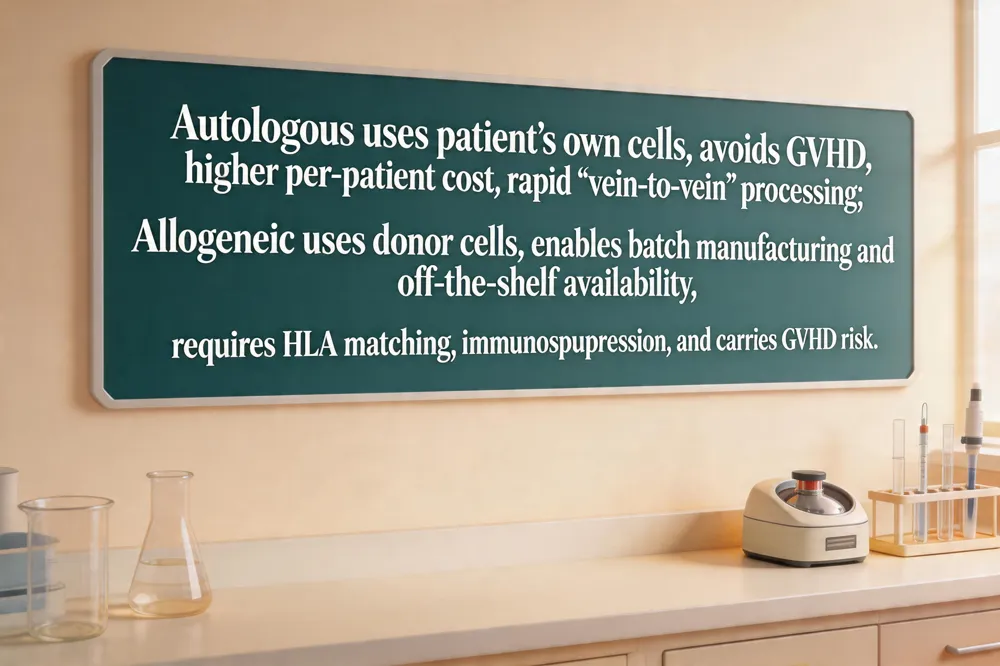 Autologous vs allogeneic stem cell therapy Autologous stem cell transplant uses the patient’s own cells, eliminating immune rejection and GVHD but requiring individualized collection, rapid “vein‑to‑vein” processing, and higher per‑patient cost. Allogeneic stem cell transplant relies on donor cells, enabling batch manufacturing, off‑the‑shelf availability, but entails HLA matching, immunosuppression, and GVHD risk.
[Allogeneic stem cell transplant] precautions Strict infection control (hand hygiene, masks, neutropenic diet), bleeding protection, adherence to immunosuppressive and prophylactic antibiotics, and immediate reporting of fever, rash, or GI changes are essential.
[Allogeneic stem cell transplant] success rate One‑year survival averages 70‑85 % in U.S. centers; top programs report >85 %. Success depends on donor match, age, disease status, and center experience.
[Allogeneic stem cell transplant] cost Average total cost ≈ $1.26 million (hospital $669 k, post‑transplant care $314 k, evaluation $94 k, procurement $97 k, physician $19 k, meds $68 k). Insurance may cover indications, but out‑of‑pocket expenses can be substantial.
Allogeneic stem cell therapy Transplant of donor hematopoietic stem cells (peripheral blood, marrow, or cord blood) after HLA matching to treat hematologic malignancies and immune deficiencies; provides graft‑versus‑tumor effect but carries GVHD and infection risks.
[Autologous stem cell transplant] Patient’s own stem cells are mobilized, collected, cryopreserved, and reinfused after high‑dose conditioning; used for myeloma, lymphomas, and certain solid tumors, offering lower GVHD risk and faster immune recovery.
[Autologous stem cell transplant] procedure Mobilization with growth factors → apheresis collection → cryopreservation → conditioning chemotherapy/radiation → thawed infusion → engraftment within 10‑14 days.
[Autologous stem cell transplant] side effects Acute infusion reactions (chills, nausea), conditioning‑related fatigue, anemia, thrombocytopenia, infection risk, and transient mucositis; most resolve as blood counts recover.
[Autologous stem cell transplant] success rate Response rates 80‑90 % in lymphoma/myeloma; 5‑year disease‑free survival ~60‑70 % in myeloma; transplant‑related mortality <5 % in experienced centers.
[Autologous stem cell transplant] lymphoma Harvest autologous hematopoietic stem cells, high‑dose chemo, reinfusion; prolongs remission in Hodgkin and aggressive non‑Hodgkin lymphomas.
Autologous stem cell IV Patient‑derived mesenchymal or hematopoietic cells infused intravenously for regenerative/immune modulation; low rejection risk, minimal invasiveness, investigated for osteoarthritis, MS, and aging‑related conditions.
Autologous vs allogeneic vs xenogeneic Autologous = self, no rejection; Allogeneic = donor, scalable, GVHD risk; Xenogeneic = different species, high immunogenicity, limited clinical use.
Allogeneic vs syngeneic vs zooplastic Allogeneic = donor, HLA‑matched, GVHD; Syngeneic = identical twin, no rejection; Zooplastic = animal‑derived, experimental, strong immune barrier.
Myeloablative vs non‑myeloablative Myeloablative = high‑dose conditioning, full marrow ablation, higher toxicity; Non‑myeloablative = reduced intensity, less toxicity, suitable for older/frail patients.
Allogeneic vs syngeneic vs zooplastic (see above)
Clinical Benefits and Disease Targets
 Stem‑cell therapy promotes tissue regeneration and rapid pain relief by differentiating into specialized cells that repair bone, cartilage, heart muscle, and nerve tissue, while the paracrine release of cytokines modulates inflammation and immune responses. This immune modulation is especially evident with allogeneic mesenchymal stem cells, which are immunoprivileged and can reduce graft‑versus‑host disease and autoimmune activity.
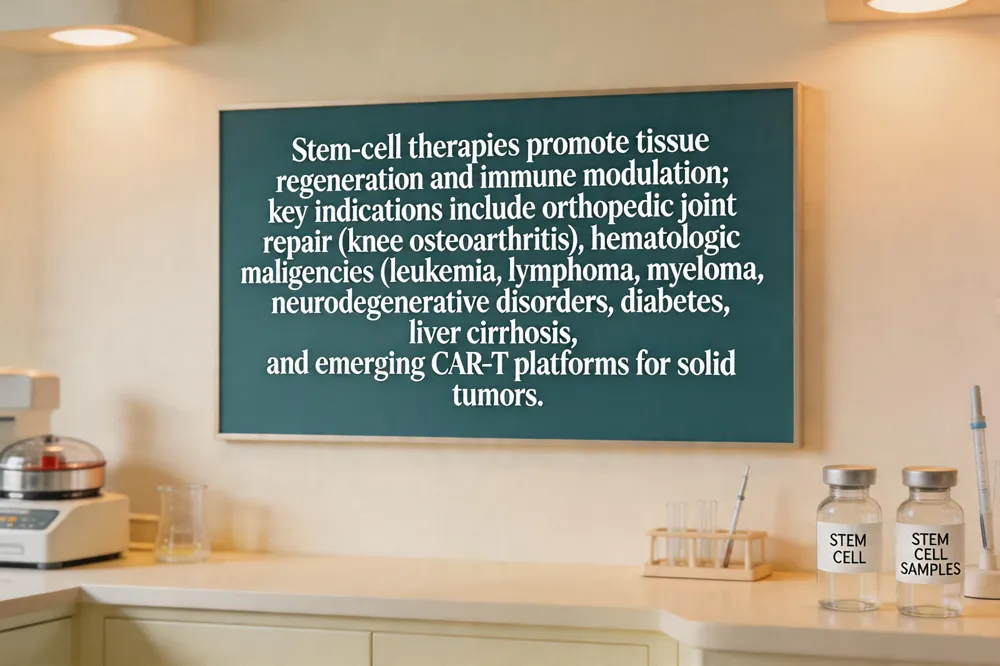
Key disease indications span multiple organ systems: orthopaedic applications such as knee osteoarthritis and cartilage defects benefit from intra‑articular MSC injections that restore joint integrity and alleviate pain; hematologic malignancies (leukemia, lymphoma, multiple myeloma) are treated with autologous or allogeneic hematopoietic stem‑cell transplants that rescue marrow after high‑dose chemotherapy and, in the allogeneic setting, provide a graft‑versus‑tumor effect; emerging trials explore stem‑cell‑derived CAR‑T platforms for solid tumors, while early studies suggest modest benefits for neurodegenerative disorders, diabetes, and liver cirrhosis.
In the knee, patients receive autologous or donor MSCs directly into the joint, often regaining function within weeks. For cancer, transplantation restores hematopoiesis and may deliver engineered immune cells. Hair‑loss protocols use adipose‑derived MSCs to extend the anagen phase, and experimental autism trials employ cord‑blood cells for immune modulation. Stem cells reside in bone marrow, peripheral blood, umbilical cord blood, adipose tissue, and many organs, providing a ubiquitous source for regenerative medicine.
Regulatory Landscape, Safety, and Costs
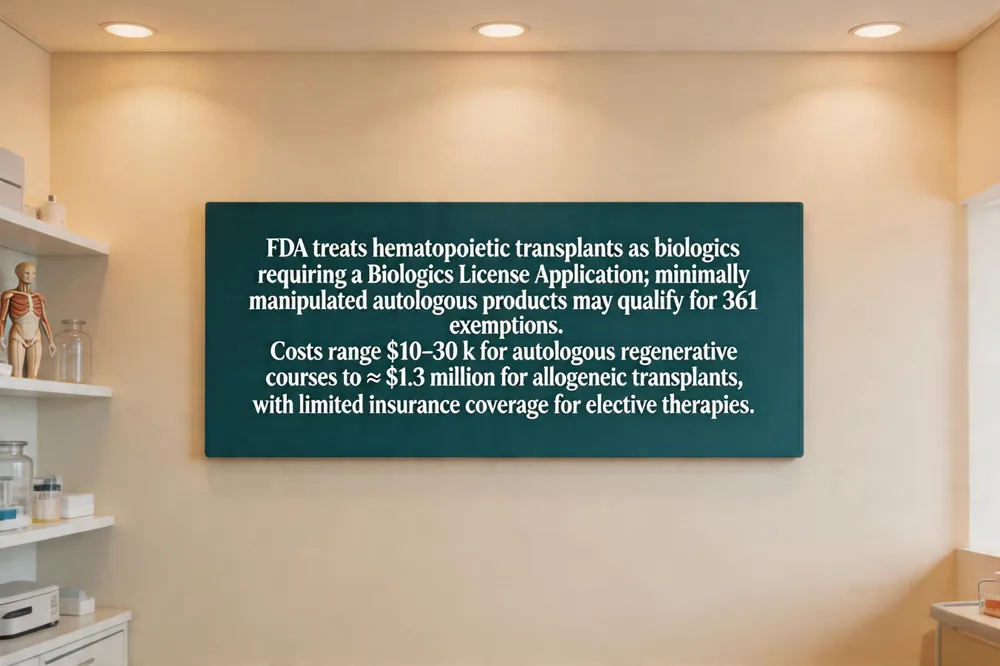 The U.S. FDA classifies hematopoietic stem‑cell transplants as biologics that require a full Biologics License Application, while minimally manipulated autologous products may qualify for 361‑handled exemptions. Only blood‑and‑immune indications are currently approved; all others remain investigational and must be conducted under an IND. Cost of autologous regenerative therapy: $10‑30 k per course with most patients paying $5‑10 k for single‑site injections and higher‑dose or multi‑site protocols exceeding $20 k; insurance rarely covers these elective regenerative procedures. Allogeneic transplants are far more expensive—average total charges approach $1.3 million, driven by hospital stay, stem‑cell procurement, and post‑transplant care—though many insurers cover approved hematologic uses. Out‑of‑pocket expenses may include travel, lodging, and lifelong immunosuppressants. Long‑term safety monitoring is mandated by the FDA, requiring at least 15 years of follow‑up for gene‑edited or allogeneic products to capture late adverse events such as secondary malignancies or chronic GVHD.
Advanced Cell Types, Gene Editing, and Future Directions
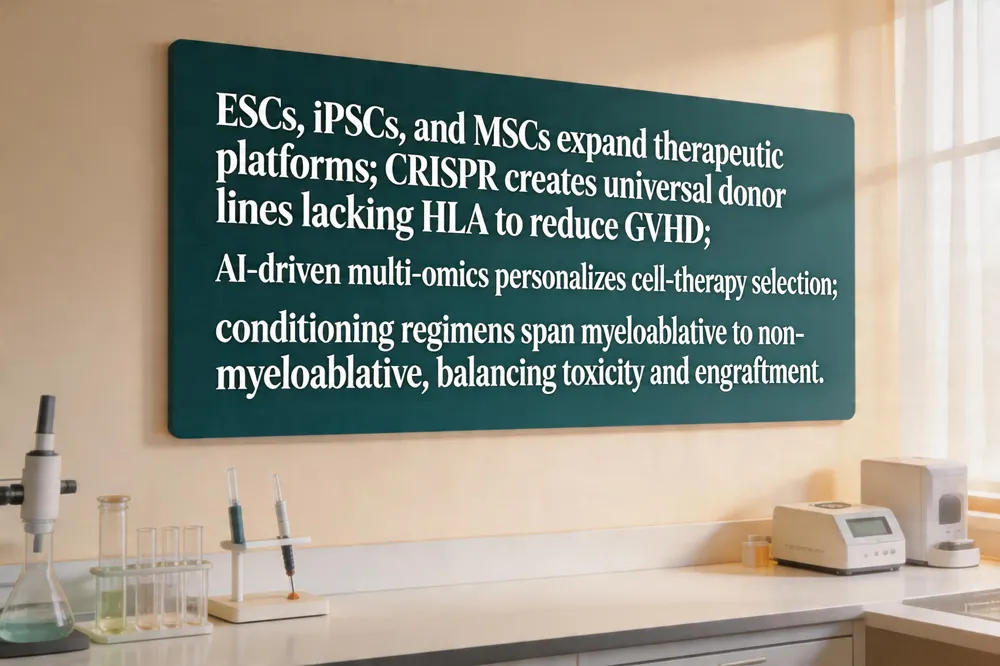 Embryonic stem cells (ESCs) are pluripotent cells harvested from the blastocyst’s inner cell mass, capable of unlimited self‑renewal and differentiation into any adult lineage, making them a powerful platform for disease modeling and regenerative therapy, albeit with ethical and tumor‑risk concerns. Induced pluripotent stem cells (iPSCs) recapitulate ESC potency by reprogramming patient‑derived somatic cells, offering a genetically matched, ethically neutral source. Mesenchymal stem cells (MSCs), especially allogeneic MSCs, exhibit immune‑privilege through low MHC‑II expression, enabling off‑the‑shelf use with minimal rejection. Gene‑editing tools such as CRISPR now enable creation of universal donor lines that lack HLA‑class I/II, reducing graft‑versus‑host disease and expanding allogeneic applicability. AI‑driven multi‑omics integrates single‑cell sequencing, proteomics, and epigenomics to personalize cell‑therapy selection, predict persistence, and guide manufacturing. Conditioning regimens range from myeloablative (high‑dose chemo/radiation) to non‑myeloablative (reduced‑intensity), balancing toxicity against engraftment strength. Autologous, allogeneic, syngeneic, and xenogeneic approaches each carry distinct immunologic profiles, with allogeneic transplants offering graft‑versus‑tumor benefits while requiring HLA matching and immunosuppression. Emerging universal donor cells and AI analytics promise scalable, safe, and tailored therapies for healthy aging.
Practical Guidance for Patients Seeking Stem Cell Treatments
 ### Stem cell therapy near me
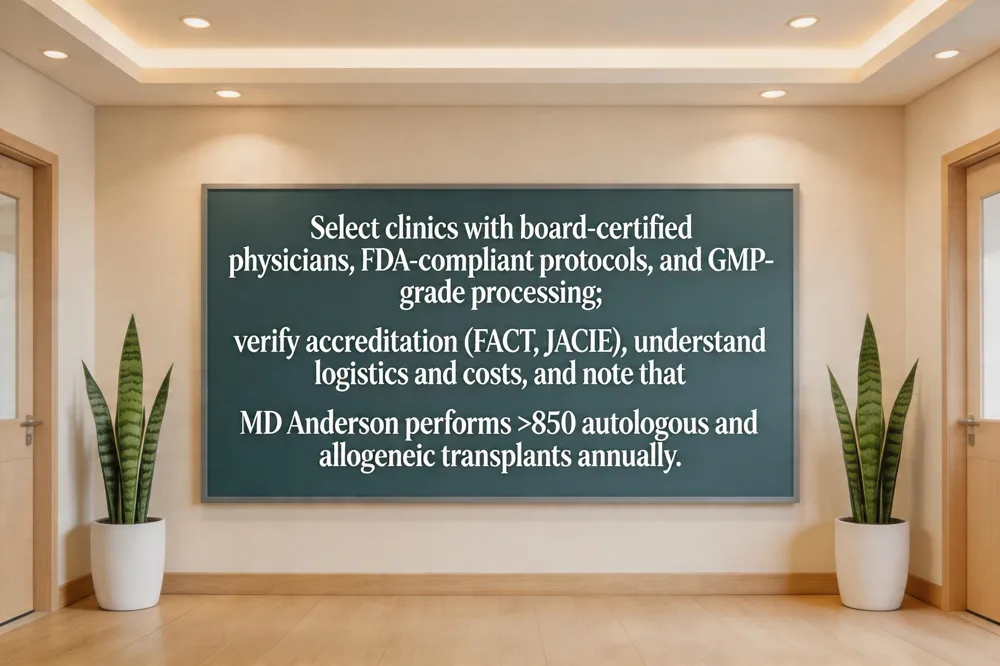
Search for clinics with board‑certified physicians, FDA‑compliant protocols, and GMP‑grade processing. Verify accreditation (e.g., FACT, JACIE), review sterility standards, and confirm the use of minimally invasive harvest (bone‑marrow or adipose). Ask about logistics support for travel and lodging.
### Stem cell therapy near me
Search for clinics with board‑certified physicians, FDA‑compliant protocols, and GMP‑grade processing. Verify accreditation (e.g., FACT, JACIE), review sterility standards, and confirm the use of minimally invasive harvest (bone‑marrow or adipose). Ask about logistics support for travel and lodging.
### Does MD Anderson do stem cell therapy? Yes. MD Anderson’s Stem Cell Transplantation and Cellular Therapy Center performs >850 autologous and allogeneic transplants annually, offers matched‑related, unrelated, and haploidentical donor programs, and runs clinical trials on novel cellular products.
### Allogeneic stem cell transplant precautions Post‑transplant, practice strict hand‑washing, wear masks, avoid crowds, and follow a neutropenic diet (no raw/undercooked foods, unpasteurized dairy). Adhere to immunosuppressive and prophylactic antibiotic regimens, use soft toothbrushes, and report fever, rash, or GI changes immediately.
### Autologous stem cell transplant side effects Transient infusion reactions (chills, metallic taste) are common. Conditioning chemo causes fatigue, nausea, hair loss, and cytopenias; platelet drops increase bleeding risk, and anemia causes breathlessness. Infections are mitigated with prophylaxis.
### Autologous stem cell transplant procedure Growth‑factor mobilization → apheresis collection → cryopreservation → high‑dose conditioning → thawed cell infusion → engraftment monitoring and supportive care.
### How much does autologous stem cell therapy cost? Typical U.S. out‑of‑pocket costs range $10,000‑$30,000, driven by disease severity, cell dose, and clinic location; insurance rarely covers elective regenerative treatments.
Putting It All Together for Healthy Aging
Choosing the right cell‑therapy strategy for longevity hinges on an assessment of disease, immune status, and treatment urgency. Clinicians integrate genomic and multi‑omics data, donor‑matching algorithms, and risk profiles to decide between autologous and allogeneic products, weighing the low rejection risk of patient‑derived cells against the off‑the‑shelf convenience of donor‑derived batches. Safety considerations include graft‑versus‑host disease, cytokine release syndrome, and surveillance, while efficacy is measured by engraftment durability, graft‑versus‑tumor effect, and functional outcomes. Cost analysis accounts for manufacturing scale, cryogenic logistics, and post‑transplant care. Emerging universal‑donor lines, CRISPR editing, and AI‑driven biomarker discovery promise to streamline production, reduce immunosuppression, and expand regenerative options for healthy aging. These advances will support longer healthspan with intervention burden.