Why Tech Matters for Preventive Health
Digital health integrates electronic health records, wearable sensors, AI analytics, and cloud‑based platforms to transform preventive medicine from a reactive to a proactive discipline. Real‑time data streams from smartwatches, continuous glucose monitors, and point‑of‑care home lab kits enable early identification of physiologic trends that precede disease onset. Telehealth extends this capability by delivering virtual assessments, e‑prescriptions, and specialist consultations without geographic constraints, thereby reducing travel costs, lowering missed‑appointment rates, and expanding access for rural and underserved populations. Remote laboratory testing complements virtual visits by providing rapid biomarker results—such as HbA1c, lipid panels, and vitamin D—directly to clinicians, facilitating timely risk stratification and personalized lifestyle coaching. Together, these technologies streamline care coordination, improve adherence, and support health‑span extension through continuous, data‑driven prevention.
Telehealth Foundations and Services
 [Telehealth delivers health‑care services via digital communication tools]—video calls, mobile apps, web portals, and secure messaging—allowing patients to receive care remotely. While telemedicine is the clinical core (diagnosis, treatment, monitoring) delivered between a patient and a licensed provider, telehealth encompasses a broader suite of services, including health education, medication counseling, and social‑support activities. In practice, a telehealth visit begins with scheduling through a patient portal (e.g., MyCigna or the Medical Institute of Healthy Aging’s platform), confirming the modality (video or phone), and testing audio‑video equipment. On the day of the appointment, the patient joins via a secure link or dial‑in number in a quiet, private space, ready with medication lists and questions.
[Cigna’s telehealth program] partners with MDLIVE; members can reach a virtual‑care provider 24/7 by calling 888‑525‑7713 for phone‑based consultations, or access video visits through the MDLIVE app or MyCigna portal. The urgent‑care service offers immediate assessment for non‑emergency concerns, with prescriptions sent directly to a local pharmacy. These services reduce travel time, lower costs, and [expand access for underserved and rural populations]—key advantages for longevity‑focused clinics such as the Medical Institute of Healthy Aging, which integrates telehealth with remote labs and wearable monitoring to deliver personalized preventive care.
Technology‑Enabled Health: Tools and Applications
 Technology‑enabled health refers to the delivery of health‑care services that are supported, enhanced, or made possible by digital technologies. It includes telehealth platforms, mobile apps, wearable sensors, and remote‑monitoring devices that collect real‑time data on sleep, activity, heart rhythm, and other vital signs. By integrating this data with AI and machine‑learning algorithms, clinicians can detect patterns, predict risks, and personalize treatment plans, while patients receive automated coaching and virtual assistance anytime, anywhere.
A common example is a smart medication dispenser that sends smartphone reminders and alerts caregivers if a dose is missed, paired with a wearable fall‑detector that notifies an alarm‑receiving centre and family members when a sudden movement is sensed. Home‑based sensors and GPS‑enabled smart watches further support independent living for older adults.
Digital health services encompass telehealth consultations, remote patient monitoring, mobile health apps, wearable sensors, and integrated electronic health records that enable continuous, personalized care beyond clinic walls.
The three primary types of preventive care offered by clinics are annual physical exams, cancer screenings, and vaccinations, each aimed at early detection and disease avoidance.
Modes of intervention include health promotion, specific protection, early diagnosis and treatment, disability limitation, and rehabilitation.
Telemedicine Capabilities, Features, and Barriers
 Telemedicine enables remote diagnosis, monitoring, and treatment through video‑conferencing, mobile health apps, and wearable sensors, Telemedicine reduces travel costs and time for patients, especially in rural areas, by delivering medical care through video conferencing and other virtual technologies. Core capabilities include real‑time audio‑video visits, secure electronic health‑record (EHR) integration, e‑prescriptions, automated appointment reminders, AI‑assisted diagnostics, and payment gateways that streamline workflow. Remote monitoring of vital signs via telemedicine transmit vital signs such as blood pressure, glucose, and heart‑rate to clinicians for proactive chronic‑disease management, while tele‑dermatology, tele‑mental‑health, and specialist e‑consultations broaden therapeutic reach. Adoption barriers persist: broadband gaps, privacy‑security concerns, and inconsistent state licensure and reimbursement policies limit uptake. Additional hurdles include digital‑literacy gaps among patients and providers and the need for robust HIPAA‑compliant platforms. Despite these challenges, telemedicine supports continuous preventive care, improves medication adherence, reduces missed appointments, and facilitates personalized longevity strategies by integrating wearable data, AI analytics, and remote lab results into a unified, patient‑centered workflow.
AI and Predictive Analytics in Preventive Medicine
 Artificial intelligence (AI) now serves as the engine that AI unifies fragmented health data—electronic records, wearable streams, lab results, and insurance claims—into a single, analyzable dataset. By applying machine‑learning to genomic and other big‑data sources, AI uncovers patterns that human analysts cannot see, enabling rapid risk stratification and personalized preventive recommendations. Predictive risk models built on AI‑driven analytics forecast disease onset years in advance, guiding early lifestyle interventions and targeted screening. Clinically, these tools reduce mortality, lower hospitalizations, and improve quality of life, especially for aging populations.
True or false: artificial intelligence is helping research crunch vast datasets like genetics. Answer: True. AI automates sequence analysis, variant calling, and phenotype prediction, accelerating genomics research and supporting longevity strategies.
What is telehealth? Answer: Telehealth uses digital communication technologies—video, phone, secure messaging, and mobile apps to deliver clinical care, education, and health‑administration remotely, expanding access and reducing travel for patients.
Remote Labs, Wearables, and Continuous Monitoring
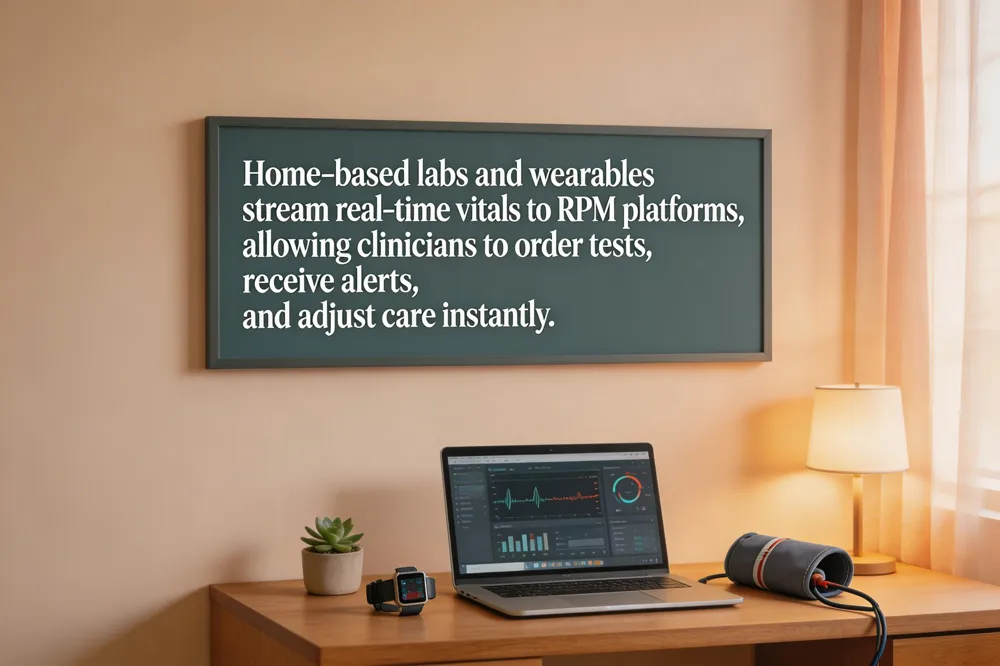 Home‑based laboratory testing and wearable sensor data have become core components of modern telehealth workflows, enabling continuous risk stratification without a clinic visit. Patients can collect blood, saliva, or urine specimens at home (e.g., through Labcorp OnDemand or point‑of‑care devices cleared by the FDA) and have results uploaded securely to the provider’s electronic health record within 24–48 hours. Wearables such as smartwatches, continuous glucose monitors, and Bluetooth‑enabled blood‑pressure cuffs transmit vital‑sign streams in real time to remote‑patient‑monitoring (RPM) platforms, which generate automated alerts when thresholds are crossed. Integrated telehealth portals combine these data streams with AI‑driven analytics, allowing clinicians to adjust treatment plans, prescribe e‑prescriptions, and schedule follow‑up video visits instantly.
Can a telehealth provider order labs? Yes. During a virtual visit the clinician places an electronic order; the patient can use a nearby Labcorp patient service center or an at‑home kit, and results appear instantly the patient’s portal for review.
Cigna Cigna’s telehealth benefit connects members with board‑certified providers via the MDLIVE app or myCigna portal, offering 24/7 virtual visits, low‑cost or no‑copay pricing, and direct prescription delivery to local pharmacies.
Impact on Patient Safety, Access, and Longevity
 Telehealth enhances patient safety by eliminating in‑person exposure to infectious agents and by delivering real‑time remote monitoring that catches early warning signs. Secure electronic transmission of labs, imaging, and medication lists reduces transcription errors, while rapid follow‑up prevents complications. For underserved communities, virtual visits cut travel time and cost, bringing specialist expertise to rural areas and lowering missed‑appointment rates, which improves overall health equity. Patients report high satisfaction: they appreciate the convenience of home‑based care, the ability to involve family members, and the feeling of empowerment from continuous data access. In the emerging digital‑health era, preventive medicine shifts toward AI‑driven risk stratification, wearable biosensors, and integrated telemedicine platforms that enable “left‑shift” interventions, extending healthspan. Telehealth can safely assess respiratory infections such as pneumonia and sore throat through video exams, symptom triage, and photo‑based visual inspection.
Future Outlook and Call to Action
Emerging digital health tools—AI‑driven risk stratification, wearable sensor streams, and home‑based laboratory kits—are converging to enable continuous, data‑rich monitoring of aging biomarkers. By linking these inputs to the Medical Institute of Healthy Aging’s (MDIHA) integrated analytics platform, clinicians can generate individualized longevity roadmaps that adjust lifestyle, nutrition, and pharmacologic recommendations in real time. For MDIHA patients, the next steps include enrolling in the AI‑augmented preventive program, completing baseline genetic and metabolomic panels, and adopting synchronized wearable devices that feed daily metrics into secure patient portals. Ongoing virtual coaching, automated alerts for out‑of‑range values, and quarterly tele‑consultations will sustain proactive health‑span optimization while reducing reliance on episodic office visits and support long‑term wellness goals for aging.