A Wider View of Everyday Health
Wearables can record health-related information during ordinary routines, including activity, heart rate, sleep, and, depending on the device, other physiological measures. Because readings are gathered outside the clinic, they may help show patterns that a snapshot at a scheduled visit cannot capture. A Duke University overview of wearable monitoring describes how these signals may support earlier attention to changes, while emphasizing that they are not a substitute for diagnosis.
The value lies in connecting relevant patterns with a person’s goals, history, and clinical assessment. At the Medical Institute of Healthy Aging, wearable information can be considered alongside advanced diagnostics and clinician-guided preventive care, rather than treated as a standalone verdict. That broader view can help make health conversations more specific and inform personalized decisions.
A device’s usefulness depends on what it measures and how it performs in real-world conditions. A systematic review of wrist-worn activity trackers found that accuracy varied by measure and context, so no reading should be assumed definitive. Wearables are best understood as one source of information, interpreted with professional judgment and, when needed, clinical testing.
Wearables and Preventive Care
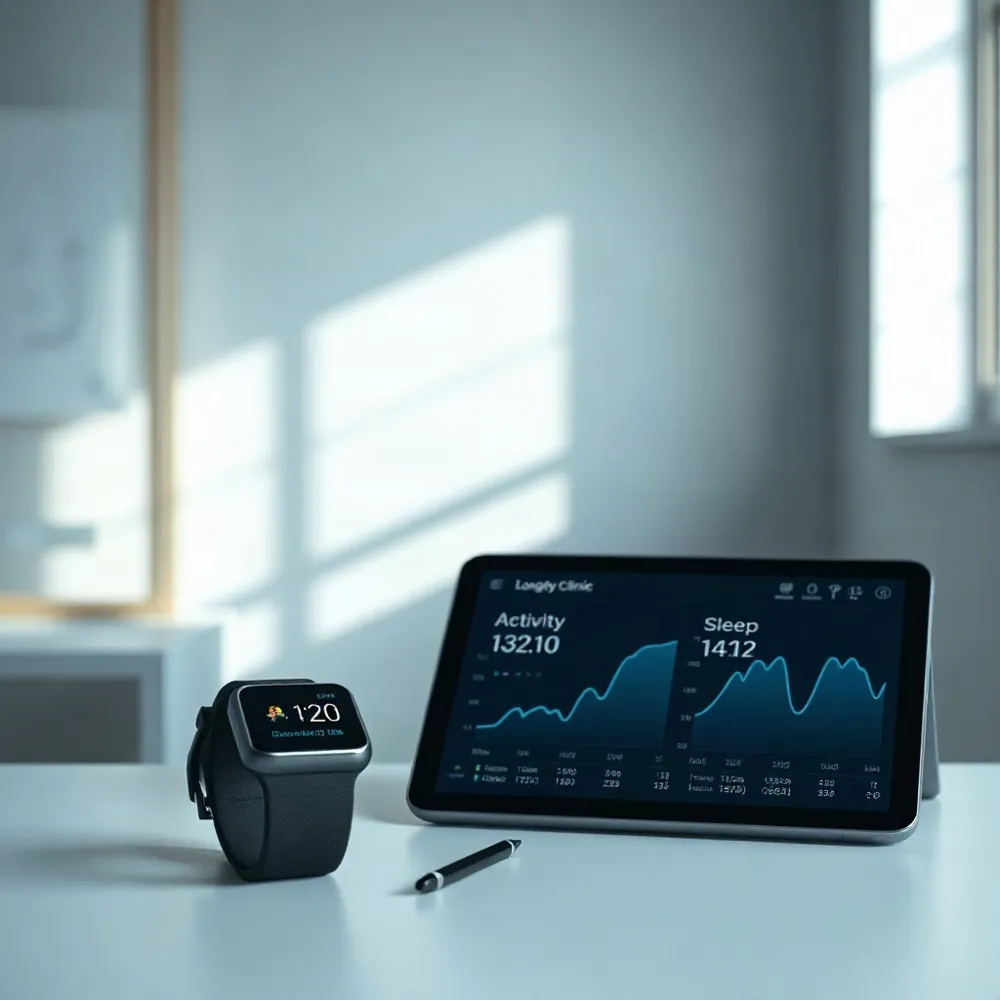 Wearables can give people and clinicians a view of everyday patterns between appointments. Depending on the device, they may record activity, sleep, and heart rate, while some models also track heart rhythm or blood oxygen. Specialized devices can collect other measures, but the type and clinical usefulness of each reading vary.
Activity goals, reminders, progress records, and feedback can make self-monitoring more practical and encourage healthy habits. A review of wearable use found that these features may support behavior change, but results depend on the person and setting, and tracking alone does not guarantee lasting changes. Research on wearables and user engagement discusses both potential benefits and barriers to continued use.
Over time, changes in sleep, mobility, or heart rate may help someone notice a pattern worth discussing with a clinician. For older adults, fall-related monitoring and changes in function are areas of wearable research and use, not capabilities that every device provides. Duke’s overview of wearable monitoring describes how ongoing measurements may inform clinical review, while cautioning that they do not replace diagnosis.
At the Medical Institute of Healthy Aging, wearable information can sit alongside a person’s symptoms, medical history, and clinical assessment when care is personalized. A device reading is a signal to interpret, not a diagnosis or a substitute for validated testing. Wearables and continuous monitoring offers related context on common measures and their role in preventive care.
Accuracy Depends on the Measure
 How accurate are wearable devices, including fitness trackers and smartwatches? There is no single answer: performance depends on the device, the measure, how it fits, the activity being performed, and the conditions in which it is tested. Accuracy for one metric does not establish accuracy for another.
A systematic review of wrist-worn activity trackers found that the Fitbit Charge and Charge HR performed comparatively well for step counts, while the Apple Watch performed comparatively well for heart-rate measurement. These findings describe relative performance in the studies reviewed, not a guarantee for every wearer or situation. The review also found substantial variation in populations, devices, reference methods, and testing conditions.
Energy-expenditure estimates were notably less dependable. In the review’s overall synthesis, mean absolute percentage error exceeded 30% for every brand assessed, and no tested device showed consistently good accuracy for this measure. A calorie estimate can therefore be a rough reference, not a precise account of energy burned.
The evidence covered wrist-worn devices, so it should not automatically be applied to a tracker worn elsewhere on the body. Fit and movement also matter: a reading collected during exercise may not perform like one taken at rest. As discussed in this guide to wearable data’s benefits and limitations, device results are most useful when interpreted in relation to the specific measure and context.
For personalized health optimization, clinicians at the Medical Institute of Healthy Aging can consider wearable trends alongside a person’s goals, history, and clinical assessment. An unusual reading may be worth discussing, especially if it persists or aligns with symptoms, but it is not a diagnosis by itself. Seek appropriate clinical assessment when a reading raises concern rather than relying on a consumer device alone.
Using Data in Personalized Care
 Wearable readings can add context to a clinical picture, but they are only one input alongside symptoms, medical history, examination findings, and validated testing. For longevity care, their value lies less in any single number than in whether a relevant pattern helps a patient and clinician decide what to discuss or assess next. A scoping review of wearable health technology describes how repeated measurements may support shared decision-making, while emphasizing that consumer data are not automatically definitive.
Trends in activity, sleep, heart rate, or other measures may help clinicians tailor conversations and follow-up to a person’s goals and health history. The Medical Institute of Healthy Aging frames wearable information as one part of personalized care, considered alongside clinical assessment and other relevant health information. Its approach to integrating wearable technology into continuous health monitoring places readings in the broader context of ongoing monitoring rather than treating them as a stand-alone verdict.
How can clinicians use wearable data in personalized longevity care?
A practical sequence is “Find, Track, Treat”: notice a possible warning sign, follow relevant changes over time, then use appropriate information to guide an intervention. A pattern might prompt a conversation, an additional check-up, rehabilitation, or a medication review. Wearable findings can support clinical assessment, but consumer readings alone should not determine treatment or be treated as a diagnosis. Duke’s discussion of wearable monitoring describes these uses as potential applications, not guaranteed outcomes.
Interpretation depends on the device and the quality of the record. Measurement limits, inconsistent wear, missing readings, and the way an algorithm summarizes data can all affect what a trend supports. Patients and clinicians should agree on which measures are relevant, how often they will be reviewed, and what changes warrant follow-up. They should also discuss where data are stored and who may access them, so monitoring supports care without leaving privacy expectations unclear.
Monitoring Chronic Conditions
For people managing a chronic condition, repeated readings can add context between appointments. Depending on the device, monitoring may include heart rate, activity, sleep, blood pressure, or glucose from a continuous glucose monitor. Reviewing these measures over time can help patients notice changes and discuss them with their care team. The range of wearable measures used in ongoing monitoring varies by device and purpose.
A device described as continuous does not necessarily measure every moment. Many systems sample at intervals, then use software to calculate averages, minimums, maximums, or trends. Movement, fit, and the activity being measured can also affect readings. Repeated measurements may support rehabilitation or clinician monitoring, but they do not by themselves establish that a condition has worsened or improved.
Accuracy and alert performance depend on the device and its intended use. A consumer wearable should not be assumed to be validated for monitoring a specific disease, and an alert may be false or may fail to flag a concerning change. A review of patient-generated health data recommends distinguishing device readings from clinician-recorded measurements and laboratory results.
Data may remain in a manufacturer’s app instead of transferring reliably to a clinical record. Before relying on wearable information, patients and clinicians should agree on which measures matter, how often they will be reviewed, and what action to take if readings change. At the Medical Institute of Healthy Aging, wearable data can be considered alongside clinical assessment and other relevant health information, rather than treated as a stand-alone result.
Wearables are best used to supplement prescribed monitoring and clinician-directed care, not replace them. Patients should follow their established treatment and testing plans, and seek clinical advice about concerning changes rather than waiting for an app alert.
Integrating Data Into Clinical Workflows
Wearable data become more useful when care teams can review them alongside symptoms, medical history, and clinical test results. Yet readings often remain in device apps or manufacturer platforms, leaving patients to show a screen or bring a report to an appointment. Direct, secure transfer into an electronic health record can make relevant trends easier to review, while reducing the risks of missing or misfiled information. Research on integrating patient-generated health data also stresses that device readings must remain clearly identified as user-generated, rather than being mistaken for clinician-measured vital signs or laboratory results.
Integration takes more than connecting an app. Devices may record the same measure in different formats, so systems need consistent standards and reliable exchange protocols. Data quality checks, such as validation and performance monitoring, help staff understand what a reading can support and where its limits lie. In personalized health care, including the diagnostic and monitoring services offered by the Medical Institute of Healthy Aging, wearable information should inform clinical review rather than stand in for validated testing.
Secure workflows require encryption, user authentication, access controls, and regular security audits. Staff also need training to set up devices, troubleshoot data transfer, interpret readings, and place information correctly in the record. Alerts should be understandable and tied to a defined action. A possible critical event may call for prompt review, but routine trends do not necessarily require real-time escalation; care programs must match alert thresholds to available response resources.
Duke University research offers examples of what carefully designed integration may support, not guaranteed results for every patient. The work includes digital twins that model blood flow, population-health analysis of wearable measures, testing devices in simulated clinical settings, and monitoring older adults before and after surgery. These projects depend on collaboration among clinicians, engineers, and data specialists, as well as practical routes for reimbursement and follow-up.
Telemedicine and remote monitoring can extend review beyond in-person visits, but only when data reach the right people in a usable form and the care team can respond. Duke’s account of wearable research and clinical integration describes this combination of technical systems, clinical collaboration, and workflow design.
Privacy and Data Stewardship
Does HIPAA protect health data collected by wearable devices, and what privacy risks should users consider? HIPAA does not automatically cover information gathered by a consumer wearable. Its protections depend on who handles the data and in what capacity. When information is held by a healthcare provider or another covered entity, different requirements may apply than when it remains with a device maker or app. The Brown Center for Digital Health’s overview of wearable privacy describes why users should assess data handling rather than assume the same protections follow their information everywhere.
Other federal or state rules may also apply. For certain health apps and platforms outside HIPAA, the Federal Trade Commission’s Health Breach Notification Rule may require notice when a breach exposes personal health records. The relevant duties depend on the service and the information it holds, so a privacy notice should not be treated as a substitute for understanding the applicable protections.
Wearables can collect sensitive details such as activity, location, heart rate, and sleep patterns. Data may be stored in cloud services or shared with third-party apps, and analysis can suggest traits or behaviors a person never directly reported. Claims that information is anonymous deserve caution because distinctive sensor patterns may still make individuals identifiable, as discussed in analysis of wearable privacy and reidentification.
Before connecting a device to a health program, review its privacy policy, app permissions, sharing and sale settings, and data-retention practices. Check whether information can be deleted or exported, and secure the account with a strong, unique password and multifactor authentication where available. For clinical programs, including personalized care at the Medical Institute of Healthy Aging, clear explanations of data use help patients make informed choices.
Responsible data stewardship also means asking whether each measure is needed for the stated purpose and limiting collection and sharing accordingly. People should be told what is gathered, where it goes, who can access it, and how long it is kept. Informed consent and user autonomy matter throughout, not just at setup: patients should be able to raise concerns and make choices about sharing without assuming that every wearable feature must be enabled.
Choosing a Device for Your Goals
What should someone consider when choosing a wearable for health monitoring? Start with the information you want to track, such as activity, sleep, or heart rate. Compare devices using evidence for that specific measure rather than choosing by a broad wellness score. A review of wrist-worn trackers found that accuracy varied by measure and study, and that energy-expenditure estimates were not consistently accurate across the devices examined (systematic review of wrist-wearable trackers).
Practical fit matters as much as a device’s feature list. Consider whether it feels comfortable, stays in place during ordinary activities, and has a battery life and setup process that suit your routine. Discomfort, technical problems, and waning interest can interrupt wear, leaving gaps in the record. Accessibility matters too: smartphone availability, digital literacy, reliable internet access, and cost can affect whether someone can set up a device and use its data consistently.
Check what the manufacturer says about data collection, storage, sharing, and security, including whether information may pass to third-party services. Wearable data can be sensitive, so clear explanations and appropriate safeguards should be part of the decision, not an afterthought (Brown University’s discussion of wearable data ethics).
If readings will inform care or monitoring of a medical condition, review the device’s validation evidence and limitations with a qualified clinician. At the Medical Institute of Healthy Aging, wearable information can be considered alongside clinical assessment and a person’s health goals, rather than treated as a diagnosis on its own. For further guidance, see how to choose a wearable for health monitoring.
Make Monitoring Useful and Proportionate
Wearables can make patterns in activity, sleep, and selected physiological measures more visible between visits. Their usefulness depends on choosing a measure suited to the question, understanding device limits, and interpreting readings alongside symptoms and clinical assessment. Evidence on wrist-worn trackers shows that accuracy varies by measure and testing conditions, so results should not be treated as universal guarantees (systematic review of wrist-wearable trackers).
For personalized health optimization, monitoring is most useful when relevant data informs a conversation and a care plan tailored to the person, rather than becoming a target in itself. At the Medical Institute of Healthy Aging, wearable information can sit alongside advanced diagnostics and clinician assessment, not replace them. Reliable data handling, clear privacy practices, and workflows that let care teams review information also matter; integrating patient-generated data into clinical records requires attention to security and accurate interpretation (review of patient-generated health data integration).
A device may support awareness and follow-up, but monitoring alone does not guarantee early diagnosis, better outcomes, or longer life. The practical aim is proportionate use: collect information that serves a clear purpose, account for usability and access, and preserve clinical judgment.