Why a Tailored Healthspan Blueprint Matters
Traditional New Year resolutions are vague and one‑size‑fits‑all, whereas a data‑driven longevity plan translates concrete biomarker results into actionable goals. A robust healthspan blueprint rests on five core pillars—targeted nutrition, calibrated movement, restorative sleep, a growth‑oriented mindset, and cutting‑edge interventions such as hormone optimization, rapamycin or GLP‑1 agonists, and peptide therapies. Proactive clinics like the Medical Institute of Healthy Aging operationalize this model: they perform >70‑marker panels, map biological age, and continuously adjust protocols based on real‑time lab and wearable data. By treating each patient as an N=1 subject, these clinics shift the focus from generic advice to personalized, measurable actions that protect cognition, preserve muscle mass, and align circadian rhythms—ultimately extending the years lived in vibrant health.
Baseline Assessments and the N=1 Principle
Baseline Assessments & N=1 Principle
| Domain | Key Biomarkers / Tests | Goal |
|---|---|---|
| Metabolic | Insulin sensitivity, hs‑CRP, lipid particle sizing | Quantify metabolic health & inflammatory load |
| Hormonal | Thyroid, adrenal, sex hormones | Optimize energy, cognition, body composition |
| Nutrient/Genomic | Micronutrient panels, SNP analysis | Identify deficiencies & genetic risks |
| Body Composition | DEXA, VO₂ max, DNA‑methylation age | Track lean mass, fitness, biological age |
| Personalized Model | N=1 data‑driven approach | Tailor diet, exercise, supplements, and emerging drugs (rapamycin, GLP‑1) to individual profile |
 Healthspan is the portion of a person’s life spent in good health, free from significant chronic disease or disability that impairs quality of life. It reflects how many years are lived in a functional, disease‑free state rather than merely counting total years (lifespan). Extending healthspan hinges on four pillars: nutrition, exercise, sleep, and stress management, each balanced to support cellular resilience.
A robust baseline assessment begins with advanced metabolic markers—insulin sensitivity, hs‑CRP inflammation, and detailed lipid particle sizing to quantify metabolic health and inflammatory load. Hormonal optimization then evaluates thyroid, adrenal, and sex hormones aiming for optimal ranges that support energy, cognition, and body composition. Nutrient and genomic analyses uncover micronutrient deficiencies and genetic predispositions that influence performance and disease risk.
WellcomeMD and Healthspan apply an “N=1” model, treating each patient as a unique subject. This personalized, data‑driven approach tailors interventions—diet, exercise, hormone therapy, supplements, and emerging pharmacology (e.g., rapamycin, GLP‑1 agonists) to the individual’s specific biomarker profile, enabling real‑time adjustments and maximal healthspan gains.
Digital Longevity Platforms, DPC, and Data‑Driven Coaching
Digital Longevity Platforms, DPC & Coaching
| Feature | Description |
|---|---|
| DPC Model | Unlimited year‑round access to longevity‑focused team for a flat monthly fee |
| Biomarker Panel | >70 biomarkers across 9 biological systems, real‑time tracking |
| MySpan App | Central hub for labs, wearables, treatment plans; secure data view |
| Coaching | Translates data into actionable lifestyle targets (strength, VO₂ max, sleep, stress) |
| Outcome | Proactive, continuous optimization rather than reactive care |
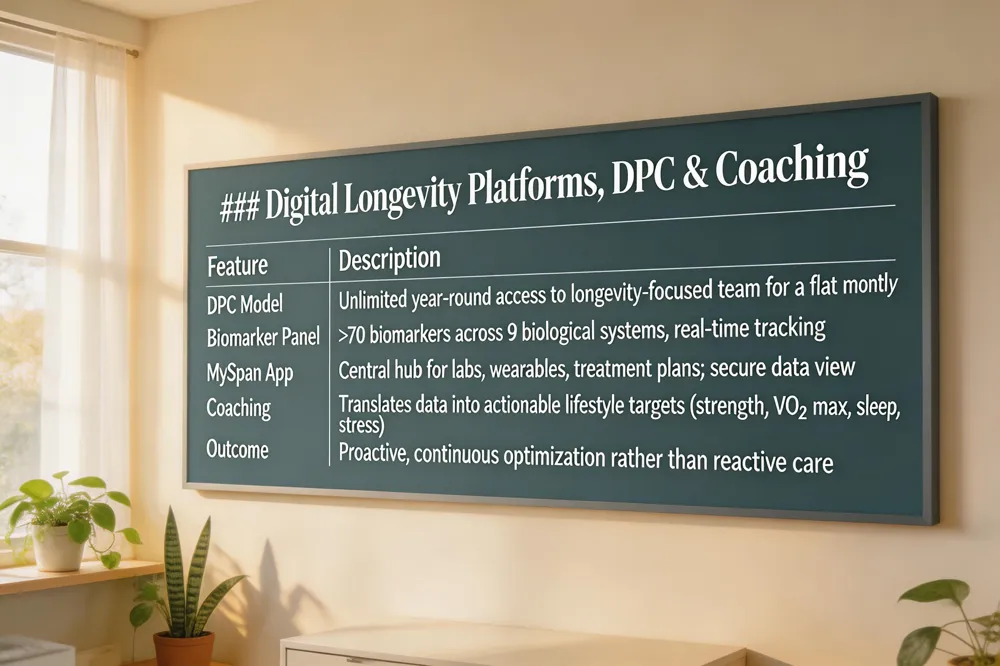 Healthspan’s Direct Primary Care (DPC) model delivers unlimited, year‑round access to a longevity‑focused medical team for a flat monthly fee. Members receive personalized protocols built on comprehensive lab panels—tracking [over 70 biomarkers across nine biological systems](https://gethealthspan.com/?srsltid=AfmBOorIEw1ZlrijvW9DKfXFzEN8zD53WkYe11kOsXUbQdCrwCLHuqOX)**—allowing real‑time adjustments to therapies such as rapamycin, GLP‑1 agonists, and hormone optimization. The [MySpan platform](https://gethealthspan.com/?srsltid=AfmBOorIEw1ZlrijvW9DKfXFzEN8zD53WkYe11kOsXUbQdCrwCLHuqOX) centralizes all health data, lab results, and treatment plans in a secure digital hub, giving patients and clinicians a single view of progress and enabling rapid protocol tweaks. Integrated performance coaching translates these data into actionable lifestyle recommendations, from strength training and VO₂ max targets to sleep hygiene and stress‑reduction practices. Together, the DPC subscription, MySpan app, and data‑driven coaching create a seamless, science‑backed ecosystem that shifts the focus from reactive care to proactive healthspan extension.
Lifestyle Pillars and the 5 P’s of Longevity
Lifestyle Pillars & 5 P’s of Longevity
| Pillar | Recommendations |
|---|---|
| Nutrition | Mediterranean‑style, plant‑forward diet (veg, fruit, nuts, whole grains, legumes, fish) |
| Exercise | ≥150 min moderate or 75 min vigorous weekly + 2+ strength sessions |
| Sleep | 7‑9 h quality; 3‑2‑1 rule (no eat 3 h, no drink 2 h, no screens 1 h before bed) |
| Stress Management | Mindfulness, gratitude, optimism practices |
| 5 P’s to Avoid | Pizza, Pasta, Protein‑heavy meats, Potatoes, Pane (bread) |
| #1 Mistake | Neglecting true rest & recovery (chronic sympathetic over‑activity) |
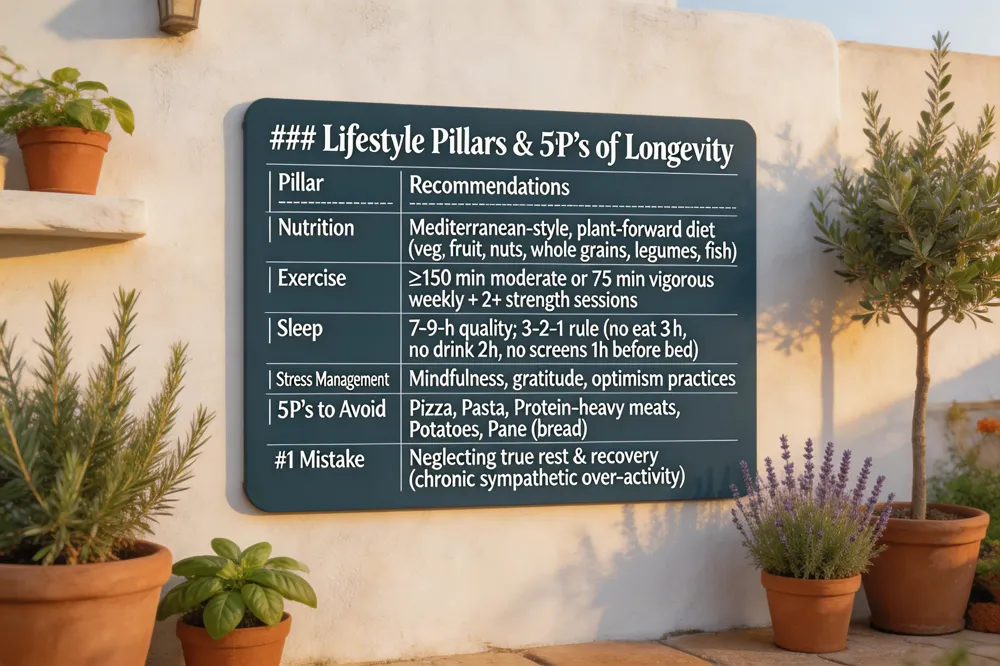 A Mediterranean‑style, plant‑forward diet —rich in vegetables, fruits, nuts, whole grains, legumes and fish—provides antioxidants, fiber, and healthy fats that lower inflammation and support vascular and cognitive health. Exercise guidelines from the 2018 Physical Activity Guidelines for Americans recommend at least 150 minutes of moderate‑intensity or 75 minutes of vigorous activity per week, plus muscle‑strengthening sessions on two or more days, which preserves muscle mass, VO₂ max, and metabolic flexibility. Sleep hygiene is equally critical; aim for 7‑9 hours of quality sleep and follow the 3‑2‑1 rule — stop eating three hours before bedtime, stop drinking fluids two hours before, and stop screen use one hour before sleep to optimize circadian alignment. Stress reduction through mindfulness, gratitude, and optimism reduces cortisol, cur inflammation, and enhances neuroplasticity.
What are the 5 P’s to avoid for longevity? The “poisonous five P’s” identified by longevity researcher Valter Longo are pizza, pasta, protein‑heavy meats, potatoes, and pane (bread). Excess intake drives obesity, inflammation, and metabolic dysfunction, accelerating biological aging.
What is the #1 mistake that will make you age faster? The top error is neglecting true rest and recovery; chronic sympathetic over‑activity elevates cortisol, impairs sleep, weakens immunity, and hastens cellular damage.
What is the 321 rule for longevity? The 3‑2‑1 rule for sleep: stop eating three hours before bed, stop drinking fluids two hours before bed, and stop looking at screens one hour before bed.
Advanced Interventions: Rapamycin, GLP‑1, Metformin, and Peptides
Advanced Interventions
| Intervention | Typical Dose / Use | Primary Benefits |
|---|---|---|
| Rapamycin | Low‑dose 5 mg / week (PEARL trial) | Improves physical function, lean mass, reduces inflammation |
| GLP‑1 Agonists (semaglutide, tirzepatide) | Individualized dosing | Weight loss, glucose control, cardiovascular & neuroprotective effects |
| Metformin | Physician‑guided dosing | Enhances insulin sensitivity, reduces age‑related disease incidence |
| Peptides (BPC‑157, thymosin β‑4, NAD⁺) | Targeted based on biomarkers | Tissue repair, inflammation reduction, mitochondrial rejuvenation |
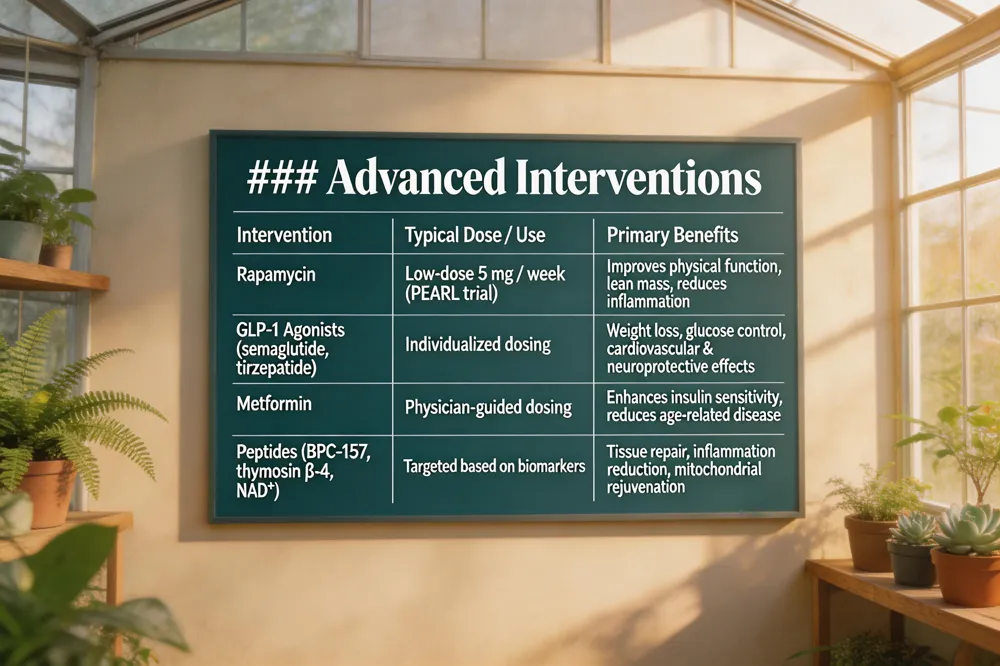 Low‑dose rapamycin (5 mg / week) has emerged from the PEARL trial as a geroprotective agent that modestly improves physical function, lean muscle mass and reduces inflammatory biomarkers in adults 50‑85. Participants reported better mobility, lower frailty and occasional side‑effects were mild and transient. Real‑world use in longevity clinics mirrors these findings, with reports of enhanced energy and cognition, though long‑term safety requires personalized monitoring.
GLP‑1 receptor agonists such as semaglutide and tirzepatide are now standard for metabolic health, promoting weight loss, improved glucose control and cardiovascular benefits while also offering neuroprotective effects. Their use is guided by precise biomarker panels to optimize dose and avoid muscle loss.
Metformin remains a cornerstone geroprotector: extensive epidemiologic and trial data link it to reduced incidence of age‑related diseases, improved insulin sensitivity and modest extensions of healthspan when dosed under physician supervision.
Peptide therapies—including BPC‑157 for tissue repair, thymosin β‑4 for inflammation reduction, and NAD⁺ infusions for mitochondrial rejuvenation—are incorporated after comprehensive biomarker assessment. These agents target cellular senescence, autophagy and energy metabolism, complementing the pharmacologic backbone of a personalized longevity roadmap.
Proactive Health Agencies, Insurance, and Consumer Perception
Proactive Health Agencies & Insurance
| Entity | Core Service | Notable Points |
|---|---|---|
| ProActive Insurance Management | Review & cost‑saving for health policies | High client satisfaction (Beth A., Jodi H., Hector C.) |
| Proactive Health Solutions | Insurance platform‑as‑a‑service for agencies | Handles commissions, compliance, marketing; offers simple online quotes |
| Proactive MD | Private longevity clinic (Founder: John Collier) | Privately held, CEO‑driven strategic direction |
| Proactive HealthRx | Clinic offering semaglutide, IV vitamins, biotin | No public reviews yet; early‑patient focus |
 Proactive health insurance agency reviews
Clients consistently praise ProActive Insurance Management for attentive service and cost‑saving expertise. Beth A. describes the team as wonderful and efficient at issuing certificates, while Jodi H. highlights long‑term professionalism and responsiveness. Hector C. notes the convenience and savings from bundling personal and business policies, indicating high overall satisfaction.
Proactive health insurance agency reviews
Clients consistently praise ProActive Insurance Management for attentive service and cost‑saving expertise. Beth A. describes the team as wonderful and efficient at issuing certificates, while Jodi H. highlights long‑term professionalism and responsiveness. Hector C. notes the convenience and savings from bundling personal and business policies, indicating high overall satisfaction.
Proactive Health Solutions insurance platform Proactive Health Solutions operates as a health‑insurance platform‑as‑a‑service, partnering with carriers to deliver age, budget, needs, family and plans. For agencies, it manages commissions, payroll, licensing, compliance, marketing, and technology, allowing sales focus on client acquisition. Customers receive affordable, comprehensive coverage, a simple online quote system, and dedicated support for policy questions and changes.
Who owns Proactive MD Proactive MD is privately held, founded in 2015 by John Collier, who serves as Founder, President, and CEO and is the principal owner. No other individual or corporate shareholders are publicly disclosed, so strategic direction is driven primarily by Collier and any private investors he has assembled.
Proactive HealthRx reviews As of now, no public reviews exist for Proactive HealthRx. The clinic offers semaglutide and lipotropic weight‑loss programs, IV vitamin infusions, and biotin injections, inviting early patients to be the first reviewers. Prospective clients can assess the service based on its offerings, West Palm Beach location, and free consultation.
Putting It All Together: Your Personalized Healthspan Blueprint
Personalized Healthspan Blueprint
| Step | Action |
|---|---|
| Baseline | Comprehensive labs (metabolic, hormonal, nutrient‑genomic, DEXA, VO₂ max, DNA‑methylation) captured in MySpan |
| Data Integration | >70 biomarkers + wearable data → healthspan calculator estimate |
| Intervention Selection | Evidence‑based therapies (rapamycin, metformin, GLP‑1) + supplements guided by biomarkers |
| Monitoring | Quarterly labs, real‑time wearables, adaptive coaching |
| Cost‑Benefit | $20 K+ clinics justified when services are evidence‑based and continuously monitored |
| Iteration | Ongoing fine‑tuning of hormones, supplements, doses to maximize disease‑free years |
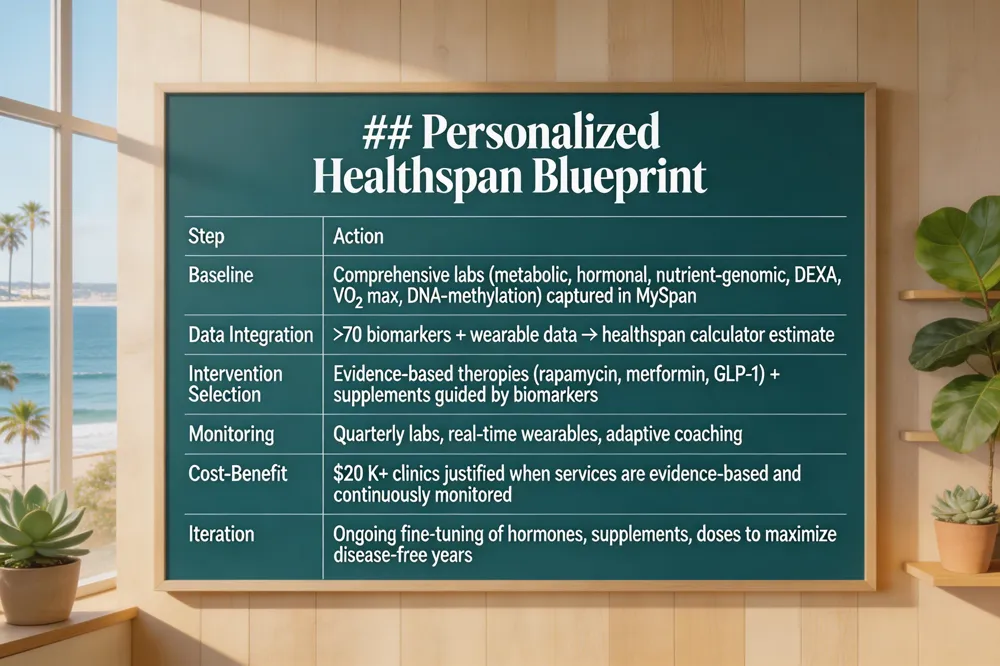 Begin with a comprehensive baseline assessment—advanced metabolic panels (insulin sensitivity, hs‑CRP, lipid particle sizing), hormonal profiling, nutrient‑genomic analysis, DEXA body‑composition, VO₂ max, and DNA‑methylation age—captured in a secure digital platform (e.g., Healthspan’s MySpan). The platform aggregates >70 biomarkers, wearable data, and lifestyle inputs to generate a healthspan calculator estimate, highlighting how exercise, Mediterranean‑style nutrition, stress reduction, and sleep (7‑9 h) can extend disease‑free years and reduce downstream healthcare costs.
Cost‑benefit analysis of $20 K+ longevity clinics shows value when services are evidence‑based (e.g., rapamycin, metformin, GLP‑1 agonists) and paired with continuous monitoring; speculative supplements without biomarker guidance dilute return on investment.
Iterative care relies on quarterly lab re‑checks, real‑time wearables, and adaptive coaching to fine‑tune hormones, supplements (Autophagy, AMPK blends), and therapeutic doses, ensuring the roadmap evolves with your biology and maximizes healthspan.
Your Next Steps Toward a Stronger, Longer Healthspan
Begin by booking a comprehensive baseline assessment with the Medical Institute of Healthy Aging (MDIHA). Their extensive panel of 70+ biomarkers will establish your current biological age and pinpoint areas for improvement. Next, use the Healthspan calculator to translate those results into clear, measurable targets for inflammation, metabolic health, hormone balance, and fitness. Finally, adopt the four lifestyle pillars—nutrition, movement, sleep, and mindset—and schedule regular follow‑up testing every 3–6 months to track progress and fine‑tune your personalized plan.