Why a Customized Healthspan Plan Matters
Modern medicine is moving away from a reactive model that treats disease after it appears toward a proactive strategy that prevents functional decline before it becomes irreversible. This paradigm shift recognizes that extending healthspan— the years lived free of chronic illness and disability—requires early detection of risk factors and targeted interventions. Data‑driven personalization lies at the heart of this approach. Biomarker panels, genetic testing, and monitoring of metrics such as VO₂ max, sleep quality, and inflammatory markers provide a granular picture of each individual’s biological age and physiological reserve. By tailoring nutrition, exercise, sleep hygiene, hormone optimization, and when appropriate, regenerative therapies to these data, clinicians can address the specific hallmarks of aging that threaten each patient. The remainder of this article will first outline the scientific basis for healthspan optimization, then detail the four‑step workflow used by leading longevity clinics, and finally present practical tools for integrating personalized protocols into everyday life.
Defining Healthspan and Its Origins
 Healthspan is the portion of life spent in good physical, mental, and functional health, free from major chronic diseases and disabling conditions. Unlike total lifespan, which simply counts the years lived, healthspan emphasizes the quality of those years—maintaining mobility, cognitive clarity, and independence. Researchers typically measure it by tracking the onset of conditions such as heart disease, diabetes, hypertension, and mobility loss, as well as biomarkers of inflammation, mitochondrial function, and cellular senescence.
The term was coined by gerontologists John Rowe and Robert Kahn in a 1987 Science article. They introduced healthspan to shift the focus of aging research from merely extending years lived to preserving functional vitality and disease‑free living. Since then, healthspan has become a central goal of personalized longevity programs, because interventions that prevent disease—regular aerobic and strength training, antioxidant‑rich whole‑food diets, adequate sleep, stress reduction, and targeted biomarker‑driven therapies—also tend to lengthen overall life expectancy.
Current U.S. Healthspan Landscape
 ## Life expectancy vs healthspan
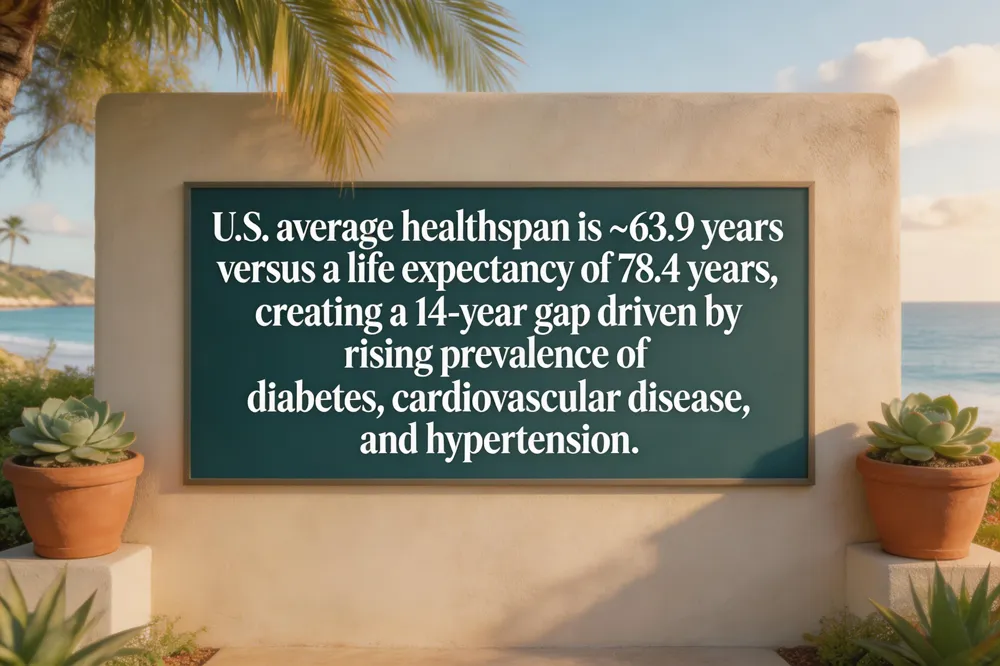
Life expectancy (lifespan) is the total years lived from birth to death, whereas healthspan is the portion of those years lived free of chronic disease and disability. In the United States the average life expectancy in 2023 was 78.4 years, yet the average healthspan has fallen to about 63.9 years (WHO, 2021). This creates a roughly 14‑year gap during which many adults experience illness and functional decline. Closing the gap requires preventive medicine—regular aerobic and resistance exercise, antioxidant‑rich whole‑food diets, 7‑9 hours of sleep, stress‑reduction practices, and strong social connections—combined with advanced diagnostics that detect risk factors early.
## Life expectancy vs healthspan
Life expectancy (lifespan) is the total years lived from birth to death, whereas healthspan is the portion of those years lived free of chronic disease and disability. In the United States the average life expectancy in 2023 was 78.4 years, yet the average healthspan has fallen to about 63.9 years (WHO, 2021). This creates a roughly 14‑year gap during which many adults experience illness and functional decline. Closing the gap requires preventive medicine—regular aerobic and resistance exercise, antioxidant‑rich whole‑food diets, 7‑9 hours of sleep, stress‑reduction practices, and strong social connections—combined with advanced diagnostics that detect risk factors early.
## Average healthspan in the United States U.S. healthspan has been decreasing: from 65.3 years in 2000 to 63.9 years in 2021. Women enjoy a slightly longer healthspan than men, reflecting higher overall longevity. The decline parallels rising prevalence of diabetes, cardiovascular disease, and hypertension among adults over 60, underscoring the need for personalized, data‑driven interventions.
## Public health implications A shrinking healthspan strains health‑care systems, increases long‑term care costs, and reduces quality of life. Policy makers must promote preventive screening, access to regenerative therapies, and lifestyle education to extend functional years and alleviate the societal burden of chronic disease.
Fundamental Lifestyle Rules for Longevity
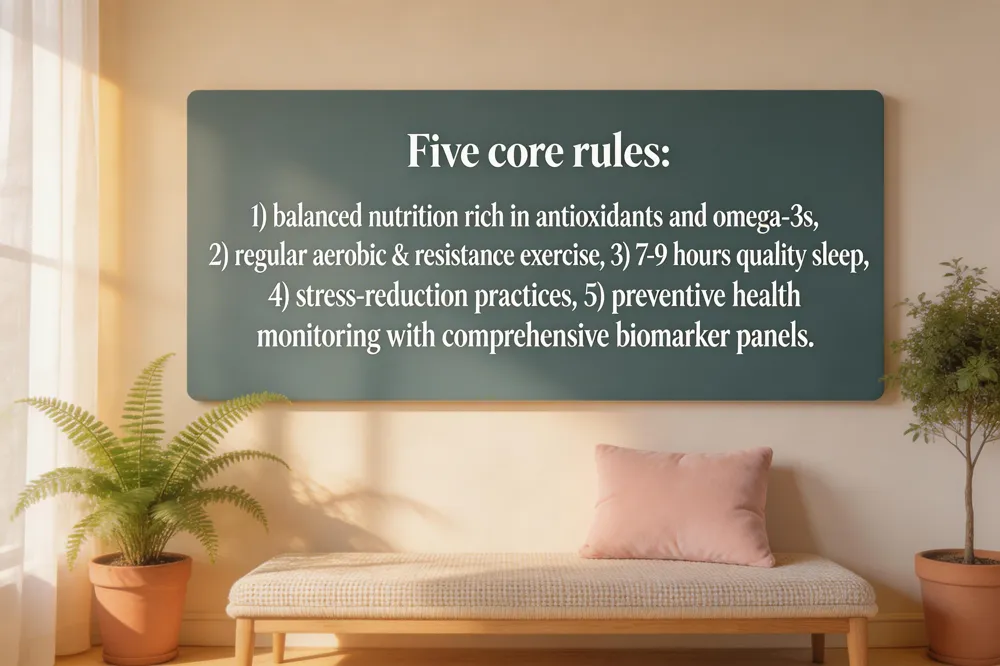 What are the 5 rules for good health?
- Balanced nutrition – Emphasize whole foods rich in antioxidants, omega‑3 fatty acids, fiber, and lean protein while limiting processed sugars, refined grains, and saturated fats.
- Regular physical activity – Aim for at least 150 minutes of moderate‑intensity aerobic exercise weekly plus two sessions of resistance training to preserve muscle mass, bone density, and mitochondrial function.
- Adequate sleep – Secure 7‑9 hours of quality sleep per night; consistent bedtime routines and a dark, cool environment support hormone regulation, immune health, and glymphatic clearance.
- Stress management – Incorporate mindfulness meditation, yoga, deep‑breathing, or enjoyable hobbies to lower cortisol, reduce chronic inflammation, and protect telomere integrity.
- Preventive health monitoring – Schedule comprehensive assessments (blood panels, cardiovascular screening, functional movement tests) to detect risk factors early and enable personalized interventions.
How to extend healthspan
Adopt a plant‑rich, whole‑food diet that supplies antioxidants and omega‑3s, maintain regular aerobic and strength training, keep a healthy weight, and avoid smoking and excess alcohol. Prioritize 7‑9 hours of restorative sleep, manage stress through mindfulness and social engagement, and undergo routine biomarker testing to guide tailored supplementation or regenerative therapies such as NAD⁺ IV infusions or peptide protocols.
Exercise and healthspan
Consistent exercise is a premier modifiable factor for extending healthspan. Meeting or exceeding the 150‑minute aerobic guideline, combined with twice‑weekly resistance work, improves cardiovascular fitness, metabolic health, and cognitive resilience, thereby lowering all‑cause mortality by 20‑30 % and delaying age‑related functional decline.
Optimizing Daily Habits for Maximum Healthspan
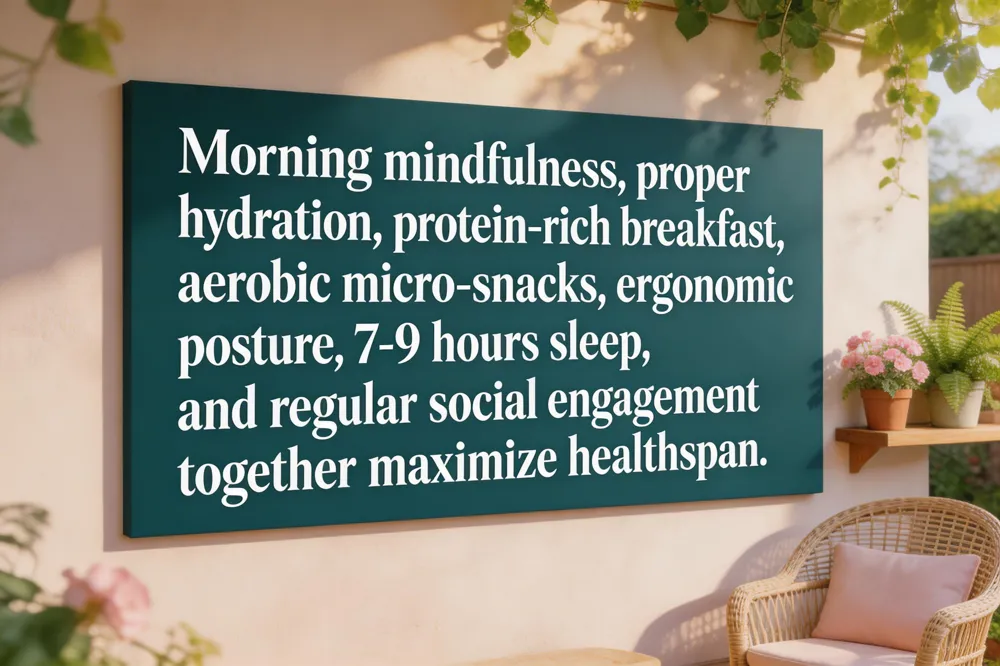 A health‑span‑focused day begins with a brief mindfulness or deep‑breathing session to lower cortisol and improve oxygen delivery. Follow this with proper hydration—preferably water before coffee—and a protein‑rich, fiber‑laden breakfast that supports mitochondrial function and blood‑sugar stability. Throughout the day, intersperse short aerobic “snacks” (1–2 minutes of brisk walking or stair climbing) and maintain ergonomic posture to preserve musculoskeletal health and lung capacity. Strength‑training sessions at least twice weekly protect muscle mass, bone density, and metabolic rate.
Sleep hygiene is critical: aim for 7–9 hours of quality sleep, keep a consistent bedtime and wake‑time, and align exposure to natural light to reinforce circadian rhythms. Evening wind‑down should be screen‑free, featuring warm‑bath relaxation or gentle yoga to promote parasympathetic tone and glymphatic clearance.
Nutrition timing matters—consume whole‑food, plant‑forward meals rich in antioxidants, omega‑3s, and adequate protein (1.0–1.5 g/kg body weight) to support cellular repair and telomere integrity. Hydration, low sodium intake, and mindful seasoning (herbs, citrus) help regulate blood pressure and inflammation.
Finally, integrate social connection and purposeful activities, as strong networks and mental‑health support are linked to lower mortality and sustained cognitive function, completing a comprehensive daily strategy to maximize and extend healthspan.
Dietary Pitfalls: The 5 P’s to Avoid
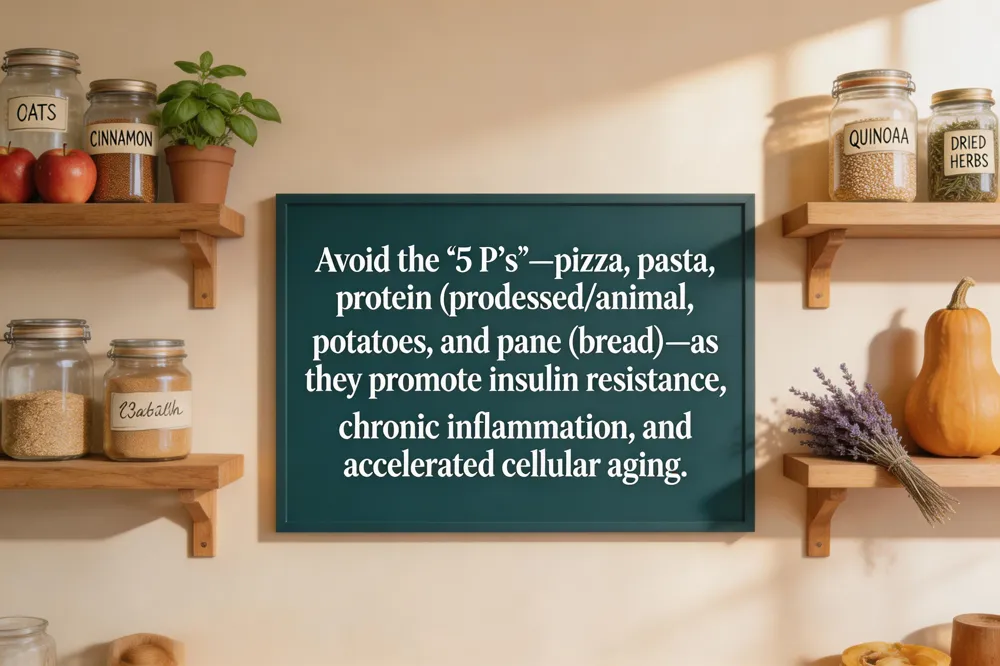 What are the 5 P’s to avoid for longevity?
The “poisonous 5 P’s” identified by longevity expert Valter Longo are foods that tend to overload the body with refined carbohydrates, excess animal protein, and unhealthy fats. They are pizza, pasta, protein (especially processed or high‑animal‑protein sources), potatoes, and pane (bread). Regular consumption of these items drives insulin resistance, chronic inflammation, and cellular aging, thereby shortening healthspan. Replacing them with plant‑based, low‑protein, high‑healthy‑fat alternatives supports metabolic balance and longer, healthier years.
Healthspan book
Healthspan: A Functional Guide to Living Long and Dying Young (by Dongxun Zhang, Bob Zhang, and David Kincade, ISBN 978‑1545322895) blends fitness, nutrition, and mindset into a science‑based longevity strategy. It argues that healthspan—the period of life spent in good health—can be expanded through personalized, proactive interventions rather than treating fitness and healthcare as separate domains. The 166‑page guide offers actionable recommendations on diet, exercise, stress management, and emerging anti‑aging technologies, targeting both individuals and clinicians seeking evidence‑based ways to extend both lifespan and quality of life.
Why these foods matter
Refined carbs (pizza, pasta, pane) spike blood glucose, while excess animal protein and processed fats increase oxidative stress and inflammation. Together they impair mitochondrial function, raise cortisol, and accelerate cellular senescence—key drivers of reduced healthspan. Opt for whole‑food, antioxidant‑rich meals, adequate omega‑3s, and regular aerobic plus strength training to counteract these effects.
Cutting‑Edge Tools and Digital Platforms
 Healthspan technologies encompass a suite of data‑driven tools that measure and extend the years people live in good health. Advanced biomarker panels evaluate over 100 indicators—metabolic, cardiovascular, hormonal, inflammatory, and cellular—allowing clinicians to calculate biological age and spot early decline. AI‑powered analytics fuse lab results with wearable‑derived activity, sleep, and nutrition data, generating protocols that may include low‑dose rapamycin, metformin, GLP‑1 agonists, hormone optimization, and targeted nutraceuticals. Digital dashboards such as MySpan centralize lab reports, medication lists, coaching notes, and trend graphs, enabling rapid adjustments and seamless communication between patients and multidisciplinary teams.
A health‑span calculator estimates the years an individual can expect to remain free of chronic disease and functional loss. By inputting age, gender, BMI, family history, lifestyle habits (exercise, diet, smoking, alcohol) and existing conditions, the tool applies actuarial and epidemiological models to produce a “health age” and actionable risk‑reduction recommendations. This view guides clinicians and patients toward preventive strategies that prioritize nutrition, activity, stress management, and routine screenings.
The Healthspan app family supports these efforts on devices. Healthspan Fitness (Android) lets users log workouts, meals, and biometrics, delivering trainer‑guided feedback, while Healthspan Recovery (iOS) provides appointment scheduling, studio location services, and secure document storage. Both apps use encrypted data transmission, privacy‑by‑design policies, and updates for a smooth, secure user experience.
Thought Leaders: Peter Attia’s Vision
 Peter Attia, a physician‑researcher, centers his work on extending healthspan—the years lived free of chronic disease and functional loss. Through Early Medical and his book Outlive, he promotes a “Medicine 3.0” model that quantifies three pillars—physical performance, cognitive function, and emotional well‑being—and uses data‑driven monitoring to stay ahead of disease. Attia highlights the “four horsemen” of age‑related illness—cardiovascular disease, cancer, type 2 diabetes, and dementia—and argues that proactive lifestyle optimization is the most effective defense. Evidence‑based practices he endorses include regular aerobic and strength training, 7‑9 hours of quality sleep, stress‑reduction techniques, and when appropriate, off‑label use of longevity‑focused drugs such as rapamycin. He also recommends periodic comprehensive biomarker panels and genetic testing to tailor interventions and continuous coaching. This vision aligns with personalized, preventive medicine to delay disease onset and preserve functional independence.
Personalized Supplementation & Hormone Optimization
 Optimizing healthspan begins with precise, blood‑work‑guided nutrient replacement. Comprehensive panels that measure vitamin D, B‑12, iron, selenium, omega‑3 status, and inflammatory markers (CRP, IL‑6) identify deficiencies that otherwise accelerate cellular aging. Tailored supplements—often delivered via IV or oral routes—are then dosed to restore optimal levels and support mitochondrial function, DNA repair, and telomere integrity.
Genetic testing adds another layer of specificity. Variants in genes such as MTHFR, COMT, and CYP450 influence the metabolism of folate, B‑vitamins, and phyto‑nutrients, allowing clinicians to customize micronutrient regimens that match each individual’s epigenetic profile.
Finally, hormone balance is essential for vitality. Bio‑available testosterone, estradiol, cortisol, and thyroid hormones are monitored and, when needed, optimized with low‑dose, physician‑supervised therapy. Proper hormone regulation improves muscle mass, bone density, mood, and cognitive function, thereby extending the disease‑free years of life.
Social Connection, Purpose, and Environmental Factors
 Robust Social connectivity and purposeful activities are a proven determinant of healthspan: epidemiological studies show that strong family and community ties reduce mortality risk by up to 23 % and protect against depression, cardiovascular disease, and cognitive decline. Personalized healthspan programs therefore include structured social‑engagement assessments and recommend regular group activities or volunteer work to sustain purpose and mental resilience. Purposeful pursuits—whether creative hobbies, mentorship, or goal‑directed projects—lower cortisol, improve mood, and have been linked to slower epigenetic aging. Environmental exposure to Regular exposure to moderate sunlight is another modifiable factor; UVB‑driven vitamin D synthesis supports bone health, immune regulation, and inflammatory control. Clinicians often monitor serum 25‑OH‑vitamin D and prescribe safe outdoor exposure or supplementation, integrating these lifestyle pillars with biomarker‑driven optimization to extend disease‑free years.
Putting It All Together for a Longer, Healthier Life
A successful healthspan strategy rests on seven evidence‑based pillars: (1) regular aerobic and resistance exercise to sustain mitochondrial function and muscle mass; (2) a whole‑food, antioxidant‑rich diet with omega‑3s and adequate protein; (3) 7‑9 hours of restorative sleep each night; (4) stress‑reduction practices such as mindfulness, yoga, or deep‑breathing; (5) routine comprehensive health assessments—including blood panels, cardiovascular screening, and functional movement tests—to catch risk factors early; (6) personalized supplementation or hormone optimization guided by biomarker and genetic data; and (7) strong social connections and purposeful activities that lower mortality risk.
Take the next step by scheduling a personalized healthspan consultation with a clinic that integrates advanced diagnostics, IV nutrition, peptide therapies, and data‑driven coaching (e.g., BioReset Medical, Healthspan, or your local longevity center).
For deeper learning, explore the American Heart Association’s "Life’s Essential 8," the WHO health‑life reports, and peer‑reviewed studies on NAD⁺, rapamycin, and metformin in aging.