Why Preventive Care Matters Today
The United States spends more on health care than any other nation yet lags behind in life expectancy, a paradox driven largely by preventable chronic diseases such as heart disease, diabetes, and cancer. These conditions account for the majority of health‑care expenditures and erode health‑span, underscoring the need for early, personalized interventions. Recent policy shifts and clinical practice trends move away from fee‑for‑service models toward value‑based, preventive‑oriented care that rewards outcomes rather than volume. Direct‑pay and Direct Primary Care (DPC) models exemplify this transition by offering transparent, subscription‑based access to advanced diagnostics—continuous glucose monitors, genomic risk profiling, and extended telehealth visits—while eliminating copays and deductibles that deter routine screenings. By fostering stronger patient‑provider relationships and enabling proactive lifestyle counseling, these models improve adherence to evidence‑based preventive measures, ultimately reducing chronic‑disease burden and extending healthy years of life.
Understanding Preventive vs. Curative Care
 Definitions
Preventive medicine seeks to avert disease before it appears or to detect it at an early, treatable stage. It relies on vaccinations, age‑appropriate screenings, risk‑factor counseling, and lifestyle‑intervention programs that are increasingly supported by digital health tools (wearables, tele‑monitoring) and integrative approaches such as nutrition, mind‑body practices, and personalized health‑optimization plans.
Definitions
Preventive medicine seeks to avert disease before it appears or to detect it at an early, treatable stage. It relies on vaccinations, age‑appropriate screenings, risk‑factor counseling, and lifestyle‑intervention programs that are increasingly supported by digital health tools (wearables, tele‑monitoring) and integrative approaches such as nutrition, mind‑body practices, and personalized health‑optimization plans.
Curative medicine, by contrast, intervenes after a pathological process is established, employing surgery, pharmacotherapy, radiation, chemotherapy, or organ‑specific procedures to eliminate or substantially reduce disease burden.
Clinical examples of curative treatment
- Antibiotic therapy for streptococcal pharyngitis removes the infection and resolves the sore throat.
- Chemotherapy and radiation therapy target malignant cells, reducing tumor burden.
- Surgical appendectomy for acute appendicitis removes the source of infection.
These interventions aim at restoring health rather than merely managing symptoms.
Complementary relationship Preventive and curative strategies are not mutually exclusive; they form a continuum essential for healthy aging and health‑span extension. Early detection through preventive care screening (e.g., low‑dose CT for lung cancer, lipid panels for cardiovascular risk) enables curative interventions when disease is most amenable to cure or remission, reducing the need for intensive, costly treatments later. Simultaneously, curative successes that restore physiologic function create a healthier baseline for preventive care on diet, exercise, and stress‑management, fostering long‑term resilience. A balanced model—leveraging transparent pricing and direct‑pay or DPC membership for routine preventive care while maintaining high‑deductible insurance for catastrophic events—optimizes patient outcomes, minimizes surprise costs, and supports sustained well‑being throughout later life.
Insurance‑Based Preventive Care: Coverage and Guidelines
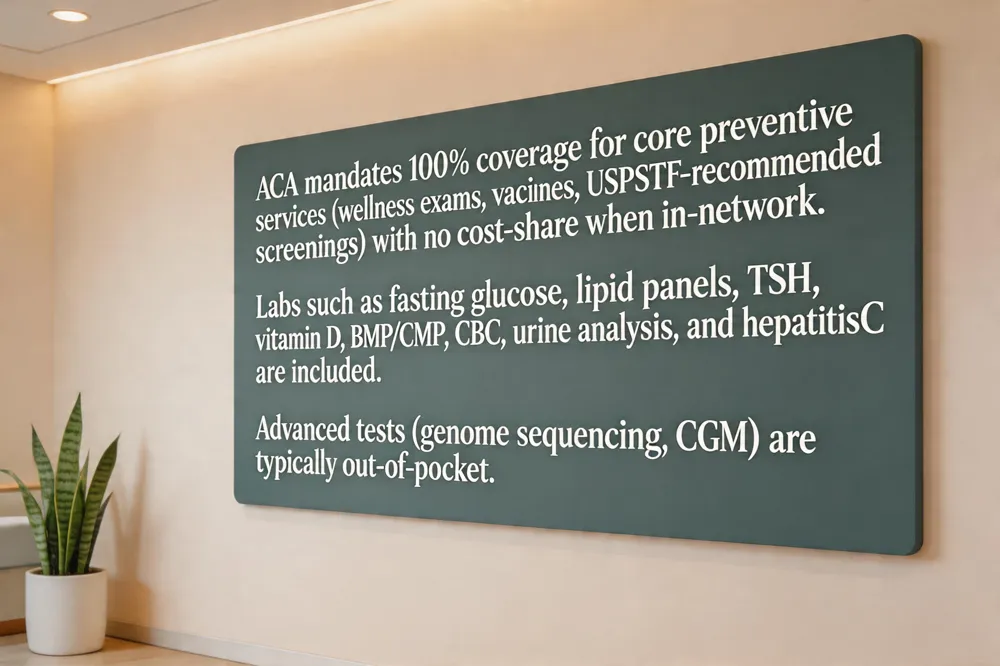 The Affordable Care Act (ACA) mandates that most private and public health plans cover a core set of preventive services at 100 % cost‑share when delivered by an in‑network provider. These ACA‑mandated services include annual wellness exams, age‑appropriate vaccinations, cancer screenings, cholesterol checks, blood pressure monitoring, and USPSTF‑recommended screenings such as blood‑pressure checks, cholesterol panels, diabetes testing, and cancer screenings (mammograms, colonoscopy, Pap smears, low‑dose CT for lung cancer). Typical insurance‑based preventive packages bundle these services into a no‑cost‑sharing benefit, while counseling for tobacco cessation, nutrition, physical activity, and mental‑health screening is also reimbursed.
Lab and screening coverage under insurance generally encompasses fasting glucose or HbA1c, lipid panels, thyroid‑stimulating hormone, vitamin D, basic or comprehensive metabolic panels, CBC, urine analysis, and hepatitis C testing for eligible adults. Advanced diagnostics—e.g., whole‑genome sequencing or continuous glucose monitoring—are usually not covered and may require out‑of‑pocket payment.
Blue Cross Blue Shield follows ACA guidelines, covering preventive services with zero copays for in‑network care. Their policies list annual check‑ups, routine immunizations, and age‑specific screenings (blood pressure, cholesterol, diabetes, osteoporosis) as fully covered, while any non‑preventive tests are subject to deductibles, copays, or coinsurance.
FAQs
- What qualifies as preventive care for insurance? Routine health‑maintenance exams, vaccinations, well‑child visits, and screenings designed to detect disease early (e.g., mammograms, colonoscopy, cholesterol, blood‑pressure, diabetes, osteoporosis, lifestyle counseling). These are reimbursed at 100 % with no out‑of‑pocket cost.
- What is considered preventive care by Blue Cross Blue Shield? The same ACA‑designated services—annual wellness visits, vaccinations, and USPSTF‑endorsed screenings—provided in‑network, with no cost‑sharing.
- What labs are covered under preventive care? Fasting glucose/HbA1c, lipid panel, TSH, vitamin D, BMP/CMP, CBC, urine analysis, and hepatitis C screening per USPSTF guidelines.
- Insurance‑based preventive care examples? Immunizations, cancer screenings, cardiovascular risk assessments, tobacco‑cessation counseling, obesity management, and mental‑health screenings, all delivered at no cost to the member when in‑network.
Direct‑Pay and Direct Primary Care Models
 Direct pay, also called direct billing, is a financial arrangement in which patients, employers, or families pay a health‑care provider directly for services, bypassing insurance claim processing and the associated administrative overhead, copays, and deductibles. In the United States this model is often implemented as Direct Primary Care (DPC), a membership‑based primary‑care delivery system. Typical DPC fees range from $50 to $100 per adult per month (family plans $100‑$150), covering unlimited routine visits, preventive screenings, chronic‑disease management, and same‑day or tele‑medicine appointments.
Unlike Traditional insurance, which requires premiums plus per‑service cost‑sharing and limits visit frequency, DPC provides predictable pricing, longer appointments (30‑60 minutes), and continuity of care, with physicians spending more time per patient. However, DPC does not cover emergency care, hospitalizations, or specialist referrals; most members pair DPC with a high‑deductible health plan or catastrophic coverage.
Pros include price transparency, reduced administrative burden, and stronger patient‑provider relationships, while cons involve limited specialist access, potential financial gaps for high‑cost events, and equity concerns for low‑income patients. Hybrid models combine DPC with HDHPs to retain catastrophic protection.
Policy support is growing: the IRS now allows HSA funds to cover DPC fees up to $150 per individual, and the Direct Primary Care Coalition advocates legislation that expands DPC accessibility while preserving consumer protections.
Digital Health and the Future of Preventive Medicine
 Wearable sensors, AI‑driven risk algorithms, genomics, and tele‑prevention platforms are reshaping preventive medicine from episodic visits to continuous, real‑time health monitoring. By fusing personalized risk assessments with wearable analytics, clinicians can identify primary and secondary risk factors early and deliver tailored lifestyle and therapeutic interventions before disease manifests. AI‑assisted decision support enables scalable secondary prevention, such as early detection of breast‑cancer markers or pre‑diabetic glucose trends, while remote monitoring and digital therapeutics support tertiary prevention by guiding patients in managing chronic conditions at home. This convergence embodies the P4 paradigm—predictive, preventive, personalized, participatory—empowering patients to actively engage in their health and improving accessibility, affordability, and outcomes across the lifespan.
Prevention is organized into four hierarchical models. Primordial prevention targets the emergence of risk factors themselves, promoting healthy lifestyles to avoid hypertension or obesity. Primary prevention seeks to stop disease before it occurs through vaccinations, seat‑belt laws, and behavior change. Secondary prevention focuses on early detection and prompt treatment of subclinical disease using screening tests and immediate interventions. Tertiary prevention reduces the impact of established disease through rehabilitation, chronic‑disease management, and support programs.
Preventive medicine aims to stop disease before it appears by using vaccinations, screenings, lifestyle counseling, and early‑detection strategies, whereas reactive medicine diagnoses and treats illnesses after symptoms have manifested. Preventive care often requires less invasive interventions, reduces long‑term costs, and preserves quality of life, while reactive care—essential for acute injuries and severe illnesses—tends to be more costly and resource‑intensive. Integrating preventive practices into routine health management therefore offers clinical and economic advantages over a solely reactive model.
Special Topics: Endoscopy, Migraine, and Specific Services
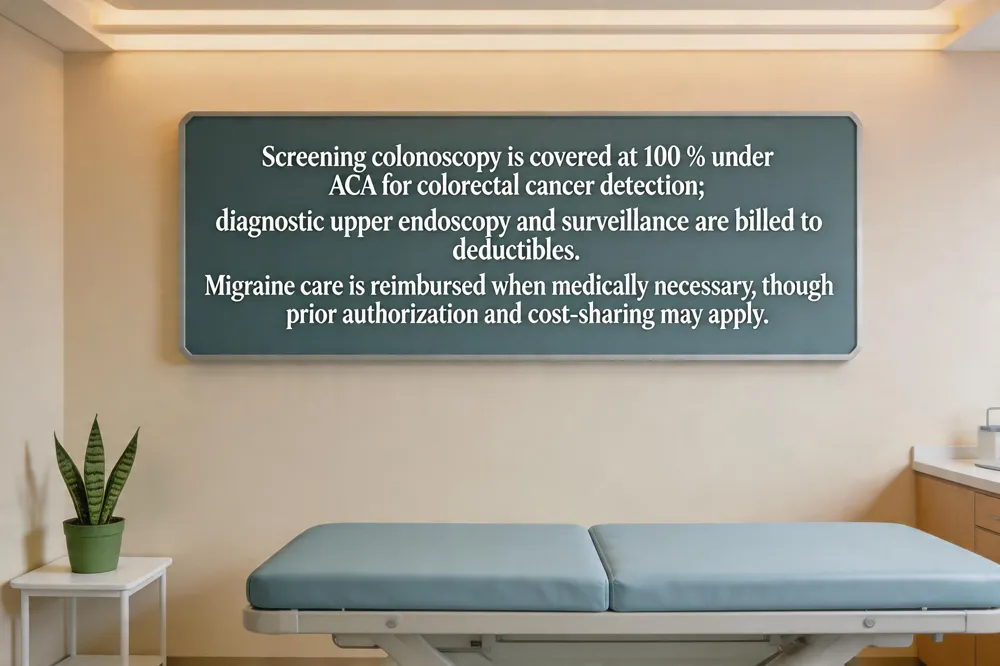 Endoscopy can be preventive when used for screening, such as a colonoscopy for colorectal‑cancer detection; under the ACA it is covered at 100 % with no cost‑share. Routine upper endoscopy (EGD) and surveillance procedures are treated as diagnostic, billed to deductibles or out‑of‑pocket. Migraine care is generally covered when a clinician documents medical necessity. Prescription drugs, preventive therapies, and certain procedures (e.g., nerve blocks) are reimbursed, though cost‑sharing varies by plan type and may require prior authorization. Service‑specific nuances include network restrictions, prior‑auth rules, and any supplemental riders that can offset expenses. Patients should review their plan’s preventive‑care list or contact the insurer for exact coverage details.
Health Equity, Uninsured Populations, and Preventive Care Barriers
 Uninsured rates by race/ethnicity reveal stark gaps: American Indian and Alaska Native adults under 65 have the highest uninsured rate at 18.7 % (2023), followed by Hispanic adults at 17.9 %; Native Hawaiian or Pacific Islander (12.8 %), Black (9.7 %) and White (6.5 %) adults lag behind. These disparities limit access to ACA‑mandated preventive services, which are otherwise covered at no cost‑sharing when in‑network. Disadvantages of preventive health care include over‑screening, false‑positives, overdiagnosis, and costly follow‑ups that can cause anxiety and unnecessary interventions. The resulting gaps in preventive utilization contribute to poorer health outcomes for uninsured groups, higher rates of uncontrolled chronic disease, and increased emergency‑room visits, underscoring the need for equitable financing models such as DPC or hybrid plans that reduce out‑of‑pocket barriers.
Financial Protection: Catastrophic Insurance and Hybrid Care Models
 Catastrophic health insurance is a low‑premium, high‑deductible plan that shields patients from worst‑case expenses while covering essential benefits and ACA‑mandated preventive services at no cost. Eligibility is limited to those under 30 or individuals with hardship exemptions, and deductible payments can be made from an HSA. Direct Primary Care (DPC) offers a predictable monthly fee for unlimited routine visits, longer appointments and transparent pricing, fostering stronger patient‑physician relationships and proactive health management. Its downside is the lack of coverage for emergencies, hospitalizations, or specialist referrals, necessitating a supplemental high‑deductible plan. A hybrid DPC‑plus‑insurance model combines DPC’s preventive focus with a high‑deductible insurance safety net, optimizing cost‑predictability and catastrophic protection. Preventive medicine relies on clinician‑guided screenings, vaccinations and lifestyle counseling, whereas self‑medication involves unsupervised OTC or prescription use, which can mask early disease signals and increase drug‑interaction risk. The four preventive levels are: primordial (addressing social‑economic determinants), primary (vaccination and risk‑factor modification), secondary (early detection via screening), and tertiary (rehabilitation and chronic‑disease management).
Integrating Preventive Strategies for Longevity at MDIHA
 What are the 6 pillars of preventive medicine?
Nutrition, physical activity, sleep hygiene, stress management, avoidance of risky substances (tobacco, excessive alcohol), and social connection form the foundational pillars that reduce chronic‑disease risk and support health‑span extension.
Preventive care examples
MDIHA offers routine immunizations (influenza, HPV, shingles, pneumococcal), age‑appropriate cancer screenings (mammograms, colonoscopies, Pap smears), cardiovascular checks (BP, cholesterol, diabetes A1C), bone‑density testing, and targeted hepatitis/HIV screening. Lifestyle counseling on diet, exercise, weight, stress, and substance use, plus mental‑health screening, completes a comprehensive program.
Clinical and Preventive Medicine Journal
This open‑access, peer‑reviewed journal (ISSN‑L 2616‑4868) publishes translational research on preventive interventions, providing evidence‑based guidance that underpins MDIHA’s longevity protocols.
Long‑term health optimization
By aligning DPC’s transparent, unlimited primary‑care access with the six preventive pillars and evidence‑based services, MDIHA creates a personalized, proactive care model that improves screening uptake, fosters continuity, and aims to delay disease onset, thereby extending healthy lifespan.
Choosing the Right Path for Healthy Aging
Effective aging strategies combine a preventive‑first mindset with a safety net for catastrophic events. A hybrid model—direct‑primary‑care membership for unlimited primary‑care visits, labs, and lifestyle counseling—paired with a high‑deductible, low‑premium insurance plan—protects against hospitalizations, surgeries, and specialist care while keeping routine costs predictable. Digital health platforms amplify this approach: wearable sensors, remote monitoring, and AI‑driven risk scores enable continuous data collection, allowing physicians to personalize interventions, adjust nutrition, exercise, and medication plans in real time. Policy must evolve to close equity gaps; transparent pricing, HSA‑eligible membership fees, and expanded public‑private partnerships can make personalized longevity services accessible across income levels, ensuring that preventive benefits are not limited to affluent cohorts and to support sustained healthspan improvements across the lifespan for.