Introduction
Preventive medicine is a systematic, evidence‑based approach that uses vaccinations, routine screenings, lifestyle counseling, and early risk‑factor identification to stop disease before it manifests or to catch it at an asymptomatic stage. By shifting care from reactive treatment to proactive health maintenance, preventive services reduce the incidence of chronic conditions such as hypertension, diabetes, and cancer, thereby extending healthspan and lowering lifetime health‑care costs. First‑dollar coverage of preventive services—mandated by the Affordable Care Act—dramatically increases utilization, leading to earlier diagnoses and less invasive, less expensive interventions. Modern preventive health of integrates these core services with personalized longevity programs, which tailor nutrition, exercise, stress‑management, and biomarker‑driven monitoring to each individual’s genetic and metabolic profile. Clinics such as the Medical Institute of Healthy Aging exemplify this model, offering bespoke, proactive care plans that align evidence‑based prevention with the goal of sustained vitality and a longer, healthier life.
Evidence‑Based Benefits of Preventive Care
Evidence‑Based Benefits of Preventive Care
| Benefit | Example of Preventive Service | Reported Impact |
|---|---|---|
| Early detection | Cancer screenings (mammogram, colonoscopy) | 15‑20 % reduction in mortality for adults >50 y |
| Disease severity reduction | Vaccinations (influenza, COVID‑19) | Fewer hospitalizations, lower ICU usage |
| Cost savings | First‑dollar ACA coverage for hypertension screening | $73.5 billion annual U.S. health‑system savings |
| Health‑span extension | Lifestyle counseling (nutrition, exercise) | Up to 30 % increase in healthy years (MDIHA data) |
| Personalized risk mitigation | Genetic risk profiling + tailored plan | Reduced progression to chronic disease |
 Benefits of preventive health care scholarly articles
Peer‑reviewed studies consistently show that early detection through vaccinations, cancer screenings, and lifestyle counseling reduces disease severity and mortality, extending health‑span. The ACA‑mandated first‑dollar coverage increases utilization, leading to earlier diagnoses of hypertension, diabetes, and cancers, which are associated with lower treatment costs and better outcomes (AMA, CDC, JAMA Network Open).
Benefits of preventive health care scholarly articles
Peer‑reviewed studies consistently show that early detection through vaccinations, cancer screenings, and lifestyle counseling reduces disease severity and mortality, extending health‑span. The ACA‑mandated first‑dollar coverage increases utilization, leading to earlier diagnoses of hypertension, diabetes, and cancers, which are associated with lower treatment costs and better outcomes (AMA, CDC, JAMA Network Open).
Is preventative medicine worth it? Yes. Detecting chronic conditions such as high blood pressure or pre‑diabetes allows simple, inexpensive interventions that prevent expensive complications like heart attack, stroke, or dialysis. Preventive visits also deliver personalized nutrition, exercise, and stress‑management guidance that supports longevity and quality of life.
How does preventive care reduce healthcare costs? By catching disease at a pre‑clinical stage, preventive services avoid high‑cost emergency care and hospitalizations. first‑dollar coverage eliminates cost‑sharing barriers, increasing uptake and lowering downstream expenditures. Meta‑analyses report a 15‑20 % mortality reduction and $73.5 billion annual savings for the U.S. health system (American College of Preventive Medicine).
Cost of preventive care vs. treatment Up‑front preventive spending is modest compared with the billions spent on advanced disease management. While some preventive interventions are cost‑effective rather than strictly cost‑saving, the net effect is reduced hospitalizations, fewer invasive procedures, and improved life expectancy, especially when personalized programs such as those offered by the Medical Institute of Healthy Aging tailor risk‑factor modification to each individual.
ACA Coverage and What Preventive Services Are Included
ACA Coverage – Core Preventive Services (No Cost‑Sharing)
| Service Category | Covered Services (In‑Network) | Typical Frequency / Age Group |
|---|---|---|
| Wellness Exams | Annual physical, well‑baby/child visits | Yearly for all ages |
| Screening Tests | Blood pressure, cholesterol, A1c, mammogram, colonoscopy, low‑dose CT (high‑risk smokers) | Varies: BP & cholesterol annually; colonoscopy every 10 y; mammogram every 1‑2 y |
| Immunizations | Flu, COVID‑19 boosters, HPV, shingles, pneumococcal, Tdap | Yearly flu, boosters per CDC schedule |
| Lifestyle Counseling | Smoking cessation, weight management, nutrition, alcohol use, fall prevention (≥65 y) | As needed, often once per year |
| Preventive Services for Seniors | Bone‑density testing, depression & cognitive screening | Every 2‑3 y (bone density) or annually (mental health) |
 The Affordable Care Act (ACA) requires most health‑insurance plans to provide a core set of preventive services at no out‑of‑pocket cost when delivered by an in‑network provider. This first‑dollar coverage includes routine wellness exams, well‑baby and well‑child visits, and age‑ and gender‑specific screenings such as blood‑pressure, cholesterol, diabetes (A1c), mammograms, colonoscopies, and lung‑cancer CT scans for high‑risk smokers. Immunizations—flu, COVID‑19 boosters, HPV, shingles, pneumococcal, Tdap, and others—are fully covered, as are lifestyle‑counseling services that address smoking cessation, weight management, nutrition, alcohol use, and fall‑prevention for adults 65 +. Eligibility extends to more than 150 million Americans enrolled in ACA‑mandated plans, but the benefit applies only when services are performed by an in‑network provider; cost‑sharing of even $1–$5 dramatically reduces utilization, especially among low‑income individuals. By eliminating copayments, deductibles, and coinsurance for these preventive interventions, the ACA promotes early disease detection, improves health outcomes, and reduces long‑term health‑care costs, aligning with USPSTF A‑ and B‑grade recommendations and the AMA’s ethical commitment to patient‑centered, preventive care.
Proactive vs Reactive Healthcare Models
Proactive vs Reactive Healthcare Models
| Model | Primary Focus | Typical Outcomes | Cost Implications |
|---|---|---|---|
| Proactive (Preventive) | Early detection, risk‑factor management, personalized lifestyle counseling | Higher quality of life, longer health‑span, 15‑20 % mortality reduction | Lower downstream costs; savings of $73.5 billion annually |
| Reactive (Symptom‑Driven) | Treatment after disease manifests (medication, surgery) | Higher acute‑care utilization, greater morbidity | Higher immediate costs; increased hospitalizations and emergency visits |
| Integrated (Tech‑Enabled) | Continuous monitoring via wearables, AI predictive alerts | Timely interventions, reduced disease progression | Upfront tech investment offset by reduced acute‑care expenses |
 Definitions and core principles: Proactive healthcare, also called preventive care, emphasizes early detection, risk‑factor management, and personalized lifestyle counseling before disease manifests. Reactive care intervenes after symptoms appear, relying on treatments such as medication or surgery.
Impact on patient outcomes and costs: Studies show that first‑dollar preventive coverage increases utilization, leading to earlier diagnoses and a 15‑20 % mortality reduction in adults over 50. By averting advanced disease, proactive models cut emergency visits and hospitalizations, saving billions annually (e.g., $73.5 billion in U.S. health‑system costs). Patients experience higher quality of life, longer health‑span, and reduced out‑of‑pocket expenses.
Technology and data integration: Advanced analytics, wearable sensors, and electronic health‑record registries enable continuous risk monitoring. Predictive modeling identifies hypertension, pre‑diabetes, or fall risk early, prompting timely interventions. Platforms such as Wellconnex and Darktrace integrate registries, dashboards, and AI‑driven alerts to support clinicians and patients.
Proactive healthcare solutions: Focus on anticipating health challenges, using personalized assessments, preventive screenings, and data‑driven lifestyle plans. This forward‑looking framework transforms everyday health maintenance into a strategic, lifelong investment for sustained well‑being.
Largest Health Threat to Seniors and Preventive Strategies
Largest Health Threat to Seniors – Chronic Disease
| Chronic Condition | Prevalence among Seniors | Key Preventive Strategy |
|---|---|---|
| Heart Disease | ~45 % | Regular BP & cholesterol checks, aerobic exercise, Mediterranean diet |
| Stroke | ~15 % | Blood pressure control, smoking cessation, anticoagulation when indicated |
| Cancer (various) | ~30 % | Age‑appropriate screenings (mammogram, colonoscopy, lung CT) |
| Diabetes | ~25 % | A1c testing, weight management, low‑glycemic diet |
| Falls & Functional Disability | ~30 % (≥65 y) | Balance training, home safety assessments, vitamin D supplementation |
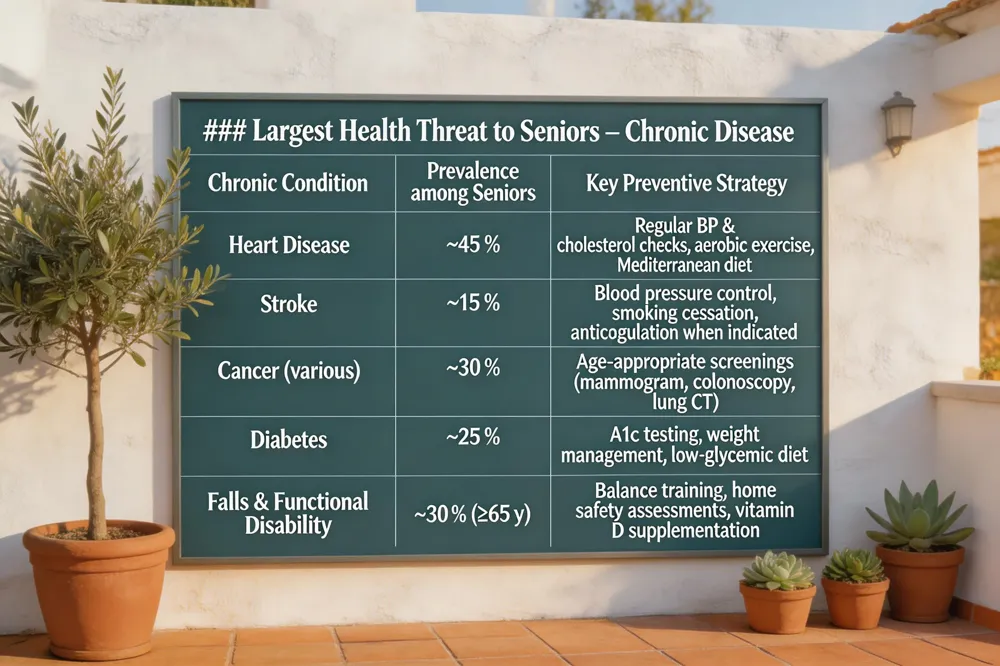 What may be the most serious problem of all to the elderly?
The greatest threat to older adults is the overwhelming burden of chronic disease. Roughly 92 % of seniors have at least one chronic condition and 77 % have two or more, with heart disease, stroke, cancer and diabetes accounting for about two‑thirds of senior deaths. These illnesses also increase the risk of secondary problems such as cognitive decline, depression, falls and functional disability. Lifestyle‑driven prevention—regular check‑ups, balanced nutrition, and consistent physical activity—is essential for managing this pervasive challenge.
What may be the most serious problem of all to the elderly?
The greatest threat to older adults is the overwhelming burden of chronic disease. Roughly 92 % of seniors have at least one chronic condition and 77 % have two or more, with heart disease, stroke, cancer and diabetes accounting for about two‑thirds of senior deaths. These illnesses also increase the risk of secondary problems such as cognitive decline, depression, falls and functional disability. Lifestyle‑driven prevention—regular check‑ups, balanced nutrition, and consistent physical activity—is essential for managing this pervasive challenge.
Preventive care Statistics Nationally, only about 8 % of adults receive routine preventive screenings; the share falling all high‑priority services dropped from 8.5 % in 2015 to 5.3 % in 2020. The COVID‑19 pandemic caused a 15‑20 % dip in mammograms, colonoscopies and cholesterol tests, creating a “health debt” of 2‑3 million missed encounters each year. Targeted outreach, insurance navigation and community‑based programs are needed to close this gap and support personalized longevity plans such as those offered by the Medical Institute of Healthy Aging.
Healthy Aging CDC The CDC’s Healthy Aging program provides evidence‑based tools, data portals, and partnerships to promote vaccinations, cancer screenings, fall‑prevention, and mental‑health resources for adults 65+. Funding the Healthy Aging Research Network, the CDC aims to reduce disease burden, improve quality of life, and curb the economic impact of aging on the U.S. health‑care system.
Practical Tips for Healthy Aging and Longevity
Practical Tips for Healthy Aging
| Pillar | Recommendation | Frequency / Amount |
|---|---|---|
| Nutrition | Plant‑rich Mediterranean diet (fruits, veg, whole grains, nuts, fish) | Daily meals |
| Physical Activity | Moderate aerobic exercise + strength/balance work | ≥150 min/week aerobic; 2 sessions/week strength/balance |
| Sleep | Restorative sleep | 7–9 hours/night |
| Alcohol | Limit intake | ≤1 drink/day (women), ≤2 drinks/day (men) |
| Tobacco | Complete cessation | N/A |
| Screenings | Blood pressure, cholesterol, A1c, colon cancer (≥45 y), mammograms, bone density, flu/pneumococcal/shingles/COVID‑19 vaccines | As per ACA schedule |
| Social & Mental Health | Daily mindfulness, lifelong learning, strong social ties | Ongoing |
 Lifestyle pillars: nutrition, activity, sleep – A plant‑rich Mediterranean diet (fruits, vegetables, whole grains, nuts, fish) lowers all‑cause mortality. Aim for ≥150 min of moderate aerobic exercise weekly plus twice‑weekly strength and balance work to preserve muscle, bone and fall protection. Prioritize 7–9 hours of restorative sleep and limit alcohol (≤1 drink/day for women, ≤2 for men) while quitting tobacco.
Screening schedule and vaccinations – Maintain ACA‑mandated no‑cost preventive services: blood pressure, cholesterol, diabetes, colorectal cancer (starting at age 45), mammograms, bone‑density testing, and annual flu, pneumococcal, shingles and COVID‑19 vaccinations. Add lung‑cancer low‑dose CT for former heavy smokers (ages 50‑80) and depression or cognitive screening after age 65.
Behavioral and social strategies – Cultivate daily mindfulness, engage in lifelong learning, and sustain strong social ties to reduce stress and support cognition. Use personalized care plans that incorporate genetic risk profiling and regular functional assessments.
10 tips for healthy aging: Eat a rainbow of nutrient‑dense plant foods, stay active with daily walking and strength work, limit alcohol, quit smoking, secure 7‑9 hours sleep, keep learning, stay socially connected, monitor vitals, schedule routine doctor visits, and get regular memory checks.
How to make 65‑85 your healthiest years: Combine aerobic, strength, and balance exercise; follow a whole‑food diet with adequate protein; schedule personalized screenings (hormone panels, bone density, cardiovascular checks); nurture mental well‑being through social engagement, stress reduction and sleep; and treat these habits as a lifelong investment.
Disadvantages of preventive health care: False‑positives, anxiety, over‑diagnosis, unnecessary procedures, access barriers—especially in underserved areas—and potential diversion of resources from acute care.
What to expect from a 70‑year‑old man: Slower processing speed, occasional memory lapses that do not impair daily function, and reduced multitasking ability.
Personalized Longevity Services at the Medical Institute of Healthy Aging
Personalized Longevity Services – Medical Institute of Healthy Aging
| Service | Technology / Tool | Primary Benefit |
|---|---|---|
| Wearable Monitoring | Continuous vitals, activity trackers | Real‑time risk detection, early alerts |
| Tele‑Health Platform | Video visits, remote consults | Convenient access, timely follow‑up |
| AI Decision‑Support | Predictive modeling, risk stratification | Tailored preventive interventions |
| Genetic Risk Profiling | DNA testing, polygenic risk scores | Personalized lifestyle & screening plans |
| Functional Assessment | Mobility, cognition, nutrition tests | Early identification of decline, targeted rehab |
| Integrated Care Plan (6P Model) | Proactive, Predictive preventive preventive Personalized participatory performance participationbased | Overall health‑span extension, reduced hospitalizations |
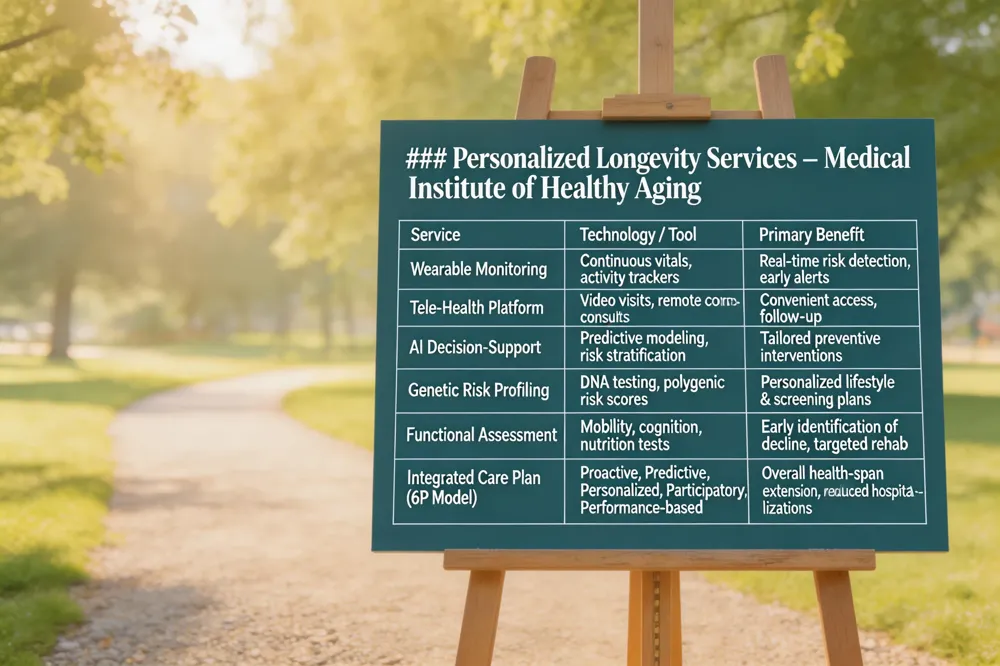 Integrative medicine and technology form the backbone of MDIHA’s service model. Wearable health monitors, tele‑health platforms, and AI‑driven decision‑support tools continuously capture physiologic data, enabling predictive modeling that flags risk factors before symptoms arise. This proactive stance mirrors the "6P" vision (proactive, predictive, preventive, personalized, participatory, performance‑based) championed by leading public‑health agencies.
Patient empowerment and outcomes are amplified through personalized health‑optimization plans that incorporate nutrition, exercise, sleep hygiene, stress‑management, and social‑connection strategies—pillars shown to extend health‑span by up to 30 % in longitudinal studies. Empowered patients report higher adherence, improved quality of life, and measurable reductions in hospitalizations.
Proactive Healthcare company: A California‑based occupational health firm offering pre‑employment exams, orthopedic care, chiropractic services, and tele‑health, emphasizing personalized, proactive care.
Proactive Healthcare reviews: Holds a perfect 5.0 Yelp rating, praised for Dr. Mark’s availability, thorough chiropractic bodywork, and nutrition counseling.
What is proactive healthcare management: A preventive‑oriented model that continuously monitors health, leverages digital tools, and intervenes early to avert chronic disease, ultimately enhancing longevity and reducing acute‑care costs.
Conclusion
Preventive medicine remains the cornerstone of public health, saving lives by catching disease early, reducing costly interventions, and extending health‑span. The Affordable Care Act’s no‑cost coverage of screenings, vaccinations, and counseling has proven to increase utilization and improve outcomes, especially for low‑income populations. As evidence mounts that lifestyle, diet, and targeted screening can lower chronic‑disease risk by up to 40 %, clinicians and patients must embrace personalized longevity plans that integrate genetic risk profiling, nutrition optimization, and regular functional assessments. By partnering with proactive clinics such as the Medical Institute of Healthy Aging, individuals can receive tailored regimens that align with USPSTF guidelines and emerging biomarker‑driven models. Looking ahead, advances in wearable analytics, AI‑based risk prediction, and value‑based care reimbursement will make proactive health management more accessible, driving a shift from reactive treatment to sustained wellness for the aging population. Collective commitment will ensure healthier, longer lives for future generations.