Valengerontology Meets the Microbiome
Valengerontology, an emerging interdisciplinary field that blends gerontology with the study of the gut microbiome, seeks to identify microbial mechanisms that can be harnessed to delay age‑related decline and extend healthspan. Recent work shows that a diverse, balanced gut ecosystem reduces systemic inflammation (inflammaging), preserves intestinal barrier integrity, and modulates immune and metabolic pathways linked to longevity. Human cohorts of centenarians consistently reveal higher abundances of anti‑inflammatory taxa such as Akkermansia muciniphila, Faecalibacterium prausnitzii, and Bifidobacterium, together with enriched short‑chain fatty‑acid production. Animal studies demonstrate that microbiota transplants from long‑lived donors improve metabolic health and cognitive function in younger recipients, while dietary interventions rich in fiber, polyphenols, and fermented foods can restore youthful microbial profiles. Proactive longevity clinics, exemplified by the Medical Institute of Healthy Aging, now integrate personalized microbiome sequencing, targeted pre‑/pro‑biotic regimens, and metabolite‑based biomarkers into preventive care plans aimed at optimizing the microbiome‑driven determinants of aging.
Microbiome Dynamics Across the Lifespan
 The human gut microbiome and aging
Research shows that the gut microbiome undergoes pronounced age‑related changes, most notably a loss of overall diversity and a decline in short‑chain fatty acids‑producing bacteria, which are linked to increased systemic inflammation, frailty and cognitive decline. In older adults, taxa that dominate in youth such as Bacteroides often diminish, while fringe groups like Clostridia rise, and the retention of beneficial microbes such as Akkermansia is associated with healthier aging. Centenarians and super‑centenarians tend to maintain higher microbial diversity than less healthy elders, suggesting a protective role of a varied microbiome. These shifts are driven by diet, medication, living environment and physiological changes such as slower digestion. Animal studies confirm that transplanting youthful microbiota can improve gut and neurological function in aged hosts, underscoring the microbiome’s functional contribution to the aging process.
Gut changes with age
As we age, the gut microbiome generally loses alpha‑diversity, with a marked decline in Firmicutes that produce SCFA and a rise in potentially pathogenic Proteobacteria. Typical compositional shifts include a reduction of Bacteroides and enrichment of Clostridia, while healthier older individuals often retain higher levels of Akkermansia. These changes weaken gut barrier integrity, diminish nutrient absorption, and skew immune signaling toward inflammation. Slower gastrointestinal motility, reduced enzyme output, medication use, and limited dietary variety accelerate these alterations. Targeted dietary strategies and microbiome‑restorative interventions can rebalance the ecosystem, supporting metabolic health and longevity.
The gut microbiome as a modulator of healthy ageing
The microbiome transduces environmental signals that shape immune function, metabolism, and inflammation. A diverse, balanced community rich in Bifidobacterium and Lactobacillus produces anti‑inflammatory SCFA, maintains barrier integrity, and supports metabolic flexibility. Dysbiosis—loss of commensals and expansion of pathobionts like Proteobacteria—drives chronic “inflammaging”, impairing tissue repair and increasing disease risk. Lifestyle factors such as a plant‑forward diet, regular exercise, and social engagement can restore a healthier profile, as observed in centenarian cohorts. Personalized interventions combining diet, probiotics, prebiotics, and targeted microbial therapeutics are emerging as promising strategies to reset unhealthy aging trajectories and promote resilient, thriving aging.
Mechanistic Pathways Linking Microbiota to Inflammaging
 The gut microbiota undergoes pronounced compositional shifts with age, losing diversity and SCFA‑producing taxa (e.g., Faecalibacterium, Roseburia, Akkermansia) while opportunistic, pro‑inflammatory microbes expand. This dysbiosis compromises the intestinal barrier, permitting lipopolysaccharide and other endotoxins to enter the circulation and fuel chronic low‑grade inflammation (inflammaging).
Short‑chain fatty acids and barrier integrity – Beneficial bacteria ferment dietary fiber into SCFAs, particularly butyrate, which strengthens tight‑junction proteins, stimulates mucin production, and activates G‑protein‑coupled receptors (GPR41/43) that dampen NF‑κB signaling. Restoring SCFA production through high‑fiber diets, prebiotic fibers, or targeted probiotic strains (Lactobacillus rhamnosus, Bifidobacterium longum) improves gut permeability and reduces systemic IL‑6/CRP levels, a core mechanism linking microbiome health to reduced frailty and longer healthspan.
Microbial metabolites (TMAO, bile acids, indoles) – Age‑related dysbiosis alters bile‑acid pools (e.g., reduced isoalloLCA) and raises trimethylamine N‑oxide (TMAO), both of which activate inflammatory pathways and endothelial dysfunction. Conversely, indole‑derived metabolites from tryptophan activate the aryl‑hydrocarbon receptor (AhR), supporting mucosal immunity and mitigating neuro‑inflammation.
Gut‑brain axis and epigenetic regulation – SCFAs act as histone‑deacetylase inhibitors, influencing epigenetic clocks and promoting mitochondrial biogenesis. Microbial‑derived neurotransmitter precursors (GABA, serotonin) modulate the enteric nervous system, affecting mood, stress resilience, and ultimately the rate of biological aging.
Collectively, these mechanistic insights explain how a diverse, balanced microbiome counters inflammaging, supports immune competence, and may be leveraged in personalized longevity programs—such as those offered by the Medical Institute of Healthy Aging—to extend healthspan.
Therapeutic Strategies in Valengerontology
 Microbiome‑based therapeutics towards healthier aging and longevity – Age‑related dysbiosis reduces beneficial bacteria, increases pathogens and gut permeability, fueling “inflammaging”. High‑fiber diets restore SCFA production and barrier integrity. Targeted probiotics (e.g., Lactobacillus rhamnosus, Bifidobacterium longum), prebiotic fibers reinforce anti‑inflammatory pathways. Fecal microbiota transplantation (FMT) offers an intensive reset, showing promise for metabolic and neurodegenerative disorders. Longevity programs match these interventions to microbiome profiles to slow biological aging.
Does the gut microbiome drive aging? – Longitudinal data show microbial diversity declines with age, while centenarians retain diversity and anti‑inflammatory taxa, indicating protection. Transplanting microbiota into aged mice extends lifespan and improves gut‑brain function, suggesting causality. Loss of Bacteroides and rise of opportunistic microbes correlate with frailty, dementia and mortality, underscoring a modifiable driver.
Anti‑aging gut bacteria – Akkermansia muciniphila, Christensenella minuta, Faecalibacterium prausnitzii and Bifidobacterium longum are linked to lower inflammation, better metabolism and longer health‑span. Fiber‑rich diets nurture these taxa; probiotic supplementation can boost abundance.
Gut microbiome and brain ageing – Dysbiosis elevates peripheral inflammation, impairing vagal signaling and hippocampal function, accelerating cognitive decline. Restoring gut balance via diet, probiotics or phage‑based approaches can improve memory.
Gut health and longevity – A microbiome supported by fiber‑dense foods, exercise and supplementation correlates with lower LDL, vitamin D, mobility and reduced frailty, extending health‑span.
Clinical Integration at the Medical Institute of Healthy Aging
 Complementary Wellness Services – Colon‑hydrotherapy clinics in the Bay Area (e.g., Health2o, Mission Colonics) are available for short‑term digestive comfort, but current evidence does not link them to long‑term microbiome remodeling or longevity. Platelet‑rich plasma (PRP) treatments are offered for cosmetic skin rejuvenation and musculoskeletal regeneration, yet systemic anti‑aging benefits remain unproven. These services are presented as adjuncts to evidence‑based lifestyle interventions.
Evidence‑Based Recommendations – MIHA's protocol emphasizes nutrient‑dense, fiber‑rich diets, regular aerobic and resistance exercise, and stress‑reduction practices that have been shown to sustain microbial diversity, lower systemic inflammation and support epigenetic health. Ongoing monitoring of inflammatory biomarkers (CRP, IL‑6), mitochondrial function and epigenetic clocks guides dynamic adjustments, ensuring each patient receives a data‑driven, personalized longevity plan.
Future Directions, Biomarkers, and the Longevity Clock
 The emerging field of valengerontology views the gut microbiome as a central regulator of the twelve hallmarks of aging. Dysbiosis amplifies primary hallmarks such as genomic instability and epigenetic drift, while also driving antagonistic hallmarks like chronic inflammation and cellular senescence. Restoring a youthful microbial ecosystem—through high‑fiber, polyphenol‑rich diets, targeted probiotic or postbiotic cocktails, and precision fecal microbiota transplantation—has been shown in animal studies to improve barrier integrity, increase butyrate production, and modulate epigenetic pathways that slow biological aging.
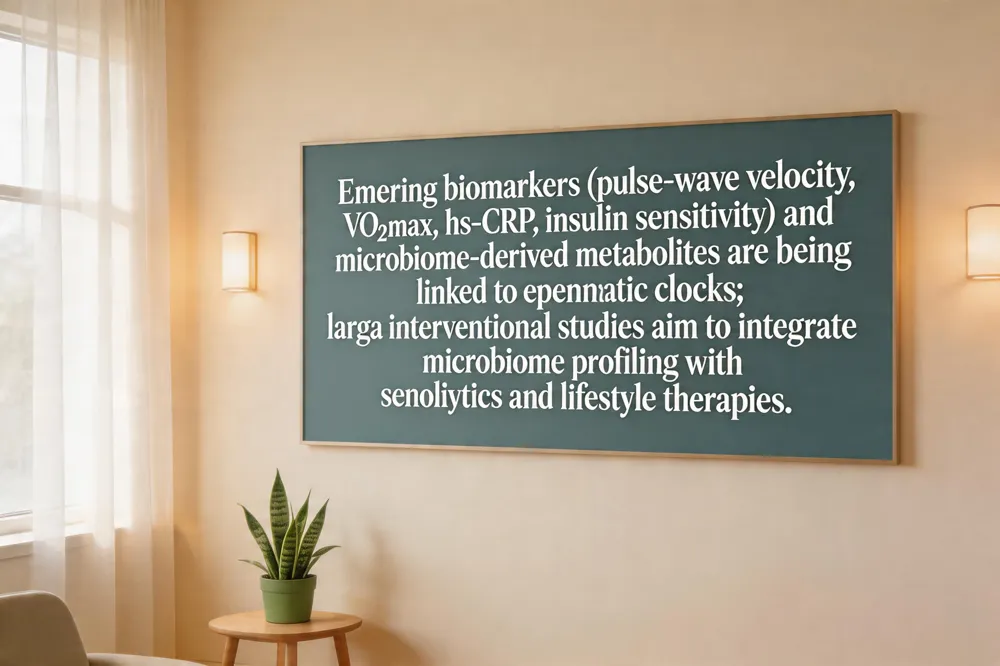
Top longevity biomarkers now include arterial stiffness (pulse‑wave velocity), glucose tolerance/insulin sensitivity, systemic inflammation (hs‑CRP, IL‑6), cardiorespiratory fitness (VO₂ max), and body‑composition ratios (lean‑to‑fat mass). These measures reflect vascular, metabolic, inflammatory, functional, and compositional health and are being incorporated into proactive longevity programs at clinics such as the Medical Institute of Healthy Aging.
Research gaps remain in translating multi‑omics microbiome signatures into reliable clinical endpoints. Ongoing trials are testing whether microbiome‑derived metabolites (SCFAs, secondary bile acids, trimethylamine N‑oxide) can shift epigenetic clocks, telomere length, and frailty scores. Future directions call for large, longitudinal, interventional studies that integrate personalized microbiome profiling with lifestyle, pharmacologic, and senolytic therapies to close the loop between biomarker‑driven risk assessment and targeted longevity interventions. Such integrative approaches promise to align molecular age estimates with individualized treatment plans, accelerating health‑span extension.
Putting Microbiome Science Into Practice
Integrating microbiome data into Valengerontology transforms aging care. Clinics such as the Medical Institute of Healthy Aging already sequence stool samples, combine the results with epigenetic clocks and inflammatory biomarkers, and use the composite profile to stratify biological age. Personalized interventions then target the identified dysbiosis: high‑fiber, polyphenol‑rich diets boost SCFA‑producing taxa (Akkermansia, Faecalibacterium), while tailored probiotic or postbiotic cocktails restore butyrate production and tighten gut barrier integrity. Emerging next‑generation longevity medicine leverages multi‑omics platforms, AI‑driven metabotyping, and targeted microbial therapeutics—fecal microbiota transplantation from long‑lived donors, engineered strains that secrete anti‑inflammatory metabolites, and bacteriophage‑based clearance of pathobionts. By monitoring microbiome diversity, metabolite panels, and functional outcomes, clinicians can adjust nutrition, exercise, and supplementation in time, extending healthspan and reducing frailty risk. This data‑guided, valengerological approach promises a shift from reactive disease treatment to precision, preventive longevity. Future trials will validate these protocols, paving the way for scalable, evidence‑based longevity programs.