Introduction to Health Optimization and Chronic Disease Prevention
Health Optimization and Chronic Disease Prevention Defined
Health optimization refers to proactive, comprehensive strategies aimed at maximizing individual well-being and preventing the onset or progression of chronic diseases. These strategies emphasize continuous care, early intervention, and personalized approaches that adapt to an individual's unique genetic, lifestyle, and environmental factors.
The Importance of Proactive Strategies
Chronic diseases such as cardiovascular conditions, diabetes, cancer, and chronic respiratory diseases pose significant health challenges globally and particularly in the United States. These conditions often require ongoing medical attention and impact both physical and mental health. Proactive measures involving lifestyle modification, regular health screenings, and advanced technologies enable early detection and management, which are critical to improving health outcomes and reducing healthcare costs.
The Global and National Burden
Chronic diseases account for approximately 74% of all deaths worldwide and represent 80% of premature deaths related to chronic conditions in the US. Nearly half of Americans live with at least one chronic condition, contributing to extensive healthcare resource utilization and economic impact. The escalating prevalence highlights an urgent need for comprehensive prevention and health optimization strategies to reduce morbidity and enhance quality of life across populations.
Main Risk Factors for Chronic Diseases and Effective Prevention Strategies

What are the main risk factors for chronic diseases and how can they be prevented?
Chronic diseases, which account for a significant proportion of mortality and healthcare costs, are primarily influenced by Risk factors for chronic diseases. These include Tobacco use and health risks, Importance of good nutrition, Physical inactivity and disease, and Effects of excessive alcohol use. Addressing these factors through targeted preventive strategies is essential to reduce disease burden.
Tobacco Use and Its Prevention
Tobacco use remains a leading risk factor for heart disease, cancer, type 2 diabetes, and lung disease. Benefits of quitting smoking, supported by resources such as quitlines and cessation programs, markedly lowers disease risks and premature mortality.
Nutrition and Dietary Interventions
A Balanced diet for disease prevention rich in fruits, vegetables, whole grains, lean protein, and low-fat dairy is vital in preventing cardiovascular diseases and diabetes. Nutritional interventions focused on reducing processed foods and excess sugars contribute to optimal metabolic health.
Physical Activity
Engaging in at least 150 minutes of moderate-intensity aerobic activity weekly, along with muscle-strengthening exercises, Regular physical activity guidelines prevent, delay, and help manage chronic conditions. Physical inactivity is associated with substantial healthcare costs and increased disease prevalence.
Alcohol Consumption
Limiting alcohol intake reduces risks of hypertension, cancer, stroke, heart disease, and liver disorders. Moderation in alcohol use is therefore recommended as part of comprehensive Alcohol intake and health risks and Preventing chronic diseases.
Sleep and Oral Health
Adults should aim for at least seven hours of quality sleep daily to mitigate risks of diabetes, obesity, heart disease, and depression. Additionally, good oral hygiene practices—including regular brushing, flossing, fluoride use, and dental check-ups—Oral health and chronic disease prevention prevent oral diseases and contribute to overall health.
Regular Health Screenings and Family History Awareness
Routine screenings such as blood pressure measurements, cholesterol testing, cancer screenings (colonoscopies, mammograms, Pap tests), and assessments for prediabetes facilitate early disease detection and timely intervention. Knowing family health history further enables personalized risk assessment and prevention planning (Importance of regular health screenings).
Adopting these lifestyle modifications and Preventive care to improve well-being improves well-being, extends healthspan, and reduces healthcare expenditures. Integration of these strategies at both individual and community levels is critical to curbing the Preventing chronic diseases epidemic.
The Four Types of Disease Prevention and Their Role in Chronic Disease Control

What are the four types of disease prevention?
The four types of disease prevention are primordial, primary, secondary, and tertiary prevention.
-
Primordial prevention targets the avoidance of risk factor development altogether by promoting healthy lifestyle choices—such as balanced nutrition, physical activity, and tobacco avoidance—to prevent the emergence of harmful behaviors or conditions. Primordial prevention
-
Primary prevention works to reduce existing risk factors to prevent disease onset. This includes interventions like vaccinations, maintaining a healthy diet, regular exercise, and limiting alcohol consumption. Preventing chronic diseases
-
Secondary prevention is focused on early disease detection through screenings and routine health exams, enabling timely intervention to halt or slow disease progression. health screenings for chronic diseases
-
Tertiary prevention involves managing established diseases to minimize complications and disability, through rehabilitation, personalized treatment plans, and continuous care. Personalized Care in Chronic Conditions
How does each prevention type contribute to reducing chronic disease burden?
Primordial and primary prevention reduce the incidence of chronic diseases by addressing modifiable risk factors such as tobacco use, poor nutrition, and physical inactivity—key contributors to conditions like cardiovascular disease, diabetes, and cancer. Risk factors for chronic diseases
Secondary prevention through systematic screenings (e.g., HbA1c testing, lipid panels, cancer screenings) enables early diagnosis, enhancing treatment efficacy, and improving prognosis. HbA1c testing trends (2018-2022)
Tertiary prevention improves quality of life for patients with chronic diseases by focusing on symptom control, preventing complications, and supporting patient self-management, thereby reducing hospitalizations and healthcare costs. Managing Chronic Diseases
How are advanced diagnostics integrated into secondary and tertiary prevention?
Advanced diagnostics powered by artificial intelligence (AI) and machine learning enhance secondary prevention by analyzing large and complex datasets from wearable sensors, imaging, and electronic health records to identify early disease signs with greater accuracy and speed. AI in healthcare diagnostics
Adaptive AI algorithms dynamically improve diagnostic precision, offering real-time risk stratification and personalized treatment insights. Adaptive AI algorithms in medical diagnostics
In tertiary prevention, AI-driven tools support personalized care by optimizing treatment plans based on patient-specific data, improving adherence, and guiding rehabilitative interventions such as virtual reality therapy. Personalized Care in Chronic Conditions
The integration of AI-enabled wearable technologies facilitates continuous monitoring of vital signs, enabling timely clinical decision-making to mitigate disease progression and improve outcomes. Wearable health monitoring devices
These technologies collectively transform chronic disease management, enabling a shift from reactive to proactive, personalized healthcare approaches. Precision management in chronic disease
Advanced Diagnostic Methods and Their Impact on Early Detection
What are examples of diagnostic methods used in healthcare?
Diagnostic methods used in healthcare encompass a wide range of tools and techniques to identify and monitor health conditions. Common examples include in vitro laboratory tests such as blood and urine analyses, as well as in vivo imaging procedures like chest X-rays, mammograms, and ultrasounds. Additionally, vital sign monitors including thermometers, electrocardiograms (ECGs), pulse oximeters, and blood pressure devices play a crucial role in continuous health assessment. For more on AI in healthcare diagnostics and AI and medical imaging see how these technologies improve diagnostic accuracy.
Overview of diagnostic tools: laboratory tests, imaging, vital sign monitors
Laboratory tests provide critical biochemical data to detect abnormalities early, such as elevated glucose or cholesterol levels. Imaging technologies enable visualization of internal structures, detecting conditions like tumors or lung nodules. Vital sign monitors track heart rate, oxygen saturation, and blood pressure, essential for managing chronic diseases such as cardiovascular disorders. These traditional tools collectively support Personalized Care in Chronic Conditions.
Emerging technologies: contactless monitoring, wearable sensors
Innovations in diagnostics increasingly incorporate AI-powered Wearable sensor technology for chronic diseases and Contactless health monitoring technologies. Wearable devices continuously measure heart rate, respiratory rate, glucose, and physical activity, facilitating real-time Chronic disease prevention and management. Contactless techniques using radar sensors and facial imaging predict parameters like blood pressure and respiration without physical contact, proving invaluable in remote patient care and infection control.
Role of regular screenings and preventive health checks
Regular preventive health screenings for chronic diseases including HbA1c testing, colonoscopies, mammograms, and depression screenings enable early detection of chronic conditions before severe symptoms develop. Guidelines now recommend earlier and more frequent Preventive services for chronic disease prevention to enhance outcomes. Preventive health checks paired with lifestyle counseling foster proactive health management, reducing morbidity and health expenditure as outlined in Preventing chronic diseases.
Global efforts to improve diagnostic accessibility and accuracy
Organizations such as the World Health Organization advocate for enhanced diagnostic capacity worldwide, particularly in underserved regions. Integration of Adaptive AI algorithms in medical diagnostics improves diagnostic precision by analyzing large datasets from diverse sources in real-time. Efforts focus on overcoming barriers like data fragmentation, ethical concerns, and the acceptance of emerging technologies to expand reliable diagnostic access globally, as discussed in Challenges in AI healthcare integration.
Artificial Intelligence: Revolutionizing Medical Diagnosis and Chronic Disease Management
How is artificial intelligence (AI) improving medical diagnosis?
Artificial intelligence is transforming medical diagnosis by efficiently processing massive datasets, including electronic health records, medical imaging, and genomic profiles. By recognizing complex patterns that may elude human clinicians, AI enhances diagnostic accuracy and facilitates earlier detection of diseases, especially chronic conditions like diabetes, cardiovascular diseases, and cancer. For instance, AI algorithms accelerate lung nodule detection in CT scans and advance diabetic retinopathy screening, providing more precise and timely diagnoses (AI in healthcare diagnostics).
AI also enables personalized care by integrating diverse data inputs—genetic, lifestyle, environmental—and predicting disease progression. These insights support clinicians in tailoring interventions specific to individual patient risk profiles, thereby shifting healthcare toward proactive disease management (personalized treatment options).
Can AI replace human diagnosticians in healthcare?
While AI substantially improves diagnostic efficiency and accuracy, it does not replace the need for human medical expertise. The clinical judgment, empathy, and contextual understanding that healthcare professionals bring remain irreplaceable. Instead, AI functions as a powerful assistant, augmenting physicians' capacity to interpret subtle signals and complex data patterns (Adaptive AI algorithms in medical diagnostics).
For example, in complex endocrine disorders like acromegaly, AI supports clinicians by synthesizing biochemical and imaging data for early detection and individualized treatment strategies. Experts such as Dr. Sailaja Bommakanti highlight the collaborative role of AI tools in complementing human decision-making, emphasizing that personalized care outcomes rely on this synergy (Personalized Care in Chronic Conditions).
Adaptive AI algorithms for real-time diagnostics and personalized care
Adaptive AI systems dynamically learn from ongoing data feedback to improve diagnostic precision over time. These algorithms can rapidly analyze evolving datasets, including real-time sensor inputs from wearables, enabling near-instantaneous diagnostics during clinical visits. Such technologies streamline personalized treatment recommendations by identifying patient similarity cohorts and predicting optimal therapeutic options based on real-world evidence (precision medicine for chronic diseases.
Use of AI in predicting disease progression and supporting treatment plans
AI-driven predictive models help forecast chronic disease trajectories, allowing early intervention to prevent complications. Machine learning workflows analyze longitudinal patient data from electronic health records to inform clinicians about probable disease progression, treatment efficacy, and risks. This facilitates proactive care planning and enhances treatment compliance (Machine learning in chronic disease prediction).
In summary, AI revolutionizes medical diagnostics and chronic disease management by augmenting clinical decision-making with comprehensive, data-driven insights, promoting personalized, preventive, and precise healthcare interventions (Health System Reorganization for Chronic Care.
Personalized Care: Tailoring Treatment and Prevention to Individual Needs
Concept and Benefits of Personalized Care in Chronic Diseases
Personalized care in chronic disease management represents a paradigm shift from one-size-fits-all approaches towards precision medicine for chronic diseases tailored to the individual characteristics of each patient. It integrates comprehensive data encompassing genetic makeup, lifestyle behaviors, and environmental exposures to develop customized prevention, diagnostic, and treatment strategies. This approach enhances diagnostic accuracy and treatment efficacy by addressing patient-specific factors, which improves overall health outcomes.
Personalized care empowers patients to actively participate in managing their chronic conditions such as diabetes, heart disease, and cancer. Increased patient engagement leads to better adherence to therapeutic regimens and lifestyle modifications. Furthermore, it holds the potential to reduce healthcare costs by minimizing unnecessary interventions and hospitalizations.
Use of Genetic, Lifestyle, and Environmental Data to Guide Treatment
Genetic testing often plays a central role in personalized care in chronic disease management, particularly in oncology, by identifying mutations that may influence response to specific therapies. Additionally, lifestyle factors such as diet, physical activity, and smoking status alongside environmental determinants contribute vital contextual information used to construct individualized risk profiles.
State-of-the-art genomic, biometric, and social determinant data collectively inform personalized health care and treatments that are increasingly integrated into clinical workflows. This multidimensional data fusion facilitates early intervention and wellness-centered care, ultimately aiming to delay or prevent disease progression.
Clinical Decision Support Systems Leveraging Patient Similarity Models
Innovative clinical decision support systems employ patient similarity algorithms that analyze large observational datasets from electronic health records. These models dynamically generate cohorts of patients with comparable clinical and demographic characteristics.
By statistically evaluating treatment outcomes within these precision cohort identification, clinicians receive evidence-based treatment recommendations tailored to their patient’s unique profile. This approach complements existing guidelines by addressing gaps posed by restrictive clinical trial inclusion criteria and enhances decision-making during point-of-care encounters.
Examples of Personalized Interventions and Programs Improving Outcomes
Recent personalized interventions demonstrate promising results. For instance, patient-centric exercise programs designed specifically for Parkinson’s disease leverage individual functional assessments to improve mobility and quality of life. Virtual reality therapies tailored for fibromyalgia patients have shown efficacy in symptom management and psychological well-being.
Integration of AI in integrative medicine facilitates the design of individualized integrative medicine plans incorporating conventional and complementary therapies. Such programs holistically address physical, mental, and social dimensions of chronic disease with measurable improvements in patient-reported outcomes.
| Aspect | Description | Impact |
|---|---|---|
| Personalized Care | Tailors treatment/prevention to genetic & lifestyle data | Improves outcomes & reduces costs |
| Genetic & Lifestyle Data Use | Integrates diverse personal health determinants | Enables precise risk profiling |
| Patient Similarity CDS Models | Dynamic cohorts for treatment decision-making | Supports evidence-based, individualized care |
| Personalized Programs | Disease-specific interventions (e.g., Parkinson’s, fibromyalgia) | Enhances quality of life and symptom control |
Integrating AI and Personalized Medicine in Clinical Practice for Chronic Diseases
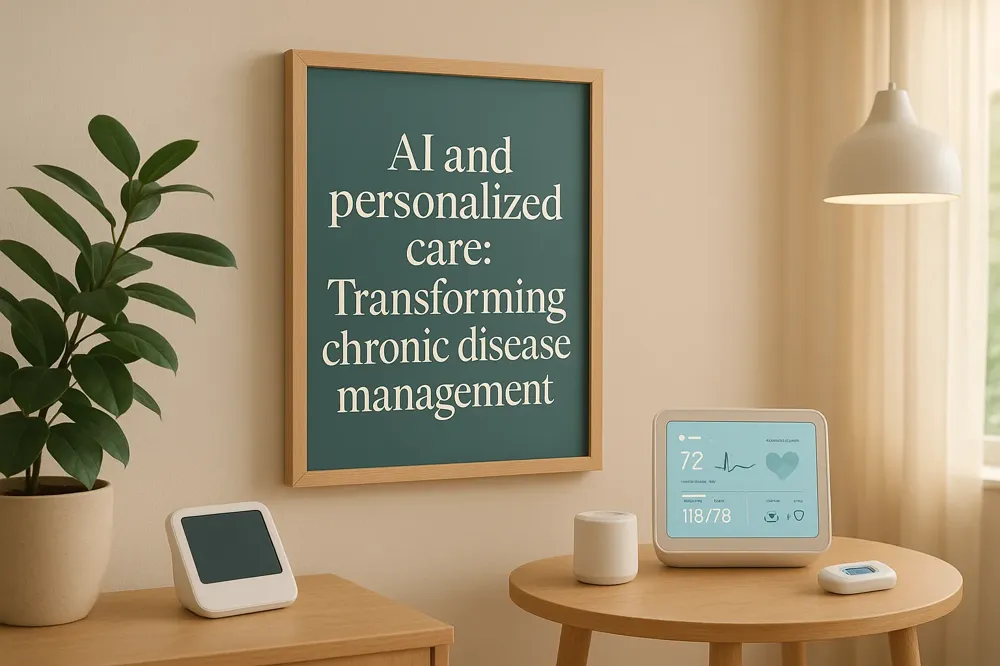
How can AI be applied to manage chronic diseases?
Artificial intelligence (AI) plays a transformative role in Precision medicine for chronic diseases management by enabling highly personalized treatment approaches. Through advanced Machine learning workflows in healthcare that analyze electronic health records (EHRs), AI supports the optimization of treatment plans for conditions like hypertension, type 2 diabetes, and hyperlipidemia. These workflows extract clinical data, train similarity models, and identify precision cohort identification—groups of patients with similar characteristics—to inform clinicians of treatment options linked to better real-world outcomes. This approach allows dynamic, real-time clinical decision support, improving treatment effectiveness while complementing traditional guidelines.
What are real-time clinical decision support and precision cohort identification?
Real-time decision support systems powered by AI provide clinicians with immediate, evidence-based insights during patient visits. By continuously analyzing patient data and comparing it to dynamically created precision cohorts, AI models predict which interventions have the best success rates for a particular individual. This precise matching enhances diagnosis accuracy, medication selection, and therapy adjustments, facilitating truly personalized care grounded on empirical data rather than population averages.
How can AI models be extended to non-pharmacologic interventions?
While current AI-driven decision support primarily focuses on medication-based treatments, evolving models increasingly incorporate non-pharmacologic interventions for chronic diseases, including dietary adjustments, exercise regimens, and lifestyle modifications. Integrating biometric data, lifestyle factors, and patient adherence information enables AI systems to tailor holistic care plans that address multiple aspects of health, thus supporting proactive disease management and potentially reducing reliance on medications.
What are the challenges and potential of AI in enhancing personalized medicine?
Despite promising advances, deploying AI in personalized chronic disease care faces several challenges. Concerns about data privacy, security, and interoperability hinder broader adoption. Additionally, user acceptance in both clinical workflows and patient engagement remains a barrier. Ethical considerations relating to algorithm transparency and bias in data require careful attention to ensure equitable care delivery. Nonetheless, the potential benefits—improved health outcomes, reduced healthcare costs, and empowered patients—underscore the vital role AI is poised to play in reshaping chronic disease management toward Precision medicine for chronic diseases and personalization.
| Aspect | Description | Impact on Chronic Disease Care |
|---|---|---|
| Machine Learning Workflows | Analyze EHR data, train patient similarity models | Optimize treatment choices, improve outcomes |
| Real-Time Decision Support | Provide immediate, data-driven insight during visits | Enhance clinical decision accuracy and timeliness |
| Precision Cohort Identification | Create tailored patient groups based on similarity | Personalize treatment plans beyond generalized guidelines |
| Non-Pharmacologic Extensions | Inclusion of lifestyle, diet, and exercise in AI models | Broaden holistic management, reduce medication dependence |
| Challenges | Privacy, ethics, interoperability, user acceptance | Must be addressed for safe, effective widespread use |
Enhancing Prevention through Optimized Screening and Monitoring Programs
Significance of regular health screenings for early detection
Regular health screenings for chronic diseases play an indispensable role in the early identification and management of chronic diseases. Early detection allows for timely interventions that can prevent disease progression, reduce complications, and improve patient outcomes. For chronic conditions such as diabetes, cardiovascular disease, and cancer, screenings provide critical data that inform personalized care plans, supporting proactive management strategies that substantially decrease morbidity and mortality.
Examples of screenings: HbA1c, mammograms, colonoscopies, cholesterol tests
Several essential screenings are recommended to monitor chronic disease risk:
- HbA1c Testing: Measures average blood glucose levels over three months, crucial for diabetes diagnosis and management.
- Mammograms: Recommended annually starting at age 45, mammograms enable early detection of breast cancer.
- Colonoscopy: Starting at age 45 for average-risk adults, colonoscopies detect colorectal polyps and cancer early, facilitating preventive removal of precancerous lesions.
- Cholesterol Screening: Detects LDL and triglyceride elevations and HDL reductions, components linked to heart disease and stroke; testing every five years is advised beginning at age 20.
Other relevant screenings include fasting blood glucose tests for diabetes risk, depression screening with tools like VitalSign 6, BMI measurements to address obesity, Pap smears and HPV testing for cervical cancer prevention, and respiratory infection screening especially during viral outbreaks. These are part of important health screenings for chronic diseases.
Impact of COVID-19 on preventive service usage and recovery trends
The COVID-19 pandemic caused significant disruptions in preventive healthcare services, with marked declines in screenings like colonoscopies and mammograms in 2020. Despite a gradual restoration of these services by 2022, some screening rates remain below pre-pandemic levels, signaling a persisting "health debt." This reduction threatens delayed diagnoses and worsened outcomes for chronic diseases. Health systems are prioritizing recovery of preventive care utilization to mitigate long-term adverse effects and are leveraging electronic health record data to monitor trends and disparities in care access effectively. This trend and analysis are detailed in CDC's research on preventive services for chronic disease prevention.
Use of digital health tools for continuous health monitoring and management
The integration of digital health technologies—such as wearable fitness trackers, smartphone apps, and sensor-equipped devices—enables continuous monitoring of vital signs including heart rate, glucose levels, physical activity, and sleep patterns. These tools empower patients and clinicians to detect early signs of deterioration, adjust treatment plans dynamically, and reinforce healthy lifestyle choices. AI-driven analytics enhance the interpretation of collected data, facilitating personalized medicine approaches and improving chronic disease management outside traditional clinical settings.
| Screening Type | Purpose | Recommended Start Age | Frequency |
|---|---|---|---|
| HbA1c Testing | Diabetes diagnosis and monitoring | 45 (or with risk factors) | As advised by clinician |
| Mammogram | Breast cancer early detection | 45 | Annually |
| Colonoscopy | Colorectal cancer screening | 45 | Every 10 years (average risk) |
| Cholesterol Test | Cardiovascular risk assessment | 20 | Every 5 years |
| Depression Screening | Mental health assessment | Variable | Regular intervals as needed |
| BMI Screening | Obesity risk evaluation | Adult ages | Annually |
| Pap Smear & HPV Testing | Cervical cancer prevention | 21 | Every 3-5 years |
| Respiratory Infection Screening | Infection control during outbreaks | Seasonal/As needed | During viral seasons |
Challenges and Future Directions in Using Advanced Diagnostics for Chronic Diseases

What are the barriers to adoption such as user acceptance, data security, and ethical issues?
Despite significant advancements in AI empowered chronic disease management and Wearable sensor technology for chronic diseases for chronic disease management, several barriers hinder widespread adoption. User acceptance is critical; patients and healthcare providers may resist new technology due to concerns about device comfort, usability, and trust in AI-driven decisions. Data security and privacy are paramount, given sensitive health information collected by sensors and AI platforms. Ethical issues in AI healthcare arise related to algorithm transparency, potential biases in AI models, and the equitable distribution of healthcare benefits.
Why is integrating AI tools into clinical workflows and patient-centered care important?
Seamless integration of AI in healthcare diagnostics technologies into clinical workflows is essential for maximizing their utility. AI systems that enhance diagnostics and decision-making must complement rather than disrupt established care processes. Additionally, tailoring AI applications to support Personalized Care in Chronic Conditions improves engagement, treatment adherence, and health outcomes. For instance, personalized care in chronic disease management that uses comprehensive patient data—including genetics, lifestyle, and environment—can create personalized treatment plans for chronic conditions like diabetes and hypertension.
How are data modernization and addressing health disparities being pursued?
Modernizing health data infrastructure is crucial to enable real-time, locally relevant decision-making for chronic disease management. Efforts to update and integrate legacy data systems, incorporate Cloud computing in health data management, and link across health and social services aim to overcome fragmentation. These improvements also facilitate addressing Social determinants of health data and reducing disparities. Data-driven public health initiatives leverage granular demographic and environmental information to target vulnerable populations and tailor interventions effectively.
What is the vision for leveraging technology to reduce chronic disease burden and healthcare costs?
The future of chronic disease management lies in combining advanced diagnostics in chronic care, AI empowered chronic disease management, and preventive strategies to reduce disease incidence and progression. Adaptive AI algorithms in medical diagnostics enhance early detection and treatment optimization, leading to better health outcomes and lower costs. Integrating Wearable sensor technology for chronic diseases, virtual rehabilitation, and Intelligent nursing products for patient care solutions further supports patient monitoring and self-management. By fostering multidisciplinary collaborations and ensuring ethical AI deployment, healthcare systems can extend healthspan, improve quality of life, and sustainably manage healthcare expenditures.
| Challenge/Focus Area | Current Status | Future Direction |
|---|---|---|
| User Acceptance | Resistance due to comfort and trust | Enhance usability and transparency |
| Data Security & Ethics | Privacy concerns and bias risks | Develop robust protocols and equitable AI |
| Clinical Integration | Fragmented workflows | Seamless AI tools supporting care providers |
| Data Modernization | Outdated, siloed systems | Cloud-based, integrated real-time data platforms |
| Health Disparities | Persistent inequities | Granular data usage for targeted interventions |
| Technological Innovation | Rapid AI and sensor advances | Adaptive AI and personalized care adoption |