Why Personalized Healthspan Matters
Healthspan is the years lived in good physical, mental and functional health, whereas lifespan is total years lived. Genetics, lifestyle choices, and environmental exposures together shape both biological age and disease risk, but modifiable factors—diet, exercise, sleep, stress management and exposure mitigation—account for the majority of healthspan variation. Proactive, data‑driven planning that integrates genetic risk scores, epigenetic clocks, wearable metrics and personalized interventions enables early risk detection, targeted prevention, and sustained vitality, ultimately extending the disease‑free years of life.
Genetics vs. Lifestyle: The Balance of Influence
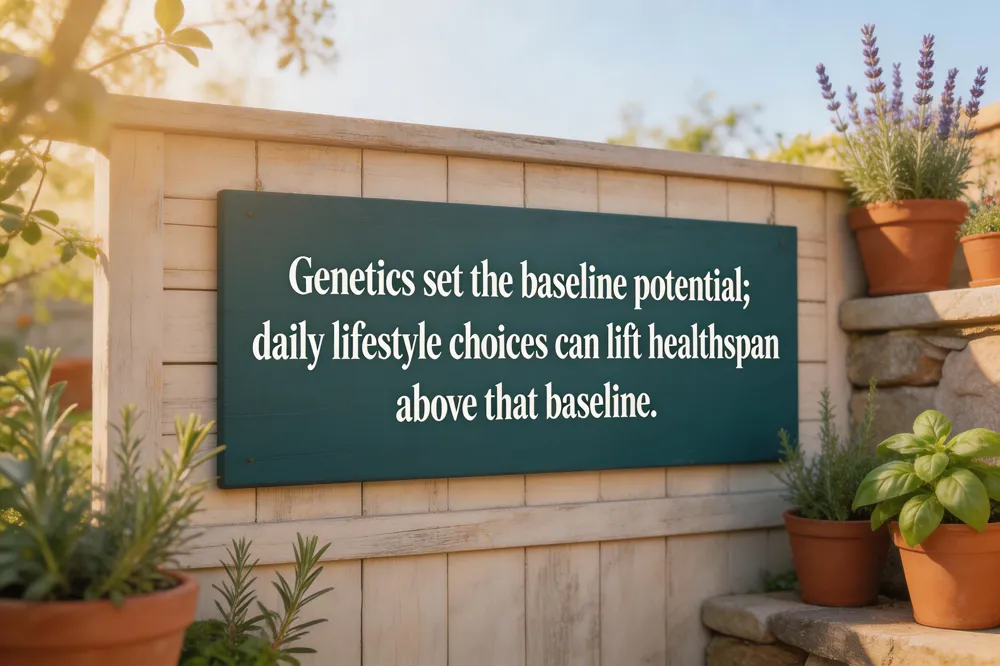 Heritability studies estimate that roughly 25‑55 % of lifespan variation is genetic, with DNA‑repair, inflammation‑control, and metabolic pathways (e.g., APOE, FOXO3, CETP) accounting for a quarter of the differences. Epigenetic mechanisms—DNA methylation, histone modifications, and non‑coding RNAs—translate daily choices into reversible gene‑expression changes, allowing nutrition, exercise, sleep, and stress management to modulate biological age without altering the DNA sequence.
Modifiable lifestyle factors are therefore decisive: a Mediterranean‑style diet, at least 150 minutes of moderate aerobic activity weekly, adequate sleep (7‑9 hours), and regular mindfulness practices have been shown to slow epigenetic age by 1‑3 years and reduce chronic‑disease risk far more than any single gene.
Centenarian research illustrates the synergy of genetics and behavior. First‑degree relatives of super‑centenarians often inherit protective alleles that support genomic stability, yet they also share disciplined habits—nutrient‑dense meals, regular movement, and strong social ties—that further blunt disease onset.
Longevity genetics or lifestyle? Both shape healthspan; genetics set a baseline potential, while personalized lifestyle interventions can shift that baseline upward, often offsetting modest genetic risk.
How do genetics affect longevity? Genetic variation influences DNA‑repair capacity, inflammation, and cellular senescence, contributing to roughly a quarter of lifespan differences; protective alleles in APOE, FOXO3, and related pathways are enriched in centenarians, yet even these individuals reap benefits from healthy daily habits.
Parental Contributions: Does Mother or Father Matter?
 Longevity is a polygenic trait, meaning dozens of genetic variants from both parents shape how long an individual may live. Current research estimates that roughly 50‑55 % of human lifespan variation is heritable, with the remaining proportion driven by environment, lifestyle, and epigenetic factors. Both maternal and paternal genomes contribute equally; no single parent dominates the inheritance of longevity‑associated alleles. Key genes repeatedly linked to healthy aging include APOE (especially the ε2 protective allele), FOXO3 (a regulator of stress response and DNA repair), and CETP (involved in lipid metabolism). The presence of favorable variants in any parent increases the probability of a longer healthspan, but the ultimate risk is determined by the combined allele load across the genome. This polygenic model has practical implications for family health history: clinicians should consider the longevity of both sides of the family when assessing risk and when designing personalized healthspan plans that integrate genetic testing, nutrition, exercise, and environmental exposure management. In short, both mother and father matter equally, and their combined genetic legacy, together with lifestyle choices, sets the stage for a person’s aging trajectory.
Five Pillars of Longevity
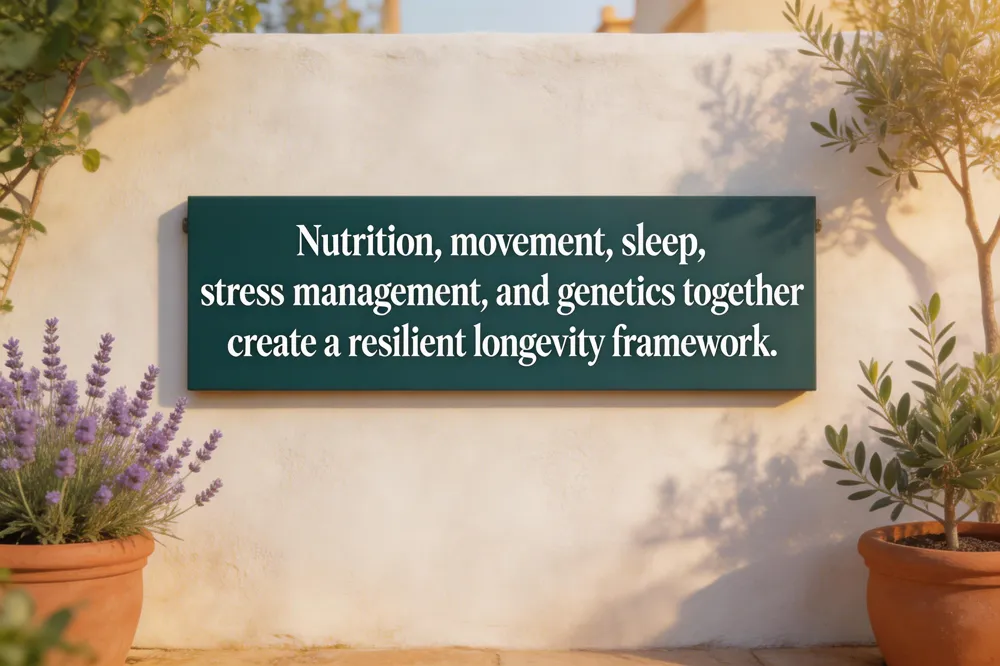 Longevity is shaped by a combination of genetic and lifestyle influences. First, inherited DNA variants set a baseline risk for age‑related diseases and affect cellular aging. Genetic screening can identify polymorphisms in APOE, FOXO3, or telomere‑maintenance genes that inform personalized prevention. Second, a nutrient‑dense diet rich in whole foods, antioxidants, and healthy fats supplies the energy and building blocks needed for cellular repair and reduces inflammation; methyl donors such as folate and vitamin B12 support DNA methylation. Third, regular physical activity—150 minutes of moderate aerobic work plus muscle‑strengthening sessions—enhances mitochondrial function, histone acetylation, and expression of longevity genes like SIRT1 and PGC‑1α. Fourth, consistent, high‑quality sleep (7‑9 hours) enables hormone regulation, DNA‑damage repair, and circadian alignment; sleep disruption accelerates epigenetic aging. Fifth, effective stress management—mindfulness, social support, or purpose‑driven activities—lowers cortisol, mitigates chronic inflammation, and modulates oxytocin‑related genes. Together, these five pillars form an integrative framework to extend healthspan, balancing genetic baseline risk with optimized nutrition, movement, recovery, and resilience.
Defining Healthspan: Quality Over Quantity
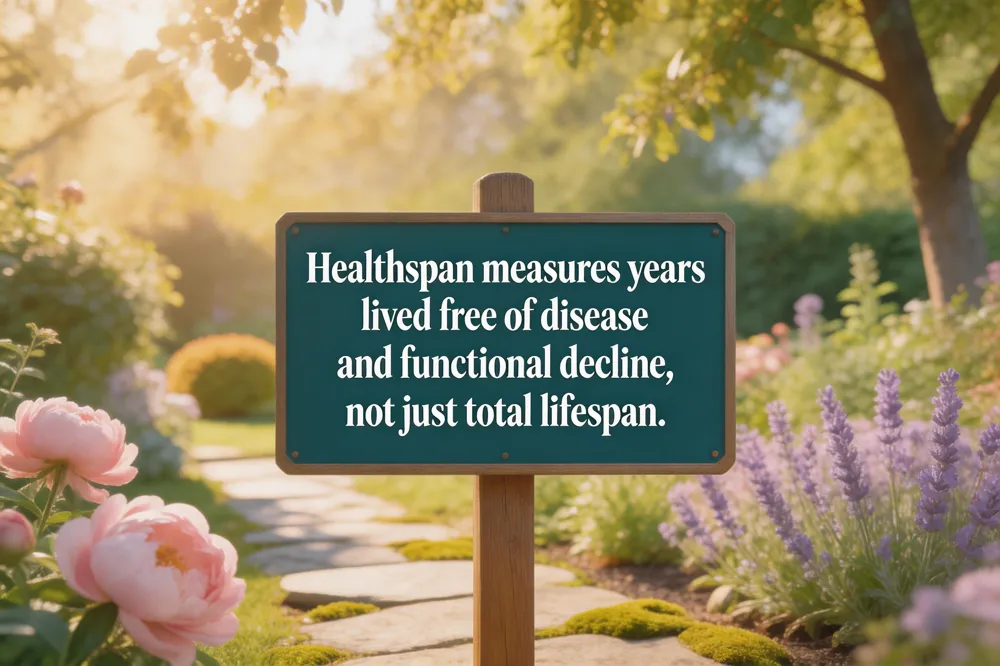 Healthspan, unlike lifespan, denotes the years lived in good physical and mental health without disabling chronic disease, pain, or functional loss ( The medical literature operationalizes healthspan by tracking the onset of major age‑related conditions (e.g., cardiovascular disease, diabetes, dementia) and by measuring functional abilities such as gait speed, grip strength, and activities of daily living. Complementary metrics include epigenetic clocks (Horvath DNA, PhenoAge) that estimate biological age, biomarker panels (hs‑CRP, fasting glucose, lipid profiles) and wearable‑derived data (heart‑rate variability, VO₂ max, sleep quality). Subjective quality‑of‑life assessments—questionnaires on mental health, social support, purpose, and perceived vitality—are increasingly incorporated to capture personal health goals. Clinically, extending healthspan is a core objective of preventive and longevity medicine because it not only delays disease onset but also improves overall well‑being and reduces health‑care costs. By integrating genetic risk scores, lifestyle factors, and environmental exposures into personalized plans, clinicians can target the modifiable determinants that dominate 70 % of healthspan variance, thereby turning longevity research into actionable, patient‑centered care.
The Power of Personalized Health Plans
 A personalized health plan is a customized roadmap that aligns medical, emotional, and lifestyle interventions to an individual’s unique health profile. It integrates comprehensive data—including genetic risk scores, epigenetic clock readings, biometric trends from wearables, and detailed lifestyle assessments—to predict disease risk and guide preventive actions. Co‑creation involves the patient, clinicians, and often a health coach, ensuring goals are realistic and motivations are addressed. Dynamic adjustment is achieved through continuous monitoring: wearables supply real‑time heart‑rate variability, activity, and sleep data, while periodic laboratory panels track markers such as LDL, hs‑CRP, glucose, and DNA methylation age. Interventions are tailored to the four potential‑energy domains of the Lifestylopathy model: chemical energy (nutrient‑dense foods rich in methyl donors, polyphenols), elastic energy (regular aerobic and resistance exercise that boosts histone acetylation), mental energy (mindfulness or meditation to modulate BDNF and stress‑response genes), and voluntary energy (purpose‑driven behaviors influencing oxytocin pathways). Examples include targeted nutrition (Mediterranean pattern, time‑restricted feeding), hormone optimization (bioidentical testosterone or estrogen), peptide therapy (CJC‑1295, BPC‑157) and NAD⁺ infusions. By continuously aligning structured inputs against biological entropy, these plans aim to extend healthspan—adding years of disease‑free vitality—while respecting each person’s socioeconomic context and preferences.
Integrating Lifestylopathy and Hyper‑Personalized Medicine
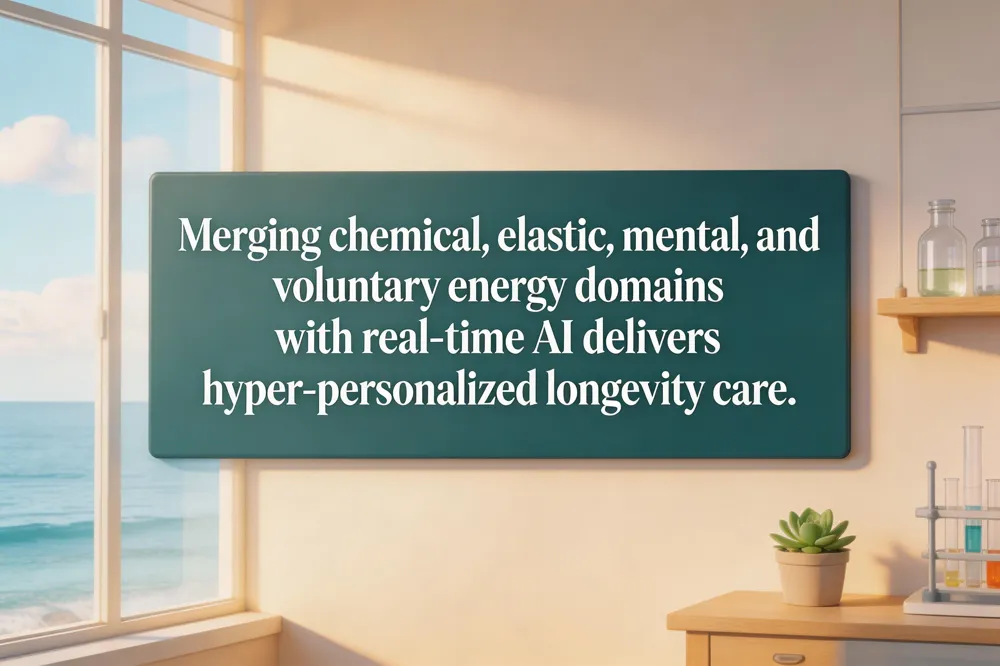 The Lifestylopathy framework classifies potential energy into four domains—chemical, elastic, mental, and voluntary—that together shape epigenetic regulation. Chemical energy, supplied by nutrients such as folate, vitamin B12, and polyphenols, provides methyl donors that support DNA methylation and curb inflammatory gene activation. Elastic energy derives from regular physical activity, which promotes histone acetylation and up‑regulates longevity‑associated genes like SIRT1, PGC‑1α, and TERT. Mental energy, cultivated through mindfulness and meditation, influences neuroplasticity genes (e.g., BDNF) and stress‑response pathways (e.g., FKBP5). Voluntary energy reflects purpose‑driven actions that modulate oxytocin‑related genes (e.g., OXTR) and enhance stress resilience.
Epigenetic mechanisms—DNA methylation, histone modifications, and non‑coding RNAs—translate these lifestyle inputs into gene‑expression changes without altering the DNA sequence, allowing reversible modulation of disease‑related pathways. Aligning medication regimens with an individual’s dietary, cultural, and behavioral preferences—lifestyle‑therapeutic drug compatibility—optimizes drug efficacy and fosters a favorable epigenetic environment.
Healthcare 5.0 expands this model with three pillars: (1) IoT wearables that continuously capture biometric and environmental data (e.g., heart‑rate variability, air‑quality indices); (2) ultra‑low‑latency 6G networks that transmit data in real time; (3) advanced AI—including AGI and quantum computing—to synthesize genomics, epigenetic clocks, and sensor streams into dynamic, adaptive health recommendations.
Health equity remains a critical challenge. Socio‑economic disparities limit access to high‑quality nutrition, safe exercise spaces, advanced wearables, and high‑speed connectivity, threatening to widen gaps in health‑span outcomes. Inclusive public‑health policies, subsidized technology programs, and community‑based interventions are essential to ensure that hyper‑personalized longevity strategies benefit all populations, not only the affluent.
Moving Forward with Proactive Longevity
Integrating genetics, lifestyle, and environmental data creates a powerful map for extending healthspan: genetic risk scores guide targeted nutrition and medication, while epigenetic clocks and wearable metrics track progress in real time. We urge individuals to adopt personalized healthspan planning that balances diet, exercise, sleep, stress management, and exposure mitigation. The Medical Institute of Healthy Aging (MDIHA) offers individualized longevity roadmaps—combining comprehensive biomarker panels, genetic profiling, and the Lifestylopathy framework—to proactively optimize aging outcomes.