Introduction
Peptide therapy for sleep optimization leverages short‑chain amino‑acid messengers—such as CJC‑1295, Ipamorelin, DSIP, and Sermorelin—to restore the body’s natural hormone rhythms rather than impose sedation. By stimulating endogenous growth‑hormone release, supporting melatonin production, and tempering nighttime cortisol spikes, these peptides deepen slow‑wave sleep, enhance recovery, and stabilize overall endocrine balance. Age‑related declines of 1‑3 % per year in GH, melatonin, and cortisol further underscore the need for targeted interventions. Because peptide effects depend on precise dosing, timing, and individual hormone baselines, a medically supervised, personalized protocol—including comprehensive sleep histories, hormone panels, and lifestyle assessments—is essential to maximize benefits while minimizing side‑effects and ensuring safety.
Key Sleep‑Optimizing Peptides and Their Evidence
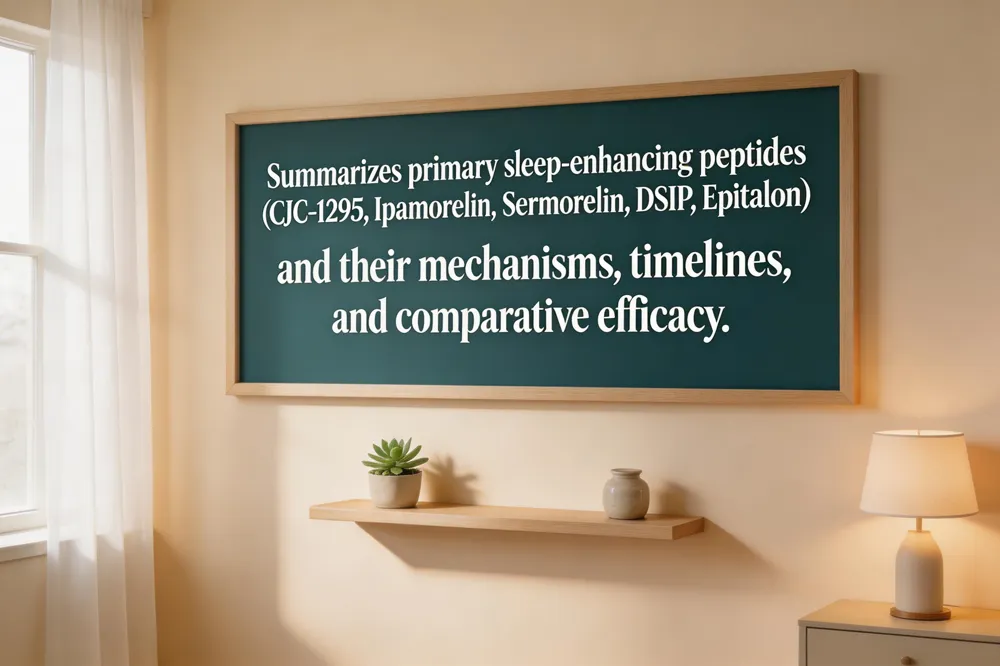 CJC‑1295 (a long‑acting GHRH analog), Ipamorelin, Sermorelin, and Delta Sleep‑Inducing Peptide (DSIP) mechanisms – CJC‑1295 (a long‑acting GHRH analog) and Ipamorelin synergistically stimulate pulsatile growth‑hormone (GH) release from the pituitary, deepening slow‑wave sleep without raising cortisol. Sermorelin, a GHRH analog, similarly boosts endogenous GH, improving sleep architecture within 1‑2 weeks. Delta Sleep‑Inducing Peptide (DSIP) directly targets hypothalamic sleep centers, increasing delta‑wave activity, shortening sleep latency, and modulating nighttime cortisol spikes.
Epitalon for circadian alignment – Epitalon, a pineal‑derived peptide, restores melatonin synthesis and synchronizes circadian rhythms, particularly valuable for older adults experiencing melatonin decline.
Growth‑hormone release and deep‑slow‑wave sleep – GH peaks during early night; elevated GH (and downstream IGF‑1) supports tissue repair, immune function, and the restorative functions of stage‑3 NREM sleep. Peptide‑driven GH release thus links hormone balance with sleep quality.
Clinical timelines for observable benefits – Most patients report reduced night awakenings and faster sleep onset within 1‑2 weeks; optimal deep‑sleep enhancement appears after 6‑8 weeks of consistent therapy.
Best peptide for sleep – The most widely studied sleep‑promoting peptide is Delta Sleep‑Inducing Peptide (DSIP), which reliably shortens latency and augments delta sleep without sedation. Epitalon is a strong secondary choice for circadian regulation.
What peptide puts you to sleep? – Delta Sleep‑Inducing Peptide (DSIP) is the primary peptide that induces sleep by directly deepening delta‑wave activity; other peptides (Sermorelin, Ipamorelin, Epitalon) act indirectly via GH or melatonin pathways.
Sleep peptides – Sleep‑supporting peptides include Delta Sleep‑Inducing Peptide (DSIP), growth‑hormone secretagogues (CJC‑1295, Ipamorelin), Epitalon, and adjunctive peptides such as BPC‑157, which reduce inflammation and thus indirectly improve sleep continuity.
Best peptides for sleep and recovery – A combined regimen of Delta Sleep‑Inducing Peptide (DSIP), Epitalon, and a CJC‑1295 + Ipamorelin cocktail, complemented by BPC‑157 for tissue repair, offers a comprehensive approach to restorative sleep and accelerated recovery.
Huberman’s Peptide Picks and Practical Guidance
 Dr. Andrew Huberman recommends pairing the neuropeptide Pinealon with oral glycine to boost REM sleep. In his own regimen the combination roughly doubles REM duration, though he uses it intermittently rather than nightly. Pinealon, a pineal‑derived regulator, works synergistically with glycine’s NMDA‑modulating properties to enhance REM consolidation.
Among growth‑hormone secretagogues, Sermorelin and Ipamorelin differ in sleep effects. Sermorelin stimulates pituitary GH release, deepening slow‑wave (NREM) sleep but may modestly suppress REM, whereas Ipamorelin produces a more balanced increase in both deep and REM phases with fewer cortisol spikes. Both are prescription‑only compounds typically compounded by pharmacies.
Safety concerns arise with over‑the‑counter peptide purchases: lack of FDA approval, purity, and potential immunogenicity. Patients should obtain peptides from physicians and compounding labs, and undergo hormone panels and sleep assessments before initiating therapy.
Delta‑Sleep‑Inducing Peptide (DSIP): Science, Safety, and User Experience
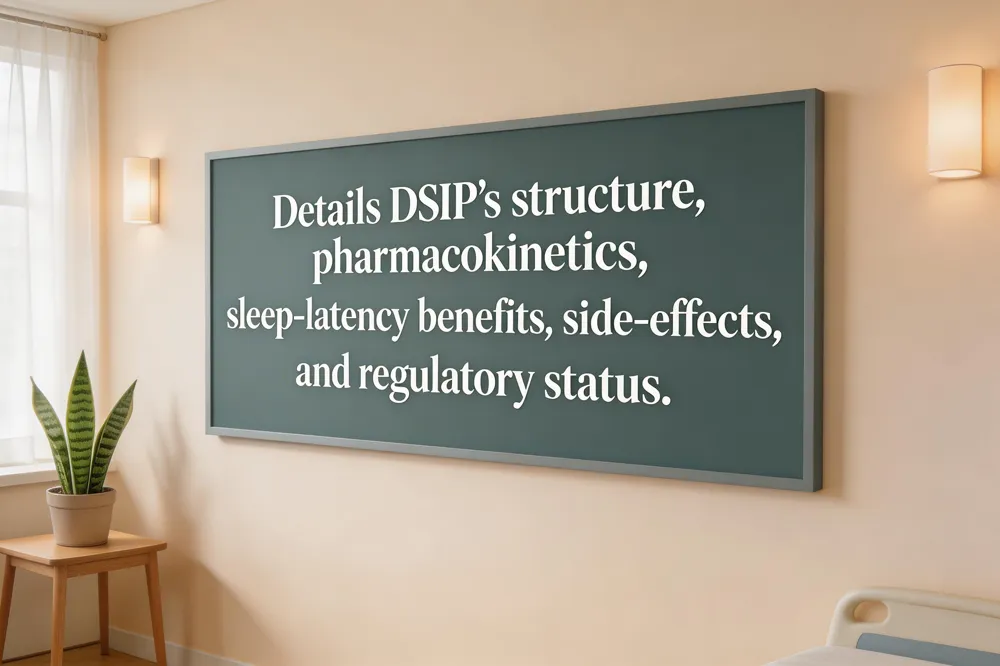 Delta‑Sleep‑Inducing Peptide (DSIP) is a naturally occurring nonapeptide (Trp‑Ala‑Gly‑Gly‑Asp‑Ala‑Ser‑Gly‑Glu) first isolated from rabbit brain and produced in the human hypothalamus. Its water‑soluble, ≥ 95 % purity formulation and short plasma half‑life (7–8 minutes) allow rapid crossing of the blood‑brain barrier, where it enhances delta‑wave (slow‑wave) activity— the deepest stage of restorative sleep DSIP is a nonapeptide (Trp‑Ala‑Gly‑Gly‑Asp‑Ala‑Ser‑Gly‑Glu) first isolated from rabbit brain and produced in the human hypothalamus. DSIP also modulates the hypothalamic‑pituitary‑adrenal (HPA) axis, lowering nighttime cortisol spikes and reducing stress‑related arousal, which contributes to more stable circadian rhythms Peptide therapy for sleep has an excellent safety profile when administered under qualified medical supervision, with minimal side effects and no dependency risk.
Clinical observations report that sub‑cutaneous dosing 30‑60 minutes before bedtime shortens sleep latency and increases deep‑sleep proportion within 1‑2 weeks, with optimal benefits after 6‑8 weeks of therapy Peptide therapy improves sleep by restoring natural hormone production. Side‑effects are mild and transient—drowsiness, brief headache, vivid dreams, or occasional injection‑site irritation—without tolerance or dependence Potential side effects include injection site irritation, headache, vivid dreams, and hormone‑related effects. Caution is advised when combined with ACE‑inhibitors, as DSIP is rapidly degraded by amino‑peptidases Potential side effects include injection site irritation, headache, vivid dreams, and hormone‑related effects.
Reviews are mixed: early animal and small human trials show clear delta‑wave enhancement, while larger controlled studies have yielded inconsistent results, leaving DSIP classified as experimental Delta sleep‑inducing peptide Reviews. The peptide is not FDA‑approved for therapeutic use; it is available only for research‑grade compounding under physician supervision The peptide is not FDA‑approved for therapeutic use; it is available only for research‑grade compounding under physician supervision. Further randomized trials are needed to define optimal dosing, long‑term safety, and its role among sleep‑optimizing peptides such as CJC‑1295, Ipamorelin, and Epitalon Key sleep‑optimizing peptides highlighted in the article are CJC‑1295, Ipamorelin, Delta Sleep‑Inducing Peptide (DSIP), and Sermorelin.
Peptides Targeting Anxiety, Hormonal Balance, and Sleep Quality
 Selank and Semax are synthetic nootropic peptides that act on GABA, dopamine, and serotonin pathways to produce anxiolytic effects without the sedation of benzodiazepines. Both cross the blood‑brain barrier and have been shown to lower nighttime cortisol by dampening the hypothalamic‑pituitary‑adrenal (HPA) axis, which in turn reduces stress‑induced awakenings. Other nootropic peptides such as PT‑141 and GHK‑Cu also modulate neuro‑inflammatory signals, supporting a calmer pre‑sleep state.
Peptides for sleep and anxiety – Peptides are short amino‑acid chains that serve as precise messengers, influencing hormones, neurotransmitters, and inflammation. Food‑derived bioactive peptides (e.g., hydrophobic residues like tyrosine, proline, leucine) and synthetic agents (Selank, PT‑141, GHK‑Cu) can modulate the HPA axis, gut‑brain communication, and neuroinflammation, thereby reducing anxiety and improving sleep quality. Their ability to cross the blood‑brain barrier and a favorable safety profile make them attractive adjuncts in personalized longevity programs.
Peptides for sleep quality – Delta‑Sleep‑Inducing Peptide (DSIP) enhances deep delta‑wave sleep and shortens latency; growth‑hormone secretagogues (Sermorelin, Ipamorelin) boost endogenous HGH, supporting restorative sleep cycles. Epitalon restores melatonin production, aiding circadian alignment, especially in older adults. Nootropic peptides (Selank, Semax) lower anxiety, indirectly increasing sleep efficiency and decreasing nighttime awakenings. Together, these agents improve sleep architecture by modulating natural hormonal and neurochemical pathways rather than providing sedative effects.
Regenerative and Anti‑Inflammatory Peptides in Sleep Support
 BPC‑157, TB‑500, and Thymosin Alpha‑1 are primarily valued for their regenerative and anti‑inflammatory actions. By repairing gut mucosa, dampening systemic cytokine release, and modulating immune pathways, they help stabilize the gut‑brain axis—a key regulator of nocturnal comfort and sleep continuity. When gastrointestinal irritation or low‑grade inflammation provokes night‑time awakenings, the tissue‑healing properties of BPC‑157 and TB‑500 can reduce these disruptions, while Thymosin Alpha‑1 further lowers inflammatory stress that fragments deep (slow‑wave) sleep.
Synergy emerges when these restorative peptides are paired with sleep‑optimizing agents such as CJC‑1295, Ipamorelin, DSIP, or Sermorelin. The growth‑hormone‑releasing peptides deepen NREM stages, whereas the anti‑inflammatory trio creates a calmer physiological backdrop, maximizing sleep efficiency and recovery.
Does BPC‑157 improve sleep quality? Indirectly—its gut‑healing and anti‑inflammatory effects can lessen nighttime discomfort and promote faster sleep onset, though direct clinical sleep data are limited and largely anecdotal.
Best peptide for sleep apnea – Currently, tirzepatide (Zepbound) is the only FDA‑approved peptide for obstructive sleep apnea, acting through weight loss rather than direct airway modulation. Other sleep‑supportive peptides (DSIP, Sermorelin, Ipamorelin, Epitalon are not approved for apnea treatment.
Sleep Hygiene, the 10‑5‑3‑2‑1 Rule, and Timing of Peptide Doses
 Effective sleep hygiene begins with a structured wind‑down. The 10‑5‑3‑2‑1 rule spaces disruptive actions: 10 h before bed avoid caffeine; 5 h skip large meals and intense exercise; 3 h stop alcohol; 2 h cease work‑related screens and tasks; 1 h dim lights and turn off devices, allowing circadian signaling to dominate. When pairing this protocol with peptide therapy, timing aligns with endogenous hormone peaks. Long‑acting GHRH analogues such as CJC‑1295 and short‑acting GHRPs (Ipamorelin, Sermorelin) are best injected 30–60 min before sleep to boost nocturnal growth‑hormone pulsatility, deepening slow‑wave sleep. Environmental controls—cool, dark rooms; blue‑light reduction; stress‑relief practices—synergize with peptides, minimizing cortisol spikes and enhancing overall sleep efficiency. Clinicians assess baseline hormone panels and sleep studies to fine‑tune dose size and frequency, ensuring each patient’s circadian profile receives optimal peptide support daily.
Future Directions and Personalized Longevity Protocols
 Emerging peptide candidates such as mitochondrial‑derived MOTS‑c and the adipose‑modulating spexin are gaining attention for their ability to boost fatty‑acid oxidation, promote brown‑fat thermogenesis, and suppress adipogenesis, offering a metabolic edge to conventional GH‑releasing peptides. Modern longevity clinics are pairing these molecules with advanced hormone panels that quantify GH, IGF‑1, cortisol, melatonin, sex steroids and emerging biomarkers like adipokines and mitochondrial peptides, enabling real‑time tracking of endocrine and metabolic shifts. Integrating peptide regimens with bioidentical hormone replacement therapy (HRT) creates synergistic protocols: HRT restores declining estrogen, progesterone, or testosterone, while peptides such as CJC‑1295, Ipamorelin or spexin fine‑tune GH pulsatility, cortisol rhythm, and adipose health. This data‑driven, combination approach promises more precise sleep optimization, tissue repair, and health‑span extension.
Conclusion
Peptide therapy restores the body’s natural hormone rhythms, deepening slow‑wave sleep, balancing cortisol, and boosting growth‑hormone and melatonin production. Protocols that combine CJC‑1295, Ipamorelin, DSIP, and Sermorelin have shown faster sleep onset, longer restorative phases, and improved recovery, while also supporting lean‑muscle maintenance and metabolic health. Because each individual’s endocrine baseline and sleep architecture differ, therapy must be prescribed and monitored by a qualified physician who conducts comprehensive hormone panels, sleep questionnaires, and lifestyle assessments. Dosing is titrated to achieve optimal IGF‑1 and cortisol patterns without dependency or adverse effects. The Medical Institute of Healthy Aging offers personalized, data‑driven programs that integrate advanced diagnostics, targeted peptide regimens, and evidence‑based sleep‑hygiene guidance, empowering patients to extend healthspan and restore vitality. Contact the clinic now to start your tailored peptide sleep program.