Introduction: Understanding Prediabetes
Prediabetes is a metabolic state in which blood‑glucose values exceed normal ranges but remain below the diagnostic thresholds for type 2 diabetes (fasting glucose 100‑125 mg/dL, HbA1c 5.7‑6.4%). It reflects early insulin resistance and impaired glucose tolerance. Major risk factors include overweight or obesity, age ≥ 45 years, a family history of diabetes, sedentary lifestyle, smoking, and certain ethnic backgrounds (Black, Hispanic, Native American, Asian). Additional contributors are gestational diabetes history, polycystic ovary syndrome, and obstructive sleep apnea. Screening is advised for adults age ≥ 35 years, or earlier for those with excess weight and any of the above risk factors, using fasting glucose, HbA1c, or oral glucose‑tolerance testing every 3‑5 years to detect progression promptly.
Lifestyle Foundations – Weight Loss, Exercise, and Diet
| Goal | Specific Recommendation |
|---|---|
| Weight loss | 5‑7% body weight reduction (≈0.5‑1 kg per week) |
| Calorie deficit | 500‑750 kcal/day |
| Exercise | ≥150 min moderate aerobic or 75 min vigorous weekly + resistance 2‑3×/week |
| Diet | Mediterranean style: ½ plate non‑starchy veg, ¼ whole‑grain/high‑fiber carbs, ¼ lean protein |
| Fiber | 25‑30 g/day |
| Stress | Mindfulness, ≥7 h sleep, counseling |
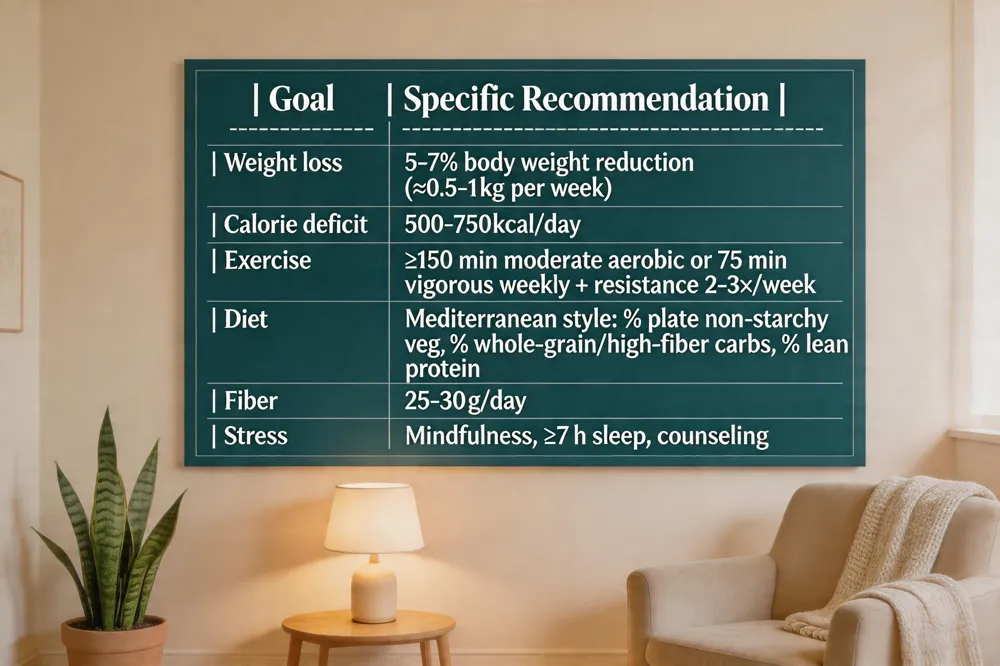 Prediabetes treatment is anchored in intensive lifestyle change. Guidelines from the American Diabetes Association call for a 5‑7 % body‑weight reduction, achieved through a modest calorie deficit and regular activity. Aerobic exercise of ≥ 150 minutes of moderate‑intensity (or 75 minutes of vigorous) per week, combined with resistance training 2–3 times weekly, improves muscle glucose uptake and insulin sensitivity. A Mediterranean‑style eating pattern—half the plate non‑starchy vegetables, a quarter whole‑grain or high‑fiber carbohydrate, and a quarter lean protein (fish, poultry, tofu, low‑fat dairy)—provides fiber, healthy fats, and antioxidants that stabilize blood glucose. Reducing refined carbs, added sugars, and processed foods while meeting a daily fiber goal of 25‑30 g further enhances glycemic control. Stress‑management techniques (mindfulness, adequate sleep, counseling) lower cortisol‑driven glucose spikes and support adherence.
Screening is recommended at age 35 (or earlier with risk factors) using A1C (5.7‑6.4 %), fasting glucose (100‑125 mg/dL), or a 2‑hour OGTT (140‑199 mg/dL). Most individuals are asymptomatic; subtle clues include fatigue, increased thirst, and acanthosis nigricans. If lifestyle goals are unmet after 3‑6 months, metformin may be added for high‑risk patients (BMI ≥ 35 kg/m², gestational‑diabetes history, or younger age). Structured Diabetes Prevention Programs provide education, coaching, and regular HbA1c monitoring every 3‑6 months to track progress and prevent progression to type 2 diabetes.
Pharmacologic Adjuncts – Metformin and GLP‑1 Agonists
| Medication | Indication | Key Benefits | Typical Effect |
|---|---|---|---|
| Metformin | High‑risk prediabetes (BMI ≥ 35, age < 60, prior GDM) | Improves hepatic insulin sensitivity, modest weight loss | ~31% reduction in progression |
| GLP‑1 agonists (semaglutide, dulaglutide, tirzepatide) | Obesity, metformin intolerance | Appetite suppression, weight loss 7‑10 lb, glucose lowering | 47‑point increase in normoglycemia, NNT = 2 |
| Combination (metformin + GLP‑1) | Patients needing greater HbA1c reduction | Complementary mechanisms | HbA1c ↓0.5‑0.7 % |
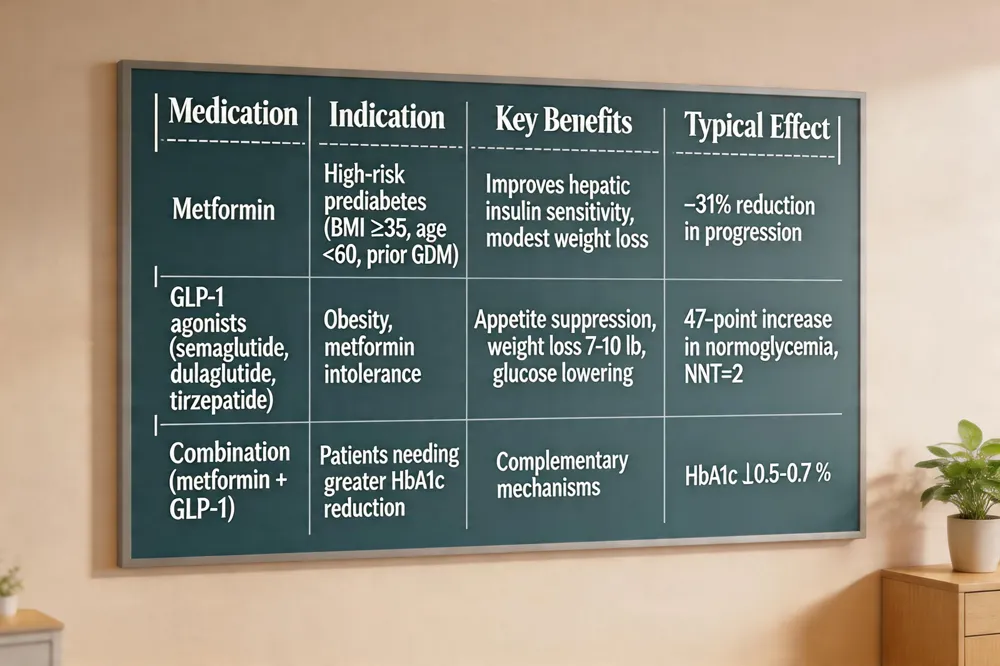 Metformin remains the first‑line pharmacologic option for prediabetes when lifestyle change alone is insufficient or when patients have high‑risk features (BMI ≥ 35 kg/m², age < 60, or prior gestational diabetes). Randomized trials and the Diabetes Prevention Program show a ~31 % reduction in progression to type 2 diabetes, primarily through improved hepatic insulin sensitivity and modest weight loss. Despite guideline endorsement, real‑world use is low, underscoring the need for personalized counseling.
GLP‑1 receptor agonists (e.g., semaglutide), dulaglutide, tirzepatide) provide additional benefits: they curb appetite, promote 7‑710‑‑–lb10 and enhance glucose lowering effects reduce..cemia.0.analyses report a 47‑percentage‑point increase in achieving normoglycemia versus control, with a number‑needed‑to‑treat of 2. These agents are especially useful for patients with obesity or those who cannot tolerate metformin.
Combined therapy—metformin plus a GLP‑1 agonist—leverages complementary mechanisms, yielding greater HbA1c reductions (0.5‑0.7 %) and higher remission rates than either drug alone. Emerging agents such as tirzepatide (dual GLP‑1/GIP agonist) have demonstrated up to a 94 % relative risk reduction for diabetes onset in the SURMOUNT‑1 trial, positioning them as promising adjuncts in proactive, longevity‑focused care.
What is the best medicine for prediabetes? No single drug works for everyone; the optimal approach integrates lifestyle modification with metformin for high‑risk individuals, while GLP‑1 agonists or newer dual‑incretin agents may be added based on BMI, comorbidities, and patient preference. Always discuss individualized options with a qualified health‑care professional.
Metformin for prediabetes – Evidence supports its use to improve insulin sensitivity and lower fasting glucose, particularly in younger, higher‑BMI patients. It is a cornerstone of personalized, proactive plans at institutes such as the Medical Institute of Healthy Aging.
New treatments – GLP‑1 receptor agonists and dual‑incretin drugs (tirzepatide) represent the latest FDA‑approved options for weight‑loss‑driven glycemic control, expanding the therapeutic arsenal beyond metformin.
Diabetes precautions – Continuous glucose monitoring, regular HbA1c checks every 3–6 months, smoking cessation, adequate sleep, and a balanced low‑carbohydrate diet remain essential to safely manage and prevent progression.
Monitoring and Personalized Care
| Test | Frequency | Purpose |
|---|---|---|
| HbA1c | Every 3‑6 months | Track long‑term glycemic control |
| Fasting plasma glucose | Every 3‑6 months | Detect trends, adjust therapy |
| 2‑hour OGTT | As needed (baseline, if unclear) | Confirm diagnosis |
| CGM | Continuous or periodic | Identify post‑prandial spikes, guide lifestyle |
| Patient education tools | Ongoing | Reinforce diet, activity, self‑monitoring |
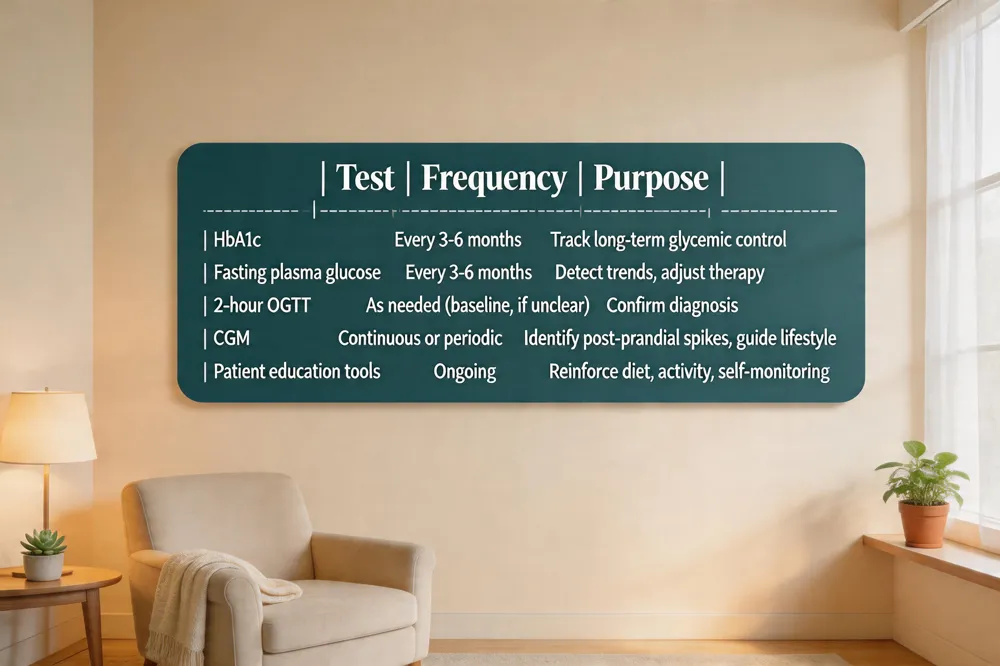 Regular laboratory testing remains the backbone of prediabetes management. The American Diabetes Association and major guidelines recommend Monitor hemoglobin A1C every 3–6 months to track progress and adjust therapy, alongside fasting plasma glucose checks, to track trends and adjust therapy promptly. In clinical practice, an oral glucose tolerance test (OGTT) performed after a standardized sugary drink provides the post‑prandial reference: a 2‑hour value of 140–199 mg/dL signals the prediabetes range, while <140 mg/dL is normal and ≥200 mg/dL indicates diabetes. Although a 1‑hour post‑meal cut‑off of 180 mg/dL is not part of formal criteria, many clinicians use it as an early warning sign.
Continuous glucose monitoring (CGM) offers real‑time insight into glucose excursions, empowering patients to fine‑tune diet, activity, and medication. CGM data can reveal hidden spikes after meals, confirm the effectiveness of weight‑loss strategies, and improve adherence by visualizing progress.
Patient education tools—such as printable PDFs, mobile food‑log apps, and structured Diabetes Prevention Program—translate evidence into actionable steps. These resources explain diagnostic thresholds, outline a balanced‑plate approach rich in fiber and healthy fats, and provide guidance on exercise prescriptions (150 minutes of moderate aerobic activity weekly plus resistance training). Ongoing coaching, motivational interviewing, and peer‑support groups further reinforce lifestyle changes, ensuring that monitoring translates into sustained glycemic control and reduced diabetes risk.
Success Stories and Real‑World Outcomes
| Patient | Intervention | Weight loss | Outcome |
|---|---|---|---|
| Val Roulic | Diabetes Prevention Program | 60 lb (27%) | Normalized glucose, stopped BP meds |
| Rick Hatcher | Half‑plate veg diet + 150 min/week aerobic | Not specified | Normal A1C |
| Barbara | Prevent T2 program | 95 lb | Reversal of prediabetes |
| SURMOUNT‑1 trial (tirzepatide) | Pharmacologic | 22.9 % body weight | 99% diabetes‑free at 176 weeks, 94% risk reduction |
 Prediabetes is a serious health condition that raises blood sugar above normal levels and increases the risk of cardiovascular disease, stroke, chronic kidney disease and fatty‑liver disease. Early detection and lifestyle changes—modest weight loss, regular physical activity, and blood‑pressure and cholesterol control—can halt or reverse its progression. Most people who adopt targeted lifestyle changes bring their blood‑sugar levels back into the normal range within 3 to 6 months; losing 5‑7 % of body weight and exercising at least 150 minutes per week are the key drivers. In 30 days, a Mediterranean‑style diet rich in vegetables, whole‑grain carbs and lean protein, combined with 150 minutes of moderate aerobic activity and two weekly resistance sessions, can lower fasting glucose and improve insulin sensitivity.
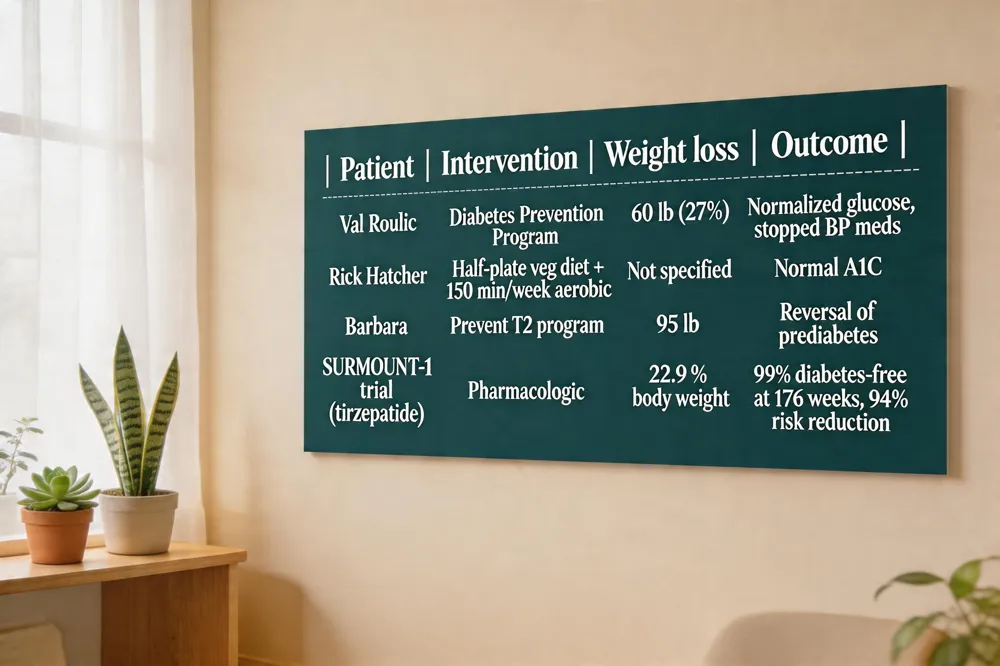
Patient case studies illustrate these principles. Val Roulic lost 60 lb (≈27 % of body weight) through a Diabetes Prevention Program, normalized her glucose, and stopped blood‑pressure medication. Rick Hatcher, after a hip fracture, adopted a half‑plate vegetable diet, lean proteins and water, achieving normal A1C. Barbara’s participation in the Prevent T2 program led to a 95‑lb loss and reversal of prediabetes.
Bariatric surgery yields 60–70% diabetes remission in eligible high‑BMI patients.
The recent SURMOUNT‑1 trial of tirzepatide showed a 94 % risk reduction for progression to type 2 diabetes, with 99 % of participants remaining diabetes‑free at 176 weeks and an average weight loss of 22.9 % (≈23 % of body weight). These data reinforce that prediabetes is reversible when evidence‑based lifestyle and, when needed, pharmacologic interventions are applied promptly and consistently.
Future Directions and Community Programs
| Initiative | Core components | Reported impact |
|---|---|---|
| NDPP (CDC‑recognized) | 150 min/week aerobic, weight‑loss coaching, nutrition education | 58% reduction in progression |
| MDIHA program | Mediterranean diet, HIIT, GLP‑1 agonists, behavioral support | Higher normoglycemia rates with ≥5% weight loss |
| Emerging combo therapies (metformin + GLP‑1, tirzepatide, early insulin GLP‑1) | Additive mechanisms | HbA1c ↓0.5‑0.7 %, risk reduction up to 94% |
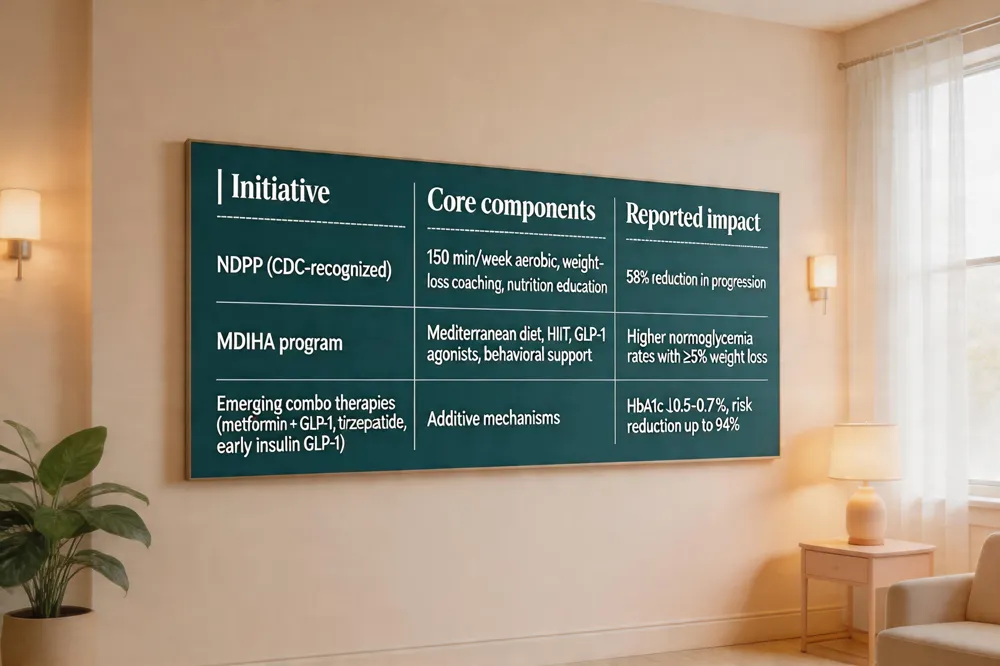 National Diabetes Prevention Prevention (NDPP) continues to be the backbone of community‑wide prediabetes care. CDC‑recognized groups deliver 150 min/week of moderate aerobic activity, weight‑loss coaching, and nutrition education that can cut progression to type 2 diabetes by 58 %. The Medical Institute of Healthy Aging (MDIHA) builds on this model with individualized health‑optimization plans that blend a Mediterranean‑style diet, high‑intensity interval training, GLP‑1 receptor agonists (e.g., semaglutide) and behavioral support. Their proactive, personalized approach yields higher rates of normoglycemia, especially when weight loss of ≥5 % is achieved. Emerging combination therapies—metformin paired with GLP‑1 agonists, tirzepatide, or early insulin‑plus‑GLP‑1 regimens—show additive benefits, reducing HbA1c by 0.5–0.7 % and lowering diabetes risk by up to 94 % in high‑risk cohorts.
Prediabetes guidelines: ADA recommends screening adults ≥45 y (or younger overweight/obese with risk factors). Diagnosis: A1C 5.7‑6.4 %, fasting glucose 100‑125 mg/dL, or 2‑h OGTT 140‑199 mg/dL. First‑line: intensive lifestyle change targeting ≥7 % weight loss and ≥150 min/week aerobic exercise; metformin for high‑risk patients (BMI ≥ 35 kg/m², gestational diabetes, etc.). Annual glucose/A1C monitoring is advised.
How to avoid diabetes: Lose 5‑7 % body weight, exercise ≥150 min/week plus resistance training, adopt a plant‑rich, high‑fiber diet, limit sugary drinks, reduce sedentary time, and obtain regular health check‑ups.
How to reverse prediabetes in 3 months: Follow a Mediterranean plate (½ veg,¼ whole‑grain carbs,¼ lean protein), create a 500‑750 kcal daily deficit, exercise 30 min daily with 2‑3 resistance sessions, prioritize 7‑9 h sleep, use stress‑reduction techniques, and monitor glucose/A1C every 3‑6 months.
Prediabetes patient information PDF: A printable guide that defines prediabetes, outlines diagnostic criteria, presents a balanced‑plate visual, lists lifestyle targets (weight loss, activity, diet), highlights NDPP enrollment, offers links to reputable resources (e.g., diabetes.org), and advises regular glucose monitoring and medication discussion with providers.
Conclusion: Proactive Path to Health
Personalized, proactive longevity plans integrate evidence‑based lifestyle counseling, targeted pharmacotherapy, and behavioral coaching to address each patient’s unique metabolic profile and risk factors. Continuous monitoring—quarterly HbA1c, fasting glucose, weight, and digital metrics from CGM or activity trackers—allows clinicians to fine‑tune interventions before glycemic drift occurs. Empowering patients through structured education, culturally tailored nutrition guidance, and shared decision‑making builds confidence and sustains adherence, turning knowledge into daily action. By coupling individualized treatment algorithms with real‑time feedback loops, health systems can delay or reverse prediabetes, preserve organ function, and extend healthspan well into older age. Long‑term success also relies on community resources, peer support groups, and digital coaching platforms that reinforce habit formation and provide rapid assistance when barriers arise for patients.