Why NAD+ Matters for Energy Renewal
NAD⁺ is a coenzyme that shuttles electrons in mitochondrial redox reactions, driving ATP synthesis, the cell’s energy currency. It also fuels PARPs and sirtuins, enzymes that detect DNA damage and orchestrate repair, preserving genomic integrity. NAD⁺ concentrations fall sharply after the twenties—by age 30 levels are half of youthful peaks, and by 50 they may drop another 30‑40 %. Poor diet, chronic stress, sedentary habits, and pollutants accelerate this decline, impairing mitochondrial efficiency and DNA repair. Oral nicotinamide riboside (NR) or nicotinamide mononucleotide (NMN) raise blood NAD⁺ modestly (≈150‑200 % after two weeks), but intestinal metabolism limits bioavailability. Intravenous infusion bypasses the gut, delivering milligram‑scale doses that raise plasma NAD⁺ 20‑30 % within hours, producing rapid cellular uptake. IV therapy can generate quick energy‑renewal signals but requires medical supervision and may cause infusion‑related side‑effects; oral precursors remain a safer long‑term option when paired with exercise, sleep, and a B‑3‑rich diet.
Understanding NAD+ and Consumer Perceptions
 NAD⁺ is a ubiquitous cellular coenzyme that fuels mitochondrial ATP production, DNA repair and sirtuin‑mediated autophagy.
Its concentrations peak in early adulthood and begin a measurable decline after the twenties, a drop accelerated by poor diet, chronic stress, sedentary habits, and environmental toxins.
To counteract this loss, consumers turn to oral precursors such as nicotinamide riboside (NR) and nicotinamide mononucleotide (NMN), as well as NAD⁺ IV infusions offered by boutique wellness clinics.
User feedback is heterogeneous: many report heightened energy, clearer skin, and sharper mental focus after several weeks, while a sizable minority experience only subtle or no change, citing gastrointestinal discomfort, flushing, or the high price as deterrents.
Expert consensus stresses that current human trials are small and inconclusive, urging caution before equating anecdotal gains with proven anti‑aging effects.
NAD reviews and complaints – Customer reviews reflect this split. Positive comments highlight perceived vitality boosts, whereas negative reviews focus on cost, mild side‑effects, and the lack of robust scientific validation.
What NAD does Jennifer Aniston take? – The actress has disclosed using a weekly NAD⁺‑based peptide regimen, administered by a medical professional as an IV or sub‑cutaneous injection. She frames the treatment as part of a broader longevity protocol, underscoring that such interventions should be pursued only under qualified medical supervision.
Clinical Evidence, Safety, and Expected Benefits
 Current human trials of NAD+ IV therapy are limited but informative. A small randomized, double‑blind pilot study comparing intravenous nicotinamide riboside (NR) with NAD+ showed that a single 500 mg NR IV raised blood NAD+ by ~20 % within three hours and produced fewer infusion‑related adverse events than NAD+ IV, which showed only modest, delayed NAD+ increases. Other early trials in chronic‑fatigue and Parkinson’s‑disease cohorts reported modest improvements in energy, mood, and gait speed, but sample sizes remain small and long‑term outcomes unproven.
Safety data across these studies and clinical practice indicate that NAD+ IV infusions are generally well‑tolerated. The most common side effects are mild and transient—nausea, flushing, headache, light‑headedness, fatigue, or brief site discomfort—often mitigated by slower infusion rates and hydration. Rare serious events include allergic reactions, vein irritation, infection, or electrolyte shifts, emphasizing the need for sterile preparation and professional monitoring. Individuals with severe organ disease, pregnancy, or known allergies should be screened carefully.
Potential metabolic and neuroprotective effects stem from NAD+’s role as a substrate for sirtuins and PARPs. Elevated NAD+ enhances mitochondrial ATP production, supports DNA repair, and may improve insulin sensitivity, lipid metabolism, and neuronal health. Pre‑clinical models suggest benefits for neurodegeneration and inflammation, but robust human evidence is still forthcoming. Regular, personalized dosing—typically a loading phase followed by maintenance every 4–6 weeks—aims to sustain these cellular advantages while minimizing adverse events.
Standard NAD+ IV Infusion Protocols and Dosage Strategies
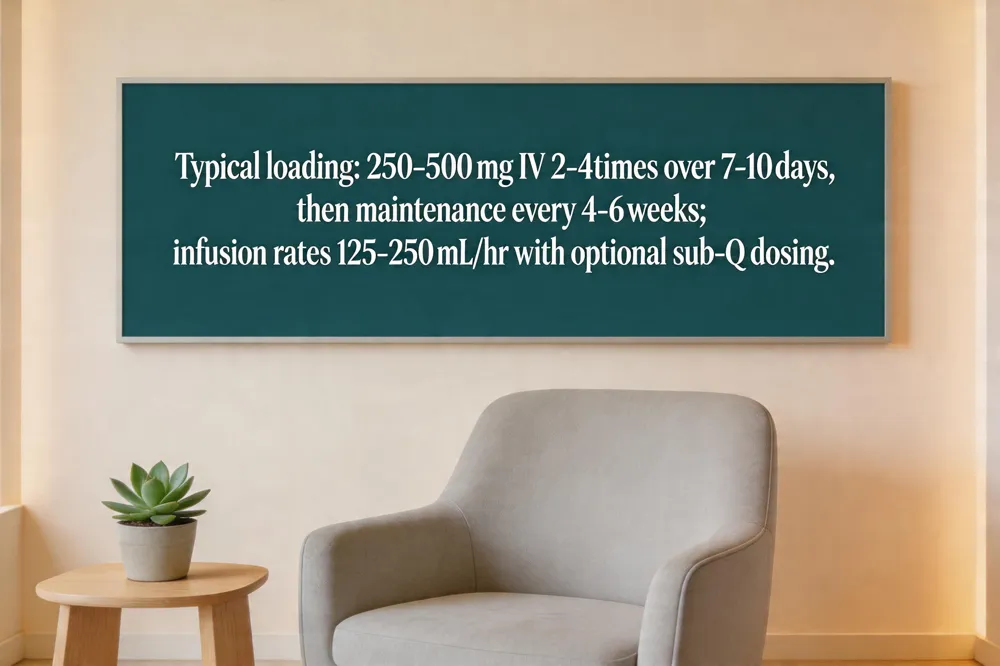 Loading phase vs. maintenance schedule – Most clinics begin with a loading phase of four to six NAD⁺ infusions over 7‑10 days (250 mg‑500 mg per session) to rapidly re‑stock cellular NAD⁺ stores. After the loading phase a maintenance infusion is typically scheduled every 4‑6 weeks, with some protocols using a monthly boost followed by a second boost at 3‑6 months to sustain optimal levels.
Typical infusion volumes, rates, and concentration – NAD⁺ is supplied as a 100 mg/mL sterile solution. A common regimen dilutes 2.5 mL (250 mg) in 500 mL of normal saline and runs the drip over 2 hours (≈125 mL/hr). For patients who tolerate the lower dose, a higher‑dose option uses 5 mL (500 mg) in 1,000 mL saline over 4 hours (≈250 mL/hr). Infusion times rarely exceed 4 hours to minimise nausea, chills, or flushing.
Individualization based on labs and tolerance – Baseline labs (NAD⁺ panel, renal/hepatic function, electrolytes) and a health screen guide the initial dose. Vital signs are monitored throughout each session; dose escalation is considered only after the first two infusions are well tolerated. Some physicians add sub‑cutaneous or intramuscular NAD⁺ (30‑50 mg daily) between IV visits to smooth troughs.
NAD+ infusion protocol – A typical protocol starts with a weekly 250 mg infusion (2.5 mL in 500 mL saline) over 2 hours, repeated for four weeks, then a maintenance infusion one month later and another at 3‑6 months. Patients may receive complementary sub‑Q NAD⁺ (30‑50 mg daily) to maintain cellular stores.
NAD+ IV dosage chart – 250 mg (2.5 mL) in 500 mL saline → 2 h; 500 mg (5 mL) in 1,000 mL saline → 4 h. Dosing is adjusted per individual response and clinical judgment.
How long does it take to see results from NAD+ IV? – Some report an immediate lift in energy and clarity; most notice measurable benefits within 1‑2 weeks, with peak effects (enhanced endurance, sleep quality, recovery) emerging after 4‑6 weeks of consistent treatment.
Financial Considerations and Practical Access
 NAD+ IV therapy is marketed as a high‑tech wellness intervention, but its price tag varies dramatically. A single infusion can cost anywhere from $250 for a modest 250 mg dose to $1,500 for a high‑dose (1,000 mg) protocol, with metropolitan clinics in Los Angeles, New York, or San Francisco typically charging $600‑$1,000 per session and smaller regional centers offering $300‑$500 options. Many providers bundle treatments into loading‑phase packages (4‑6 infusions) that lower the per‑session price to $250‑$800, and some offer monthly subscription models or home‑service discounts. Geographic price variation reflects clinic overhead, local regulatory scrutiny, and whether the infusion is performed in a dedicated med‑spa versus a physician‑supervised infusion center.
When evaluating cost‑benefit, patients should weigh the limited clinical evidence—most studies are small, short‑term, and focus on subjective outcomes such as increased energy, mental clarity, or faster recovery—against the out‑of‑pocket expense. Potential side effects (nausea, flushing, rare infection) and the necessity of multiple sessions for any sustained effect further influence value. For individuals seeking a brief wellness boost and who can afford the expense, the therapy may be justified; however, it should not be viewed as a proven anti‑aging cure. A thorough consultation with a licensed clinician, transparent pricing, and comparison of package versus per‑session rates are essential steps before committing to NAD+ IV therapy.
Patient Voices: Before‑After Transformations and Reviews
 Patients who begin NAD+ IV therapy commonly describe chronic fatigue, brain fog, poor sleep, and a dull, dehydrated complexion. Within the first week of a loading‑phase protocol (five infusions over ten days), many report a rapid surge in mental clarity, physical stamina, and improved sleep quality. By weeks two to four, skin tone often appears brighter, hydration increases, and recovery from exercise or cosmetic procedures accelerates. Over a month to two months, the metabolic benefits tend to stabilize, yielding sustained energy, reduced cravings, and greater stress resilience, while long‑term users note continued mitochondrial support and a more youthful appearance.
Visual documentation from clinics typically shows a stark contrast between baseline and post‑treatment photographs. Before images display uneven skin tone, fine lines, and a fatigued demeanor; after images reveal smoother, more radiant skin, reduced inflammation, and a more alert facial expression—often accompanied by improved posture and a healthier glow. Clinics usually capture these images at baseline and after 2–4 weeks of weekly NAD+ IV sessions to provide a clear side‑by‑side comparison.
Patient reviews are mixed. Positive reports emphasize short‑term boosts in energy, mood, and sleep, while acknowledging occasional side effects such as dizziness, nausea, or a transient metallic taste. The therapy is not FDA‑approved, costs $200–$1,500 per session, and should be performed at reputable facilities with qualified staff to mitigate infection risk. Overall, anecdotal experiences suggest a temporary wellness lift, but robust clinical evidence remains limited, and many benefits may be driven by placebo effects.
Women often highlight additional advantages: enhanced stamina, faster post‑exercise recovery, improved cognitive function during hormonal transitions, better skin elasticity, and potential support for hormonal balance and fertility. These gender‑specific observations are consistent with NAD+ role in mitochondrial function, DNA repair, and anti‑inflammatory pathways.
Metabolic Impact, Longevity Outlook, and Comparative Perspective
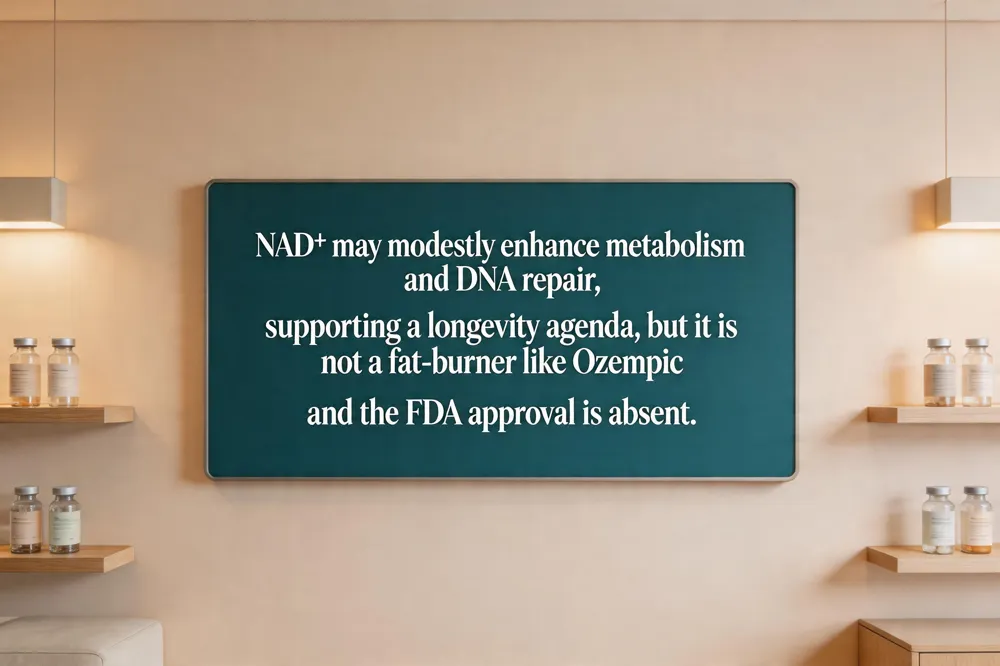 NAD⁺ is a central co‑enzyme that fuels mitochondrial ATP production and activates sirtuin pathways involved in DNA repair and autophagy. By improving mitochondrial efficiency, higher NAD⁺ levels can modestly enhance fat oxidation and appetite regulation, which may support weight‑management efforts. However, current research does not show a direct, targeted effect on abdominal fat; NAD⁺ should be viewed as a metabolic enhancer rather than a standalone belly‑fat burner.
NAD⁺ IV therapy pros and cons – Benefits reported by health‑optimization seekers include increased energy, clearer mental focus, better mood, and accelerated recovery, all linked to boosted cellular NAD⁺ stores. The therapy also promises anti‑aging effects such as improved DNA repair and skin quality. On the downside, NAD⁺ IV lacks FDA approval, robust large‑scale clinical data, and can cause nausea, headaches, vein irritation, or infection if sterile techniques are not followed. Sessions are costly (often $200‑$1,500) and oral precursors (NR, NMN) may provide a safer, more economical alternative.
NAD⁺ IV therapy benefits – Rapid elevation of intracellular NAD⁺ supports mitochondrial ATP generation, leading to reduced fatigue and heightened vitality. Neuro‑protective effects improve focus, memory, and mood, while activation of sirtuins and PARPs aids DNA repair and cellular renewal, contributing to longevity and healthier aging. Consistent protocols typically involve a loading phase of several infusions followed by maintenance every 4‑6 weeks.
Is NAD⁺ like Ozempic? – No. NAD⁺ is a cellular co‑enzyme that enhances intracellular metabolism and tissue regeneration, whereas Ozempic is a GLP‑1 receptor agonist that lowers blood glucose and suppresses appetite. They act on distinct biological pathways and serve different therapeutic goals.
Final Thoughts on NAD+ IV for Energy Renewal
When weighing anecdotal gains against scientific uncertainty, it is clear that NAD+ IV therapy remains an experimental wellness tool. Small pilot studies and case reports suggest transient improvements in energy, mood, and cognition, yet robust randomized trials are lacking and the mechanistic plausibility of direct NAD+ uptake is still debated. Because of these gaps, medical supervision is essential: licensed clinicians can verify sterility, adjust dosing (often a loading phase of 5 infusions followed by 4‑6‑week maintenance), and monitor for mild adverse effects such as flushing or nausea. Personalized protocols that incorporate baseline NAD+ levels, metabolic panels, and comorbidities improve safety and may enhance outcomes. Finally, NAD+ IV should be integrated into a broader longevity strategy that includes evidence‑based lifestyle measures—regular aerobic exercise, adequate sleep, a vitamin B3‑rich diet, and stress reduction—alongside other preventive interventions like hormone optimization, telomere monitoring, and targeted nutrition. In this context, NAD+ IV can serve as a complementary, not standalone, component of energy renewal and health‑span extension.