Why Chronobiology Matters for Healthy Aging
Circadian rhythms are endogenous ~24‑hour oscillations driven by a master pacemaker in the suprachiasmatic nucleus (SCN) of the hypothalamus. The SCN synchronizes peripheral clocks in liver, adipose tissue, muscle and other organs through light‑derived cues (zeitgebers) and hormonal signals such as cortisol and melatonin. Light exposure is the most potent zeitgeber: bright natural light in the early morning (2,500–5,000 lux for 20–30 min) advances the SCN, suppresses melatonin, and boosts cortisol, thereby sharpening alertness and priming glucose metabolism. Evening blue‑rich light delays melatonin onset, impairs insulin sensitivity, and disrupts downstream peripheral clocks. Consistent sleep‑wake timing stabilizes the SCN‑peripheral coupling, preserving the amplitude of clock‑gene expression (CLOCK, BMAL1, PER, CRY) that regulates DNA repair, mitochondrial function, and inflammation. Nutritional timing acts as a secondary zeitgeber; time‑restricted feeding (8–10‑hour daylight window) aligns nutrient influx with peak insulin sensitivity, enhances BAT thermogenesis, and improves lipid handling. Misalignment—shift work, irregular meals, or late‑night screens—dampens circadian amplitude, raises cortisol, reduces melatonin, and accelerates metabolic dysregulation, increasing risk for obesity, type 2 diabetes, cardiovascular disease, and neurodegeneration. By deliberately synchronizing light exposure, sleep schedules, and meal timing to an individual’s chronotype, chronobiology‑based interventions reinforce cellular homeostasis, lower inflammatory load, and extend healthspan, offering a proactive, personalized strategy for healthy aging.
The Foundations of Chronobiology
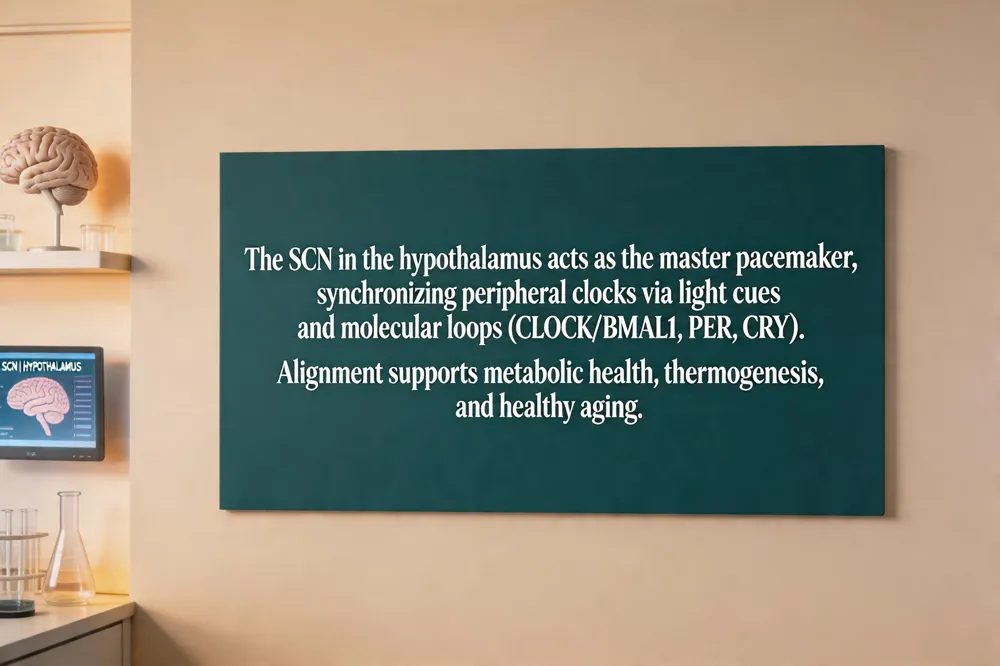 The suprachiasmatic nucleus (SCN) in the hypothalamus serves as the master pacemaker that synchronizes the body’s ~24‑hour rhythms to the external light‑dark cycle. Light information reaches the SCN via intrinsically photosensitive retinal ganglion cells, and the resulting neuronal output entrains peripheral oscillators throughout the body. At the molecular level, the core clockwork consists of interlocking transcription‑translation feedback loops driven by the genes CLOCK, BMAL1, PER and CRY. CLOCK‑BMAL1 heterodimers activate PER and CRY transcription; accumulated PER/CRY proteins then inhibit CLOCK‑BMAL1 activity, creating a self‑sustaining oscillation. These clock proteins also regulate downstream metabolic genes in peripheral tissues. In the liver and gut, circadian clocks coordinate nutrient processing, insulin sensitivity, and bile acid synthesis, while in brown adipose tissue (BAT) they modulate thermogenesis via UCP1 expression. Alignment of central and peripheral clocks through timed light exposure, consistent sleep‑wake schedules, and chrononutrition preserves clock amplitude, supports metabolic health, and underpins strategies for healthy aging and health‑span extension.
Morning Light, Cortisol, and Melatonin
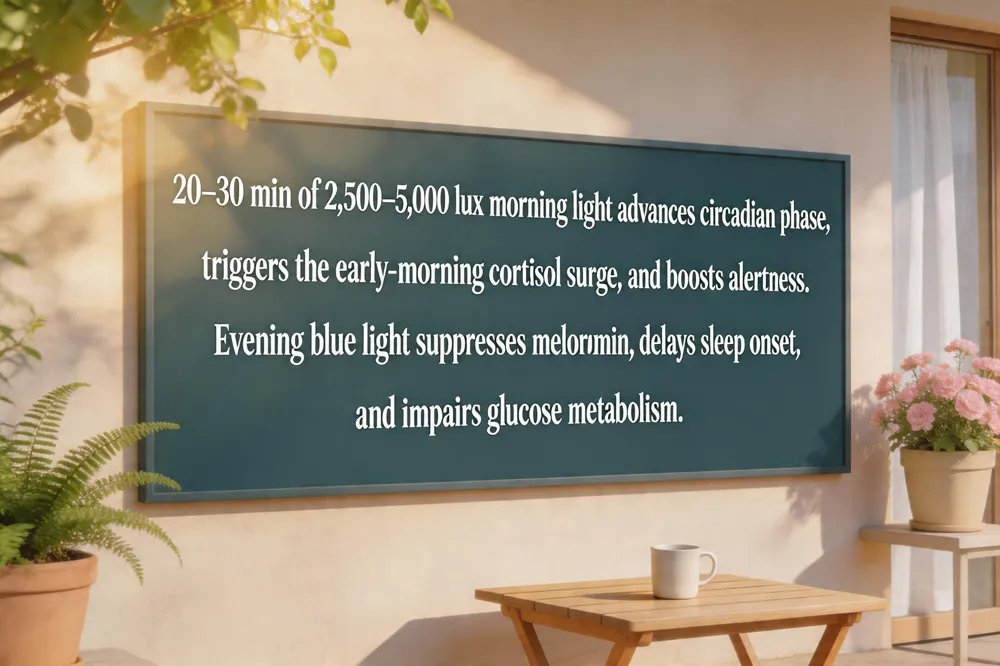 Bright natural light is the most powerful zeitgeber for the suprachiasmatic nucleus. A 20‑30 minute exposure to 2,500–5,000 lux of morning sunlight synchronizes the central clock, advances the circadian phase, and triggers the early‑morning cortisol surge. Cortisol levels begin to climb shortly after dawn, peak between 5 a.m. and 8 a.m., and provide the alertness, mobilized glucose, and anti‑inflammatory tone needed for daytime activity.
In the evening, exposure to blue‑rich artificial light from screens or LED bulbs suppresses melatonin production, delays its onset, and disrupts peripheral clocks in liver, adipose, and muscle. This misalignment reduces insulin sensitivity, impairs glucose tolerance, and promotes weight gain and metabolic syndrome.
What hormone wakes you up at 5 a.m.? The hormone is cortisol, released in response to light‑driven SCN signaling, peaking in the early morning to promote wakefulness and energy mobilization.
The effects of light at night on circadian clocks and metabolism. Nighttime blue light suppresses melatonin, shifts peripheral clock gene expression, impairs glucose and lipid regulation, and is linked to higher obesity, diabetes, and cardiovascular risk. Reducing evening blue light exposure restores melatonin, improves metabolic health, and supports overall healthspan.
Sleep Timing and the Forbidden Hour
 Consistent bedtime and wake‑time
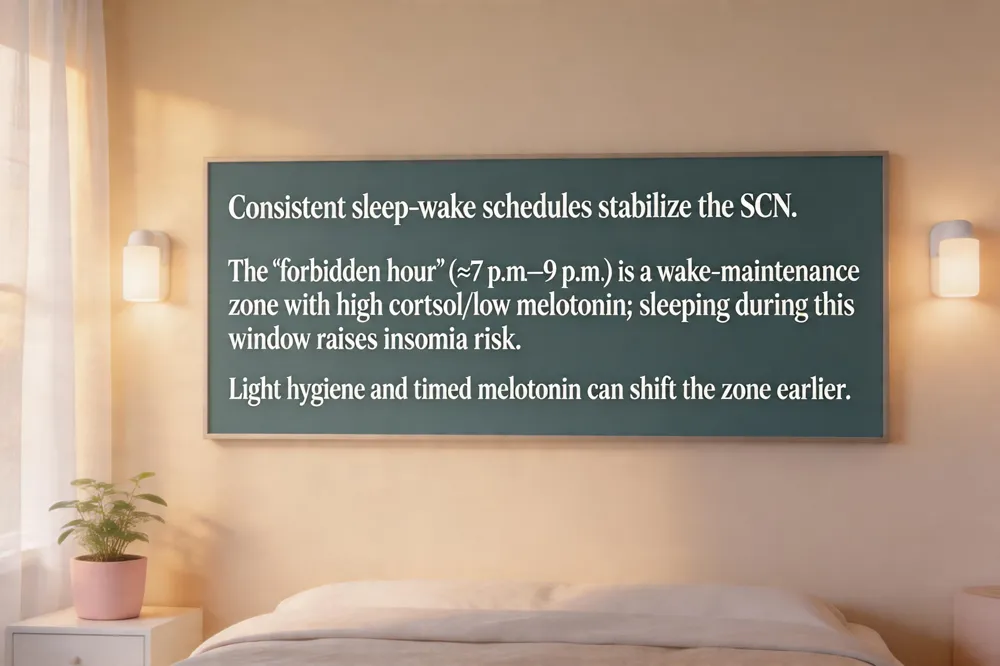
Maintaining the the sleep‑wake schedule each day—including weekends—stabilizes the suprachiasmatic nucleus (SCN) and preserves the amplitude of circadian oscillations. Regular timing synchronizes peripheral clocks in liver, gut, and brown adipose tissue, supporting insulin sensitivity, hormone balance, and cellular repair, all of which are essential for health‑span extension.
Wake‑maintenance zone (forbidden hour)
The “forbidden hour,” also called the wake‑maintenance zone, typically spans from about 7 p.m. to 9 p.m. in individuals with a normal circadian phase. During this window the SCN emits a strong alerting signal (high cortisol, low melatonin), actively inhibiting sleep‑promoting nuclei. Lying in bed at this time conditions arousal and raises insomnia risk. Shifting light exposure—bright natural light in the morning and dim, amber lighting in the evening—can move the zone earlier, facilitating earlier sleep onset.
Impact on melatonin and sleep onset
Melatonin production rises sharply after the forbidden hour, signaling the body to transition to sleep. Suppressing melatonin with evening blue‑light exposure or late meals blunts this signal, delaying sleep onset and impairing glucose metabolism. Timed melatonin supplementation (0.5–5 mg, 30 min before intended bedtime) can reinforce the natural rise when light hygiene is insufficient.
Circadian rhythm
A Circadian rhythm is the body’s internal 24‑hour clock that synchronizes vital processes such as sleep‑wake cycles, hormone release, temperature, and metabolism with the day‑night environment. The master clock resides in the suprachiasmatic nucleus of the hypothalamus and is most strongly reset by light entering the eyes, which modulates melatonin production and other signaling pathways. When the rhythm is aligned with natural light cues, sleep is deeper, cognitive function is sharper, and metabolic health is optimized—key factors for healthy aging. Disruptions from irregular schedules, shift work, excessive nighttime screen exposure, or jet lag can impair these functions and accelerate age‑related decline. Maintaining a consistent daily routine, getting bright morning light, limiting evening blue light, and, when needed, using timed melatonin can help keep the circadian system robust and support long‑term vitality.
What is the forbidden hour of sleep?
The “forbidden hour” of sleep—also called the wake‑maintenance zone—begins around 7 p.m. in people with normal circadian rhythms and lasts until roughly 9 p.m., when melatonin production starts to rise and the alerting signal from the internal clock wanes. During this window the body’s suprachiasmatic nucleus actively promotes wakefulness while inhibiting the sleep‑inducing nuclei, making it hard to fall asleep. It typically occurs about four hours before an individual’s usual sleep onset. Lying in bed during this period can create conditioned arousal and increase the risk of insomnia. Adjusting light exposure or shifting the circadian phase can move the forbidden zone earlier and improve sleep onset.
Chronotype Spectrum and Health Implications
 Human chronotypes fall along a spectrum that includes early‑morning “larks,” late‑night “owls,” intermediate “bears,” and the less common “dolphin pattern. Dolphins, who make up roughly 10 % of the population, are the rarest chronotype. They are light‑sleepers with fragmented sleep, often waking easily and feeling fatigued; their peak alertness occurs in late‑morning to early‑evening hours rather than at sunrise or midnight. Recognizing a dolphin chronotype enables targeted sleep‑hygiene and scheduling strategies to mitigate insomnia and improve overall well‑being.
Among the major chronotypes, early‑morning types (larks) show the healthiest metabolic profile. Research consistently links larks to higher insulin sensitivity, greater fat oxidation at rest and during exercise, and lower prevalence of type 2 diabetes and obesity. They also tend to have higher VO₂max, better metabolic flexibility, and more consistent morning activity, reducing sedentary time. In contrast, night owls rely more on carbohydrate metabolism, are more sedentary, and exhibit higher rates of metabolic‑syndrome‑related conditions. Aligning daily habits—light exposure, meal timing, and exercise—to an early‑chronotype schedule therefore supports optimal metabolic health and longevity.
Time‑Restricted Feeding and Metabolic Alignment
 Meal timing and insulin sensitivity are tightly coupled. Studies show that glucose tolerance peaks during daylight hours, while evening meals blunt insulin response and increase fat storage Chrono‑Nutrition: Optimizing Individualized Nutrition with Circadian Rhythms. Time‑restricted feeding (TRF) within an 8–10‑hour window enhances peripheral clock entrainment in liver and gut, improving insulin signaling and lipid handling. Early‑day carbohydrate intake, followed by protein‑rich meals later, stabilizes post‑prandial glucose and lowers HbA1c in diabetic patients.
Chrononutrition and sleep are bidirectional. Consistent daytime eating supports melatonin rhythm and reduces sleep latency, whereas late‑night, heavy meals delay sleep onset and fragment deep‑sleep stages How Circadian Rhythms Improve Sleep and Health, Qualia. Aligning meals with natural light exposure—bright morning light and dim evening lighting—reinforces circadian amplitude, improves sleep efficiency, and mitigates metabolic jet lag.
In diabetes management, chrononutrition offers a non‑pharmacologic lever. Front‑loading protein and low‑glycemic carbs in the morning blunts post‑prandial spikes, while an early evening protein‑focused dinner preserves insulin sensitivity. Personalizing these timing strategies to an individual’s chronotype further optimizes glycemic control and extends healthspan.
Digital Tools: Apps and Questionnaires
 Chrononutrition tracking apps translate the science of circadian‑aligned eating into everyday practice. By logging meals, sleep, activity and light exposure, they reveal how calorie, protein and micronutrient timing influences the master clock and peripheral metabolic clocks. Apps such as Cronometer provide macro‑ and micronutrient breakdowns, fasting‑timer features, and device sync that help users schedule larger, nutrient‑dense meals in the morning and lighter fare later, supporting insulin sensitivity, brown‑fat activation and sleep quality.
The Chrononutrition Questionnaire (CNQ) is a validated self‑report instrument that captures six‑week patterns of meal timing, sleep‑wake schedules and work‑day rhythms using a 24‑hour format. Its demographic, occupational and timing sections generate a circadian eating profile that correlates strongly with metabolic outcomes (r = 0.39–0.91).
Data‑driven coaching integrates app‑derived metrics and CNQ responses, allowing clinicians at longevity clinics to tailor light‑therapy, sleep‑hygiene and personalized nutrition plans that reinforce robust circadian amplitude and extend healthspan.
Targeted Nutrition and Supplement Strategies
 For athletes and active individuals, Healthspan Elite gels provide a fast‑acting carbohydrate‑electrolyte blend (≈100 kcal per 60 g sachet) that sustains blood‑glucose levels and prevents cramping during prolonged exertion. Formulated with maltodextrin, fructose, sodium, potassium, and citric acid, the vegan‑friendly gels are available in Passion Fruit, Apple & Blackcurrant, and Citrus flavors and can be integrated into pre‑, intra‑, or post‑exercise nutrition plans.
The Longevity RX line, developed by Dr. Will Cole, delivers whole‑food‑sourced, third‑party‑tested nutrients targeting mitochondrial function, gut integrity, and cellular repair. Products such as Liv120 Superfood Powder, MitoMultiply methylated multivitamin, Mag18 peptide‑powered magnesium, Stem‑Cell Protein, and Probiotic Trillion are designed for daily vitality and cognitive focus, positioning them as proactive tools for extending healthspan.
Finally, metformin is emerging as a pharmacologic healthspan intervention. Low‑dose, long‑term use improves insulin sensitivity, activates AMPK‑driven autophagy, and reduces chronic inflammation. Pre‑clinical mouse studies and epidemiological human data link metformin to lower incidences of cancer, cardiovascular disease, and neurodegeneration, making it a well‑tolerated adjunct to lifestyle‑based longevity strategies.
Healthspan Definition and Emerging Therapies
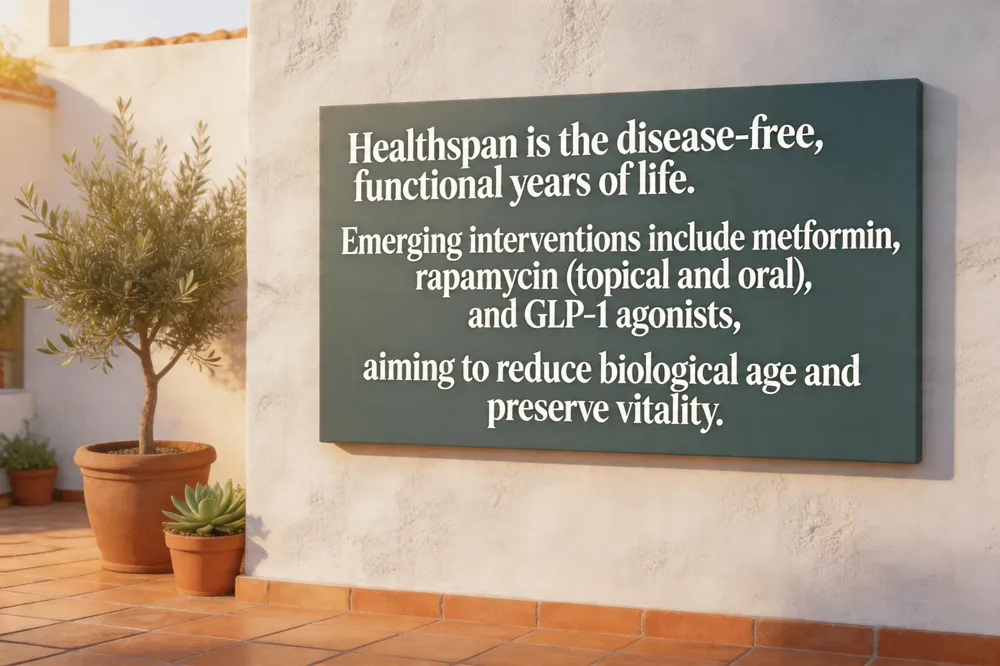 Healthspan refers to the portion of life spent in robust physical and mental health, free from chronic disease and functional decline. While average lifespan has risen, many seniors experience years of disability; modern longevity science therefore targets healthspan directly using biomarkers, personalized protocols, and interventions such as metformin, rapamycin, and GLP‑1 agonists. At the Medical Institute of Healthy Aging, comprehensive lab testing, data‑driven coaching, and evidence‑based supplements are combined to optimize cellular repair, hormonal balance, and metabolic health, aiming to reduce biological age and preserve vitality.
The Healthspan – Healthspan is the period of life lived without disease‑related limitations. It focuses on preserving function, cognition, and quality of life rather than merely extending chronological years. Interventions that improve insulin sensitivity, reduce inflammation, and support mitochondrial function are central to extending this healthy window.
Healthspan topical rapamycin reviews – Early users of Healthspan’s topical rapamycin report smoother, firmer skin and reduced fine lines, often noting benefits that surpass traditional retinol. A typical regimen involves twice‑daily application on the face and occasional use on hands, sometimes paired with low‑dose oral rapamycin. Mild side‑effects such as sun sensitivity, dryness, and occasional pimples have been reported, leading some to cycle the product every 2–3 days. While anecdotal results are encouraging, long‑term clinical data remain limited, underscoring the need for rigorous trials to confirm efficacy and safety.
Cost, Coaching, and Program Access
 Healthspan services can be purchased in several ways, ranging from a one‑time Starter Kit for $499 to Individual Kits priced at $799 each. For ongoing support, the Longevity Kit Subscription delivers a new kit every three months at $699 per kit. If you commit to the full program, a 5‑kit pre‑pay option costs $3,245 total ($649 per kit). Many of these services are eligible for HSA, HCSA, or FSA reimbursement and some private insurance plans may cover part of the cost. All pricing is transparent with no hidden fees.
Jim Lanzilotti, PhD, NBC‑HWC is a senior Healthspan coach who has been guiding clients for over 20 years, helping more than 2,000 individuals achieve weight‑loss and health‑optimization goals. He brings a direct yet supportive coaching style, focusing on habit formation that sticks and integrates evidence‑based recommendations with each member’s medical history and biomarkers. Working alongside other PhD‑level experts, Jim collaborates with dedicated Healthspan physicians to ensure personalized, data‑driven protocols are coordinated and measurable. His expertise spans nutrition, exercise, sleep, and metabolic health, making him a key figure in Healthspan’s longevity‑focused programs. Members regularly consult him for ongoing adjustments and accountability throughout their health‑span journey.
Biomarker Panels and Personalized Longevity
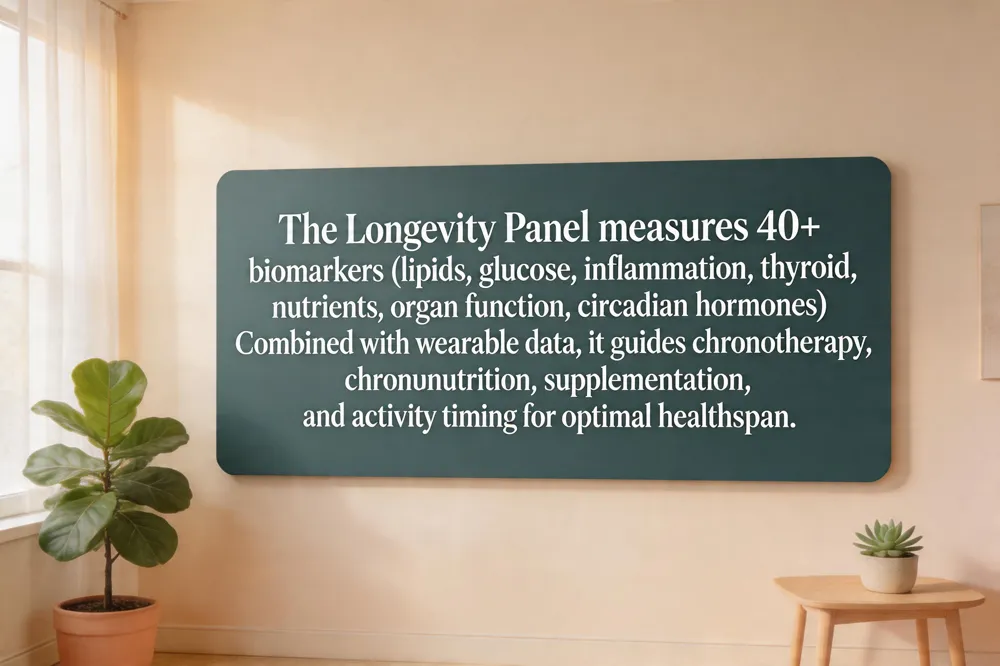
Longevity Panel
A Longevity Panel is a comprehensive blood‑test panel designed to assess the biomarkers most closely linked to aging, disease risk, and overall vitality. It measures over 40 key markers—including lipid profiles (LDL, HDL, ApoB, Lp(a)), glucose and insulin regulation (fasting glucose, HbA1c, insulin), inflammation (hs‑CRP, ESR), thyroid function (TSH, Free T3/T4), vitamin and nutrient levels (vitamin D, B12, ferritin), and liver‑kidney function—to provide a detailed snapshot of metabolic, cardiovascular, and hormonal health. The results are delivered in a clear, physician‑reviewed report within two weeks, highlighting areas for proactive intervention and estimating biological age. By identifying early signs of insulin resistance, heart disease, inflammation, or nutrient deficiencies, the panel empowers individuals to personalize lifestyle, nutrition, and supplement strategies that support longer, healthier lives. The test is ordered online, performed at a CLIA‑certified lab, and is ideal for anyone seeking science‑backed guidance for longevity and healthy aging.
Longevity Panel Composition
The panel includes:
- Lipid metabolism: LDL, HDL, ApoB, Lp(a) – to gauge cardiovascular risk.
- Glucose homeostasis: fasting glucose, HbA1c, fasting insulin, HOMA‑IR – to detect early insulin resistance.
- Inflammation markers: hs‑CRP, ESR – chronic low‑grade inflammation is a hallmark of accelerated aging.
- Thyroid axis: TSH, free T3/T4 – thyroid health influences basal metabolic rate and energy.
- Nutrient status: vitamin D, B12, ferritin, magnesium, zinc – deficiencies impair mitochondrial function and immune resilience.
- Organ function: ALT, AST, creatinine, eGFR – to monitor liver and kidney health.
- Hormonal balance: cortisol rhythm (salivary morning/evening), melatonin (night‑time urine) – to assess circadian integrity.
Integration with Wearable Data
Wearable devices capture continuous metrics such as sleep duration, sleep‑stage distribution, heart‑rate variability, activity patterns, and ambient light exposure. By linking these real‑time data streams with the static biomarker snapshot from the Longevity Panel, clinicians can:
- Validate circadian alignment – correlating melatonin levels with nighttime darkness exposure and sleep‑phase stability.
- Detect metabolic drift – matching glucose‑related markers with timing of meals and physical activity logged by the device.
- Refine risk stratification – using wearable‑derived heart‑rate variability and activity amplitude to contextualize inflammatory marker trends. The combined dataset enables a dynamic, feedback‑driven model of healthspan that updates recommendations as lifestyle patterns evolve.
Actionable Insights for Healthspan
Based on panel results and wearable trends, personalized interventions may include:
- Chronotherapy: scheduling light exposure (bright morning light, dim evening lighting) and melatonin supplementation to restore robust circadian amplitude.
- Chrononutrition: implementing time‑restricted feeding (8‑10 hour daylight window), emphasizing a nutrient‑dense breakfast and limiting caloric intake after 7 p.m. to improve insulin sensitivity.
- Targeted supplementation: correcting identified deficiencies (e.g., vitamin D, magnesium, omega‑3) to support mitochondrial function and reduce inflammation.
- Physical activity timing: aligning workouts with the individual's chronotype—morning or early‑afternoon sessions for early birds, late‑day activity for night owls—to enhance metabolic entrainment.
- Lifestyle monitoring: using wearable alerts to maintain consistent sleep‑wake times, reduce evening blue‑light exposure, and ensure adequate daytime light exposure.
By integrating a scientifically robust Longevity Panel with continuous wearable analytics, patients receive a precise, data‑driven roadmap that targets the biological levers of aging, ultimately extending healthspan and preserving functional vitality.
Putting Chronobiology Into Practice
Key take‑aways for sleep, light, and nutrition alignment: • Consistent sleep‑wake times (7–9 h) reinforce the suprachiasmatic nucleus, stabilize cortisol and melatonin rhythms, and protect against metabolic dysregulation. • Bright natural light (≈2,500–5,000 lux for 20–30 min) in the early morning entrains the central clock, boosts alertness, and prepares peripheral tissues—especially brown adipose tissue—for optimal thermogenesis. • Evening exposure to blue‑rich light suppresses melatonin; dim, warm lighting or amber‑tinted glasses after sunset preserves hormonal balance and glucose tolerance. • Time‑restricted feeding (8–10‑hour daylight window) with larger meals earlier in the day aligns peripheral clocks, enhances insulin sensitivity, and reduces obesity risk. Tryptophan‑rich foods support melatonin synthesis, while caffeine after mid‑afternoon should be avoided. How MDIHA integrates these principles: • Light‑therapy boxes (10,000 lux, 20 min) and structured morning outdoor exposure are prescribed based on chronotype. • Sleep‑coaching enforces regular bedtime/wake‑time, amber bedroom lighting, and strategic napping. • Chrononutrition plans deliver calibrated calorie distribution (breakfast‑dominant), nutrient timing (protein‑rich morning meals, light evening meals), and optional melatonin or magnesium supplementation. Next steps for readers seeking personalized longevity:
- Determine your chronotype using a validated questionnaire (e.g., MCTQ).
- Track sleep, light, and meals with a wearable or app for at least two weeks.
- Consult a chronobiology‑trained clinician (MDIHA or similar) to receive a data‑driven protocol that synchronizes sleep, light, and nutrition to your internal clock, thereby optimizing healthspan.