Introduction
Seasonal wellness programs aim to counteract the predictable swings in immune competence and energy that occur with changing weather, daylight, and stressors. As winter reduces vitamin D synthesis and dry air impairs mucosal barriers, many seek rapid, high‑bioavailability interventions. Intravenous (IV) therapy delivers fluids, electrolytes, and micronutrients directly into the bloodstream, bypassing gastrointestinal absorption and first‑pass metabolism. This results in near‑100 % bioavailability and can achieve plasma concentrations of vitamin C, zinc, and B‑complex vitamins far above oral levels, supporting antioxidant defenses, leukocyte function, and cellular energy. While IV nutrient infusions are established for correcting documented deficiencies and severe dehydration, their routine use for seasonal immune boost in healthy adults remains an emerging, evidence‑limited practice.
Efficacy and Safety of IV Immune Restoration
 IV immune‑restoration protocols, most often high‑dose vitamin C combined with zinc, glutathione, and B‑complex vitamins, achieve near‑100 % bioavailability and rapidly raise plasma nutrient concentrations. Clinical trials in severely ill or malabsorptive patients show modest improvements in leukocyte function, reduced oxidative stress, and faster wound healing. However, large‑scale randomized studies in healthy adults are scarce; the few small trials report mixed outcomes, with no statistically significant reduction in infection rates or illness duration for most participants.
Safety considerations are paramount. Sterile technique minimizes infection risk, yet phlebitis, bruising, and rare electrolyte disturbances occur in <0.5 % of professionally administered infusions. High‑dose vitamin C can cause transient renal stone formation in susceptible individuals, and excess fat‑soluble vitamins may lead to toxicity if dosing is not monitored. Cardiovascular patients are at risk for fluid overload and altered blood pressure.
Advantages include rapid rehydration, correction of documented deficiencies (e.g., B12, folate, vitamin C) in gastrointestinal disease, and short‑term symptom relief such as increased energy and reduced fatigue. Disadvantages comprise high out‑of‑pocket cost ($100‑$800 per session), lack of insurance coverage, and limited evidence beyond anecdotal reports.
Overall, IV immune restoration offers a useful adjunct for those with proven nutrient deficits or acute medical needs, but for the general, well‑nourished population, oral nutrition, regular exercise, adequate sleep, and vaccination remain the evidence‑based cornerstones of immune health.
Nutrient Sources: Foods, Supplements, and Vitamins
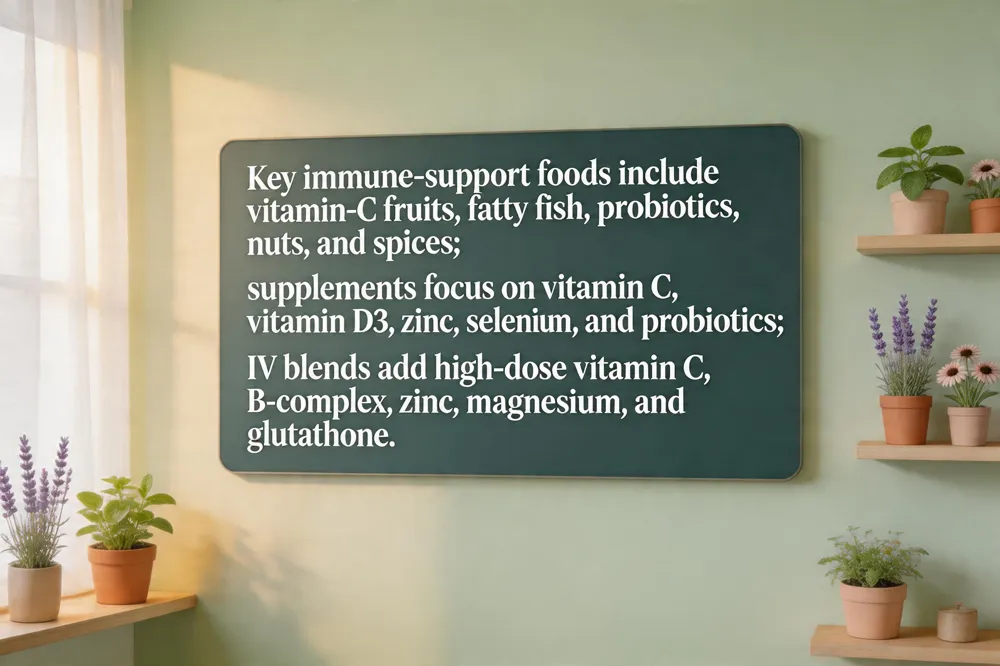 Best immune support foods – Vitamin‑C‑rich fruits (citrus, berries, kiwi) and vegetables (bell peppers, leafy greens) provide antioxidants that protect leukocytes. Fatty fish (salmon, mackerel, sardines) supply omega‑3 fatty acids that modulate inflammatory pathways. Probiotic‑rich foods (yogurt, kefir, fermented vegetables) nurture the gut microbiome, a central hub of immune regulation. Nuts, seeds, and spices (garlic, ginger, turmeric) add zinc, selenium, vitamin E, and phytochemicals that further bolster defenses.
Best immune support supplements – Targeted micronutrients are most effective when baseline nutrition is adequate. Vitamin C (500‑1000 mg/day), vitamin D3 (1000‑2000 IU/day), zinc (15‑30 mg/day), and selenium (55 µg/day) have the strongest evidence for enhancing immune competence. Elderberry extract and high‑quality probiotics add antiviral and gut‑associated benefits, while a comprehensive multivitamin fills residual gaps in vitamins A, E, and B‑complex. Omega‑3 fatty acids are recommended for additional anti‑inflammatory effects.
Best immune support vitamins – Vitamin C (antioxidant, leukocyte function), vitamin D3 (modulates innate and adaptive immunity), vitamin E (membrane protection), and vitamin A (beta‑carotene; maintains mucosal barriers) are the core vitamins linked to robust immune responses.
Immune boost IV ingredients – A typical formulation includes high‑dose vitamin C (10‑30 g), a B‑complex blend (B1, B2, B3, B5, B6, B12), zinc, magnesium chloride, and balanced electrolytes (sodium, potassium). Antioxidants such as glutathione and optional selenium are added for cellular detoxification, all delivered in a saline or lactated Ringer’s base for rapid hydration and nutrient bioavailability.
Cost, Access, and Provider Landscape
 IV vitamin therapy is priced as a premium wellness service. In the United States a typical infusion ranges from $150‑$300, with basic hydration drips at $85‑$120 and high‑dose cocktails (Myers’, NAD+, anti‑aging blends) reaching $350‑$500. Mobile delivery adds a $50‑$100 convenience fee, so a $199 in‑office Myers Cocktail may cost $219‑$239 at home. Most insurers do not cover elective infusions; patients rely on out‑of‑pocket payment or HSA/FSA accounts. Clinics mitigate cost through membership tiers or package discounts that lower per‑session fees by 15‑30 %.
Prime IV therapy exemplifies this model with three subscription plans—Select ($94/mo), Essentials ($159/mo), and Transformation ($299/mo)—each providing a primary drip, optional B‑12 or Lipolean shots, and progressive discounts on add‑ons. A dedicated NAD+ membership ($275/mo) adds cellular rejuvenation.
Regional access varies. Houston residents can book mobile services such as Bounce Hydration or Mobile IV Medics, where sessions cost $149‑$259 and are HSA‑eligible. In‑office options include Revived IV Therapy ($150‑$250 per infusion) and ThrIVe Drip Spa ($180‑$350), both offering physician‑directed formulations. Spring, TX patients have IVX Health Spring Infusion Center for prescription‑grade infusions and mobile providers like IVTherapy2Go®. Pearland, TX offers iCRYO Shadow Creek and Total Wellness Drip Spa, with standard drips $150‑$250 and specialty blends up to $500.
To locate an “immune IV drip near me,” search online directories, use health‑service apps, or consult provider websites (e.g., The Hydration Room, Medical Institute of Healthy Aging). Verify that the clinic employs licensed nurses or physicians, offers a pre‑infusion health screen, and provides transparent pricing before scheduling.
Therapeutic Applications and Clinical Evidence
 IV vitamin therapy delivers nutrients directly into the bloodstream, achieving near‑100 % bioavailability and rapid rehydration.
Cold and flu – High‑dose IV vitamin C, zinc, and B‑complex can shorten symptom duration by roughly 1–2 days in some trials, but benefits are modest and inconsistent. The main value lies in rapid hydration and supporting immune cells while oral intake may be limited; IVs are adjunctive, not a replacement for rest, fluids, or vaccination.
Fibromyalgia – Small pilot studies report pain reductions up to 60 % and fatigue improvements of 80 % after weekly infusions of magnesium, vitamin C, B‑vitamins and and amino acids. These nutrients bypass gastrointestinal malabsorption and may correct deficiencies that exacerbate pain, yet evidence is limited to few small trials and should be used alongside conventional therapies.
Skin health – Formulations containing vitamin C, glutathione, and biotin are marketed to boost hydration, collagen synthesis, and complexion radiance. Preliminary case reports suggest modest texture gains, but large‑scale, controlled data are lacking; observed changes likely stem from improved hydration rather than lasting structural remodeling.
Skin whitening – Glutathione can inhibit melanin synthesis in vitro, yet human studies show only fleeting lightening that fades after treatment cessation. Risks include electrolyte imbalance and liver stress, making IV whitening experimental rather than proven.
Overall, IV therapy offers a rapid delivery platform for nutrient repletion, but robust clinical evidence supports its use mainly in deficiency correction or as an adjunct in acute illness, not as a universal wellness cure.
Practice Guidelines, Protocols, and Research Resources
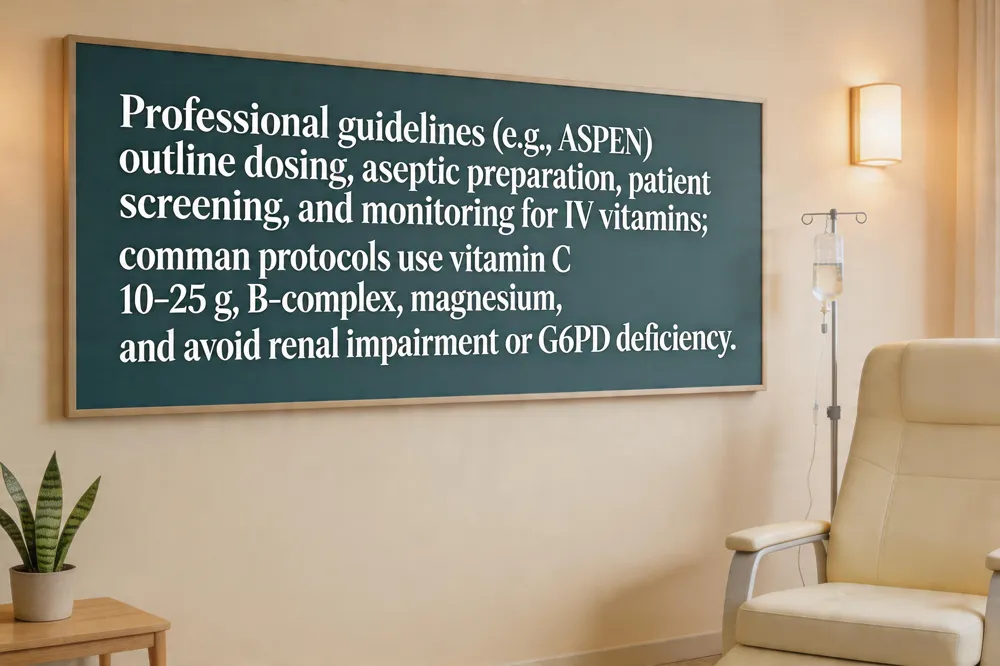 Professional societies such as ASPEN publish detailed PDF manuals that outline dosage ranges, infusion rates, and safety checks for IV nutrients—including vitamin C, B‑complex, magnesium, calcium, zinc, and glutathione. Clinic‑specific PDFs (e.g., Fort Wayne Integrative Medicine’s “IV Infusion Menu”) list exact formulations (Recharge, Recovery, Antioxidant, Immune Boost) and include patient‑education sections on 100 % bioavailability and rapid tissue repair.
Clinical guidelines start with a thorough medical history, medication review, and clear indication (deficiency, malabsorption, dehydration). Infusions must be prepared aseptically, verified for concentration, and delivered by qualified staff while monitoring vitals. Typical dosing: vitamin C 10–25 g per session; B‑complex, magnesium, calcium titrated to tolerance. Exclude patients with renal impairment, G6PD deficiency, or uncontrolled electrolytes, and document formulation, rate, duration, and post‑infusion assessment.
Multivitamin IV cocktails (e.g., Myers’ Cocktail) achieve near‑100 % bioavailability, correcting acute deficiencies in malabsorptive or post‑surgical patients and may provide short‑term relief of fatigue or mood changes. Observational studies suggest improvements in pain and quality of life, but placebo effects and small sample sizes limit conclusions for healthy individuals. Risks include phlebitis, infection, and potential toxicity if doses exceed safe limits.
Reddit discussions reflect mixed experiences: some users report heightened energy and faster recovery, while others see no measurable benefit, underscoring the role of personal perception and the need for rigorous research.
Conclusion
Key takeaways: • IV delivery provides near‑100 % bioavailability, bypassing gut absorption and first‑pass metabolism, useful for malabsorption or acute depletion. • High‑dose IV vitamin C and zinc raise plasma levels far beyond oral limits, supporting white‑blood‑cell function and antioxidant defense. • Glutathione, B‑complexes and magnesium add antioxidant and metabolic support; fluid replacement restores mucosal barriers. • Safety is favorable with qualified clinicians, though infection, phlebitis, electrolyte imbalance and cost remain. Evidence summary: Randomized trials show IV vitamin C shortens common‑cold duration by 1‑2 days and may lower mortality in severe infections; meta‑analyses note modest reductions in respiratory‑illness incidence with combined micronutrient cocktails. Large‑scale RCTs in healthy adults are lacking, and many claimed wellness benefits are anecdotal or placebo‑driven. Combining IV therapy with lifestyle measures—diet, sleep, exercise, vaccination—offers an approach to immune resilience.