Introduction
Intravenous (IV) therapy administers fluids, vitamins, minerals and antioxidants directly into the bloodstream, achieving near‑100 % bioavailability and rapid cellular uptake. Metabolic health hinges on efficient mitochondrial function, balanced hormone signaling, adequate insulin sensitivity and proper hydration; these processes are supported by B‑complex vitamins, magnesium, L‑carnitine and NAD⁺, which can be delivered intravenously when oral absorption is limited. Longevity science emphasizes maintaining optimal micronutrient status, reducing oxidative stress and preserving mitochondrial DNA repair—targets that IV protocols can address as part of a personalized, preventive‑care strategy. While IV infusions can correct documented deficiencies and accelerate recovery, they should complement a foundation of nutrient‑dense diet, regular exercise, quality sleep and stress‑management for sustainable health‑span extension.
Understanding IV Therapy and Its Clinical Foundations
Clinical Foundations of IV Therapy
| Item | Details |
|---|---|
| Typical Indications | Severe malnutrition, chronic alcoholism, malabsorption syndromes, postoperative ileus, acute illness (e.g., burns, severe infections) |
| Baseline Labs | CBC, CMP, B‑12, folate, vitamin C, magnesium, calcium, renal function, electrolytes |
| Contra‑indications | Renal impairment, hyper‑magnesemia, active infection, known allergy to any component, uncontrolled hypertension |
| Infusion Parameters | 20–60 min, sterile aseptic technique, physician supervision, vitals monitored before, during, after infusion |
| Regulatory Oversight | FDA regulates sterility, labeling, and safety of compounded solutions; clinics must follow USP <797> standards |
| Post‑infusion Monitoring | Repeat labs after first session, monitor for vein irritation, fluid overload, electrolyte shifts |
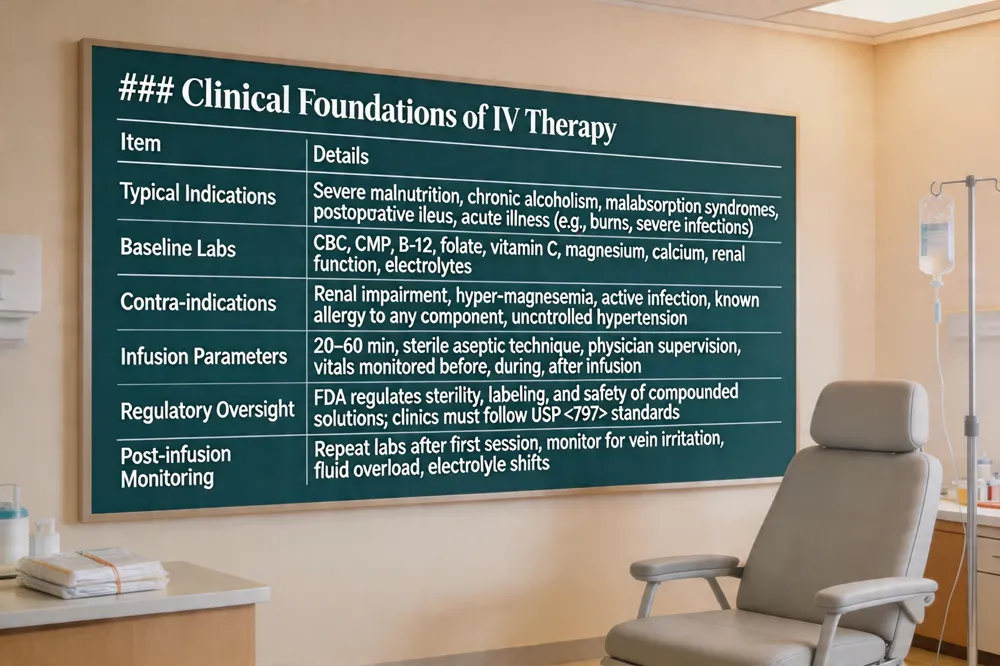 Intravenous (IV) therapy delivers fluids, vitamins, minerals and antioxidants directly into the bloodstream, bypassing gastrointestinal absorption and achieving near‑100 % bioavailability. It is medically indicated for patients who cannot obtain adequate nutrition orally because of severe malnutrition, chronic alcoholism, malabsorption syndromes, postoperative ileus, or acute illness (e.g., burns, severe infections). Clinicians first obtain baseline laboratory values, screen for contraindications such as renal impairment, hyper‑magnesemia or active infection, and then infuse a tailored blend over 20–60 minutes using sterile technique under physician supervision. The FDA regulates sterility, labeling and safety of compounded IV solutions; licensed nurses and physicians must follow aseptic protocols, monitor vital signs and repeat labs after the initial infusion.
Anti‑aging IV therapy near me – Clinics that offer NAD⁺ high‑dose vitamin C, glutathione and antioxidant blends are now common. In California, The Medical Institute of Healthy Aging provides nurse‑led, personalized infusions (in‑office or mobile) and other providers such as Hydrate IV Therapy and Twin Cities IV illustrate nationwide availability. Choose a facility with licensed staff, clear protocols and positive patient reviews.
IV vitamin therapy guidelines – Reserve IV vitamins for documented deficiencies or malabsorption. Obtain baseline labs (B‑12, folate, vitamin C, magnesium, calcium), assess contraindications, dose according to age, weight and deficit, and re‑check vitals and labs after the first session. Routine “wellness” cocktails without a proven need are not recommended; oral supplementation and a balanced diet remain the safest evidence‑based approach.
IV vitamin therapy near me – The Medical Institute of Healthy Aging in California offers personalized infusions—including the classic Myers’ Cocktail, NAD⁺ plus and specialty drips—administered by licensed nurses under physician oversight. Sessions last 45–60 minutes, can be in‑clinic or home‑based, and pricing is competitive with some insurance acceptance. Visit mdiha.com or call to locate the nearest site and schedule an appointment.
Metabolic Boosters: Key Nutrients and Their Effects
Metabolic Boosters – IV Nutrients
| Nutrient | Primary Metabolic Role | Typical IV Dose (per infusion) | Evidence Summary |
|---|---|---|---|
| B‑complex (B5, B12, Biotin) | Cofactors for glycolysis, TCA cycle, fatty‑acid oxidation, ATP production | B5 100 mg, B12 1000 µg, Biotin 5 mg | Small trials show ↑ energy, modest ↑ BMR in deficient patients |
| L‑carnitine | Transports long‑chain fatty acids into mitochondria for β‑oxidation | 1–2 g (often as 1500 mg) | Weight‑loss programs report ↑ fat oxidation, better muscle recovery |
| NAD⁺ | Restores NAD⁺/NADH ratio, activates sirtuins, enhances mitochondrial respiration | 250–500 mg (as NAD⁺ precursor) | Early trials show improved mental clarity, stamina, metabolic markers |
| Alpha‑lipoic acid | Dual‑soluble antioxidant, improves insulin signaling | 200–300 mg | IV achieves therapeutic plasma levels not possible orally |
| Coenzyme Q10 | Electron carrier in ETC, supports ATP synthesis | 100–200 mg | Limited data; synergistic with NAD⁺ for mitochondrial health |
| Glutathione | Primary intracellular antioxidant, detoxifies ROS | 600–1000 mg | Improves oxidative stress markers; used in anti‑aging protocols |
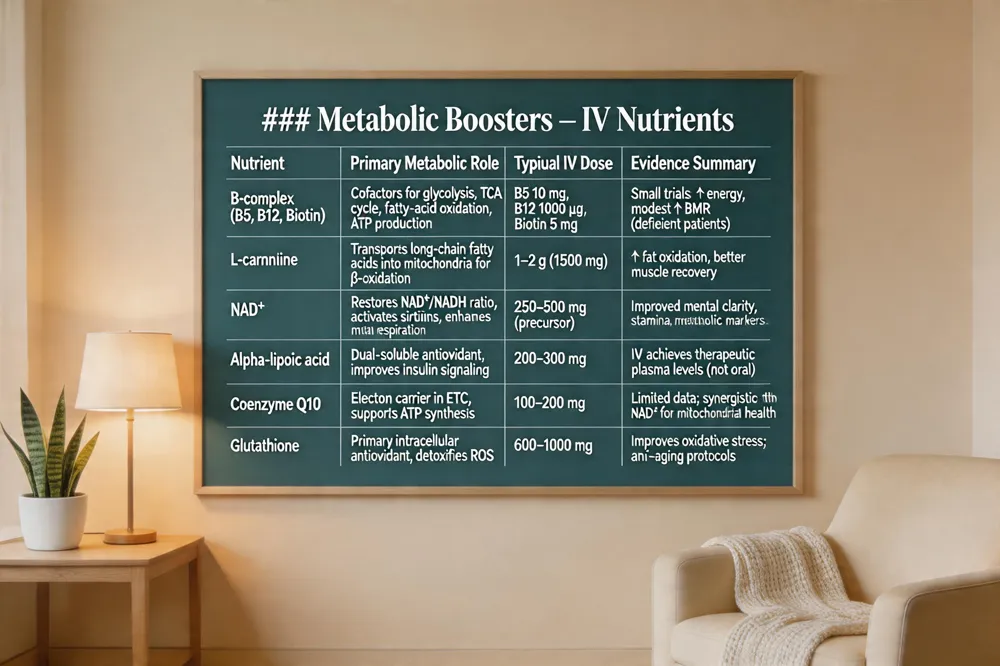 Maintaining a high‑efficient metabolism hinges on delivering the right micronutrients to cells, and intravenous (IV) therapy can achieve near‑100 % bioavailability for those nutrients.
B‑complex vitamins – IV B‑vitamins (especially B5, B12, and biotin) serve as cofactors in glycolysis, the citric‑acid cycle, and fatty‑acid oxidation, rapidly raising plasma levels and supporting ATP production. Clinical observations show that IV B‑complex vitamins improve energy, reduce fatigue, and modestly increase basal metabolic rate in individuals with documented deficiencies.
L‑carnitine and fatty‑acid oxidation – L‑carnitine transports long‑chain fatty acids into mitochondria for β‑oxidation. IV delivery bypasses intestinal uptake limits, allowing immediate enhancement of fat‑burning pathways and preserving lean muscle during calorie restriction. Studies in weight‑loss programs report higher fat oxidation and better muscle recovery when L‑carnitine is combined with B‑vitamins.
NAD⁺ and mitochondrial function – NAD⁺ levels decline with age, impairing DNA repair and oxidative phosphorylation. IV NAD⁺ infusions raise intracellular NAD⁺/NADH ratios, activating sirtuin genes and boosting mitochondrial respiration. Early trials suggest improved mental clarity, stamina, and metabolic markers when NAD⁺ is paired with antioxidants such as glutathione.
Alpha‑lipoic acid and insulin sensitivity – Alpha‑lipoic acid is a dual‑soluble antioxidant that enhances insulin signaling and reduces inflammatory cytokines. IV formulations achieve therapeutic plasma concentrations that oral dosing cannot match, supporting glucose homeostasis and overall metabolic health.
Best IV therapy for weight loss – The most effective weight‑loss blend combines B‑complex vitamins (B5, B12, biotin), L‑carnitine, Alpha‑lipoic acid, and coenzyme Q10. This cocktail accelerates fat oxidation, stabilizes blood glucose, and mitigates fatigue, but it must be used under medical supervision and alongside diet and exercise.
Weight‑loss IV drip ingredients – Typical drips contain amino acids (L‑arginine, L‑citrulline, L‑ornithine, L‑lysine), antioxidants (vitamin C, Alpha‑lipoic acid), B‑vitamins, electrolytes, and optional glutathione or magnesium for detoxification and hydration.
What IV is good for metabolism? – B5 (dexpanthenol), B12, biotin, L‑carnitine, and NAD⁺ or CoQ10‑enhanced drips are recognized for boosting metabolic pathways, improving mitochondrial energy output, and supporting glucose‑fat balance.
What is the best IV for aging? – [NAD⁺] IV therapy is regarded as the most comprehensive anti‑aging infusion because it restores the coenzyme essential for mitochondrial repair and DNA maintenance. When combined with glutathione or a tailored Myers Cocktail, NAD⁺ delivers systemic rejuvenation beyond superficial skin benefits, aligning with evidence‑based longevity strategies.
Overall, IV nutrient delivery offers a rapid, bioavailable means to address specific metabolic deficiencies, but its greatest benefit is realized when integrated into a personalized wellness plan that includes balanced nutrition, regular aerobic and resistance exercise, adequate sleep, and stress management.
Weight Management Support: Evidence and Practical Outcomes
Weight‑Management IV Evidence
| Outcome | Study Type | Typical Blend | Reported Effect |
|---|---|---|---|
| BMI / Fat Mass Reduction | Small RCTs (n≈30) | B‑complex + Mg + L‑carnitine | ↓ BMI ≈ 0.5–1 kg/m² after 4‑6 weeks |
| Energy & Exercise Adherence | Observational surveys | Myers’ Cocktail (B‑vitamins, vitamin C, magnesium) | ↑ self‑reported energy within 1 h, ↑ weekly exercise minutes |
| Appetite Control | Prospective cohort (n≈50) | B‑vitamins + L‑carnitine | ↓ cravings, modest ↓ caloric intake |
| Waist Circumference | Pre‑post (1‑2 weeks) | B‑vitamins + L‑carnitine + Alpha‑lipoic acid | ↓ 1–2 cm when paired with diet/exercise |
| Adverse Events | All studies | N/A | Mild bruising, transient light‑headedness; rare infection or fluid overload |
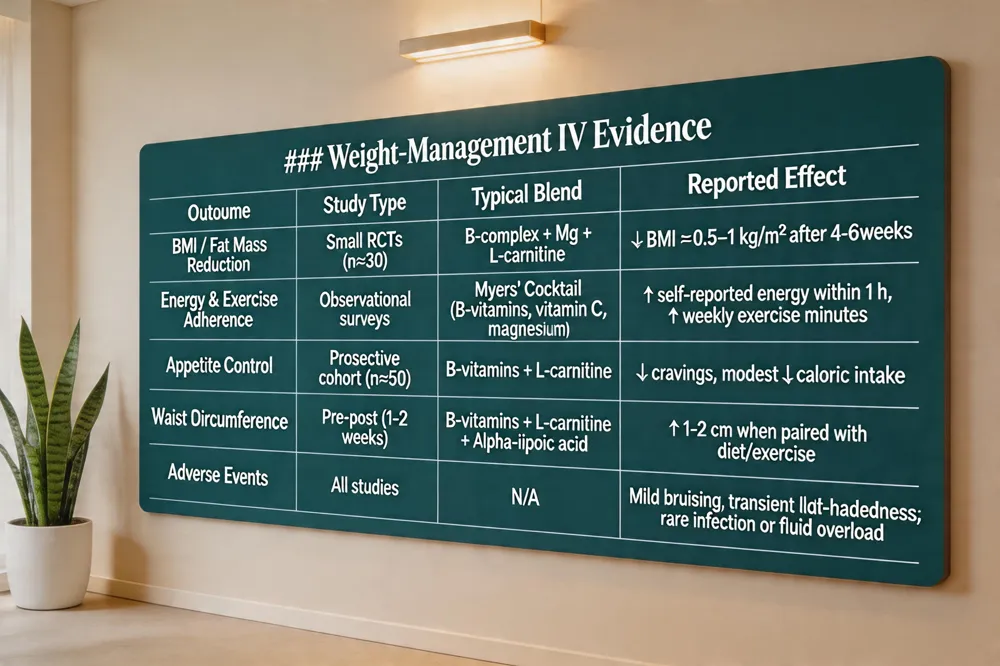 Clinical findings on weight‑loss drips show that intravenous blends containing B‑vitamins, magnesium, L‑carnitine and lipotropic agents can modestly improve metabolic markers. Small trials of L‑carnitine and magnesium report statistically significant reductions in BMI and fat mass, while larger studies on whole‑cocktail regimens remain limited. Patient‑reported results are mixed: many clients experience an early surge in energy, reduced fatigue, and clearer focus within hours of infusion, which can translate into more consistent exercise and modest decreases in waist circumference when paired with diet and aerobic training. Results are individualized; some users notice a noticeable “kick‑start” in weight loss, whereas others see minimal changes. Before‑and‑after observations indicate that after 1–2 weeks of weekly sessions, patients often report steadier appetite control, fewer cravings and modest improvements in body composition; cumulative benefits may last about a week per infusion. Side‑effects are generally mild—bruising, temporary light‑headedness, nausea, or a brief drop in blood pressure—but rare serious events such as infection, fluid overload or allergic reactions can occur. Therefore, weight‑loss IV therapy should be viewed as an adjunct to proven lifestyle interventions (balanced nutrition, regular exercise, adequate sleep) rather than a standalone solution.
Anti‑Aging Benefits and Limitations
Anti‑Aging IV Benefits & Limitations
| Benefit | Mechanism | Supporting Evidence | Key Limitations |
|---|---|---|---|
| Antioxidant Capacity | High‑dose vitamin C, glutathione, Alpha‑lipoic acid neutralize ROS | Small trials show ↑ plasma antioxidant markers | Short‑term; no clear impact on skin aging long‑term |
| Collagen Synthesis | Vitamin C + L‑proline/L‑lysine act as co‑factors for fibroblasts | anecd improvements in skin elasticity | Requires consistent dosing; oral diet can provide similar benefits |
| Mitochondrial Rejuvenation | NAD⁺ precursors, B‑vitamins, L‑carnitine improve ATP production | Early studies report ↑ mental clarity, stamina | Limited RCTs; effects may be transient |
| Overall Longevity | Multi‑nutrient synergy addresses cellular repair pathways | Anecdotal reports & pilot studies | No large‑scale, randomized data; regulatory gaps |
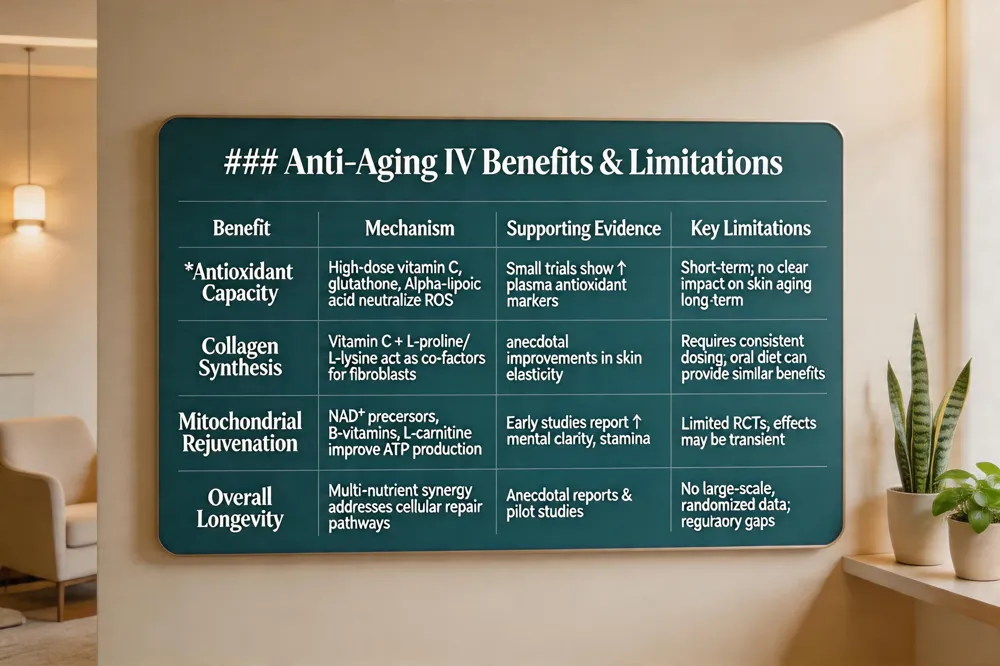 Antioxidant defenses – IV infusions of high‑dose vitamin C, glutathione, and alpha‑lipoic acid raise plasma antioxidant capacity far beyond oral dosing, neutralizing reactive oxygen species that drive cellular aging. Collagen synthesis – Vitamin C and amino‑acid blends (e.g., L‑proline, L‑lysine) delivered intravenously support fibroblast activity and collagen production, improving skin elasticity and reducing fine lines. Mitochondrial rejuvenation – B‑complex vitamins (especially B12), NAD⁺ precursors, and L‑carnitine enhance mitochondrial enzyme function, ATP generation, and fatty‑acid oxidation, which can boost energy and mental clarity. Scientific evidence review – Small trials (e.g., Myers’ cocktail for fibromyalgia, high‑dose IV C for cancer‑related fatigue) show modest, short‑term benefits but are limited by sample size and placebo effects; robust, randomized data for anti‑aging outcomes are lacking.
Does IV therapy work for anti‑aging? It can support cellular repair and skin health by delivering nutrients with near‑100 % bioavailability, yet the evidence remains preliminary and should complement, not replace, a balanced diet, exercise, sleep, and stress management.
Anti‑aging IV drip benefits – High‑dose vitamins, minerals, antioxidants, and NAD⁺ improve collagen synthesis, reduce oxidative stress, and enhance mitochondrial function, leading to better skin texture, energy, and cognitive focus.
Multivitamin IV infusion benefits – Useful for patients with malabsorption or acute deficiencies; modest improvements in fatigue and quality of life have been reported, but healthy adults gain little over oral nutrition and face risks such as vein irritation and infection.
Vitamin IV therapy pros and cons – Pros: rapid hydration, high bioavailability, correction of documented deficiencies. Cons: limited evidence for wellness claims, potential toxicity, procedural risks, high out‑of‑pocket cost, and lack of FDA approval for many anti‑aging indications.
Is IV therapy covered by insurance? Coverage is limited to medically necessary indications (e.g., severe dehydration, chemotherapy side‑effects, iron deficiency). Elective wellness infusions are typically not reimbursed.
Practical Considerations: Costs, Access, and Safety
Practical Considerations
| Factor | Details |
|---|---|
| Cost per Session | Hydration drip $80‑$120; Myers Cocktail $150‑$250; premium blends (NAD⁺, glutathione) $250‑$400 |
| Insurance Coverage | Generally limited to medically necessary indications (dehydration, chemotherapy side‑effects, iron deficiency). Elective wellness infusions are not covered |
| Access | Clinics in major US cities (e.g., California, Minnesota, New York). Mobile services available in some regions. Licensed nurses/physicians required |
| Safety Measures | USP <797> aseptic technique, sterile compounding, vital sign monitoring, post‑infusion labs, emergency equipment on site |
| Common Risks | Vein irritation, bruising, mild nausea, transient hypotension; rare serious events: infection, fluid overload, allergic reaction |
| Mitigation | Screen for contraindications, use peripheral veins, limit infusion rate, educate patients on after‑care |
 Disadvantages of IV therapy – IV infusions carry infection and vein‑irritation risk due to needle insertion and catheter placement. High‑dose vitamin blends can cause electrolyte imbalances, allergic reactions, nausea, headache or bruising. Sessions are pricey, typically $120‑$260, and are rarely covered by insurance for elective use. Evidence of benefit in well‑nourished adults is limited, and improper dosing may lead to toxicity.
Does IV therapy work for cold – High‑dose vitamin C, B‑complex, zinc and magnesium given intravenously provide hydration and 100 % bioavailability, acting as antioxidants that can shorten symptom duration and lessen fatigue. The treatment is supportive, not curative, and should complement sleep, nutrition and management.
Vitamin IV therapy cost – Basic hydration drips start around $80‑$120; popular blends such as the Myers Cocktail run $150‑$250. Membership discounts and packages can cut the per‑session price by 15 % or more. Add‑ons (B12, D3, glutathione) cost $35‑$50 each.
Is IV therapy covered by insurance – Coverage is limited to necessary indications such as severe dehydration, iron deficiency, or immunoglobulin. Elective wellness infusions are excluded; a physician’s prescription and diagnosis codes are required for reimbursement.
Integrating IV Therapy with Evidence‑Based Lifestyle
Integration with Lifestyle Pillars
| Lifestyle Pillar | How IV Complements | Practical Recommendation |
|---|---|---|
| Nutrition | Rapidly corrects documented micronutrient gaps that diet alone cannot address (e.g., B12 deficiency) | Perform baseline labs; use IV only when deficiency confirmed |
| Exercise | Supplies B‑vitamins & L‑carnitine to support muscle protein synthesis and fat oxidation during training | Schedule IV 1–2 days before high‑intensity sessions |
| Sleep | NAD⁺ and magnesium improve sleep quality and circadian regulation | Consider evening infusion of NAD⁺ + magnesium for insomnia support |
| Stress Management | Antioxidants (glutathione, vitamin C) reduce oxidative stress linked to chronic cortisol elevation | Pair IV with mindfulness or yoga sessions for synergistic effect |
| Social Connection | Group wellness programs can improve adherence and motivation | Offer community‑based infusion days with educational workshops |
 A holistic longevity plan should weave IV nutrient delivery into the proven pillars of health: nutrition, exercise, sleep, stress management, and social connection. Optimizing diet with whole foods supplies the baseline micronutrients needed for mitochondrial function, while targeted IV infusions can rapidly correct documented deficiencies (e.g., low B12, magnesium, vitamin D) that oral intake cannot address due to malabsorption or acute illness. When combined with high‑intensity interval training or resistance exercise, these nutrients support muscle protein synthesis , improve insulin sensitivity , and raise resting metabolic rate , creating a synergistic boost to energy expenditure. Adequate sleep , mindfulness‑based stress reduction, and regular social engagement remain the strongest predictors of healthy aging and should be reinforced alongside any infusion protocol.
IV vitamin therapy guidelines
IV vitamin therapy should be reserved for patients with a documented micronutrient deficiency, malabsorption, or inability to meet nutritional needs orally (e.g., severe burns, chronic alcoholism, postoperative ileus). Prior to infusion, clinicians must obtain baseline labs (B12, folate, vitamin C, magnesium, calcium) and screen for contraindications such as renal impairment, hyper‑magnesemia, or active infection. Infusions are typically administered over 20–60 minutes using sterile technique, with doses individualized to the patient’s deficit, age, weight, and comorbidities. Vital signs and labs are re‑checked after the first session and periodically thereafter to monitor for electrolyte shifts or adverse reactions. In the absence of a proven deficiency, routine “wellness” IV vitamin cocktails are not recommended; oral supplementation and a balanced diet remain the safest, evidence‑based approaches.
Future Directions and Research Gaps
Future Research & Gaps
| Emerging Area | Current Status | Research Gap |
|---|---|---|
| NAD⁺ Infusions | Early phase I/II trials show metabolic and cognitive benefits | Large‑scale RCTs needed to confirm long‑term safety & efficacy |
| High‑Dose Vitamin C | Used in oncology supportive care; modest evidence for fatigue reduction | Mechanistic studies on aging biomarkers lacking |
| Glutathione | Improves oxidative stress markers; limited data on clinical outcomes | Standardized dosing protocols and long‑term outcome data needed |
| Personalized Panels (MIC, B‑complex, electrolytes) | Pilot programs integrate lab‑driven panels | Validation of personalized algorithms vs. standard blends |
| Regulatory Landscape | FDA classifies most blends as “compounded”; no formal anti‑aging indication | Clear guidance on labeling, safety monitoring, and reimbursement pathways |
| Cost‑Effectiveness | Economic analyses sparse | Health‑economic models to assess value in chronic disease vs. wellness use |
 Vitamin IV therapy pros and cons: IV therapy delivers nutrients directly into the bloodstream, providing rapid hydration and higher bioavailability that may help people with malabsorption, chronic illness, or acute deficiencies. It is sometimes used clinically for conditions such as severe dehydration, certain chemotherapy side‑effects, or for patients who cannot take oral supplements. However, scientific evidence for benefits in healthy individuals is limited, and many claimed effects—like boosted immunity or fatigue reduction—remain unproven. The procedure also carries risks, including infection at the needle site, vein irritation, and the potential for vitamin toxicity when doses exceed what the body can safely process. Finally, IV treatments are costly, not covered by most insurance plans, and are not FDA‑approved for many of the wellness indications marketed by clinics.
Emerging clinical trials are evaluating intravenous NAD⁺, high‑dose vitamin C, and glutathione for mitochondrial repair, oxidative‑stress reduction, and metabolic efficiency. Regulatory outlook remains cautious: the FDA classifies most nutrient infusions as “compounded” and requires sterility, labeling, and safety monitoring, while withholding formal approval for anti‑aging or weight‑loss claims. Personalized longevity protocols are beginning to integrate laboratory‑driven nutrient panels with IV blends—such as B‑complex, magnesium, L‑carnitine, and MIC (methionine, inositol, choline)—to target documented deficiencies and support cellular health, but large‑scale, randomized studies are needed to validate their long‑term impact on healthspan.
Conclusion
Key takeaways: IV nutrient therapy can achieve near‑100 % bioavailability and may correct documented deficiencies, support mitochondrial function, and reduce oxidative stress, but robust evidence of added benefit for well‑nutrished, healthy adults is limited. Evidence‑based recommendations: Prioritize proven lifestyle pillars—balanced whole‑food diet, regular aerobic and resistance exercise, adequate sleep, stress management, and social connection—to optimize metabolic health and longevity. Consider IV therapy only when a qualified clinician confirms a specific deficiency, malabsorption, or clinical need, and ensure the regimen is personalized based on laboratory testing. Call to action for personalized assessment: Schedule a comprehensive metabolic and micronutrient evaluation with a licensed health professional to determine whether targeted IV infusions could safely complement your individualized wellness plan.