Why Proactive Medicine Matters Today
Today’s healthcare system is strained by a relentless rise in chronic disease. In the United States, roughly three‑quarters of all health‑care spending is devoted to treating conditions such as diabetes, heart disease and cancer, and two‑thirds of annual expenditure growth is driven by worsening lifestyle habits. Reactive models, which intervene only after symptoms appear, generate higher costs, more invasive procedures and contribute to provider burnout. They also miss the window for early risk modification, leading to frequent hospitalizations and reduced quality of life. Advances in molecular biology, multi‑omics, and digital health now enable truly personalized preventive strategies. Genomic risk profiling, wearable‑derived physiologic data, and targeted biomarker panels allow clinicians to design individualized screening schedules, lifestyle interventions, and early‑stage interventions that can delay or prevent disease onset. By shifting resources from treatment to prevention, proactive medicine promises lower spending, longer healthspan, and a more resilient population for future generations.
Understanding the Shift: Reactive, Preventive, and Proactive Care
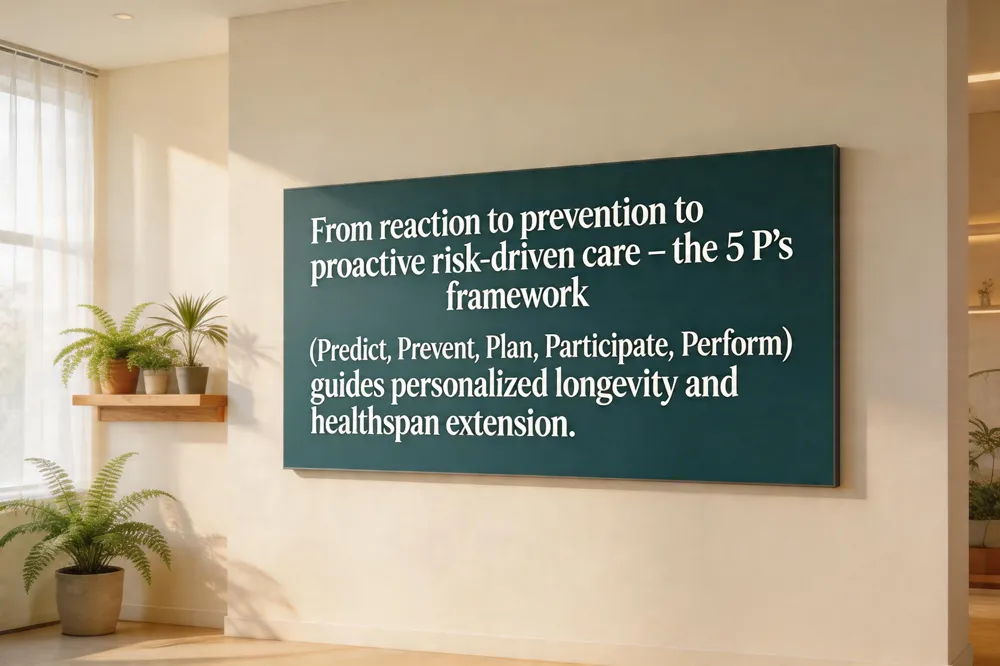 Reactive care treats health problems only after they appear, often requiring emergency visits, intensive interventions, and higher costs. Preventive care relies on scheduled actions—screenings, vaccinations, and lifestyle counseling—to reduce disease likelihood before symptoms develop. Proactive care goes further, using personalized risk modeling, genomics, and continuous monitoring to identify and mitigate underlying risk factors before any pathology emerges.
Key differences lie in timing and individualization: reactive is response‑driven, preventive is calendar‑driven, and proactive is risk‑driven and condition‑based.
The four levels of preventive medicine are primordial (addressing social‑economic determinants), primary (immunizations, lifestyle), secondary (early detection via screening), and tertiary (rehabilitation and complication reduction).
Synonyms for proactive care include anticipatory, preemptive, wellness, and health‑maintenance care.
The 5 P’s framework—Predict, Prevent, Plan, Participate, and Perform—guides a forward‑looking, data‑driven approach that extends healthspan, lowers long‑term expenses, and supports personalized longevity.
Economic Impact: Costs and Savings of Prevention
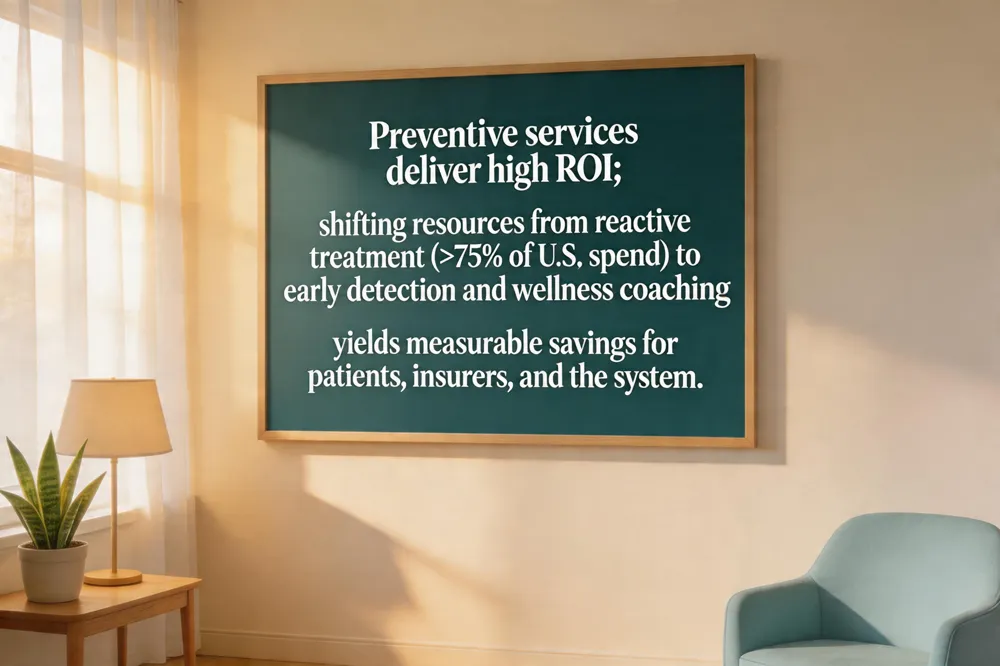 Preventive health services deliver a strong return on investment. Scholarly research shows that early detection and lifestyle counseling lower morbidity, curb chronic‑disease incidence, and reduce overall health‑care spending. While not every preventive intervention is net‑cost‑saving, high‑value services—vaccinations, blood‑pressure and cholesterol screening, and cancer checks—yield substantial health benefits at modest expense. Cost comparisons consistently reveal that proactive care—front‑loading screening, personalized risk‑reduction, and wellness coaching—costs a fraction of the billions spent on reactive treatment of advanced disease. The U.S. reactive model consumes >75 % of health‑care dollars; shifting resources to prevention can slash hospitalization, surgery, and long‑term medication costs. Under the Affordable Care Act, most plans cover essential preventive services with zero out‑of‑pocket cost when delivered in‑network, removing financial barriers for patients. In sum, investing in evidence‑based preventive medicine not only improves quality of life and functional independence but also generates measurable savings for individuals, insurers, and the health‑care system as a whole.
Insurance Landscape: Coverage and Access
 Under the ACA, all Marketplace and many employer‑sponsored plans must cover a core set of preventive services at $0 cost‑share when delivered in‑network, even before the deductible is met. Covered items include vaccinations, blood‑pressure and cholesterol checks, age‑based cancer screenings (mammogram, Pap, colonoscopy), diabetes testing, tobacco‑cessuse counseling, and annual wellness visits. Typical out‑of‑pocket rules still apply to services that are not classified as preventive; patients may face copays, coinsurance, or deductible payments for diagnostic or therapeutic procedures. Endoscopy illustrates this split: only colonoscopies performed for colorectal‑cancer screening meet preventive criteria and are covered without cost‑share; upper endoscopies (EGD) and therapeutic colonoscopies are billed as diagnostic/therapeutic and subject to the plan’s deductible and copay. To verify benefits, review the Summary of Benefits and Coverage, use the insurer’s online portal, or call member services and confirm whether a specific code is deemed preventive.
Personalized Longevity Programs: Next Health and MDIHA
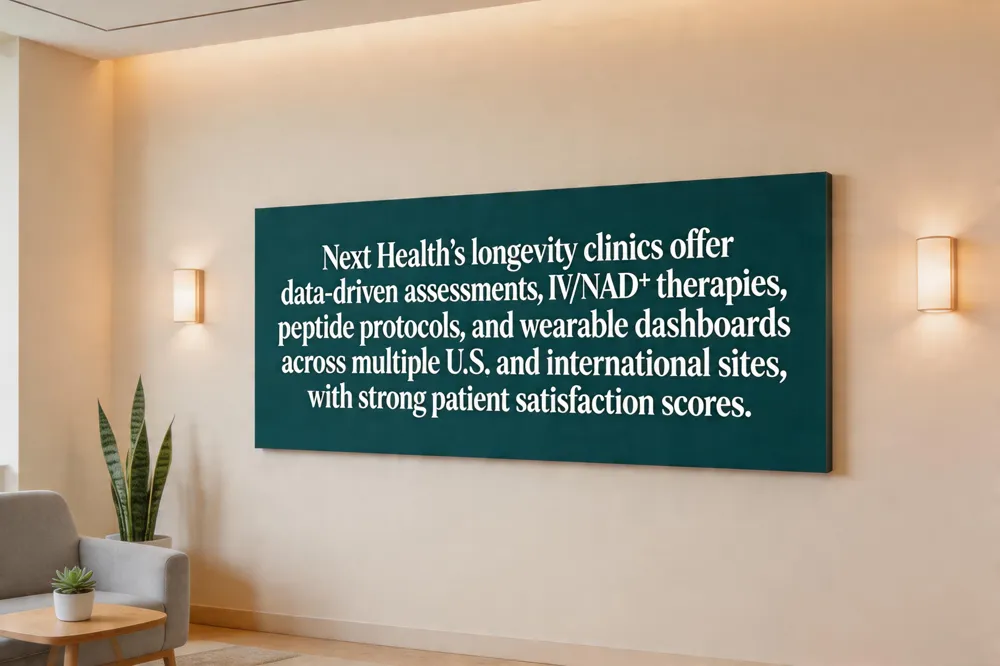 Next Health operates a network of longevity clinics, centered in California (West Hollywood, Century City, Studio City, Woodland Hills/Calabasas, Montecito, Newport Beach, Roseville, Elk Grove) and expanding to Chicago’s Oak Brook, New York City, Miami‑Aventura, Nashville, Peoria, Maui and Dubai, with planned sites in Washington and Vancouver. Patient feedback is positive: Yelp shows a 4.8‑star average from 87 reviews praising assessments, data‑driven plans and services such as cryotherapy, NAD⁺ IV, peptide protocols and LED therapy; Glassdoor notes a 3.2‑star staff rating. The Oak Brook clinic (1301 W 22nd St) will offer IV, vitamin shots, infrared sauna and executive physicals, with a waitlist and discounted membership. Peptide therapy, delivered under physician oversight within the Medicine 4.0 membership, targets muscle recovery, sleep, cognition and skin health, while NAD⁺ and glutathione IVs support cellular repair. Dashboards track biomarkers, wearable data and usage, enabling. Reddit threads discuss outcomes, noting improved energy, faster recovery and slower biological aging.
Practical Preventive Services and Guidelines
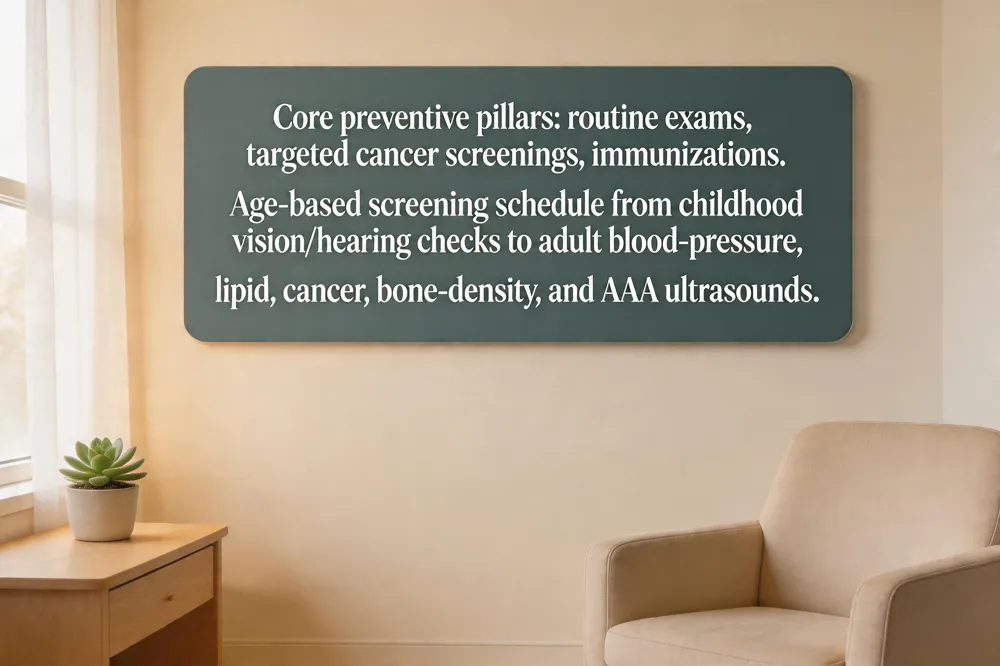 Preventive care services span vaccinations (flu, HPV, COVID‑19, shingles, pneumococcal), annual physical exams, and screenings such as blood‑pressure checks, lipid panels, diabetes risk assessments, and age‑specific cancer tests (mammograms, Pap smears, colonoscopy, low‑dose CT for lung cancer). Pediatric care adds well‑baby visits, developmental checks, and immunizations.
Screening by age follows a tiered schedule: children receive vision, hearing, growth measurements; adolescents (12‑18 y) are screened for anxiety, depression, cholesterol, and obesity; adults 18‑39 y need yearly blood‑pressure checks and lipid panels every 4‑6 y, with cervical Pap tests every three years for women. At 40 y, biennial mammograms begin; at 45 y, colorectal screening starts; at 65 y, bone‑density scans and abdominal aortic aneurysm ultrasound for former smokers are added.
The three pillars of preventive medicine are (1) routine physical examinations, (2) targeted cancer screenings, and (3) immunizations. Adult guidelines emphasize annual blood‑pressure checks, five‑year cholesterol screening, colorectal testing from age 45, diabetes screening for ages 40‑70 with excess weight, mental‑health questionnaires, tobacco‑cessation counseling, and fully covered vaccinations.
Both “preventive” and “preventative” mean the same; “preventive” is the preferred spelling in medical literature.
Technology and Data‑Driven Proactive Care
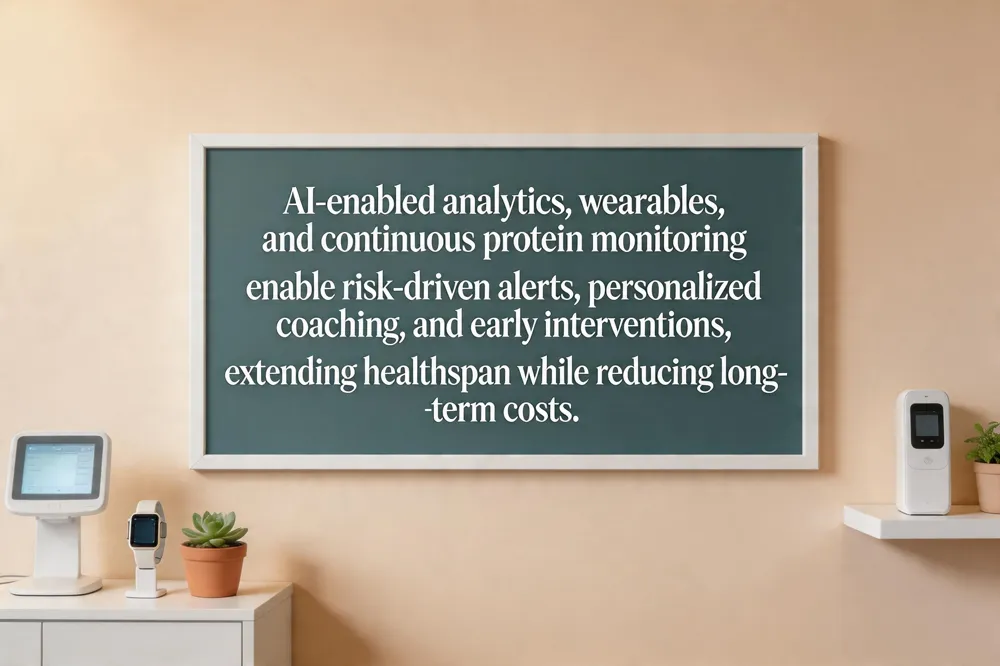 Proactive care is an anticipatory approach that identifies and addresses health risks before symptoms arise, using continuous monitoring, personalized risk assessments, and early interventions such as lifestyle counseling, screenings, and vaccinations. Proactive healthcare solutions blend wearable and remote monitoring devices with AI‑driven analytics to flag early disease signals, while secure platforms ensure HIPAA‑compliant data flow for personalized coaching and medication adjustments. Continuous protein monitoring (CPM) extends this concept by tracking disease‑specific biomarkers in real time, enabling interventions for heart failure, autoimmune flare‑ups, or neurodegeneration before clinical presentation, much like continuous glucose monitoring transformed diabetes care. Examples of proactive care include routine labs, blood‑pressure checks, frailty screenings, personalized nutrition plans, and early‑stage cancer panels. Proactive healthcare communications deliver timely alerts via patient portals, newsletters, and telehealth, keeping members engaged with preventive goals. Proactive healthcare management integrates multidisciplinary teams, digital dashboards, and automated workflows to continuously assess risk, schedule preventive services, and adapt care plans, ultimately extending healthspan and reducing long‑term costs.
A New Era of Health: Proactivity as the Standard of Care
Over the past decade the United States has begun to move away from a “break‑and‑fix” model that treats disease only after symptoms appear toward a proactive paradigm that emphasizes early detection, risk reduction and health optimization. Molecular insights, multi‑omics profiling and wearable sensor data now enable clinicians to identify pathogenic processes before they become clinically manifest, turning chronic‑disease treatment into prevention. This shift is evident in policy: the Affordable Care Act mandates no‑cost‑share preventive services, and employer‑sponsored wellness programs embed on‑site screenings, tele‑health triage and data‑driven dashboards to catch health threats early.
For individuals, proactive care delivers tangible benefits: routine biomarker panels, full‑body MRI and genetic testing uncover subclinical imbalances, allowing targeted nutrition, hormone optimization, antioxidant supplementation (vitamin C, E, selenium) and lifestyle changes that extend healthspan and reduce the likelihood of costly interventions. On a system level, preventive interventions lower emergency‑department visits, hospital readmissions and long‑term spending—studies show a 70 % reduction in hospitalizations for participants in proactive programs and a $3‑$6 return on every dollar spent on prevention.
To realize these gains, patients should enrol in personalized longevity programs that integrate advanced diagnostics, evidence‑based nutraceuticals and continuous monitoring. By partnering with clinics such as the Medical Institute of Healthy Aging, individuals can receive individualized care plans that evolve with their biology, turning proactive health into the new standard of care. Start today for vitality.