Why Real‑Time Dashboards Matter
Digital health dashboards are interactive, web‑based platforms that aggregate and‑time data from wearables, electronic health records, remote patient‑monitoring devices, and patient‑reported outcomes into concise visualizations such as trend graphs, color‑coded risk levels, and actionable alerts. By delivering up‑to‑the‑minute insights into vital signs, activity, sleep, and laboratory biomarkers, dashboards enable early detection of physiologic deviations and support secondary‑prevention actions—e.g., medication adjustments, lifestyle coaching, or targeted screenings—before disease manifests. The Medical Institute of Healthy Aging (MDHA) leverages this technology to fulfill its mission of personalized longevity: integrating dynamic risk scores and context‑dependent guidance into patient portals, MDHA empowers older adults and caregivers to modify exercise intensity, nutrition, social interaction, and medication adherence in real time, thereby extending healthspan and reducing preventable morbidity.
Actionable Dashboards and Behavior Change
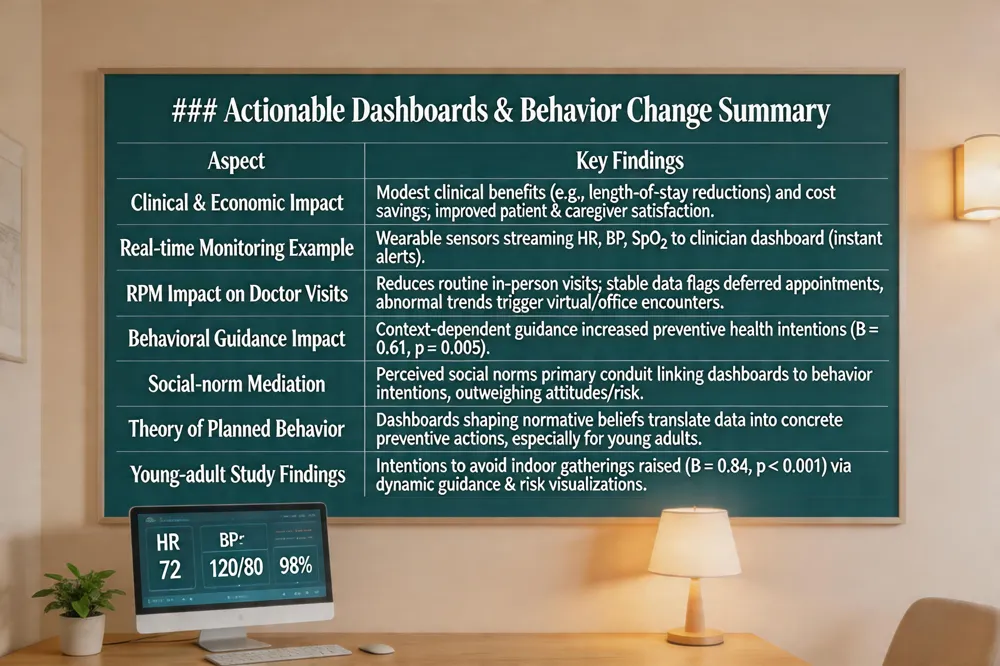
Actionable Dashboards & Behavior Change Summary
| Aspect | Key Findings |
|---|---|
| Clinical & Economic Impact | Modest clinical benefits (e.g., length‑of‑stay reductions) and cost savings; improved patient & caregiver satisfaction. |
| Real‑time Monitoring Example | Wearable sensors streaming HR, BP, SpO₂ to clinician dashboard (instant alerts). |
| RPM Impact on Doctor Visits | Reduces routine in‑person visits; stable data flags deferred appointments, abnormal trends trigger virtual/office encounters. |
| Behavioral Guidance Impact | Context‑dependent guidance increased preventive health intentions (B = 0.61, p = 0.005). |
| Social‑norm Mediation | Perceived social norms primary conduit linking dashboards to behavior intentions, outweighing attitudes/risk. |
| Theory of Planned Behavior | Dashboards shaping normative beliefs translate data into concrete preventive actions, especially for young adults. |
| Young‑adult Study Findings | Intentions to avoid indoor gatherings raised (B = 0.84, p < 0.001) via dynamic guidance & risk visualizations. |
 Dashboard in healthcare
A healthcare dashboard is a visual interface that consolidates real‑time clinical, operational, and financial data into actionable insights, enabling clinicians and administrators to monitor performance at a glance.
Dashboard in healthcare
A healthcare dashboard is a visual interface that consolidates real‑time clinical, operational, and financial data into actionable insights, enabling clinicians and administrators to monitor performance at a glance.
Clinical and economic impact of digital dashboards on hospital inpatient care: a systematic review Evidence shows modest clinical benefits (length‑of‑stay reductions) and cost savings, with improved patient and caregiver satisfaction.
What is an example of real‑time monitoring? Wearable sensors streaming heart‑rate, blood‑pressure, and oxygen‑saturation to a clinician’s dashboard illustrate real‑time monitoring, allowing instant alerts and interventions.
How does RPM impact doctor visits? Remote patient monitoring reduces routine in‑person visits by flagging stable data for deferred appointments and abnormal trends for timely virtual or office encounters.
Behavioral guidance impact Studies with 200 undergraduates found that dashboards delivering context‑dependent guidance alone increased preventive health behavior intentions (B = 0.61, p = 0.005).
Social‑norm mediation Parallel mediation analysis identified perceived social norms as the primary conduit linking actionable dashboards to behavior intentions, outweighing attitudes or perceived risk.
Theory of Planned Behavior Applying Theory of Planned Behavior, dashboards that shape normative beliefs translate data into concrete preventive actions, especially among young adults.
Young‑adult study findings Actionable dashboards raised intentions to avoid indoor gatherings (B = 0.84, p < 0.001), confirming that dynamic guidance and risk visualizations drive behavior change.
Personalized Longevity Through RPM
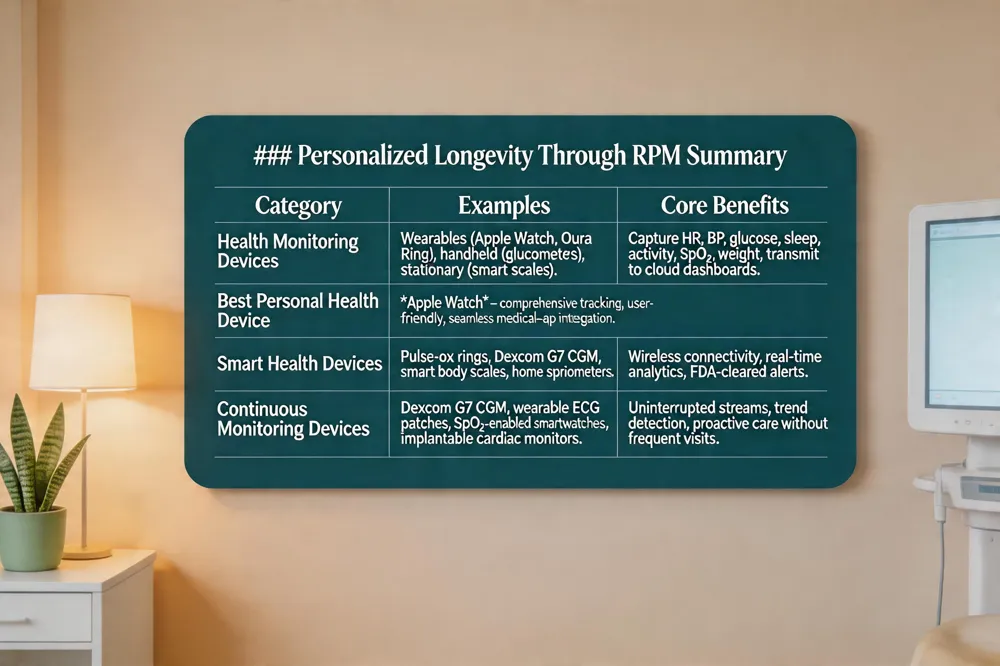
Personalized Longevity Through RPM Summary
| Category | Examples | Core Benefits |
|---|---|---|
| Health Monitoring Devices | Wearables (Apple Watch, Oura Ring), handheld (glucometers), stationary (smart scales). | Capture HR, BP, glucose, sleep, activity, SpO₂, weight; transmit to cloud dashboards. |
| Best Personal Health Device | Apple Watch – comprehensive tracking, user‑friendly, seamless medical‑app integration. | |
| Smart Health Devices | Pulse‑ox rings, Dexcom G7 CGM, smart body scales, home spirometers. | Wireless connectivity, real‑time analytics, FDA‑cleared alerts. |
| Continuous Monitoring Devices | Dexcom G7 CGM, wearable ECG patches, SpO₂‑enabled smartwatches, implantable cardiac monitors. | Uninterrupted streams, trend detection, proactive care without frequent visits. |
 What are health monitoring devices?
Health monitoring devices capture physiological data—heart rate, blood pressure, glucose, sleep, activity, oxygen saturation, weight, etc.—and transmit it to smartphones or cloud dashboards. Wearables (smartwatches, rings), handheld tools (glucometers, digital thermometers), and stationary home devices (smart scales, blood‑pressure cuffs) enable real‑time or periodic tracking for proactive health management, especially in chronic‑condition and longevity care.
What is the best personal health monitoring device?
The Apple Watch consistently ranks highest for comprehensive, user‑friendly tracking and seamless integration with medical apps. It records heart rate, sleep, mobility, blood‑oxygen, and fall detection, providing data that clinicians at the Medical Institute of Healthy Aging can turn into actionable longevity recommendations. Specialized devices like Whoop or Oura excel in niche metrics, but the Apple Watch offers the broadest, most consistent coverage.
Smart health monitoring devices
Smart devices combine sensors with wireless connectivity to stream data to apps or cloud platforms for real‑time analytics and remote clinician oversight. Examples include pulse‑ox rings, the Dexcom G7 continuous glucose monitor, smart body scales, and home spirometers. FDA‑cleared and data‑validated, they support personalized alerts and early‑risk detection.
Continuous health monitoring devices
Continuous devices provide uninterrupted physiological streams—CGMs (Dexcom G7), wearable ECG patches, SpO₂‑enabled smartwatches, and implantable cardiac monitors—delivering trends and alerts without frequent office visits. Integrated with dashboards, they empower proactive, longevity‑focused care.
Preventive Care Framework
Preventive Care Framework Overview
| Domain | Recommended Actions |
|---|---|
| Screenings (U.S. adult) | BP annually; cholesterol every 4‑6 y; colonoscopy or stool test 45‑75; mammography 40‑74; cervical cytology 21‑65; diabetes 40‑70 overweight; hepatitis C 18‑79; lung‑cancer CT 50‑80 heavy smokers; AAA US men 65‑75 smokers. |
| Immunizations | Influenza, COVID‑19, Tdap, shingles, pneumococcal, HPV. |
| Wellness & Counseling | Annual wellness exam; smoking cessation; diet & physical activity; alcohol use; fall prevention. |
| Coverage (ACA) | Most services covered without cost‑sharing when delivered in‑network; supported by CDC and USPSTF guidelines. |
| Integration | MDHA uses personalized dashboards to deliver real‑time alerts and coordinate longevity programs. |
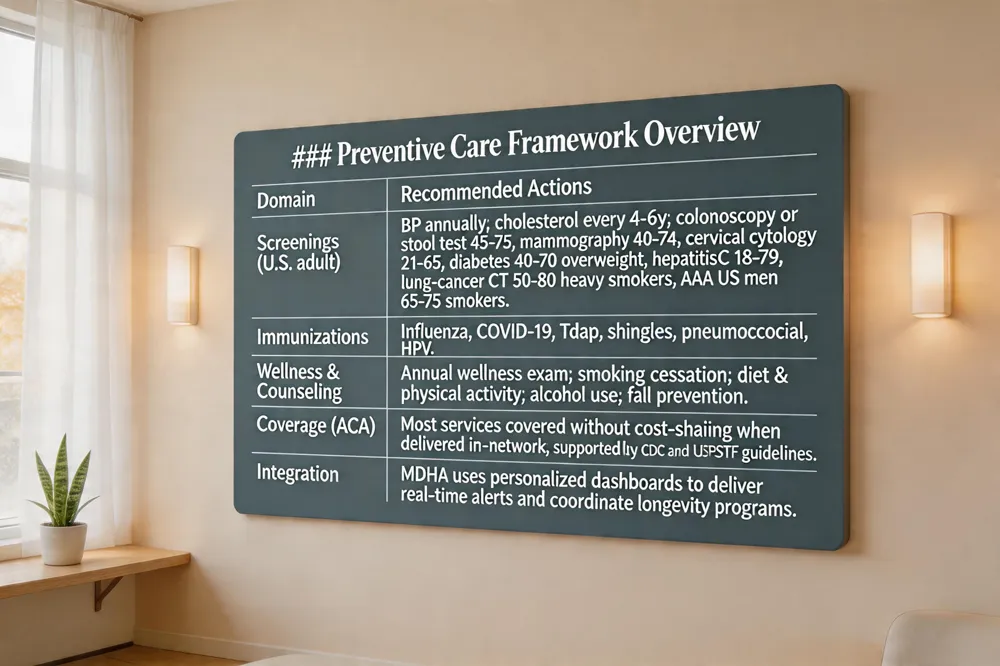 Preventive health is the proactive practice of avoiding disease onset, detecting health issues early, and mitigating existing conditions through primary, secondary, and tertiary interventions. U.S. adult guidelines, derived from USPSTF and CDC recommendations, call for annual blood‑pressure checks, cholesterol screening every 4–6 years, age‑specific cancer screenings (colonoscopy or stool test ages 45–75, mammography ages 40–74, cervical cytology ages 21–65), diabetes screening for overweight adults 40–70, hepatitis C testing ages 18–79, lung‑cancer screening for heavy smokers 50–80, and a one‑time AAA ultrasound for men 65–75 who have smoked. CDC‑defined preventive care includes immunizations, screenings, chronic‑disease management, and health‑promotion counseling, all supported by the Affordable Care Act, which mandates that most insurance plans cover these services without cost‑sharing when delivered in‑network. Coverage spans vaccinations (influenza, COVID‑19, Tdap, shingles, pneumococcal, HPV), annual wellness exams, and counseling for smoking cessation, diet, physical activity, and fall prevention, enabling personalized longevity programs such as those offered by the Medical Institute of Healthy Aging.
Age‑Specific Preventive Strategies
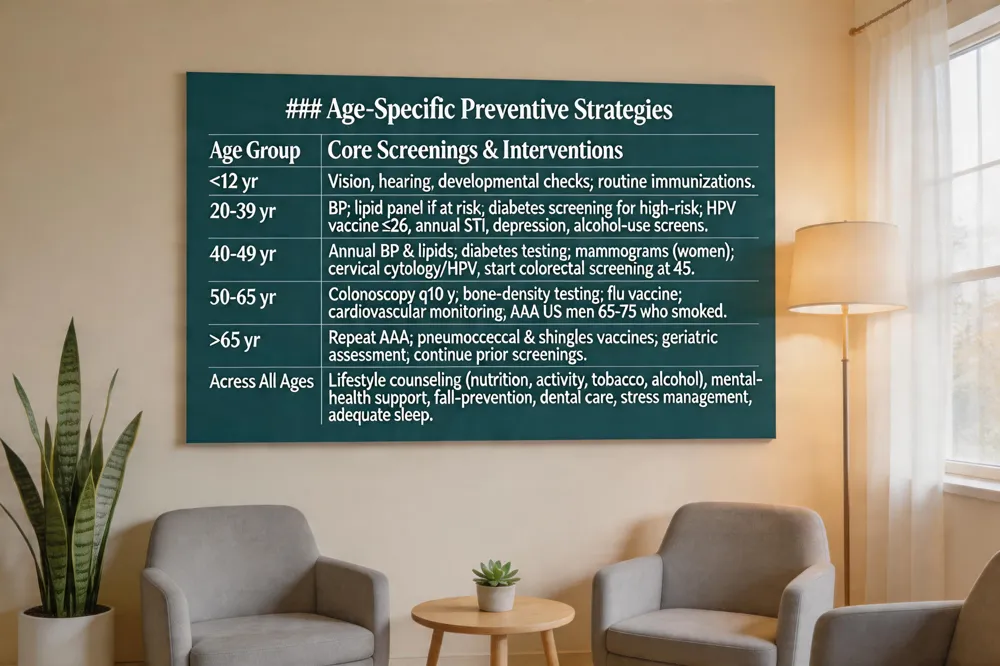
Age‑Specific Preventive Strategies
| Age Group | Core Screenings & Interventions |
|---|---|
| <12 yr | Vision, hearing, developmental checks; routine immunizations. |
| 20‑39 yr | BP; lipid panel if at risk; diabetes screening for high‑risk; HPV vaccine ≤26; annual STI, depression, alcohol‑use screens. |
| 40‑49 yr | Annual BP & lipids; diabetes testing; mammograms (women); cervical cytology/HPV; start colorectal screening at 45. |
| 50‑65 yr | Colonoscopy q10 y; bone‑density testing; flu vaccine; cardiovascular monitoring; AAA US men 65‑75 who smoked. |
| >65 yr | Repeat AAA; pneumococcal & shingles vaccines; geriatric assessment; continue prior screenings. |
| Across All Ages | Lifestyle counseling (nutrition, activity, tobacco, alcohol), mental‑health support, fall‑prevention, dental care, stress management, adequate sleep. |
 Preventive health screenings by age
Children <12 receive vision, hearing, developmental, and immunizations. Adults 20‑39 need BP checks, lipid panels (if at risk), diabetes screening for high‑risk, HPV vaccination ≤26, and annual STI, depression, and alcohol‑use screens. Ages 40‑49 add annual BP and lipids, diabetes testing, mammograms (women), cervical cytology/HPV, and start colorectal screening at 45. Ages 50‑65 include colonoscopy every 10 y, bone‑density testing, flu vaccine, cardiovascular monitoring, and AAA ultrasound for men 65‑75 who smoked. >65 repeat AAA, get pneumococcal and shingles vaccines, undergo geriatric assessment, and continue prior screenings.
Preventive health screenings by age
Children <12 receive vision, hearing, developmental, and immunizations. Adults 20‑39 need BP checks, lipid panels (if at risk), diabetes screening for high‑risk, HPV vaccination ≤26, and annual STI, depression, and alcohol‑use screens. Ages 40‑49 add annual BP and lipids, diabetes testing, mammograms (women), cervical cytology/HPV, and start colorectal screening at 45. Ages 50‑65 include colonoscopy every 10 y, bone‑density testing, flu vaccine, cardiovascular monitoring, and AAA ultrasound for men 65‑75 who smoked. >65 repeat AAA, get pneumococcal and shingles vaccines, undergo geriatric assessment, and continue prior screenings.
Preventive care examples Routine immunizations (flu, HPV, shingles, pneumococcal), blood‑pressure, cholesterol, diabetes, and cancer screenings (mammography, colonoscopy, lung‑cancer CT) are core. Lifestyle counseling on nutrition, activity, smoking cessation, and alcohol use, plus mental‑health and fall‑prevention programs, round out comprehensive care. MDHA integrates these via personalized dashboards delivering real‑time alerts.
Three examples of preventive health care
- Screening tests (BP, diabetes, cholesterol). 2. Cancer‑screening procedures (mammograms, colonoscopies). 3. Behavioral counseling (quit‑smoking, weight‑management).
Preventive health measures Regular physical activity, balanced diet, weight control, tobacco avoidance, limited alcohol, safe sex, vaccinations, dental care, stress management, adequate sleep, and individualized risk‑reduction plans—supported by digital health dashboards that provide timely, actionable guidance—are essential for extending healthspan.
Monitoring Technologies for Older Adults
Monitoring Technologies for Older Adults
| Category | Devices & Examples | Primary Use |
|---|---|---|
| Wearable Sensors | Apple Watch, Oura Ring, WHOOP, KardiaMobile ECG, Omron HeartGuide BP cuff, Muse EEG headband. | Real‑time vitals, fall detection, activity, sleep, cardiac & brain monitoring. |
| Home Health Devices | Bluetooth BP cuffs, pulse‑oximeters, digital thermometers, glucometers, smart scales, sleep‑tracking mats. | Remote vital sign collection, trend analysis, adherence reporting. |
| Integrated Platforms | Rest Assured, GrandCare (door, smoke, temperature sensors + video/audio). | Comprehensive safety monitoring, emergency alerts. |
| Secondary Prevention | Dashboards flag subclinical changes (elevated glucose, BP spikes) → early lifestyle/pharmacologic interventions; guide timely screening & functional assessments. | Proactive, personalized longevity care. |
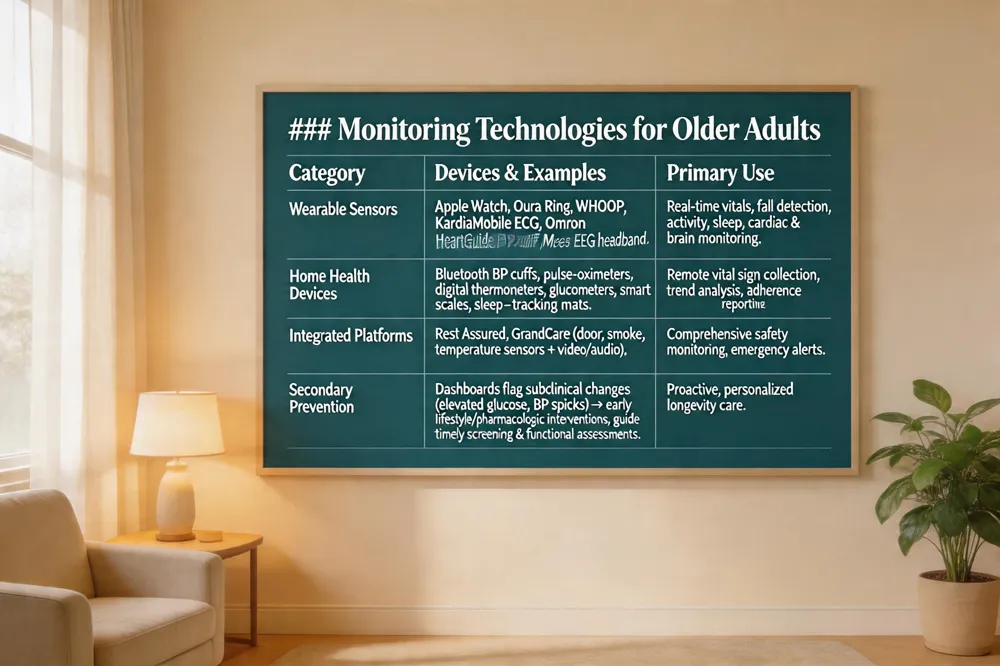 Health monitoring devices for elderly – Fall‑detection sensors and motion trackers (e.g., Apple Watch, Oura Ring) instantly alert caregivers of impacts. Bluetooth‑enabled blood‑pressure cuffs, pulse‑oximeters, and continuous glucose monitors (Dexcom G6) stream vitals to secure apps for round‑the‑clock oversight. Smart pill dispensers (Medminder) lock/release meds and send adherence reports. Integrated home platforms (Rest Assured, GrandCare) combine door, smoke, temperature sensors with video and two‑way audio for remote safety checks, while voice‑activated emergency alerts and SOS buttons ensure rapid help summons.
Wearable health monitoring devices examples – Smartwatches (Apple Watch, Samsung Galaxy), fitness bands (Fitbit Charge, Garmin Vivosmart), and ring wearables (WHOOP) track heart rate, activity, sleep, and stress. Medical‑grade wearables include FDA‑cleared ECG patches (KardiaMobile), wearable BP cuffs (Omron HeartGuide), and EEG headbands (Muse) for brain‑wave monitoring.
Health monitoring devices for home – Bluetooth BP cuffs, digital thermometers, pulse‑oximeters, glucometers, smart scales, and sleep‑tracking mats sync data to cloud dashboards for trend analysis. Portable ECG units and digital stethoscopes enable clinician‑reviewed cardiac and pulmonary assessment from home.
Secondary prevention – Real‑time dashboards flag subclinical changes (elevated glucose, blood pressure spikes) enabling early lifestyle or pharmacologic interventions. Integrated alerts guide timely screening (colonoscopies, mammograms) and functional assessments, supporting the Medical Institute of Healthy Aging’s proactive longevity program.
Implementation, Workforce, and Quality
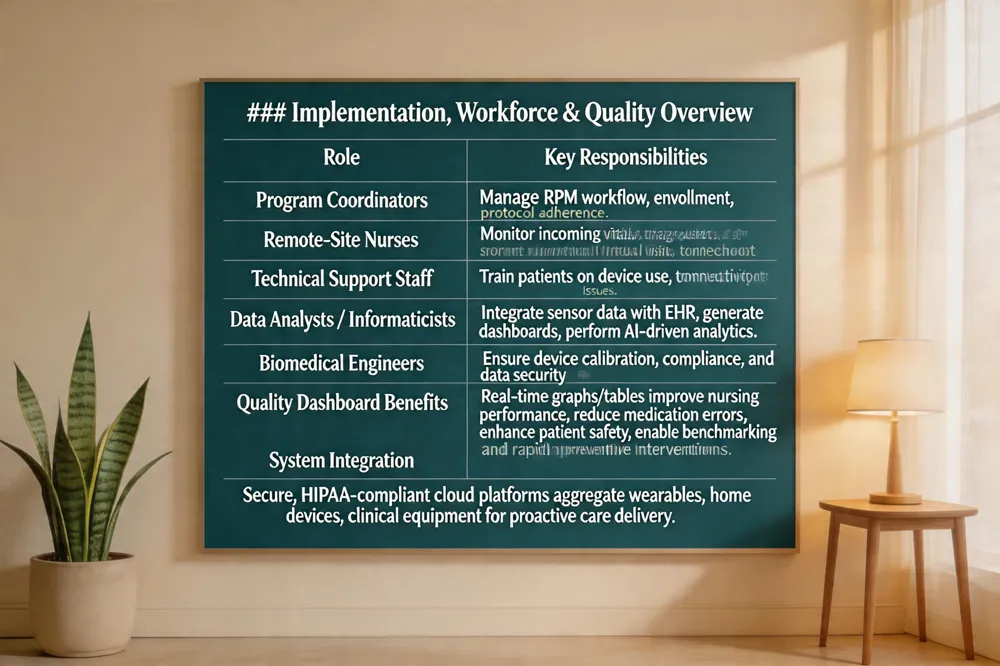
Implementation, Workforce & Quality Overview
| Role | Key Responsibilities |
|---|---|
| Program Coordinators | Manage RPM workflow, enrollment, protocol adherence. |
| Remote‑Site Nurses | Monitor incoming vitals, triage alerts, coordinate virtual visits. |
| Technical Support Staff | Train patients on device use, troubleshoot connectivity issues. |
| Data Analysts / Informaticists | Integrate sensor data with EHR, generate dashboards, perform AI‑driven analytics. |
| Biomedical Engineers | Ensure device calibration, compliance, and data security. |
| Quality Dashboard Benefits | Real‑time graphs/tables improve nursing performance, reduce medication errors, enhance patient safety, enable benchmarking and rapid preventive interventions. |
| System Integration | Secure, HIPAA‑compliant cloud platforms aggregate wearables, home devices, clinical equipment for proactive care delivery. |
 Remote patient monitoring jobs
RPM creates diverse roles: program coordinators manage workflow; remote‑site nurses monitor vitals and act on alerts; technical support staff train patients and troubleshoot devices; data analysts, biomedical engineers, and informaticists integrate sensor data with EHRs; sales and IT specialists promote and sustain the technology.
Remote patient monitoring jobs
RPM creates diverse roles: program coordinators manage workflow; remote‑site nurses monitor vitals and act on alerts; technical support staff train patients and troubleshoot devices; data analysts, biomedical engineers, and informaticists integrate sensor data with EHRs; sales and IT specialists promote and sustain the technology.
Quality dashboards in hospital settings: a systematic review with implications for nurses Well‑designed dashboards improve nursing performance by presenting real‑time graphs and tables, supporting evidence‑based decisions, and highlighting benchmarks. Interactive features boost engagement, while unit‑specific views reduce medication errors and enhance patient safety.
Health monitoring systems These systems combine wearables, home devices, and clinical equipment with cloud platforms that aggregate and analyze data instantly. AI‑driven analytics flag abnormal trends, generate alerts, and link results to EHRs, enabling proactive, personalized care for aging patients.
Health data dashboard An interactive dashboard visualizes key clinical and operational metrics—outcomes, readmissions, infection rates, resource use—in clear charts and maps. Secure, HIPAA‑compliant design lets clinicians and administrators at the Medical Institute of Healthy Aging monitor patterns, benchmark performance, and deliver rapid, evidence‑based preventive interventions.
Future Directions for Real‑Time Preventive Care
Advancing AI‑driven predictive analytics will transform dashboards from displays into engines that forecast risk trajectories and suggest interventions before clinical thresholds are crossed. Scaling these platforms nationwide requires interoperable standards such as FHIR, cloud‑based architectures, and automated validation pipelines so health systems can ingest millions of sensor streams while preserving latency. Equity must be built in by designing visualizations, offering multilingual support, and ensuring underserved communities receive reliable broadband and device access. HIPAA‑compliant encryption, role‑based access controls, and audit trails will safeguard privacy as data volumes expand. MDHA continues to pilot adaptive dashboards integrating genomic risk scores, lifestyle metrics, and AI‑generated guidance, positioning the institute at the forefront of preventive medicine.