From Reactive to Proactive: A New Era of Health Monitoring
The United States health system has long been reactive, delivering care only after patients present symptoms. Continuous data collection through wearable biosensors, at‑home point‑of‑care kits, and remote patient monitoring converts every heartbeat, glucose fluctuation, or sleep pattern into a signal that clinicians can evaluate in real time. Cutting‑edge diagnostics—AI‑enhanced imaging, FDA‑cleared liquid biopsy, multi‑omics panels, and electronic‑nose breath analysis—detect molecular changes weeks or months before clinical signs appear, enabling preventive interventions that can slow disease progression. Longevity‑focused clinics such as the Medical Institute of Healthy Aging now integrate these tools into personalized protocols, using baseline biomarker maps to tailor nutrition, hormone optimization, and regenerative therapies. The result is a proactive, data‑driven model that extends healthspan while reducing significantly costly hospitalizations.
Defining Cutting‑Edge Medical Technology
Defining Cutting‑Edge Medical Technology
| Innovation | FDA Status | Clinical Impact | Example |
|---|---|---|---|
| AI‑enhanced imaging | FDA cleared for radiology, ophthalmology, cardiology | ↑ 15 % early cancer detection sensitivity; risk stratification for chronic disease | Deep‑learning algorithms flag high‑risk patients in EHR data |
| Wearable IoMT devices | FDA cleared for atrial‑fibrillation detection, glucose tracking | Real‑time biometric streaming for predictive models | Apple Watch ECG, continuous glucose monitors (CGM) |
| Telemedicine platforms with integrated biosensors | FDA/EMA guidance for SaMD | Virtual examinations with live dashboards; proactive interventions | Digital stethoscope + high‑resolution imaging in virtual visit |
| Explainable AI (XAI) in RPM | Emerging regulatory frameworks | Transparent alert reasoning, clinician trust | XAI module highlights why arrhythmia alert triggered |
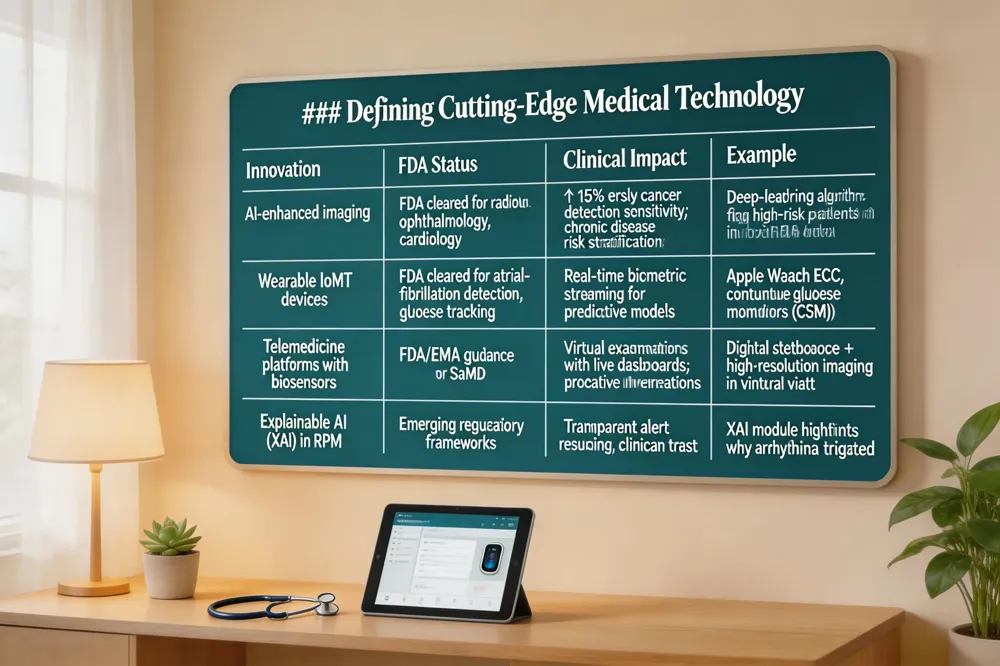 Cutting‑edge medical technology comprises the newest innovations that transform speed, accuracy, and personalization of health care. In the United States, artificial‑intelligence (AI) algorithms have been cleared by the FDA for radiology, ophthalmology and cardiology, delivering up to a 15 % boost in early cancer detection sensitivity and flagging high‑risk patients for chronic diseases through electronic health‑record analytics. Wearable Internet‑of‑Medical‑Things devices—such as Apple Watch, Fitbit, and continuous glucose monitors—are FDA‑cleared for atrial‑fibrillation detection and glucose tracking, providing real‑time biometric streams that feed AI‑driven predictive models. Telemedicine platforms now integrate these data streams, allowing clinicians to review continuous monitoring dashboards, intervene before symptoms arise, and conduct virtual examinations with digital stethoscopes and high‑resolution imaging. Together, AI‑enhanced imaging, wearable biosensors, and real‑time telehealth create a proactive, longevity‑focused care model that personalizes prevention, early diagnosis, and treatment for each individual.
Insurance Coverage for Remote Patient Monitoring
Insurance Coverage for Remote Patient Monitoring
| CPT Code | Service | Requirement | Typical Reimbursement (USD) |
|---|---|---|---|
| 99453 | Device setup | Initial enrollment & consent | $15–$30 |
| 99454 | Device use ≥30 days | Continuous data transmission | $30–$45 per month |
| 99457 | First 20 min clinical management | Review & intervention | $45–$70 |
| 99458 | Each additional 20‑min increment | Ongoing management | $25–$40 |
Key billing requirements: (1) qualifying chronic condition, (2) documented consent, (3) monthly usage logs, (4) clinical staff time, (5) correct CPT usage.
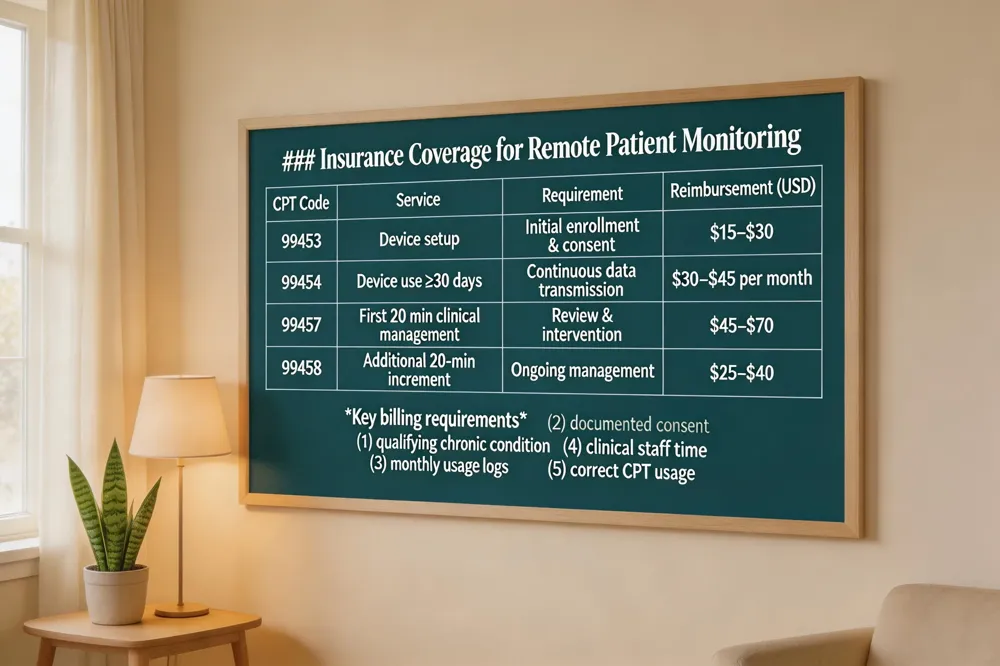 Remote Patient Monitoring (RPM) is now widely reimbursed across the United States. Medicare Part B leads the way, paying for RPM under the Physician Fee Schedule using CPT 99453 (device setup), CPT 99454 (device use ≥30 days), CPT 99457 (first 20 minutes of clinical management), and CPT 99458 (each additional 20‑minute increment). Beneficiaries typically incur only a modest co‑pay, and claims must satisfy CMS criteria for patient eligibility, documented consent, and service dates.
Private insurers and many Medicaid programs have adopted similar coverage policies, though reimbursement rates and co‑pay structures differ by payer.
Key billing requirements include: (1) enrollment of a patient with a qualifying chronic condition, (2) documented patient consent, (3) monthly device provisioning and usage logs, (4) clinical staff time spent reviewing data and intervening, and (5) use of the appropriate CPT code for each service component.
Adhering to these guidelines ensures consistent payment and supports the expansion of proactive, data‑driven care models.
Personalized Diagnostics: From Genomics to Epigenetics
Personalized Diagnostics: From Genomics to Epigenetics
| Test Type | Target | Clinical Use | Example |
|---|---|---|---|
| Liquid biopsy (cfDNA) | Circulating tumor DNA | Early cancer detection, treatment monitoring | Guardant360 |
| Multi‑gene panels | DNA variants | Predict drug response, disease risk | 50‑gene oncology panel |
| Epigenetic clocks (DNA‑methylation) | Biological age | Monitor aging interventions | Horvath clock |
| Multi‑omics profiling (genomics, proteomics, metabolomics, microbiome) | Global molecular landscape | Comprehensive risk stratification | Integrated omics platform |
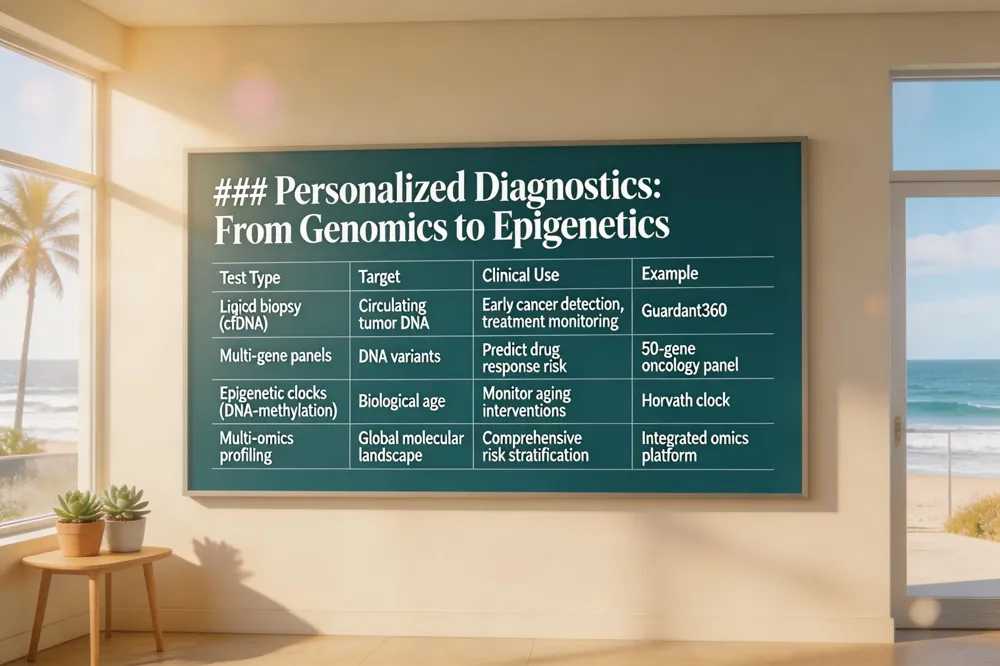 Personalized diagnostics is the practice of customizing health‑care decisions by using molecular, genetic, and epigenetic analyses to understand an individual’s unique biological makeup. By examining a patient’s DNA, RNA, protein markers, and other omics data, clinicians can make more precise diagnoses that reflect the specific drivers of disease in that person. This information then guides the selection of the most appropriate therapies, dosages, and preventive strategies, moving beyond one‑size‑fits‑all approaches. The process also incorporates emerging biomarkers, such as epigenetic signatures, to capture factors that are not encoded in the DNA sequence but still influence health outcomes.
Molecular and genetic testing now includes FDA‑cleared liquid biopsies (e.g., Guardant360) that detect circulating tumor DNA, and multi‑gene panels that predict drug response. Epigenetic clocks—DNA‑methylation based age estimators—are being used to quantify biological age and monitor the impact of interventions on aging trajectories. Integration of genomics, proteomics, metabolomics, and microbiome profiling creates a comprehensive multi‑omics profile, enabling early detection of cancers, neurodegenerative disease, and metabolic dysfunction before clinical symptoms appear. Clinically, these tools support targeted therapy selection, risk‑stratified screening, and proactive lifestyle adjustments, thereby extending healthspan and improving outcomes for aging populations.
Evaluating High‑Cost Longevity Clinics
Evaluating High‑Cost Longevity Clinics
| Assessment Component | Cost Range (USD) | Evidence Level | Potential Benefit |
|---|---|---|---|
| Full‑body imaging (MRI, CT) | $5,000–$8,000 | Moderate (screening) | Early detection of silent disease |
| Extensive biomarker panels | $3,000–$5,000 | Low‑moderate (exploratory) | Identification of subclinical risk |
| Genetic & epigenetic testing | $2,000–$4,000 | Low (experimental) | Personalized risk scores, limited proven outcomes |
| Experimental therapies (plasma exchange, nutraceuticals) | $5,000–$10,000 | Very low (off‑label) | Uncertain impact on healthspan |
Takeaway: Valuable insights may be gained, but current data do not support a reliable increase in lifespan for the $20,000+ price tag.
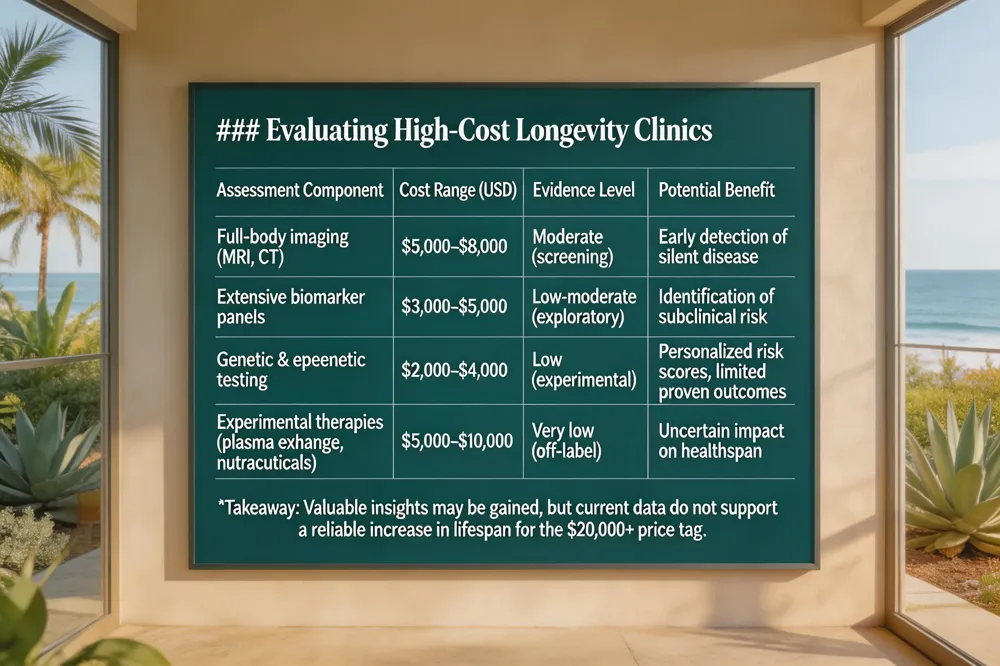 High‑price longevity programs often begin with a comprehensive assessment that can exceed $20,000, incorporating full‑body imaging, extensive biomarker panels, genetic and epigenetic testing, and sometimes experimental therapies such as therapeutic plasma exchange or advanced nutraceutical infusions. Peer‑reviewed literature, including a 2025 review in Biogerontology, indicates that while these assessments uncover hidden risk factors, the clinical benefit of the subsequent interventions remains modest and frequently unvalidated. Many services offered—e.g., multi‑omics profiling, DNA‑methylation clocks, and off‑label use of anti‑aging drugs—are still experimental and lack FDA clearance for disease‑prevention claims. Consequently, patients must weigh the potential for early detection and personalized counseling against the high out‑of‑pocket expense and the uncertainty of measurable health‑span extension. In short, a $20,000 longevity clinic can provide valuable insight and may modestly improve quality of life, but current evidence does not support a reliable increase in lifespan. Individuals should consider evidence‑based alternatives—regular screening, lifestyle optimization, and proven preventive medicine—before committing to costly, experimental packages.
The Future of Remote Patient Monitoring
The Future of Remote Patient Monitoring
| Technology | Data Type | Predictive Capability | Expected Outcome |
|---|---|---|---|
| Next‑gen wearables (CGM, SpO₂, sleep, stress) | Continuous high‑resolution vitals | Early warning of arrhythmia, hypoglycemia, decompensation | Reduced hospital readmissions |
| AI‑driven analytics platforms | Integrated multimodal streams | Forecast complications before they become urgent | Lower overall cost, extended healthspan |
| Cloud‑based EHR integration | Real‑time patient data | Seamless telehealth visits, proactive care plans | Improved chronic disease management |
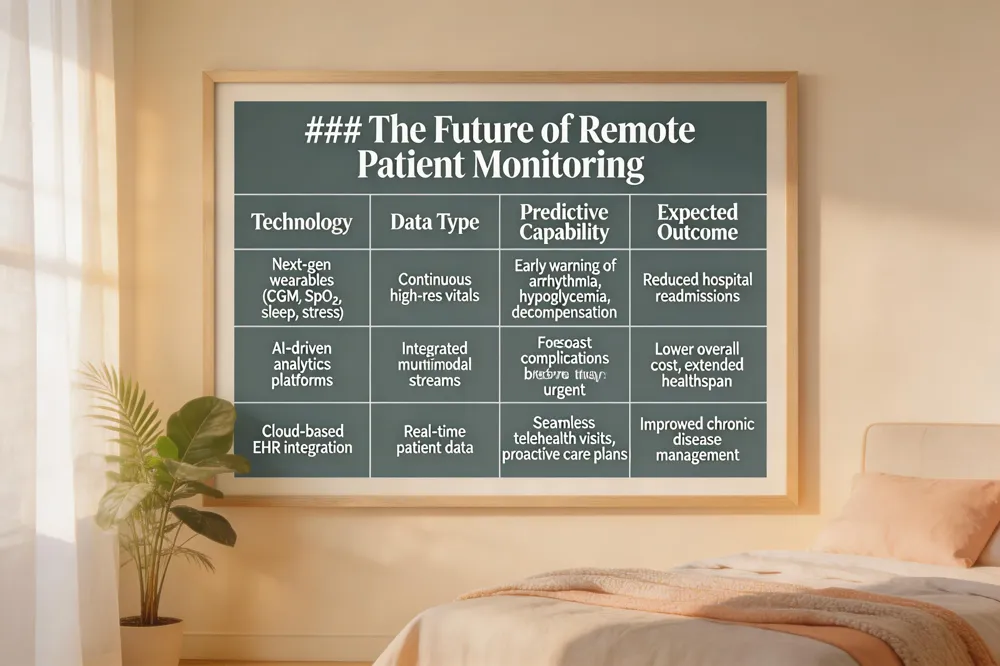 Remote patient monitoring (RPM) is evolving into a seamless extension of telehealth and virtual care, allowing clinicians to assess and adjust treatment plans in real time without in‑person visits. Next‑generation wearables—continuous glucose monitors, SpO₂ sensors, sleep trackers, and stress‑level detectors—collect high‑resolution physiological data that flows into cloud‑based platforms. AI‑driven predictive analytics instantly process these streams, flagging early warning signs such as arrhythmias, hypoglycemia, or decompensating heart failure, and forecasting complications before they become urgent. This proactive insight empowers patients to engage actively in their health, improving adherence and outcomes for chronic diseases like diabetes, heart disease, and COPD. By catching deterioration early, RPM reduces hospital readmissions, lowers overall healthcare costs, and extends healthspan for aging populations. In practice, RPM integrates with electronic health records and telehealth visits, delivering a personalized longevity‑care model that is both scalable and financially sustainable.
Choosing the Optimal Wearable for Health Monitoring
Choosing the Optimal Wearable for Health Monitoring
| Device | Key Sensors | Battery Life | FDA Clearance | Best Use Case |
|---|---|---|---|---|
| Apple Watch | ECG, HR, SpO₂, GPS, fall detection | ~18 h (daily charge) | ECG & AFib detection | Comprehensive health hub, clinical data sharing |
| Whoop | HRV, sleep stages, strain | 4–5 days | None (research‑grade) | Recovery & autonomic balance for athletes |
| Oura Ring | HRV, temperature, sleep, activity | ~4 days | None (research‑grade) | Sleep quality & readiness scoring |
| Garmin (e.g., Fenix) | HR, VO₂‑max, GPS, altitude | 1–2 weeks | None (fitness‑focused) | Training & outdoor activity monitoring |
| Fitbit | HR, SpO₂, sleep, stress | 5–7 days | SpO₂ sensor cleared | Affordable entry‑level stress & sleep tracking |
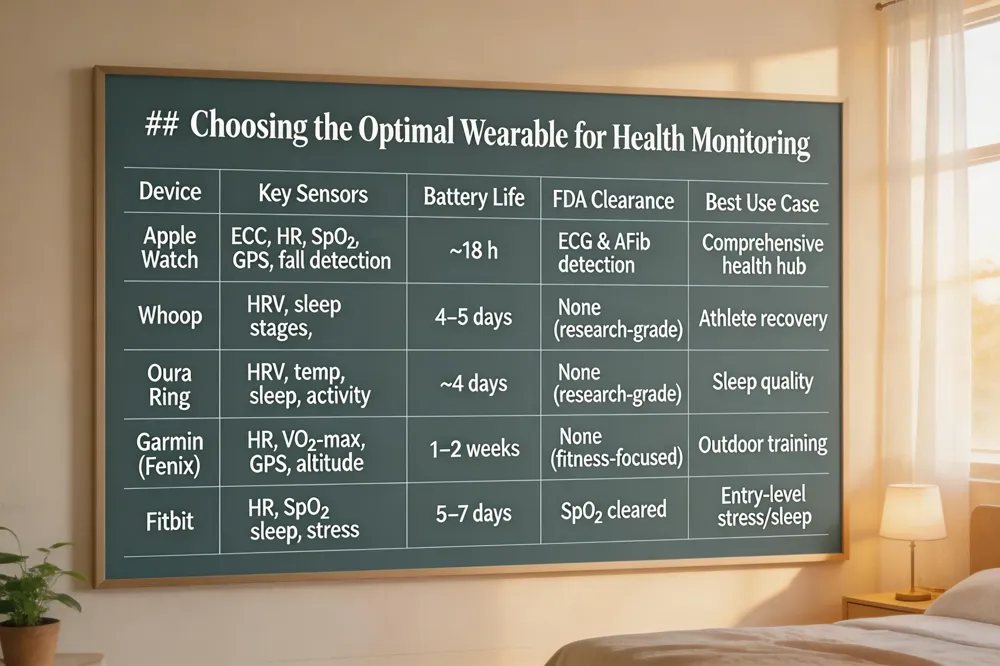 Modern wearables have become essential tools for proactive health management in the United States. The Apple Watch, cleared by the FDA for ECG and atrial‑fibrillation detection, serves as a comprehensive health hub: it continuously records heart rate, oxygen saturation, activity, sleep stages, and even fall events, and its data can be automatically uploaded to electronic health records via the Health app. For patients focused on recovery and autonomic balance, Whoop and the Oura Ring provide high‑resolution heart‑rate‑variability (HRV) metrics, sleep‑stage analysis, and a “readiness” score without a distracting screen. Garmin’s devices excel in activity‑focused tracking, offering advanced training‑, VO₂‑max estimation, and robust GPS for outdoor athletes, while Fitbit’s FDA‑cleared SpO₂ sensor and user‑friendly interface make it an affordable entry point for basic stress and sleep monitoring. Key selection factors include sensor accuracy (validated against clinical standards), battery life (ranging from 4 days for Oura to 18 hours for Apple Watch), data‑sharing capabilities, and integration with telehealth platforms. Ultimately, the best wearable aligns with an individual’s health goals, clinical needs, and lifestyle preferences.
Safety and Security of RPM Systems
Safety and Security of RPM Systems
| Security Feature | Description | Compliance Standard |
|---|---|---|
| End‑to‑end encryption | Data encrypted in transit and at rest | HIPAA, FDA SaMD |
| Blockchain‑based audit trail | Immutable log of data access and modifications | FDA 21 CFR Part 820 |
| Explainable AI (XAI) modules | Transparent alert rationale for clinicians | FDA Good Machine Learning Practice |
| Continuous security audits | Regular penetration testing & risk assessments | NIST SP 800‑53 |
| Device‑level risk management | Hazard analysis, failure mode evaluation | IEC 62304 |
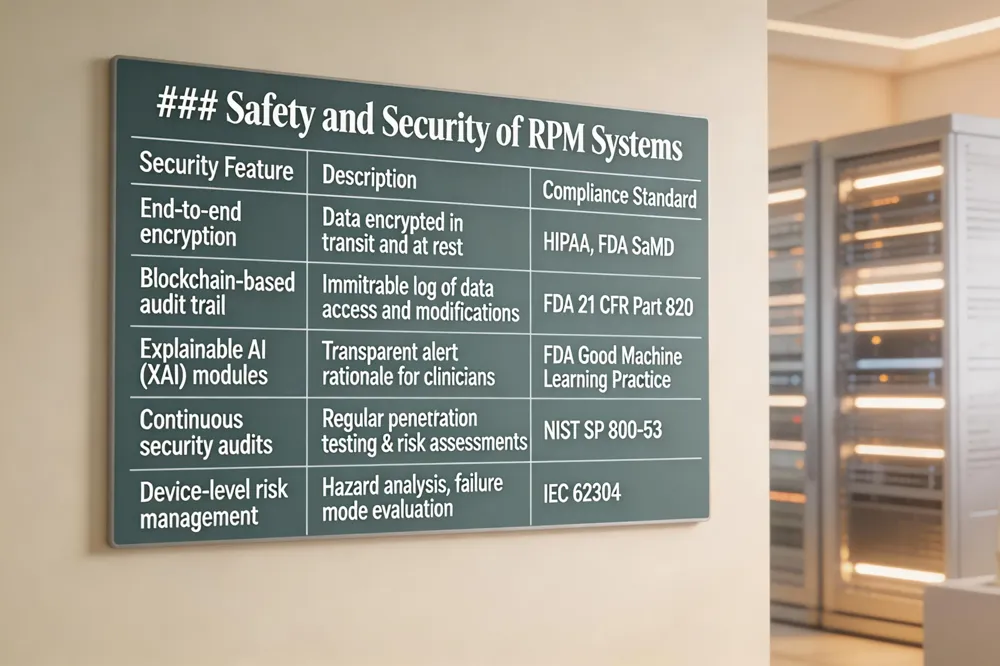 Systematic reviews of remote patient monitoring (RPM) consistently show improved safety outcomes, higher adherence, and better quality‑of‑life for diverse patient populations. Modern RPM platforms meet HIPAA and FDA SaMD guidance by employing end‑to‑end encryption, blockchain‑based audit trails, and secure IoT architectures that protect data in transit and at rest. Explainable AI (XAI) modules surface the reasoning behind alerts, enabling clinicians to validate decisions and reducing the risk of misinterpretation. Regulatory compliance is reinforced through continuous security audits, device‑level risk management, and transparent data‑governance policies. Consequently, RPM is deemed safe for patients: it delivers real‑time health insights while safeguarding privacy and ensuring trustworthy, auditable decision‑making.
Bridging Innovation and Longevity at the Medical Institute of Healthy Aging
The Medical Institute of Healthy Aging integrates artificial‑intelligence analytics, wearable biosensors, and next‑generation diagnostic platforms to create a seamless proactive‑care loop. AI algorithms process continuous streams from FDA‑cleared smartwatches, continuous glucose monitors, and digital twin models, flagging subtle physiologic shifts before symptoms appear. Patients receive a baseline “health‑span” profile that combines liquid‑biopsy ctDNA screening, multi‑omics panels, and high‑resolution imaging, enabling early intervention for cancer, cardiovascular disease, and neurodegeneration. Practical engagement begins with at‑home sensor kits, weekly remote data uploads to the institute’s secure cloud, and scheduled tele‑consultations that translate alerts into personalized lifestyle or therapeutic adjustments. Looking ahead, expanding reimbursement, broader AI validation, and integrated epigenetic clocks will make evidence‑based longevity care a standard, scalable option for aging Americans nationwide.