Introduction
Healthspan is the period of life spent in good physical and mental health, free from chronic disease and functional decline. Unlike total lifespan, it emphasizes quality of living rather than merely longevity. As individuals age, genetic, metabolic, and lifestyle factors diverge, making a one‑size‑fits‑all approach ineffective. Personalized healthspan plans integrate advanced diagnostics—such as comprehensive biomarker panels, epigenetic clocks, and body‑composition imaging—with targeted interventions that include nutrition optimization, tailored exercise regimens, sleep hygiene, and when appropriate, evidence‑based medications or supplements. This data‑driven strategy enables early detection of risk, precise adjustment of therapies, and ultimately extends the disease‑free years of life.
Foundations of Healthspan and Its Pillars
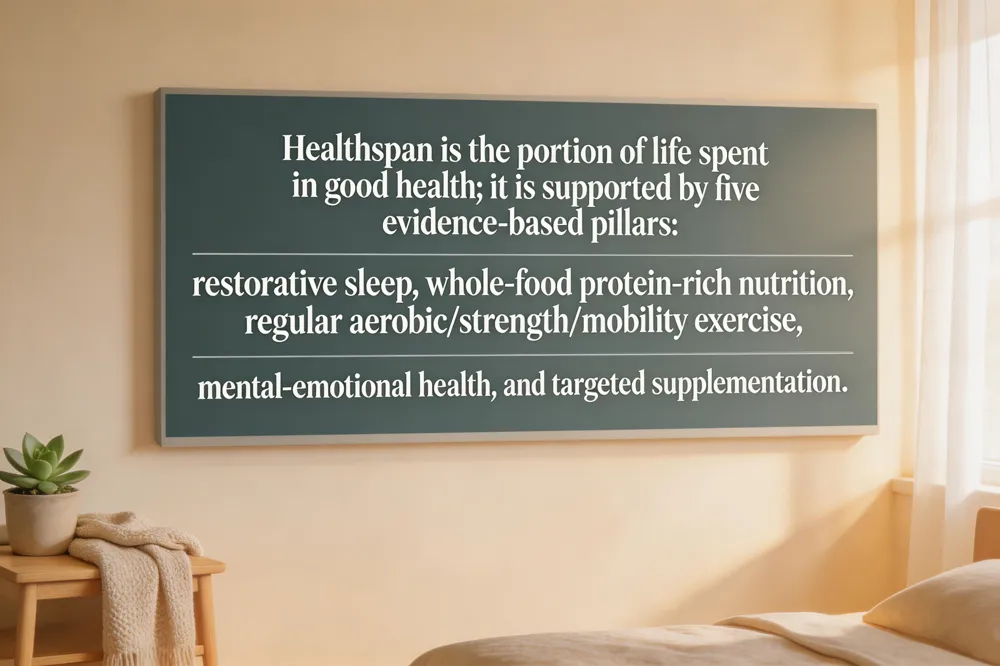
Extending healthspan hinges on five evidence‑based pillars: restorative sleep, balanced nutrition rich in whole foods and adequate protein, regular exercise that includes aerobic, strength, and mobility work, mental and emotional health through stress‑reduction, social connection, and mindfulness, and targeted supplementation to fill nutritional gaps.
Maximizing healthspan means adopting core habits such as daily moderate‑intensity aerobic activity, resistance training 2–3 times per week, a nutrient‑dense, mostly plant‑based diet (Mediterranean diet can produce epigenetic rejuvenation), sufficient quality sleep, and strong psychosocial support (Strong social connections and community engagement can reduce mortality risk).
Muscle Mass, Strength, and Longevity
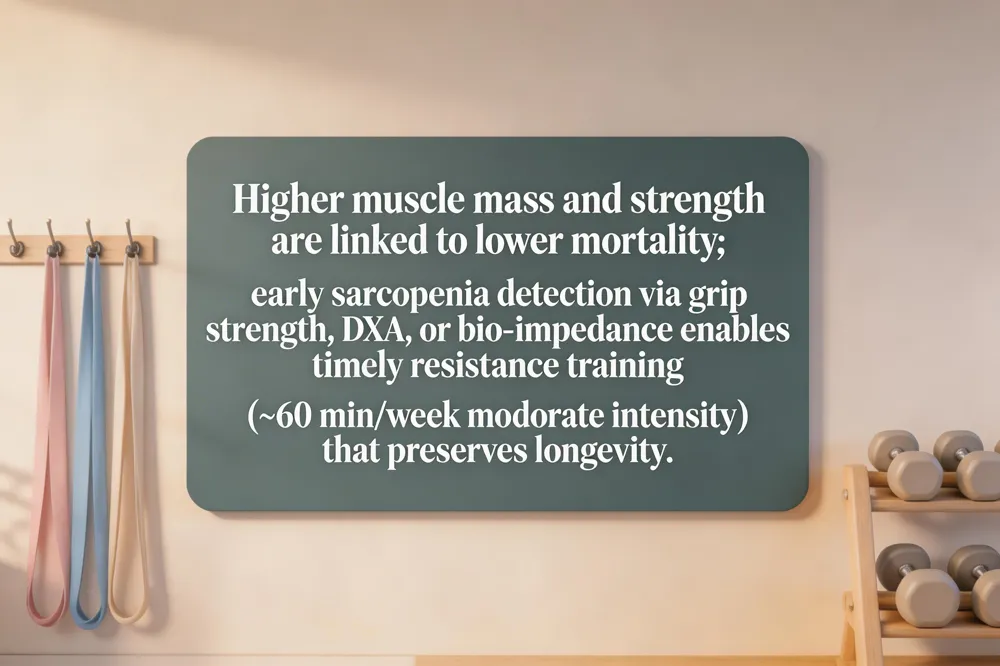 Higher muscle mass is consistently linked to lower mortality. In a nationally representative NHANES cohort of adults 50 + years, low appendicular lean mass doubled the odds of all‑cause death, while each 20‑percentile increase in skeletal muscle index reduced mortality risk by ~14 %. Muscle‑mass index (MMI), skeletal muscle divided by height², is an independent predictor of longevity; the highest MMI quartile showed a 19 % lower risk of death compared with the lowest, even after adjusting for obesity and cardiovascular factors. Strong thigh muscles, especially the quadriceps, are critical for mobility, balance and metabolic health; weak quadriceps raise early‑death risk by 51‑65 % and triple mortality for slow chair‑rise times. Sarcopenia—age‑related loss of muscle mass, strength and function—emerges from hormonal decline, reduced protein synthesis, inactivity and chronic disease. Early detection via grip strength, DXA or bio‑impedance and gait speed enables timely intervention. Strength training mitigates sarcopenia, preserves bone density, improves insulin sensitivity and lowers inflammation. Evidence supports ~60 minutes per week of moderate‑intensity resistance work (two sessions) as optimal for longevity. Regular progressive overload—body‑weight, bands or light weights—maintains muscle quantity and quality, supporting independence, reducing chronic‑disease burden and extending health‑span.
Biomarker Categories and Monitoring
 What are the 7 categories of biomarkers? The BEST framework defines seven categories: (1) susceptibility/risk – indicating future disease likelihood; (2) diagnostic – confirming disease presence; (3) monitoring – tracking disease progression or therapy response; (4) prognostic – predicting disease outcome; (5) predictive – forecasting benefit from a specific treatment; (6) pharmacodynamic/response – reflecting biological effect of an intervention; and (7) safety – signaling potential adverse effects.
What are the five core biomarkers for metabolic health? Optimal metabolic health is gauged by: fasting glucose < 100 mg/dL, triglycerides < 150 mg/dL, HDL > 50 mg/dL (women) / > 40 mg/dL (men), waist ≤ 35 in (women) / ≤ 40 in (men), and blood pressure ≤ 120/80 mm Hg. Maintaining these targets lowers risk of diabetes, cardiovascular disease, and stroke.
What are the five markers of longevity? Longevity assessment integrates cardiovascular metrics (blood pressure, lipid profile), metabolic indicators (fasting glucose, insulin sensitivity), inflammatory markers (hs‑CRP, cytokines), aerobic capacity (VO₂ max), and body‑composition/hormonal status (muscle mass, visceral fat, hormone balance). Together they provide a comprehensive view of biological age and guide personalized health‑span interventions.
Personalized Protocols and Interventions
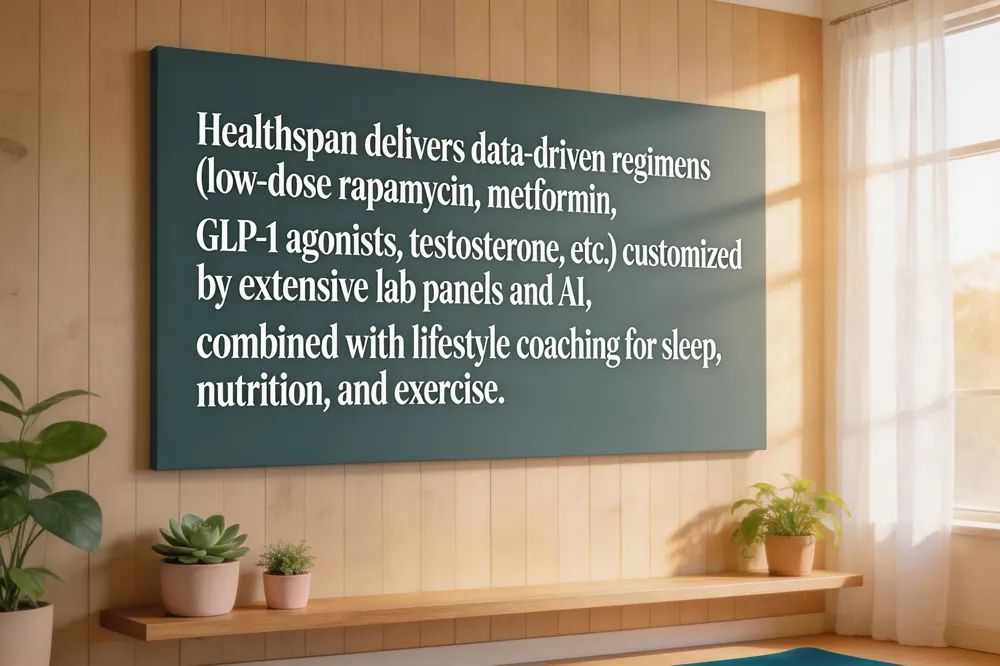 Healthspan delivers data‑driven longevity protocols that target core aging hallmarks through prescription medications, targeted supplements, and lifestyle coaching. Core regimens include Rapamycin for cellular senescence, Metformin and SGLT2 agents for metabolic flexibility, and GLP‑1 injectables such as Zepbound® for weight loss and cardiovascular health. each regimen is customized after comprehensive lab testing and a digital assessment, ensuring dosing matches the individual’s biological age and goals.
Healthspan’s testosterone program restores declining bioidentical testosterone—delivered as transdermal cream for women or gel/injection for men—to support lean‑muscle growth, bone density, cognition, and cardiovascular wellness. Dosage is personalized and regularly adjusted based on routine biomarker monitoring.
User reviews of Healthspan’s topical rapamycin highlight smoother, firmer skin and reduced fine lines after a few weeks, with minimal irritation when paired with sunscreen. The pharmaceutical‑grade formulation (≈99.5 % rapamycin) is praised for reliable dosing.
Top U.S. longevity programs combine advanced diagnostics, personalized coaching, and regenerative therapies. Fountain Life offers whole‑body MRI, genetic testing, hormone balancing, and stem‑cell options; Synergy Life Centers provide affordable IV therapy and targeted supplementation; Memorial Longevity Clinic delivers tiered memberships with comprehensive cardiac, cancer, and dementia screening.
Healthspan Inc. operates a digital longevity‑care model, using extensive lab panels (>70 markers) to prescribe evidence‑based treatments such as Rapamycin, metformin, GLP‑1 agonists, and hormone therapies, all delivered via a subscription platform and rated 4.9/5 on Trustpilot.
Healthspan Labs offers comprehensive 100+ biomarker testing, with results interpreted by MDs and PhDs to tailor protocols—including Rapamycin, metformin, hormone replacement, and GLP‑1 therapies—while providing ongoing nutrition, exercise, and sleep coaching.
Healthspan Longevity Pro tracks >80 metabolic, cardiovascular, hormonal, and trace‑mineral markers through CLIA‑certified labs, delivering an expert‑guided report that translates data into actionable lifestyle, supplement, and medication recommendations, supported by continuous coaching and performance monitoring.
Cost, Accessibility, and Clinic Landscape
 How much does a longevity clinic cost?
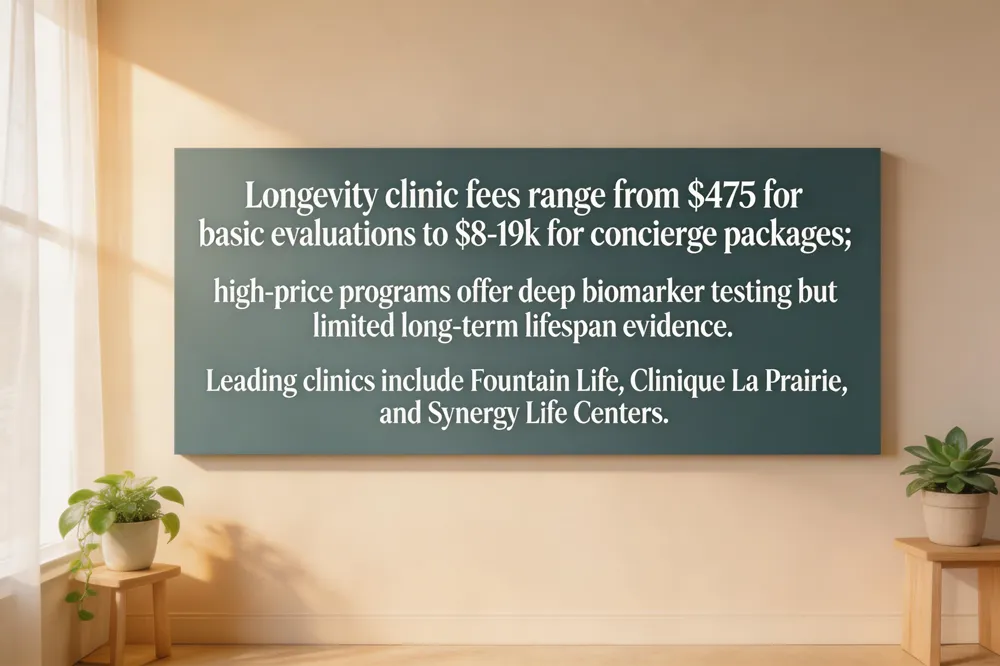
Longevity clinics range from $475 for a basic hormone‑and‑weight‑loss evaluation to $1,200 annual retainers for standard preventive‑age‑management. Comprehensive concierge packages that include whole‑genome sequencing, whole‑body MRI, extensive blood panels, and continuous monitoring cost $8,000‑$19,000. Tiered options such as a $12,000 “100+ Care” plan add wearable monitoring and quarterly follow‑ups, letting patients match testing depth to budget.
How much does a longevity clinic cost?
Longevity clinics range from $475 for a basic hormone‑and‑weight‑loss evaluation to $1,200 annual retainers for standard preventive‑age‑management. Comprehensive concierge packages that include whole‑genome sequencing, whole‑body MRI, extensive blood panels, and continuous monitoring cost $8,000‑$19,000. Tiered options such as a $12,000 “100+ Care” plan add wearable monitoring and quarterly follow‑ups, letting patients match testing depth to budget.
Can a $20,000 longevity clinic really help you live longer? These high‑price programs provide extensive biomarker panels and personalized interventions that can detect risks early, potentially extending life expectancy. However, many interventions lack long‑term evidence, so the impact on actual lifespan is uncertain. For healthy individuals, benefits are often modest compared with lower‑cost preventive care, raising questions about cost‑effectiveness.
Best longevity clinics in the world Top centers combine cutting‑edge diagnostics, regenerative therapies, and AI‑driven analysis. Fountain Life (U.S.), Clinique La Prairie (Switzerland), and boutique European/Asian clinics offering epigenetic and microbiome services set the benchmark for proactive health optimization.
Longevity clinics near me Search online for “longevity clinic” plus your city or ZIP, use directories like Healthgrades or Zocdoc, and consider providers such as the Medical Institute of Healthy Aging (California) or Michigan Longevity Clinic. Verify certifications and read reviews before scheduling a consultation.
Longevity clinic USA U.S. clinics (Fountain Life, Synergy Life Centers, Next Health, MDIHA) integrate whole‑body MRI, genetic testing, functional labs, hormone optimization, IV nutrient therapy, and continuous monitoring to reduce biological age and prevent disease.
Healthy longevity clinic A healthy longevity clinic utilizes advanced biomarker testing, genetics, and personalized lifestyle coaching to lower biological age, improve energy, sleep, and cognition, offering 24/7 app access and tele‑medicine support.
Who owns Healthspan? Healthspan is owned by Orkla Health, the consumer‑health division of Norwegian conglomerate Orkla ASA, which acquired the company in 2022.
Research Evidence and Population Data
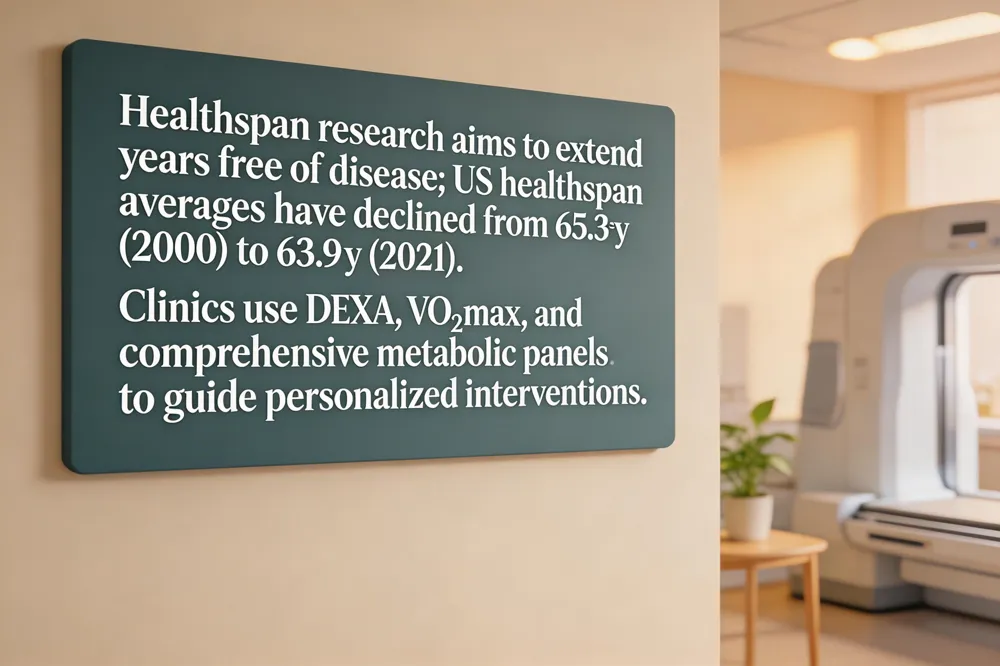 Healthspan research
 investigates how long people can live in robust health, focusing on the period free from chronic disease, disability, and functional decline. Recent systematic reviews have identified over 180 disparate definitions, highlighting the need for a standardized metric. At the Icahn School of Medicine at Mount Sinai, multidisciplinary teams target key biological drivers of aging—such as inflammation, cellular senescence, and metabolic dysregulation—through interventions like rapamycin, spermidine, exercise, and nutrition. Clinical trials combine pharmacologic agents with lifestyle optimization to restore immune function and improve tissue repair. By validating measurable biomarkers, healthspan research aims to translate cutting‑edge longevity science into personalized protocols that keep patients active, cognitively sharp, and disease‑free.
Healthspan research
Healthspan research investigates how long people can live in robust health, focusing on the period free from chronic disease, disability, and functional decline. Recent systematic reviews have identified over 180 disparate definitions, highlighting the need for a standardized metric. At the Icahn School of Medicine at Mount Sinai, multidisciplinary teams target key biological drivers of aging—such as inflammation, cellular senescence, and metabolic dysregulation—through interventions like rapamycin, spermidine, exercise, and nutrition. Clinical trials combine pharmacologic agents with lifestyle optimization to restore immune function and improve tissue repair. By validating measurable biomarkers, healthspan research aims to translate cutting‑edge longevity science into personalized protocols that keep patients active, cognitively sharp, and disease‑free.
Healthspan USA In the United States, healthspan is the number of years lived in good health, free from significant chronic disease or disability. Data show the average healthspan for U.S. adults fell from 65.3 years in 2000 to about 63.9 years in 2021, exposing a gap between increasing life expectancy and declining healthy years. Extending healthspan involves addressing hallmarks of aging through personalized protocols, regular biomarker monitoring, and lifestyle coaching—services offered by clinics such as the Medical Institute of Healthy Aging.
Healthspan Longevity Healthspan refers to years lived in good health, not merely total lifespan. Comprehensive, data‑driven assessments—DEXA scans, VO₂ max testing, metabolic panels, and advanced biomarker profiling—identify early physiological imbalances. Targeted longevity protocols (low‑dose rapamycin, metformin, GLP‑1 agonists, hormone optimization, personalized nutrition, exercise) aim to slow cellular hallmarks of aging, thereby extending the healthy portion of life.
What is a longevity clinic? A longevity clinic is a specialized medical center that focuses on proactive, preventive care to extend both lifespan and healthspan. It uses advanced diagnostics—comprehensive biomarker panels, genetic/epigenetic testing, imaging, and wearable‑data monitoring—to detect early signs of age‑related disease. A multidisciplinary team creates highly personalized plans blending lifestyle interventions, targeted supplements, hormone optimization, and cutting‑edge therapies, continuously tracking biological age and organ‑specific markers to keep individuals healthier longer.
Healthspan refers to the period of life spent in good health, free from chronic disease and disability
Putting It All Together: Your Custom Plan
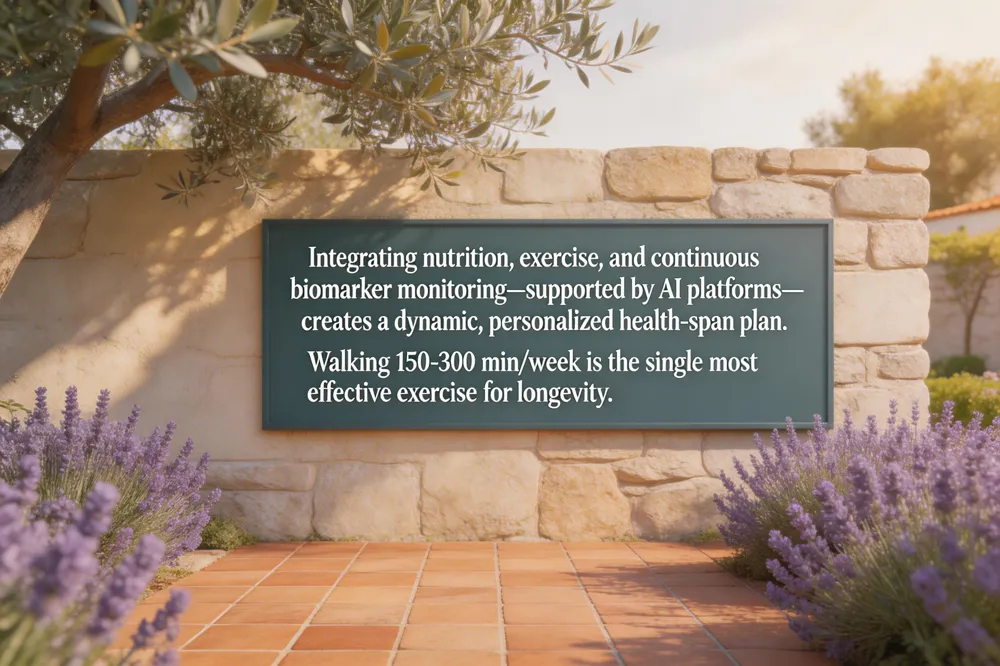 Integrating nutrition, exercise, and biomarker monitoring is the backbone of modern health‑span optimization. Advanced clinics such as Healthspan, the Medical Institute of Healthy Aging, and the Preamble Program use DEXA scans, VO₂ max testing, and panels of 100+ blood markers (LDL, hs‑CRP, HbA1c, vitamin D, etc.) to identify early metabolic and inflammatory shifts. AI‑driven platforms (MySpan, InsideTracker, Human Longevity’s app) synthesize these data with genetics, wearable metrics, and lifestyle inputs, producing dynamic, evidence‑based recommendations that are updated as each new lab result arrives.
Is too much muscle bad for longevity? No. Functional muscle mass, attained through regular resistance training and adequate protein, supports insulin sensitivity, balance, and bone health, and is consistently linked to lower mortality. Only extreme, pharmacologically‑enhanced hypertrophy poses cardiovascular risk.
What is the number one exercise for longevity? Walking—150‑300 min of brisk, moderate‑intensity steps per week—offers the simplest, safest route to improved VO₂ max, reduced inflammation, and metabolic health.
Healthspan longevity refers to years lived free from chronic disease. By pairing personalized nutrition, targeted supplements (e.g., metformin, low‑dose rapamycin), and precise exercise prescriptions with ongoing biomarker tracking, clinicians can extend the healthy portion of life while preserving functional independence.
Conclusion
Personalized healthspan programs combine advanced diagnostics—such as comprehensive biomarker panels, genetic and epigenetic testing, and body‑composition analysis—with targeted lifestyle interventions that nutrition, exercise, sleep, and stress management. By continuously monitoring markers of inflammation (hs‑CRP), metabolism (HbA1c, fasting glucose), lipid health (LDL, HDL), and physiological fitness (VO₂ max, HRV), clinicians can fine‑tune protocols in real time, achieving measurable reductions in cardiovascular risk, visceral fat, and biological age. If you are ready to shift from reactive care to a data‑driven, preventive model, enroll in a reputable healthspan clinic, schedule baseline testing, and begin a personalized plan designed to extend your years of vibrant, disease‑free living.