Why a Tailored Healthspan Plan Matters
Healthspan is the period of life spent in good physical and mental health, free from chronic disease or disability. It differs from lifespan, which simply counts total years lived regardless of health quality. Extending healthspan means compressing morbidity and preserving functional independence well into later years. Evidence shows that a personalized plan—grounded in advanced diagnostics and proactive care—optimizes the four pillars that drive healthspan: nutrition, physical activity, sleep, and stress management. A diet rich in whole foods, fruits, vegetables, lean protein, and healthy fats reduces inflammation and supports cellular repair. Regular aerobic exercise (≥150 min/week) plus strength training maintains cardiovascular fitness, muscle mass, and metabolic flexibility. Adequate sleep (7‑9 h/night) restores hormone balance and immune function, while mindfulness‑based stress‑reduction lowers cortisol and mitigates age‑related damage. Tailoring these habits to an individual’s genetics, biomarker profile, and lifestyle maximizes adherence and long‑term benefit, turning longevity science into everyday health.
Understanding Healthspan and the Factors That Shorten It
Quick Reference Tables
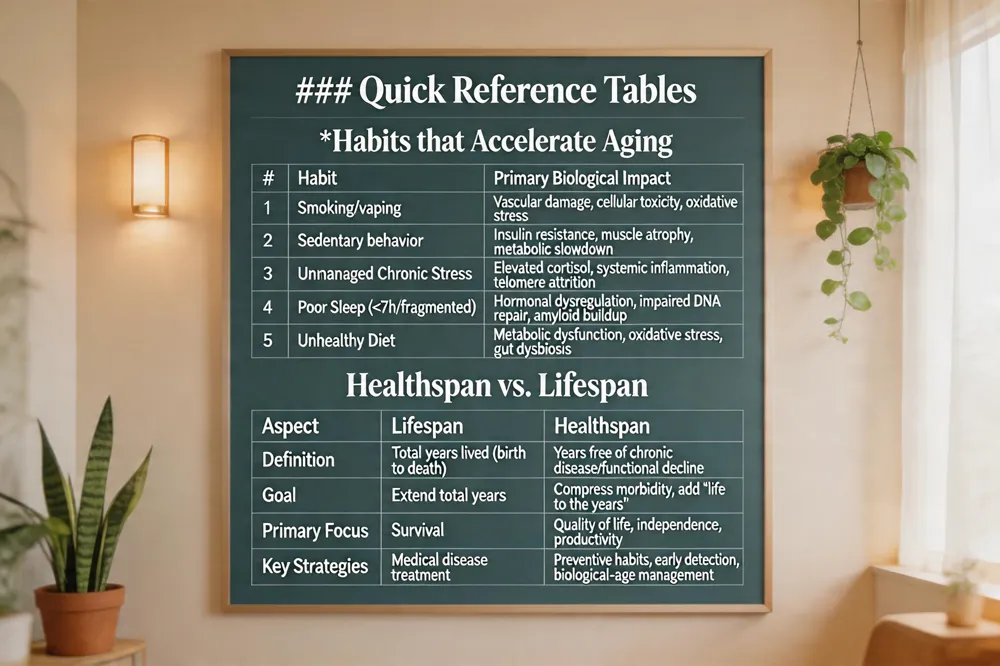
Habits that Accelerate Aging
| # | Habit | Primary Biological Impact |
|---|---|---|
| 1 | Smoking or vaping | Vascular damage, cellular toxicity, oxidative stress |
| 2 | Sedentary behavior | Insulin resistance, muscle atrophy, metabolic slowdown |
| 3 | Chronic stress (unmanaged) | Elevated cortisol, systemic inflammation, telomere attrition |
| 4 | Poor sleep (<7 h or fragmented) | Hormonal dysregulation, impaired DNA repair, increased amyloid buildup |
| 5 | Unhealthy diet (high‑ processed sugars/fats, low nutrient density) | Metabolic dysfunction, oxidative stress, gut dysbiosis |
Healthspan vs. Lifespan
| Aspect | Lifespan | Healthspan |
|---|---|---|
| Definition | Total years lived from birth to death | Years lived free of chronic disease and functional decline |
| Goal | Extend total years | Compress morbidity, add “life to the years” |
| Primary Focus | Survival | Quality of life, independence, productivity |
| Key Strategies | Medical treatment of disease | Preventive habits, early detection, biological‑age management |
 Healthspan meaning
Healthspan refers to the portion of a person’s life lived in good health—free from chronic disease, major disabilities, and significant functional decline.
In the United States the average healthspan is roughly 64 years for men and 65 years for women, meaning many people spend a decade or more living with age‑related illnesses. Extending healthspan involves balanced nutrition, regular exercise, adequate sleep, stress management, and avoidance of smoking and excessive alcohol.
Healthspan meaning
Healthspan refers to the portion of a person’s life lived in good health—free from chronic disease, major disabilities, and significant functional decline.
In the United States the average healthspan is roughly 64 years for men and 65 years for women, meaning many people spend a decade or more living with age‑related illnesses. Extending healthspan involves balanced nutrition, regular exercise, adequate sleep, stress management, and avoidance of smoking and excessive alcohol.
Healthspan vs lifespan Lifespan is the total number of years a person lives, from birth to death, whereas healthspan is the segment of those years spent free of chronic disease and functional decline. The goal of proactive longevity care is to add “life to the years” rather than just “years to life,” compressing the period of morbidity. By targeting biological drivers of aging and maintaining healthy habits, individuals can align healthspan more closely with lifespan, remaining active, productive, and independent longer.
What habits age you faster? Five daily habits identified by cardiologists accelerate aging: (1) Smoking or vaping, which damages vascular and cellular health; (2) Sedentary behavior, which promotes insulin resistance and muscle loss; (3) Ignoring chronic stress, which raises cortisol and inflammation; (4) Poor sleep, which impairs hormone regulation and repair processes; and (5) Unhealthy eating—high in processed sugars, saturated fats, and low in nutrient‑dense foods—drives metabolic dysfunction and oxidative stress.
Proactive Care: Investing Early for Long‑Term Gains
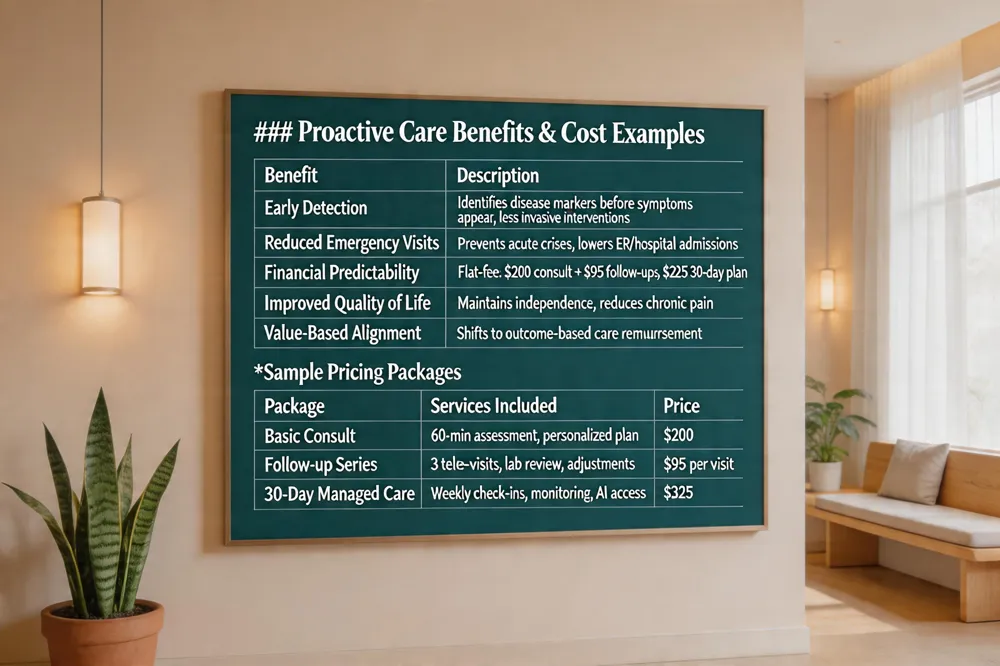
Proactive Care Benefits & Cost Examples
| Benefit | Description |
|---|---|
| Early Detection | Identifies disease markers before symptoms appear, enabling less invasive interventions |
| Reduced Emergency Visits | Prevents acute crises, lowering ER utilization and hospital admissions |
| Financial Predictability | Flat‑fee packages (e.g., $200 consult + $95 follow‑ups, $325 30‑day managed‑care plan) provide budget certainty |
| Improved Quality of Life | Maintains functional independence, reduces chronic pain and disability |
| Value‑Based Alignment | Shifts reimbursement from volume‑based to outcome‑based care |
Sample Pricing Packages
| Package | Services Included | Price |
|---|---|---|
| Basic Consult | Initial 60‑min assessment, personalized plan | $200 |
| Follow‑up Series | 3 monthly tele‑visits, lab review, plan adjustments | $95 per visit |
| 30‑Day Managed Care | Weekly check‑ins, continuous biomarker monitoring, AI dashboard access | $325 |
 Proactive care means anticipating health challenges and intervening before they become serious. It relies on regular monitoring, early screenings, vaccinations, and personalized lifestyle guidance—shifting the focus from treating disease after it appears to preventing it. This preventive model reduces costly emergency visits, lowers long‑term medical expenses, and supports a longer, healthier healthspan. In contrast, reactive healthcare treats symptoms after they arise, often requiring more invasive and expensive interventions. Investing in proactive health is financially sound: early detection and lifestyle coaching can avert chronic disease, decreasing hospitalizations and medication costs. Many clinics now offer flat‑fee packages—e.g., a $200 consult with $95 follow‑ups or a $325 30‑day managed‑care plan—providing budget certainty while delivering the benefits of personalized longevity optimization. Overall, proactive care aligns with value‑based health systems, improves quality of life, and offers a clear return on investment for individuals and the healthcare system alike.
Clinical Resources for a Personalized Healthspan Blueprint
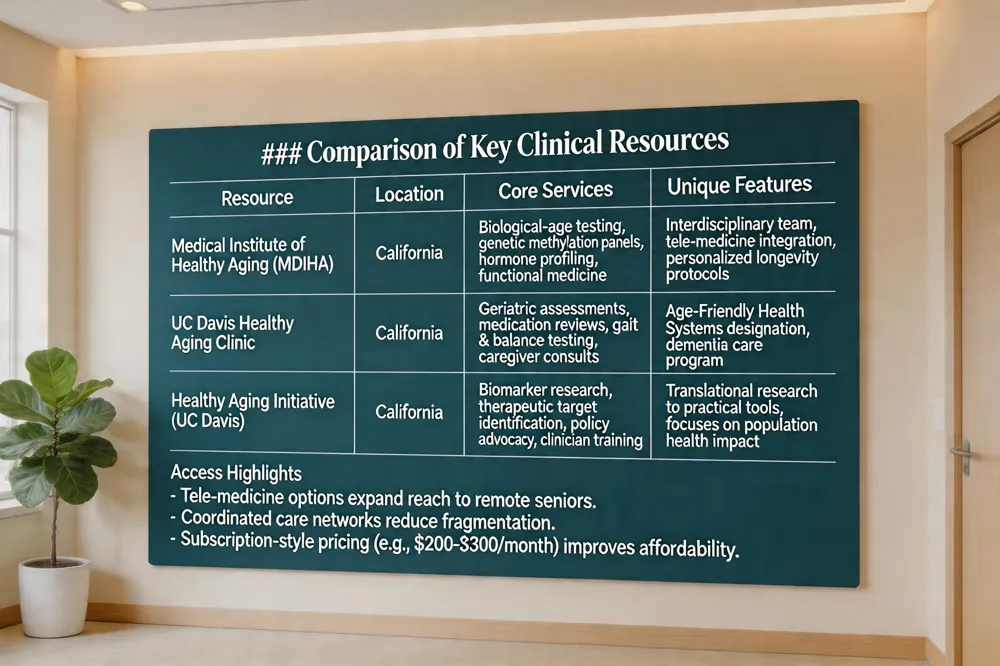
Comparison of Key Clinical Resources
| Resource | Location | Core Services | Unique Features |
|---|---|---|---|
| Medical Institute of Healthy Aging (MDIHA) | California | Biological‑age testing, genetic methylation panels, hormone profiling, functional medicine | Interdisciplinary team, tele‑medicine integration, personalized longevity protocols |
| UC Davis Healthy Aging Clinic | California | Geriatric assessments, medication reviews, gait & balance testing, caregiver consults | Age‑Friendly Health Systems designation, dementia care program |
| Healthy Aging Initiative (UC Davis) | California | Biomarker research, therapeutic target identification, policy advocacy, clinician training | Translational research to practical tools, focuses on population health impact |
Access Highlights
- Tele‑medicine options expand reach to remote seniors.
- Coordinated care networks reduce fragmentation.
- Subscription‑style pricing (e.g., $200‑$300/month) improves affordability.
 The Medical Institute of Healthy Aging (MDIHA) in California delivers proactive, personalized longevity care using advanced diagnostics such as biological‑age testing, genetic methylation panels, comprehensive hormone profiling and functional medicine evaluation. An interdisciplinary team creates individualized nutrition, exercise, hormone‑balance and cognitive‑health plans, monitoring progress through regular labs and tele‑medicine. Patient reviews praise its proactive approach, though staff feedback highlights internal management challenges. The UC Davis Healthy Aging Clinic, an Age‑Friendly Health Systems‑designated center, offers interdisciplinary geriatric assessments, medication reviews, gait and balance testing, and caregiver consultations for adults 65+. Its Dementia Care Program provides long‑term cognitive support, care coordination and education for families. The Healthy Aging Initiative advances healthspan science by identifying biomarkers, therapeutic targets and policies that add disease‑free years, training clinicians and translating research into practical tools. Northern California’s rapidly growing senior population benefits from these resources, which address access gaps through preventive plans, tele‑medicine and coordinated care networks.
Building Your Custom Healthspan Plan: Lifestyle, Tools, and Support
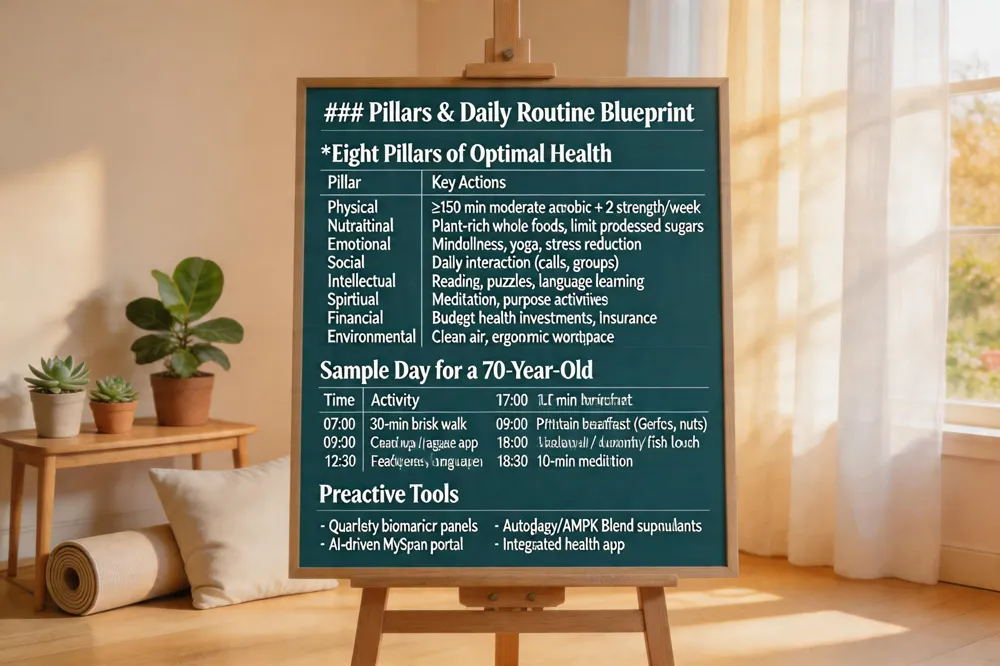
Pillars & Daily Routine Blueprint
Eight Pillars of Optimal Health
| Pillar | Key Actions |
|---|---|
| Physical | ≥150 min moderate aerobic + 2 strength sessions/week |
| Nutritional | Plant‑rich, whole‑food diet, limit processed sugars/fats |
| Emotional | Mindfulness, yoga, stress‑reduction techniques |
| Social | Daily interaction (calls, groups, volunteering) |
| Intellectual | Reading, language learning, puzzles |
| Spiritual | Meditation, purpose‑driven activities |
| Financial | Budget for health investments, insurance optimization |
| Environmental | Clean air/water, safe housing, ergonomic workspace |
Sample Day for a 70‑Year‑Old
| Time | Activity |
|---|---|
| 07:00 | 30‑min brisk walk (moderate aerobic) |
| 08:00 | Protein‑rich breakfast (e.g., Greek yogurt, berries, nuts) |
| 09:30 | Light resistance work (chair squats, resistance bands) |
| 11:00 | Cognitive task (reading, language app) |
| 12:30 | Balanced lunch (leafy greens, quinoa, fish) |
| 14:00 | Social call / community group participation |
| 16:00 | Mindfulness/meditation (10 min) |
| 18:30 | Dinner (vegetable‑rich, low‑glycemic) |
| 20:00 | Light stretching, prepare for 7‑9 h sleep |
Proactive Tools
- Quarterly biomarker panels (Metabolic Pro Panel, Longevity Pro Panel)
- AI‑driven health‑risk dashboard (MySpan portal)
- Supplement protocols (Autophagy Blend, AMPK Blend, hormone therapy)
- Healthspan calculator (online projection based on labs & lifestyle)
- Integrated health app (syncs labs, tracks trends, delivers recommendations)
 Healthspan— the years lived free from chronic disease can be length by a proactive, data‑driven lifestyle that blends nutrition, movement, sleep, stress management, and social engagement. 1) Steps to increase healthspan: adopt a plant‑rich, whole‑food diet, aim for ≥150 min of moderate aerobic activity plus two weekly strength sessions, keep cholesterol, blood pressure, and glucose in healthy ranges, limit smoking and alcohol, secure 7‑9 h of restorative sleep, and practice mindfulness or yoga to curb cortisol. 2) Daily routine for a 70‑year‑old: start with a brisk 30‑minute walk, follow with light resistance work (e.g., chair squats or resistance bands), intersperse mental‑stimulating tasks such as reading or language practice, and schedule social interaction—phone calls, community groups, or volunteering. 3) Proactive care examples: quarterly biomarker panels (Metabolic Pro Panel, Longevity Pro Panel), AI‑enabled health‑risk dashboards (e.g., Healthspan’s MySpan portal, remote vitals monitoring, and multidisciplinary team reviews that adjust medications, supplements (Autophagy Blend, AMPK Blend, and hormone therapy as needed. 4) Healthspan calculator: an online tool that projects healthy‑year expectancy from age, gender, labs, and lifestyle, highlighting high‑impact changes. 5) Healthspan app: syncs lab results, tracks biomarker trends, delivers AI‑driven recommendations, and integrates with personalized protocols from clinics such as the Medical Institute of Healthy Aging. 6) Eight pillars of optimal health: physical, nutritional, emotional, social, intellectual, spiritual, financial, and environmental wellness—each supported by evidence‑based interventions and regular monitoring to ensure a longer, higher‑quality life.
Tools, Products, and Ongoing Management for Longevity
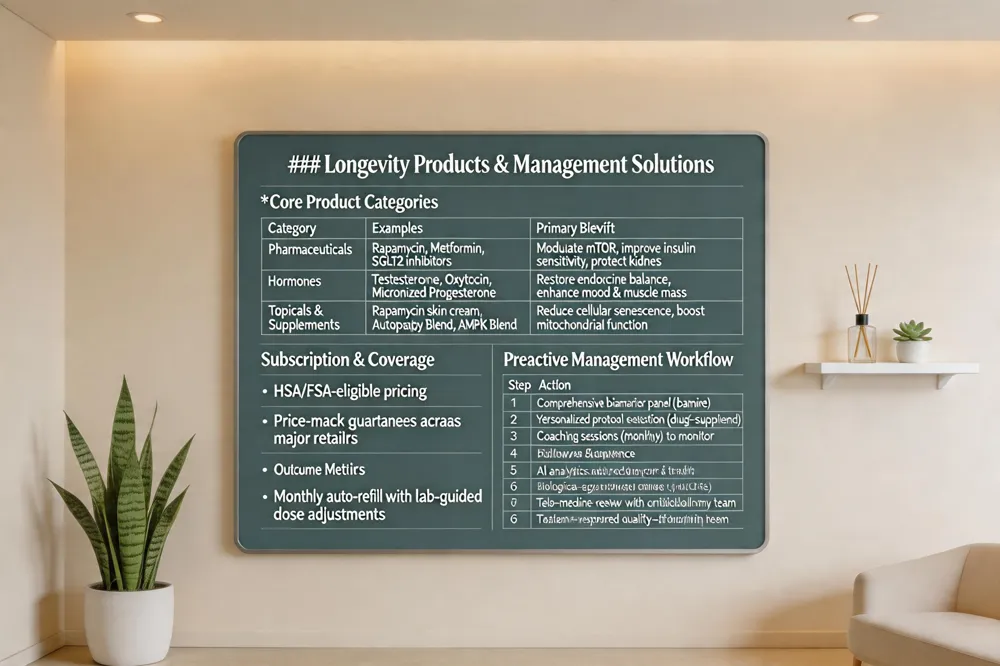
Longevity Products & Management Solutions
Core Product Categories
| Category | Examples | Primary Benefit |
|---|---|---|
| Pharmaceuticals | Rapamycin, Metformin, SGLT2 inhibitors | Modulate mTOR, improve insulin sensitivity, protect kidneys |
| Hormones | Testosterone, Oxytocin, Micronized Progesterone | Restore endocrine balance, enhance mood & muscle mass |
| Topicals & Supplements | Rapamycin skin cream, Methylene Blue, Autophagy Blend, AMPK Blend | Reduce cellular senescence, boost mitochondrial function |
Subscription & Coverage
- HSA/FSA‑eligible pricing
- Price‑match guarantees across major retailers
- Monthly auto‑refill with lab‑guided dose adjustments
Proactive Management Workflow
| Step | Action |
|---|---|
| 1 | Comprehensive biomarker panel (baseline) |
| 2 | Personalized protocol selection (drug/supplement) |
| 3 | Coaching sessions (monthly) to monitor adherence |
| 4 | Follow‑up labs (quarterly) to track biological age & functional markers |
| 5 | AI analytics adjust dosing or add new interventions |
| 6 | Tele‑medicine review with multidisciplinary team |
Outcome Metrics
- Biological‑age reduction (years) |
- Biomarker improvement (e.g., HbA1c, LDL, CRP) |
- Functional scores (gait speed, grip strength) |
- Patient‑reported quality‑of‑life index |
 Healthspan products and supplements
Healthspan delivers a data‑driven suite of longevity tools after rapamycin, Metformin, SGLT2 inhibitors, and bioidentical hormones such as testosterone, oxytocin, and micronized progesterone are prescribed after comprehensive biomarker panels. Complementary items—including topical rapamycin skin creams, antioxidant blends like Methylene Blue, and autophagy‑activating supplements—are offered on subscription with HSA/FSA eligibility and price‑match guarantees. Each product is paired with expert coaching and regular lab monitoring to track biological age and healthspan metrics, aiming to slow cellular senescence and boost resilience.
Healthspan products and supplements
Healthspan delivers a data‑driven suite of longevity tools after rapamycin, Metformin, SGLT2 inhibitors, and bioidentical hormones such as testosterone, oxytocin, and micronized progesterone are prescribed after comprehensive biomarker panels. Complementary items—including topical rapamycin skin creams, antioxidant blends like Methylene Blue, and autophagy‑activating supplements—are offered on subscription with HSA/FSA eligibility and price‑match guarantees. Each product is paired with expert coaching and regular lab monitoring to track biological age and healthspan metrics, aiming to slow cellular senescence and boost resilience.
Proactive healthcare solutions These solutions anticipate risk before disease emerges, using personalized screenings, wearable‑derived data, and tele‑medicine platforms. Tailored nutrition, exercise regimens, and preventive labs create real‑time feedback loops that preserve function and independence for seniors.
What is proactive health management? It is a preventive, patient‑centered model that continuously stratifies risk, fills screening gaps, and adjusts medication or lifestyle interventions through regular touchpoints, education, and coordinated care teams.
Healthspan vs. lifespan Lifespan counts total years lived; healthspan measures years lived free of chronic disease. Extending healthspan adds “life to the years,” compressing morbidity by targeting aging biology and reinforcing pillars such as activity, nutrition, sleep, stress reduction, and social connection.
Your Path Forward: A Live, Adaptive Healthspan Plan
To sustain healthspan, begin with a schedule of comprehensive assessments that capture blood biomarkers, hormonal panels, inflammation markers, and biological‑age indices. Repeat these tests at least annually, or more often when life changes arise, and compare results against individualized baselines. Modern technology—wearable devices, AI‑driven dashboards such as Healthspan’s MySpan portal or Fountain Life’s Zori AI—translates real‑time data into actionable recommendations, while dedicated coaches interpret trends and adjust protocols. Parallel to these tools, embed core preventive habits: a Mediterranean‑style diet rich in vegetables and lean protein, 150 minutes of moderate aerobic activity plus twice‑weekly strength work, 7‑9 hours of quality sleep, stress‑reduction practices, and regular social engagement. Small, incremental adjustments compound over time, creating a dynamic, personalized plan that evolves with your biology.