Setting the Stage for California’s Longevity Revolution
California’s longevity landscape is anchored by the nation’s only Blue Zone—Loma Linda—where a plant‑based diet, daily low‑intensity exercise, abstinence from smoking and alcohol, and strong social ties have been linked to a decade‑long lifespan advantage. University‑driven programs at the USC Longevity Institute, Stanford Center on Longevity, and UCLA Longevity Center translate this epidemiology into actionable science, offering workshops on fasting‑mimicking diets, stress resilience, and purpose‑driven living while providing community‑wide learning opportunities such as senior scholars and multilingual webinars. Precision‑medicine clinics—including the Medical Institute of Healthy Aging, California Longevity & Vitality Medical Institute, and Human Longevity—extend the Blue Zone blueprint with genomics‑based risk panels, AI‑driven health dashboards, and individualized nutrition, exercise, and supplement regimens. Regenerative and hormone therapies, from bio‑identical hormone pellet delivery (BioTE®) to stem‑cell, exosome, and peptide treatments, are deployed to restore endocrine balance, reduce inflammation, and support cellular renewal. While many of these services command premium fees, the growing consumer demand for proactive healthspan extension fuels a vibrant market that blends cutting‑edge diagnostics, evidence‑based lifestyle coaching, and community engagement, positioning California as the vanguard of the longevity revolution.
Blue Zone Blueprint: Loma Linda’s Longevity Secrets
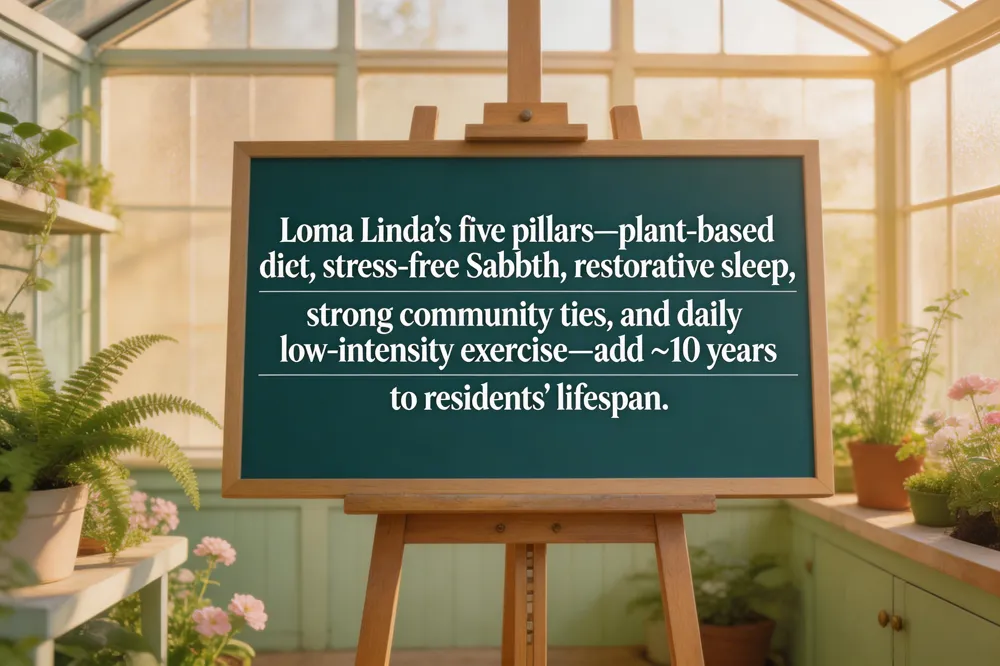 Loma Linda, California, holds the title of the state’s longest‑life‑expectancy city and is the nation’s only recognized Blue Zone. Residents live roughly ten years longer than the U.S. average—men about 89 years and women about 91 years—thanks to a distinctive health‑focused culture rooted in Seventh‑day Adventist traditions.
Plant‑based nutrition
A majority of Loma Linda adults follow a vegetarian or vegan diet rich in whole foods, fruits, vegetables, legumes, nuts, and healthy fats. This dietary pattern mirrors the Mediterranean diet and has been linked to lower rates of heart disease, cancers, and metabolic disorders.
Stress management and sleep
Weekly Sabbath observance provides a structured 24‑hour period of rest, meditation, and family connection, reducing chronic stress. Residents also prioritize regular, quality sleep, which supports hormonal balance and cellular repair.
Community involvement
Strong social ties are cultivated through volunteering, church activities, and intergenerational gatherings. These connections enhance mental health, purpose, and resilience—key components of the Blue Zone longevity model.
Daily physical activity
Walking, biking, and low‑intensity aerobic exercise are woven into everyday life, with many residents engaging in strength‑training sessions at least twice a week. This consistent movement maintains cardiovascular fitness, muscle mass, and metabolic health.
Together, these five pillars—plant‑based eating, stress reduction, restorative sleep, community engagement, and regular exercise—form Loma Linda’s Blueprint for extending healthspan and achieving a decade‑long advantage over the national average.
University‑Driven Research and Community Programs
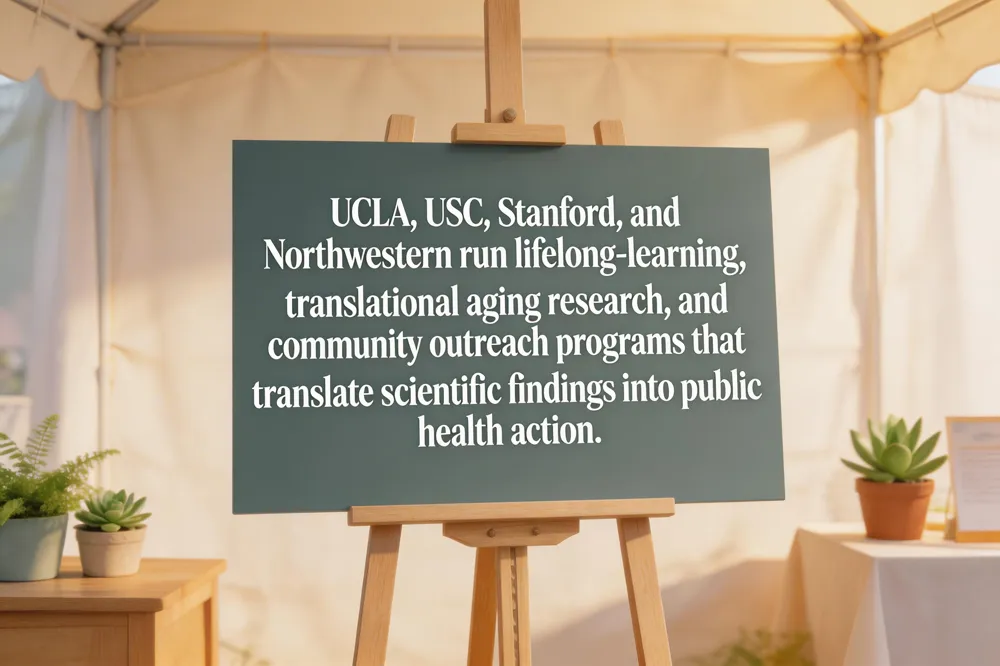 UCLA Senior Scholars program
The UCLA Senior Scholars program invites adults 50 + to audit regular undergraduate courses at UCLA. Participants attend lectures and complete readings without exams, papers, or grades, paying a low quarterly fee ($175 for the first class, $150 for additional classes). Enrollment requires creating a UCLA Logon ID, selecting eligible 200‑level courses, and obtaining instructor approval. The initiative promotes lifelong learning and cognitive health.
UCLA Longevity Center
Part of the Semel Institute, the UCLA Longevity Center’s mission is to help people live better, longer lives through lifelong learning, research, and community programs. Led by Interim Director Linda Ercoli, PhD, it offers Brain Boot Camp, Memory Training, Senior Scholars, and multilingual webinars. Contact: longevity@mednet.ucla.edu.
USC Longevity Institute
Located in the USC Longevity Institute at the USC Davis School of Gerontology, the institute conducts translational aging research, emphasizing dietary interventions like the fasting‑mimicking diet. Faculty such as Dr. Valter Longo lead studies funded by major grants. It also offers a PhD program with core aging biology courses and specializations in neuroscience, stem‑cell science, and biomedical sciences.
Stanford Center on Longevity – New Map of Life
The New Map of Life initiative addresses the social, economic, and health challenges of century‑long lifespans. It proposes redesigning institutions for age‑diverse participation, lifelong learning, flexible work, and equitable access to geroscience advances, publishing reports and newsletters to guide policymakers and the public. The Stanford Center on Longevity leads these efforts.
Potocsnak Longevity Institute
Founded at Northwestern’s Feinberg School of Medicine, the institute conducts human longevity research, using detailed physiological and biomarker assessments to determine biological age and personalize interventions. It studies unique longevity cohorts, explores novel drugs and nanotechnologies, and aims to translate findings into practical health‑span‑extending strategies.
Precision Medicine Clinics: Human Longevity’s Model
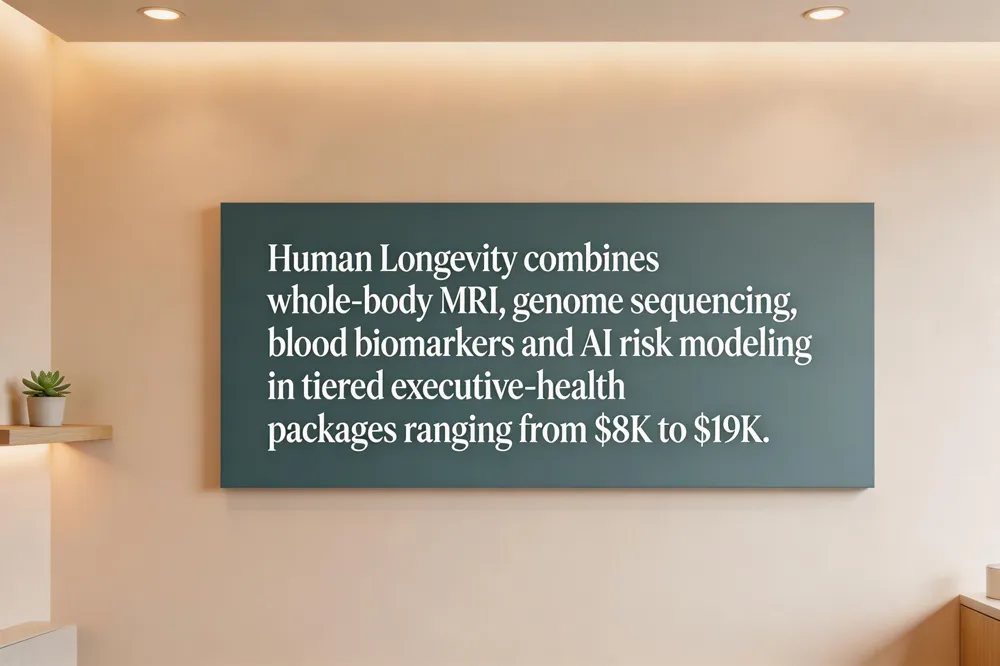 Human Longevity exemplifies California’s high‑tech, data‑driven longevity ecosystem. Its multimodal early‑detection platform fuses whole‑body MRI, whole‑genome sequencing, advanced blood‑biomarker panels, and AI‑powered risk modeling to spot cancer, cardiovascular disease, metabolic dysfunction, and neurodegeneration before symptoms arise. The flagship Executive Health program bundles these diagnostics into a single visit, delivering a personalized health‑action plan that integrates nutrition, exercise, and supplement recommendations.
Three cost tiers reflect the depth of service: the Executive Health package at $8,000 (genome, MRI, core labs), the 100 + Care tier at $12,000 (adds continuous glucose monitoring, cardiac patch, Cologuard and quarterly clinician reviews), and the 100 + Concierge tier at $19,000 (includes GRAIL liquid‑biopsy, AMRA body‑composition, subspecialty consults and full‑time concierge primary care). Patient feedback on platforms such as Yelp praises the ease of imaging and attentive staff, while internal employee ratings on Glassdoor sit at 2.8 stars, indicating mixed workplace satisfaction.
Human Longevity, Inc. (HLI) remains a private, pre‑IPO company; shares trade only on secondary markets for accredited investors, with roughly $300 million raised across Series A and B rounds. The clinics operate in South San Francisco (600 Gateway Blvd., Suite 101) and San Diego (4570 Executive Drive, Suite 100).
Personalized Regenerative and Hormone Therapies
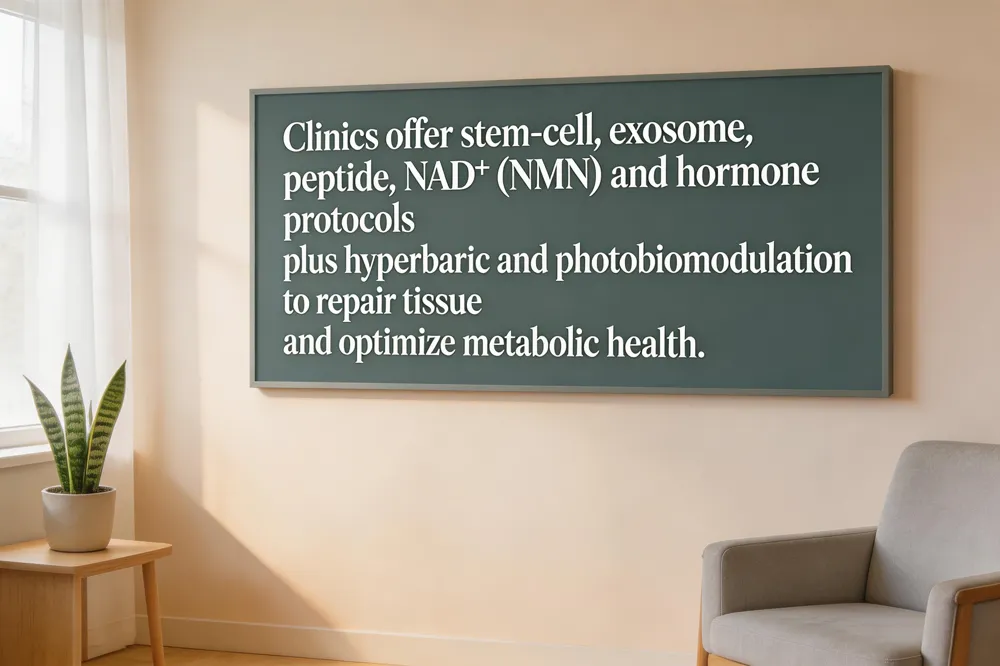 California’s longevity ecosystem blends cutting‑edge regenerative medicine with precision hormone optimization to extend healthspan.
Longevity Medical Institute (LMI) earns a 4.5‑star Yelp rating, with patients highlighting rapid benefits from IV, ozone, stem‑cell and exosome therapies. Reviewers praise Dr. Josh Donaldson’s personalized assessments and the clinic’s proactive age‑management approach.
Longevity LA integrates stem‑cell, exosome, NK‑cell, peptide, and nutraceutical protocols with hyperbaric oxygen, photobiomodulation, and molecular hydrogen inhalation in its Longevity Recharge Station. The practice adds hormone balancing, heavy‑metal detoxification and comprehensive lab testing to address root causes of aging.
The Longevity Institute operates a membership‑driven network that supplies vetted regenerative products—GLP‑1 agents, NAD boosters, peptides, hormones, and advanced diagnostics—to independent clinics. Led by Dr. Matt Burnett, the Institute uses bulk purchasing to keep cutting‑edge therapies affordable while maintaining clinical autonomy.
Regenerative medicine, including high‑potency stem‑cell and exosome treatments, is now a cornerstone of California’s anti‑aging clinics, offering tissue repair, inflammation reduction, and cellular rejuvenation.
Among supplements, nicotinamide mononucleotide (NMN) stands out as the most evidence‑based longevity aid, boosting NAD⁺, mitochondrial function and DNA repair with a strong safety record.
Can a $20,000 longevity clinic really help you live longer? Such clinics provide comprehensive biomarker panels and personalized interventions that can detect disease earlier and improve healthspan, but long‑term survival data remain limited; benefits must be weighed against cost.
Are longevity centers worth it? For individuals seeking proactive, data‑driven health management, the advanced diagnostics, customized nutrition, fitness, and hormone plans justify the expense, though traditional care may suffice for many.
What is the number one supplement for longevity? NMN, a direct NAD⁺ precursor, is consistently ranked highest for its ability to support cellular repair and metabolic health, making it the premier supplement for extending healthy life.
Cost, Value, and Lifestyle Practices
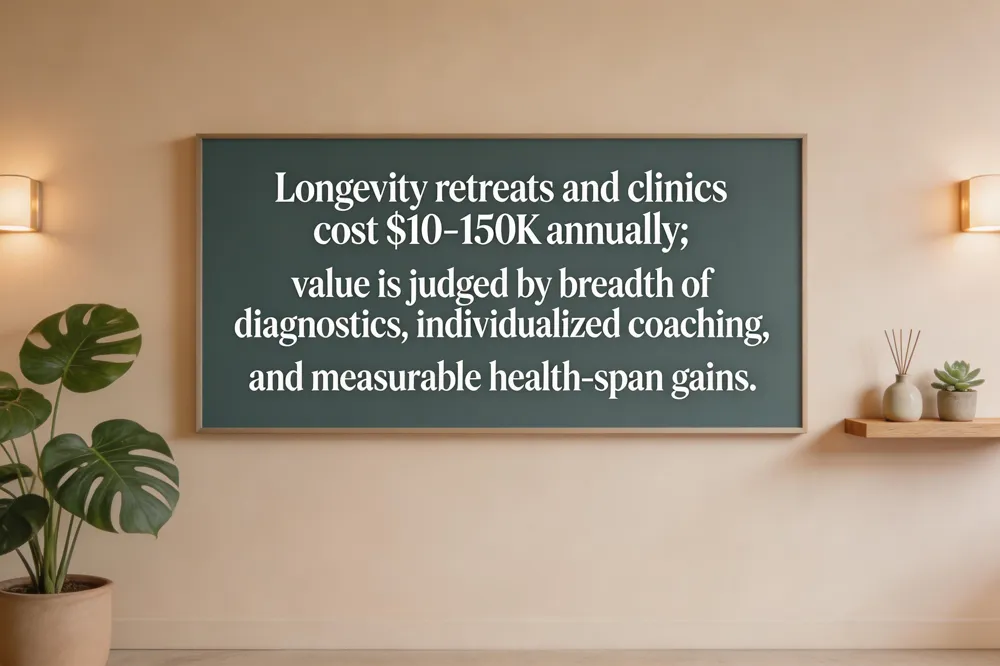 The Longevity8™ retreat, a four‑day immersive program, is priced at $20,000 per person (or $36,000 for a couple). A non‑participating companion can stay for $4,000, with all costs covering accommodations, meals, 30+ daily activities, 18 one‑on‑one consultations, 15+ diagnostic tests and a comprehensive view of over 200 health biomarkers. In the broader market, longevity clinics charge $10,000–$150,000 per year depending on service depth. Initial comprehensive evaluations range from $5,000 to $25,000, while ongoing monitoring adds $1,500–$10,000 annually. Advanced diagnostics such as full‑body MRI or epigenetic panels cost $3,000–$15,000 per test, and bundled membership packages typically run $3,000–$20,000 per year. A leading figure in this field is Dr. Peter Attia, MD, author of Outlive and founder of Early Medical, who champions data‑driven, personalized strategies to extend healthspan. Sleep hygiene is emphasized through the 3‑2‑1 rule: stop eating three hours before bedtime, cease fluid intake two hours before, and avoid screens one hour prior, supporting restorative rest. Consumers should assess value by comparing the breadth of precision diagnostics, individualized coaching, and long‑term health outcomes against the upfront and recurring costs, ensuring alignment with personal longevity goals.
Looking Ahead: The Future of Longevity in California
California’s longevity ecosystem is evolving as research, technology, and community initiatives converge. University‑based centers such as Stanford’s Center on Longevity and USC’s Longevity Institute translate interdisciplinary findings into public workshops on stress resilience, sleep optimization, and purpose‑driven living, fostering a feedback loop that brings science to neighborhood groups and volunteer projects. Precision medicine expands through clinics like the Medical Institute of Healthy Aging, Human Longevity, and the California Longevity & Vitality Medical Institute, which combine whole‑body AI‑enhanced MRI, genomics, telomere analysis, and biomarker panels to craft individualized nutrition, exercise, and hormone‑optimization plans. Regenerative therapies—stem‑cell infusions, exosome treatments, hyperbaric oxygen, and peptide protocols—are now offered alongside traditional preventive care, accelerating tissue repair and metabolic health. The Blue Zone model of Loma Linda continues to shape these programs: plant‑centric diets, daily movement, abstinence from smoking, and strong social ties are embedded in lifestyle coaching and community‑based yoga, meditation, and volunteering events. Finally, patient‑centered value is emphasized through multilingual webinars, tele‑medicine access, tiered pricing, and digital health dashboards that allow real‑time monitoring, making longevity services more affordable and inclusive across California’s diverse population.