Introduction: Valengerontology and the Promise of Modern Diagnostics
Valengerology, coined by Dr. Paul H. Kim at the Medical Institute of Healthy Aging, merges the Latin “valen” (strong, healthy) with gerontology to describe a proactive, data‑driven approach to extending healthspan. Central to this framework are advanced diagnostics—high‑resolution MRI and CT, genomic and epigenetic sequencing, multi‑omics panels, and AI‑assisted imaging—that reveal subclinical changes before symptoms emerge. By quantifying biological age, telomere integrity, mitochondrial function, inflammatory markers, and hormone balance, clinicians can tailor interventions such as targeted nutrition, senolytic drugs, and regenerative therapies. This preventive mindset transforms routine care into a continuous longevity program, empowering individuals to maintain physiological vigor and reduce age‑related disease risk. Telemedicine and home‑collection enable nationwide access, while AI‑driven analytics combine multi‑omics and wearable data to produce personalized risk scores that steer early, targeted interventions for longevity.
Foundations of Preventive Health Screening
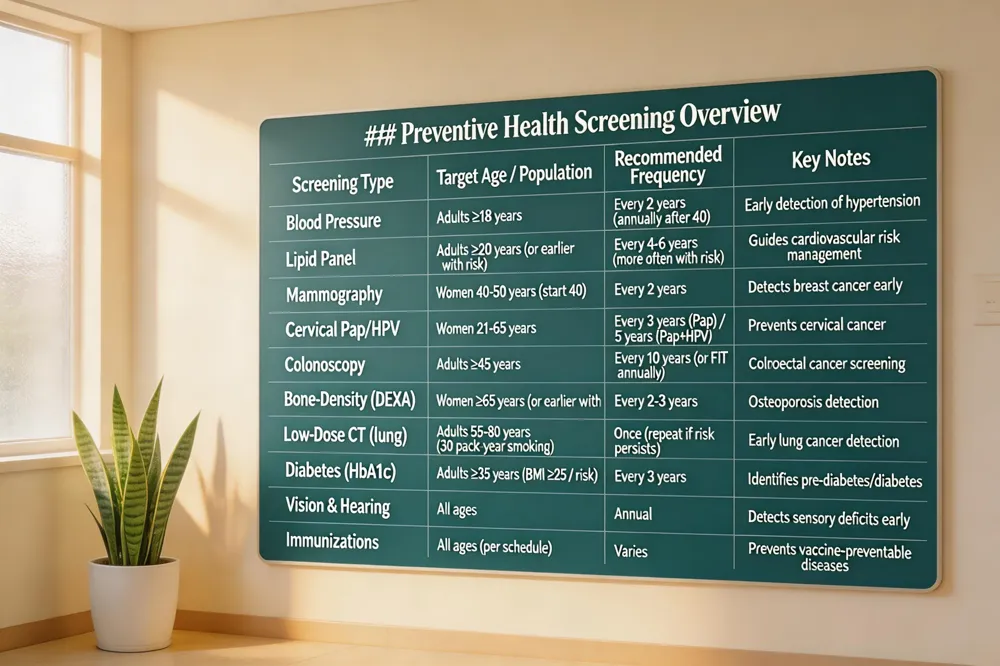
Preventive Health Screening Overview
| Screening Type | Target Age / Population | Recommended Frequency | Key Notes |
|---|---|---|---|
| Blood Pressure | Adults ≥ 18 years | Every 2 years (annually after 40) | Early detection of hypertension |
| Lipid Panel | Adults ≥ 20 years (or earlier with risk) | Every 4‑6 years (more often with risk) | Guides cardiovascular risk management |
| Mammography | Women 40‑50 years (start 40) | Every 2 years | Detects breast cancer early |
| Cervical Pap/HPV | Women 21‑65 years | Every 3 years (Pap) or every 5 years (Pap+HPV) | Prevents cervical cancer |
| Colonoscopy | Adults ≥ 45 years | Every 10 years (or FIT annually) | Colorectal cancer screening |
| Bone‑Density (DEXA) | Women ≥ 65 years (or earlier with risk) | Every 2‑3 years | Osteoporosis detection |
| Low‑Dose CT (lung) | Adults 55‑80 years with 30 pack‑year smoking history | Once (repeat if risk persists) | Early lung cancer detection |
| Diabetes (HbA1c) | Adults ≥ 35 years with BMI ≥ 25 (or risk factors) | Every 3 years | Identifies pre‑diabetes/diabetes |
| Vision & Hearing | Children & adults annually | Annual | Detects sensory deficits early |
| Immunizations (Flu, COVID‑19, Shingles, Pneumococcal) | All ages according to schedule | Varies | Prevents vaccine‑preventable diseases |
 What are preventive health screenings?
Preventive health screenings are systematic tests and examinations performed on asymptomatic individuals to detect early signs of disease or risk factors. They are a core component of preventive care, often included in annual wellness visits and covered at no cost by many U.S. health plans. Typical examples include blood pressure and cholesterol checks, diabetes testing, bone‑density scans, and cancer‑detecting tests such as mammograms, Pap smears, colonoscopies, and prostate exams. By identifying problems early, these screenings enable timely intervention and help maintain long‑term health and longevity.
What are preventive health screenings?
Preventive health screenings are systematic tests and examinations performed on asymptomatic individuals to detect early signs of disease or risk factors. They are a core component of preventive care, often included in annual wellness visits and covered at no cost by many U.S. health plans. Typical examples include blood pressure and cholesterol checks, diabetes testing, bone‑density scans, and cancer‑detecting tests such as mammograms, Pap smears, colonoscopies, and prostate exams. By identifying problems early, these screenings enable timely intervention and help maintain long‑term health and longevity.
What are some examples of preventative health care? Preventative health care encompasses immunizations (influenza, COVID‑19, hepatitis B), routine screenings (mammograms, colonoscopies, osteoporosis DEXA, abdominal aortic aneurysm ultrasound), and wellness counseling on nutrition, exercise, tobacco and alcohol use, and mental health. Laboratory and imaging tests—cholesterol panels, blood‑sugar checks, low‑dose CT for lung cancer—further support early detection and risk reduction.
What is covered under preventive care? Most U.S. plans cover annual wellness visits, vaccinations, and age‑appropriate screenings such as mammograms, colonoscopies, Pap smears, and prostate exams at no out‑of‑pocket cost. The USPSTF also recommends coverage for osteoporosis, hepatitis C, and other screenings when performed per guidelines, aiming to detect health issues early and reduce chronic disease risk.
What is a preventive health check? A preventive health check is a comprehensive evaluation that combines a medical questionnaire, physical exam, laboratory tests, imaging (CT, MRI, ultrasound), and lifestyle counseling. It creates a personalized risk profile, detects early disease markers (e.g., hormonal imbalances, cardiovascular risk), and guides interventions that improve quality of life and extend healthspan.
Personalized Medicine in Valengerontology
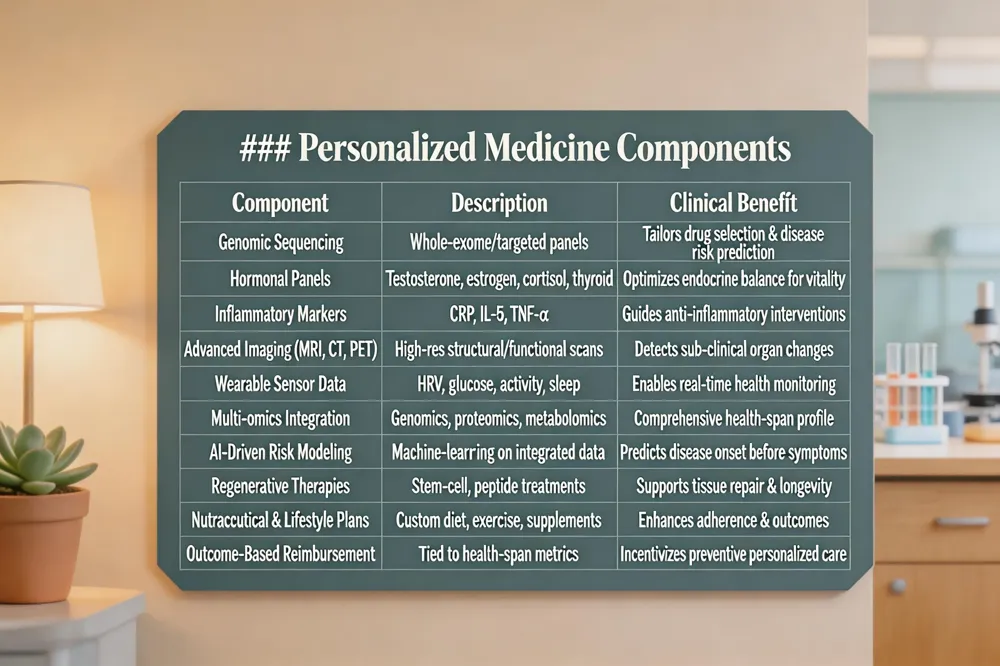
Personalized Medicine Components
| Component | Description | Clinical Benefit |
|---|---|---|
| Genomic Sequencing | Whole‑exome or targeted panels to identify variants | Tailors drug selection and disease risk prediction |
| Hormonal Panels | Serum testosterone, estrogen, cortisol, thyroid hormones | Optimizes endocrine balance for vitality |
| Inflammatory Markers | CRP, IL‑6, TNF‑α | Guides anti‑inflammatory interventions |
| Advanced Imaging (MRI, CT, PET) | High‑resolution structural & functional scans | Detects sub‑clinical organ changes |
| Wearable Sensor Data | Continuous HRV, glucose, activity, sleep metrics | Enables real‑time health monitoring |
| Multi‑omics Integration | Combines genomics, proteomics, metabolomics | Provides a comprehensive health‑span profile |
| AI‑Driven Risk Modeling | Machine‑learning algorithms on integrated data | Predicts disease onset before symptoms |
| Regenerative Therapies | Stem‑cell infusions, peptide‑based treatments | Supports tissue repair and longevity |
| Nutraceutical & Lifestyle Plans | Customized diet, exercise, supplement regimens | Enhances adherence and outcomes |
| Outcome‑Based Reimbursement | Payments tied to health‑span extension metrics | Incentivizes preventive, personalized care |
 Will people live longer with personalised medicine? Yes. By leveraging genetic, lifestyle and environmental data, personalized medicine detects disease risk far earlier than population‑based guidelines, enabling preventive actions and targeted therapies that are far more effective. This approach has already transformed cancer care, reduced mortality, and promotes proactive health behaviors that translate into longer, healthier lives.
Medical Institute of Healthy Aging The Medical Institute of Healthy Aging (MDIHA) is a California‑based clinic that delivers personalized, proactive longevity services. It integrates advanced diagnostics—genomic sequencing, hormonal panels, inflammatory markers, advanced imaging, and wearable sensor data—to create individualized health plans. Its multidisciplinary team uses these insights to tailor nutrition, exercise, hormone optimization, and regenerative therapies, empowering patients to maintain optimal health and extend healthspan.
Advanced Diagnostic Tools Shaping Longevity
Key Diagnostic Tools
| Tool | Modality | Primary Application |
|---|---|---|
| High‑Resolution MRI | Magnetic Resonance Imaging (sub‑mm) | Early detection of neurodegeneration, cardiac fibrosis |
| 4‑ CT | Computed Tomography (sub‑mm) | Visualizes atherosclerotic plaques, lung nodules |
| AI‑Assisted Image Analysis | Deep‑learning algorithms on CT/MRI | Flags subtle lesions, reduces radiologist workload |
| Liquid Biopsy (cfDNA) | PCR / NGS of circulating tumor DNA | Non‑invasive cancer screening and monitoring |
| Wearable Biosensors | Continuous physiological monitoring | Real‑time glucose, HRV, blood pressure, activity |
| Nanoparticle‑Enhanced Immunoassays | Nano‑based detection platforms | Ultra‑sensitive measurement of cytokines, oxidative stress |
| Telomere‑Length Assay | qPCR or Flow‑FISH | Biomarker of cellular senescence |
| Epigenetic Clock (DNA Methylation) | Bisulfite sequencing | Precise biological‑age estimation |
| Multi‑omics Panels | Integrated genomics, proteomics, metabolomics | Comprehensive molecular health portrait |
| Cloud‑Based AI Integration | Secure data platforms | Synthesizes sensor, lab, imaging data for risk scores |
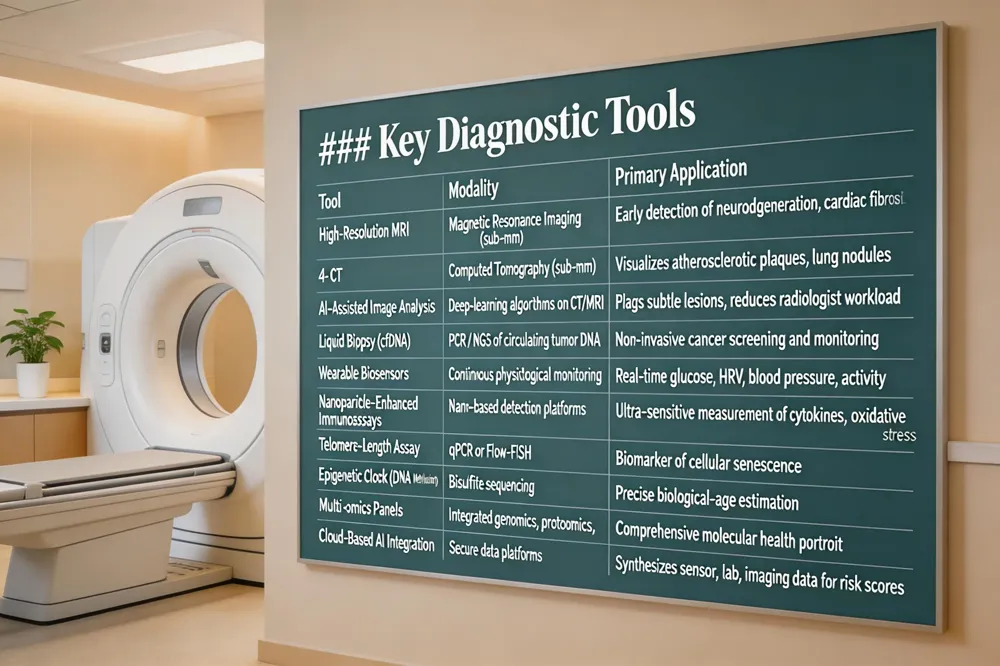 High‑resolution magnetic‑resonance imaging (MRI) and computed tomography (CT) now deliver sub‑millimeter detail of brain, cardiac and vascular structures, allowing clinicians to spot early atherosclerotic plaques, silent strokes and neurodegenerative atrophy before symptoms arise. AI‑assisted image analysis further accelerates this process: deep‑learning algorithms flag subtle lesions on chest CT scans for coronary artery calcium, and on brain MRI for early Alzheimer’s‑related changes, improving diagnostic accuracy and reducing radiologist workload. Molecular diagnostics have kept pace; polymerase chain reaction (PCR) and next‑generation sequencing‑based liquid biopsies detect viral pathogens, circulating tumor DNA and age‑related somatic mutations from a single blood draw, enabling minimally invasive, point‑precision testing for infection and cancer screening. Wearable and implantable sensors now continuously stream heart‑rate variability, glucose, blood‑pressure and activity data to cloud platforms, where AI integrates these physiologic signals with laboratory biomarkers to model each individual’s biological‑age trajectory. Emerging nanotechnology‑based assays—such as nanoparticle‑enhanced immunoassays and wearable biosensors—provide real‑time monitoring of oxidative stress, inflammatory cytokines and mitochondrial function, closing the loop between early detection and personalized anti‑aging interventions.
Integrating Advanced Diagnostics into Clinical Practice
Clinical Integration Workflow
| Process Step | Example | Expected Outcome |
|---|---|---|
| Home Sample Collection | SST gold or EDTA purple tubes shipped to Adventus Labs | Convenient patient participation, high‑quality specimens |
| Standardized Handling | Volume & temperature protocols | Reproducible genomic/hormonal/metabolic panels |
| EHR API Integration | Direct upload to TruForm Longevity Center | Real‑time data availability for clinicians |
| AI Analytics in EHR | Automated flagging of sub‑clinical changes | Early intervention, reduced disease incidence |
| Outcome‑Based Reimbursement | Payments linked to ↓ hospitalizations | Aligns incentives with preventive success |
| Telemedicine Review | Virtual consult interpreting imaging & labs | Improves access and continuity of care |
| Multidisciplinary Team Meetings | Clinicians, genetic counselors, nutritionists | Holistic, personalized care plans |
| Continuous Monitoring | Wearable data streamed to cloud | Dynamic risk modeling, timely adjustments |
| Reporting & Feedback | Patient portal dashboards | Enhances engagement and adherence |
| Quality Assurance | Audits of assay performance | Maintains diagnostic accuracy and reliability |
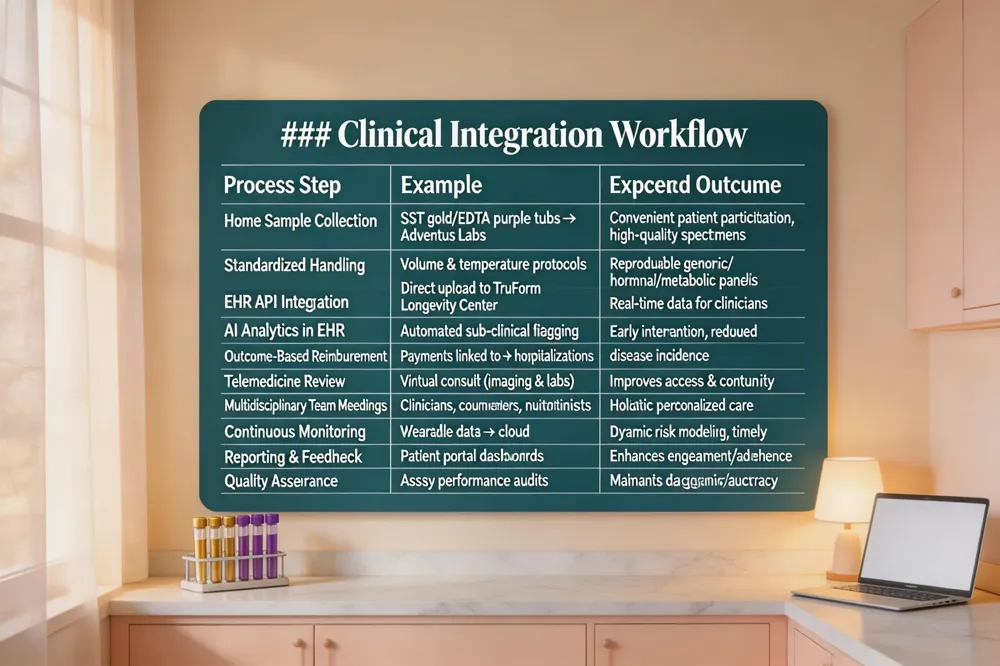 Telemedicine platforms now enable home‑sample collection, allowing patients to receive SST gold or EDTA purple tubes for blood draws that are shipped to partner laboratories such as Adventus Labs and TruForm Longevity Center. These labs follow standardized tube volumes and handling protocols, ensuring reproducible genomic, hormonal, and metabolic panels that feed directly into electronic health record (EHR) systems via secure APIs. AI‑driven analytics within the EHR synthesize imaging, PCR, and multi‑omics data, flagging early sub‑clinical changes for clinicians. Outcome‑based reimbursement models reward providers when such diagnostics lead to measurable reductions in disease incidence or hospitalizations.
Preventive health screening by age? From birth through adversity, well‑child visits, immunizations, growth charts, and vision/hearing screens are essential. Young adults (19‑39) focus on blood‑pressure checks, lipid panels when risk‑present, cervical Pap smears at 21, and STI testing. Mid‑life (40‑49) adds mammography (optional), colon cancer screening at 45, diabetes risk assessment, and skin exams. Ages 50‑64 require regular colonoscopy, biennial mammograms, low‑dose CT for smokers, osteoporosis screening for women at 65 (or earlier), and updated vaccines. After 65, all prior screens continue plus bone‑density testing, shingles and pneumococcal vaccines, and annual flu shots.
Adult preventive screening guidelines? Blood pressure at least every 2 years (annually after 40); cholesterol every 4‑6 years (more often with risk); colorectal cancer screening starting at 45; breast mammography every 2 years (starting 40‑50); cervical Pap/HPV every 3 years; osteoporosis screening for women 65+; diabetes screening for BMI ≥ 25 with risk factors.
Future Directions: Emerging Technologies & Valengerontology
Emerging Longevity Technologies
| Technology | Metric Measured | Clinical Use |
|---|---|---|
| Epigenetic Clocks | DNA‑methylation age | Predicts physiological age, guides anti‑aging interventions |
| Telomere Length Analysis | Chromosomal telomere length | Assesses cellular senescence, monitors therapy response |
| Multi‑omics Integration | Genomics, proteomics, metabolomics | Generates individualized molecular health scores |
| AI Predictive Algorithms | Integrated dataset risk scores | Recommends personalized lifestyle/pharmacologic regimens |
| Value‑Based Reimbursement Models | Health‑adjusted life expectancy gains | Rewards clinicians for extending healthspan |
| Nanotech Biosensors | Real‑time oxidative stress, mitochondrial function | Enables immediate therapeutic adjustments |
| Advanced Imaging AI | Early neurodegenerative and cardiovascular changes | Facilitates pre‑symptomatic treatment |
| Wearable Implantable Sensors | Continuous physiologic streaming | Supports dynamic health‑age trajectory modeling |
| Outcome‑Based Contracts | Measurable health‑span extensions | Drives adoption of cutting‑edge diagnostics |
| Tele‑Health Integrated Platforms | Remote sample collection & AI analytics | Expands reach of precision preventive care |
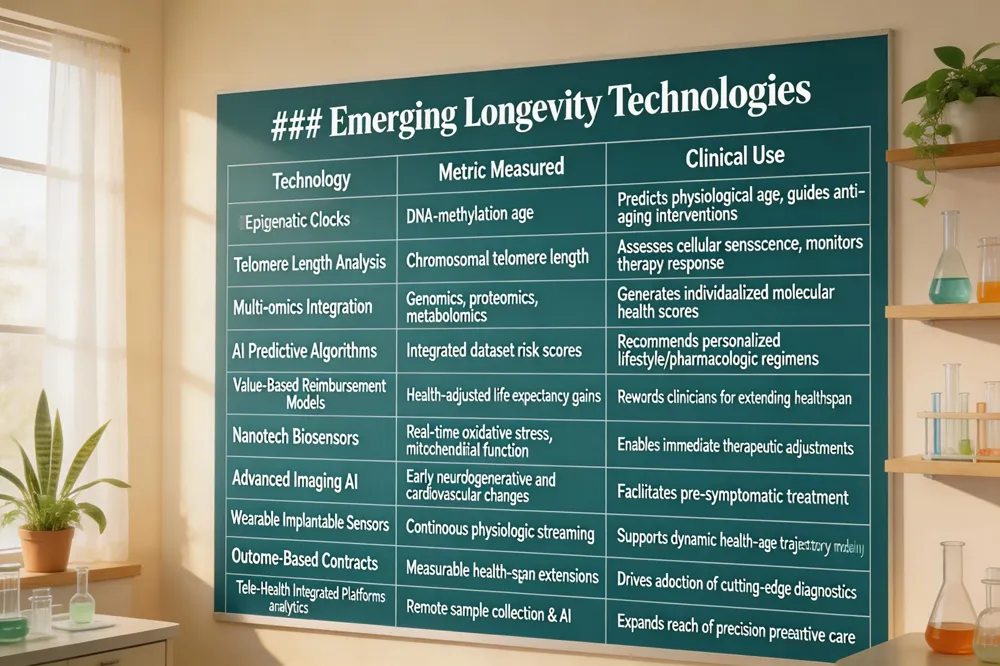 The next wave of longevity medicine will be driven by ultra‑precise biological‑age metrics such as epigenetic clocks, which quantify DNA‑methylation patterns to predict physiological age far more accurately than chronological years. Complementary to these clocks, telomere‑length analysis—already offered by labs like Adventus—provides a direct read‑out of chromosomal integrity and cellular senescence. Integrating these markers with multi‑omics data (genomics, proteomics, metabolomics) creates a comprehensive molecular portrait of each patient, enabling the Valengerontology model to tailor interventions that target the root drivers of aging. Artificial‑intelligence algorithms will synthesize these massive datasets, generating predictive risk scores and recommending personalized lifestyle, nutraceutical, or pharmacologic regimens before clinical disease manifests. Finally, emerging value‑based reimbursement models and outcome‑based contracts are beginning to reward clinicians for demonstrable extensions in health‑adjusted life expectancy, incentivizing the adoption of these cutting‑edge diagnostics across the United States.
Conclusion: Valengerontology for a Longer, Healthier Life
Advanced diagnostics—high‑resolution imaging, multi‑omics panels, PCR‑based pathogen detection, and AI‑driven analysis—now reveal subclinical changes before symptoms appear. By quantifying biological age, telomere integrity, mitochondrial function, inflammatory markers, and genetic risk, these tools enable early identification of cardiovascular, neurodegenerative, and oncologic threats. Personalized preventive care builds on this data, tailoring hormone regimens, nutrition, exercise, and targeted therapies to each individual’s risk profile. The Valengerontology model integrates these insights into a health‑span optimization plan, turning detection into timely intervention. Individuals should schedule assessments, adopt wearable monitoring, and partner with clinics such as the Medical Institute of Healthy Aging to transform management into a lifelong strategy. By committing to re‑evaluation and lifestyle adjustments, people can sustain a younger biological profile and enjoy extended vitality.