Setting the Stage
California’s health‑conscious population and state‑wide emphasis on preventive care have created a surge in demand for data‑driven longevity strategies. Modern,arker panels—such as the Longevity Lab Panel from Personal Primary Care or the Inflammatory Panel offered by Ulta Lab Tests—simultaneously measure systemic inflammation (hs‑CRP, IL‑6), oxidative‑stress by (MDA, F2‑IsoPs, 8‑OHdG), and cellular aging clocks (telomere length). By integrating these metrics with clinical insight and lifestyle coaching, the panels translate raw numbers into actionable health‑span recommendations. The Medical Institute of Healthy Aging (MDIHA) in California leverages these comprehensive panels, combining them with advanced imaging, genetic testing, and personalized coaching to tailor interventions—nutritional, hormonal, antioxidant, and exercise‑based—to each individual’s biological age profile. This integrated approach aligns perfectly with California’s preventive‑health ethos, offering residents a scientifically grounded roadmap to extend health span and improve quality of life.
Inflammatory Markers: What Levels Are Ideal?
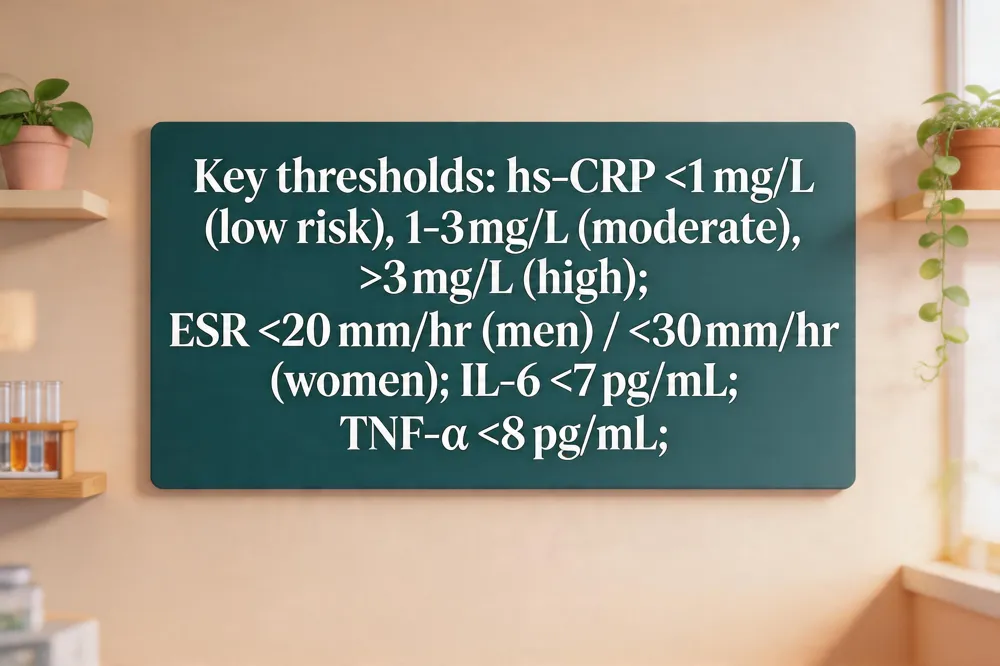 In a health adult, systemic inflammation should be minimal. High‑sensitivity C‑reactive protein (hs‑CRP) is the most widely used cardiovascular risk marker; values < 1 mg/L indicate low risk, 1‑3 mg/L moderate, and > 3 mg/L high risk. The broader CRP range is considered normal up to 10 mg/L, but values above 3 mg/L merit lifestyle or therapeutic review. The erythrocyte sedimentation rate (ESR) is typically < 20 mm/hr in men and < 30 mm/hr in women. Cytokine panels show interleukin‑6 (IL‑6) < 7 pg/mL and tumor‑necrosis‑factor‑α (TNF‑α) < 8 pg/mL in non‑inflamed states; higher concentrations correlate with frailty, atherosclerosis, and neurodegeneration. Common inflammatory biomarkers measured in clinical practice include C‑reactive protein (CRP), erythrocyte sedimentation rate (ESR), procalcitonin (PCT), fibrinogen, ferritin, and acute‑phase cytokines (IL‑1β, IL‑6, IL‑8, TNF‑α). Anti‑inflammatory mediators—IL‑10, transforming growth factor‑β, adiponectin, and omega‑3 fatty acids (EPA/DHA) or resolvins—are increasingly quantified to gauge protective capacity; higher levels are linked to reduced disease risk and slower biological aging. Pro‑inflammatory biomarkers (C‑reactive protein (CRP), IL‑6, TNF‑α, IFN‑γ, IL‑8) signal immune activation and predict cardiovascular, metabolic, and age‑related disorders. Integrated panels that combine these markers with oxidative‑stress and telomere length assays enable personalized longevity strategies, as employed by California‑based longevity clinics.
Oxidative Stress: Tests and Interpretation
 Core‑stress biomarkers fall into three classes: DNA damage (e.g., 8‑hydroxy‑2′‑deoxyguanosine, 8‑OHdG measured by HPLC‑MS or ELISA), lipid peroxidation (F2‑isoprostanes, malondialdehyde MDA, 4‑hydroxynonenal) and protein oxidation (carbonyls, nitrotyrosine). Antioxidant capacity is captured by total antioxidant status, the GSH/GSSG ratio, and enzyme activities such as SOD, catalase, and GPx.
Blood‑based panels typically draw 10‑15 mL of venous blood (EDTA or serum) and may add urine for 8‑OHdG. The Longevity Lab Panel and Ulta Inflammatory Panel both include hs‑CRP, IL‑6, MDA, and telomere length, providing a multimodal view of systemic redox balance.
Liver‑specific oxidative‑stress assessment relies on serum ALT/AST ratios combined with circulating F2‑isoprostanes or urinary 4‑HNE‑adducts; direct tissue assays of hepatic MDA, 4‑HNE, GSH, and protein carbonyls are used in research settings.
Clinically, elevated hs‑CRP, IL‑6, and oxidative markers predict cardiovascular events, neurodegeneration, and metabolic decline. Integrated panels improve early risk detection and enable personalized interventions—Mediterranean diet, omega‑3 supplementation, NAD⁺ precursors, and targeted antioxidant therapy—while longitudinal monitoring (every 6‑12 months) tracks response and guides adjustments in longevity programs.
Telomere Length: Accuracy, Cost, and Access
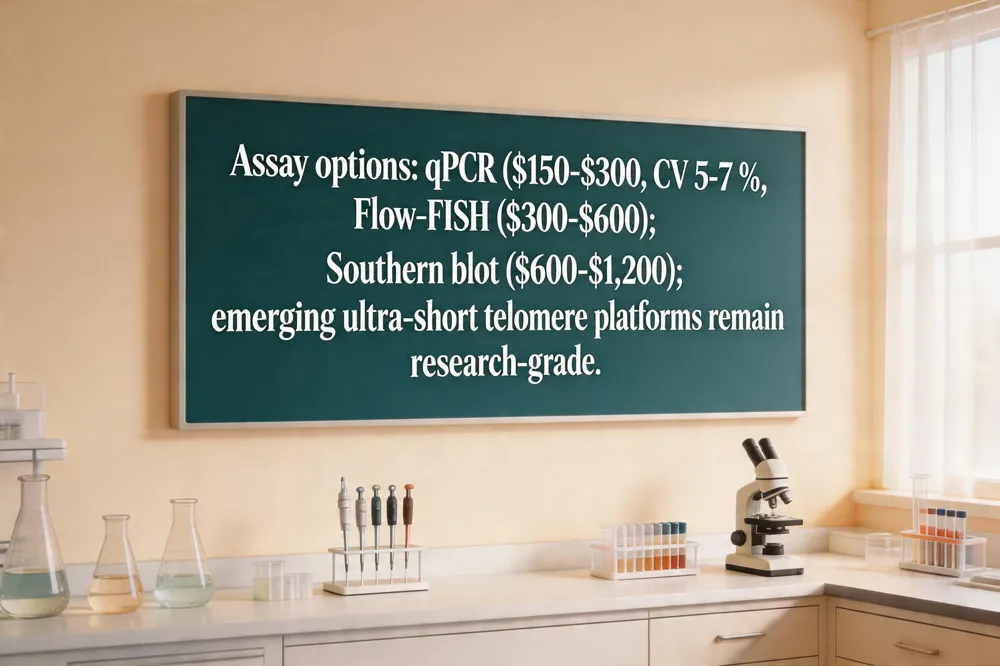 Telomere‑length assays fall into four main technological families. qPCR provides a rapid, high‑throughput estimate of average telomere length with a typical coefficient of variation of 5‑7 % and a price point of $150‑$300. Flow‑FISH (flow cytometry combined with fluorescent in‑situ hybridization) and Southern blot (TRF analysis) both offer the highest precision at the short‑telomere end, detecting critical attrition that qPCR can miss, but they are labor‑intensive and cost $300‑$600 (Flow‑FISH) or $600‑$1,200 (Southern blot). Emerging platforms such as HT‑STELA, TeSLA, and long‑read sequencing (e.g., PacBio HiFi) aim to resolve individual telomere lengths and ultra‑short telomeres, yet they remain research‑grade and carry higher expense and turnaround times.
Assay variability stems from pre‑analytical factors (blood‑draw technique, tube type, temperature, time to processing), DNA extraction methods, and assay‑specific conditions (primer efficiency for qPCR, hybridization stringency for FISH, gel‑loading consistency for blot). Biological influences—circadian rhythms, acute illness, recent exercise, and medication use—also shift telomere readings. While all U.S. clinical laboratories are CLIA‑certified and many have undergone extensive validation, no universally accepted age‑specific reference ranges exist; results should be interpreted as relative indicators of cellular aging.
In California, patients can access telomere testing through university‑affiliated centers (UCSF Telomere Center, UC San Diego Health) offering physician‑ordered qPCR or Flow‑FISH, as well as commercial networks such as Quest Diagnostics and Labcorp, which process telomere orders statewide. RepeatDx provides a CLIA‑certified Flow‑FISH service with 10‑15‑day turnaround, and direct‑to‑consumer kits (e.g., ALCAT) are available for $288‑$379. Insurance coverage is possible with prior‑authorization, and genetic counseling is advised given the hereditary implications of short telomeres.
Finally, according to the FDA’s BEST glossary, biomarkers fall into seven categories: susceptibility/risk, diagnostic, monitoring, prognostic, predictive, pharmacodynamic/response, and safety. Understanding which category a telomere result belongs to helps clinicians integrate the measurement into broader longevity strategies. integratingForProvide cost clarity, qPCR assays range $150‑$300, Flow‑FISH $300‑$600, Southern blot $600‑$1,200, and comprehensive genetic‑omic panels that include telomere‑maintenance genes cost $200‑$400.
The #1 Predictor of Longevity and Lifestyle Implications
 Recent large‑scale analyses of accelerometer data, notably from the National Health and Nutrition Examination Survey (NHANES), have identified everyday movement—especially total daily step count and moderate‑intensity activity—as the single strongest predictor of all‑cause mortality, surpassing traditional risk factors such as age, smoking, and chronic disease burden. In cohorts of adults aged 50‑80, each additional 1,000 steps per day was linked to a measurable reduction in mortality risk, highlighting that cumulative low‑intensity motion drives long‑term health outcomes.
Practical recommendations
- Aim for a baseline of 7,000–10,000 steps per day, breaking the total into frequent short walks (5‑10 minutes) throughout the day.
- Replace prolonged sitting with standing or light‑intensity tasks (e.g., pacing while on phone calls, using a treadmill desk).
- Use wearable devices to set reminders for movement breaks and to track total step count.
Integration with biomarker panels Combining objective activity data with advanced panels—such as the Longevity Lab Panel (hormone balance, metabolic health, oxidative stress, inflammation, and telomere length)—creates a multidimensional “aging fingerprint.” Regular monitoring of hs‑CRP, IL‑6, F2‑isoprostanes, MDA, and leukocyte telomere length alongside step counts enables clinicians to tailor lifestyle, nutritional, and therapeutic interventions, track their impact on biological age, and adjust strategies in real time for optimal health‑span extension.
Answer to the key question The #1 predictor of longevity is daily movement, quantified by accelerometer‑derived step count and moderate‑intensity activity. Even modest increases in low‑intensity movement can meaningfully lower mortality risk, making consistent everyday motion the most powerful evidence‑based strategy for extending healthy lifespan.
Comprehensive Longevity Lab Panels in California
 California’s preventive‑health culture fuels demand for advanced biomarker panels that translate laboratory data into actionable longevity strategies. The Longevity Lab Panel from Personal Primary Care exemplifies this approach, offering a single blood draw that evaluates hormone balance, metabolic health, organ function, nutrient status, and cellular aging. In the cellular‑aging domain it quantifies oxidative‑stress markers (malondialdehyde, isoprostanes), telomere length, and mitochondrial function, providing a snapshot of biological age versus chronological age.
Ulta Lab Tests expands the toolkit with an Inflammatory Panel that measures 13 biomarkers across 82 targets, including high‑sensitivity CRP, IL‑6, a comprehensive lipid profile, EBV antibodies, and omega‑3/6 fatty‑acid ratios. This panel highlights the interplay between systemic inflammation, lipid metabolism, and viral latency, all of which influence long‑term health risk.
Aliri Bio’s ready‑to‑use immunology panels add depth by profiling hundreds of cytokines, chemokines, and acute‑phase proteins via LC‑MS‑based multiplex assays, enabling clinicians to capture immune‑dysregulation patterns that precede overt disease.
The Medical Institute of Healthy Aging (MDIHA) integrates these laboratory results into its proprietary “Longevity Index,” a composite score that merges inflammatory, oxidative‑stress, and telomere data. MDIHA pairs the index with personalized coaching, nutrition plans, hormone optimization, and targeted supplementation, delivering a data‑driven action plan that can be revisited every 6‑12 months to monitor progress and adjust interventions. This seamless blend of cutting‑edge testing and clinical insight represents the future of health‑span extension in California.
Putting It All Together: Personalized Longevity Action Plans
 Advanced biomarker panels that simultaneously assess inflammation (e.g., hs‑CRP, IL‑6, TNF‑α), oxidative‑stress markers (e.g., MDA, F2‑isoprostanes, 8‑OHdG), and leukocyte telomere length provide a multi‑dimensional "biological‑age fingerprint." In California, the Medical Institute of Healthy Aging (MDIHA) uses this fingerprint to stratify patients by the discrepancy between chronological and biological age, allowing clinicians to prioritize interventions that address the most deranged pathways.
Frequency of monitoring. Evidence from the Longevity Lab Panel, Next Health Executive Physical, and Healthspan programs supports repeat testing every 6‑12 months. Serial measurements capture trends in hs‑CRP, oxidative‑stress metabolites, and telomere attrition rates, making it possible to distinguish true therapeutic response from assay variability. Longitudinal trend analysis is especially valuable because single‑time‑point values can be influenced by recent illness, circadian rhythms, or short‑term dietary changes.
Targeted interventions. When hs‑CRP > 3 mg/L or IL‑6 rises, MHAHA recommends anti‑inflammatory nutrition (Mediterranean‑style diet rich in omega‑3 fatty acids, polyphenols), aerobic exercise, and stress‑reduction techniques, all of which have been shown to lower CRP and IL‑6 within 3‑6 months. Elevated oxidative‑stress markers such as MDA or F2‑isoprostanes trigger antioxidant strategies—coenzyme Q10, vitamin C/E, NAD⁺ precursors, and increased intake of antioxidant‑rich foods—to reduce lipid peroxidation and DNA damage (8‑OHdG). Shortening telomeres or accelerated attrition rates lead to hormone‑balancing protocols (e.g., DHEA‑S, estradiol, testosterone optimisation) and lifestyle adjustments aimed at preserving telomere integrity, such as adequate sleep, regular resistance training, and avoidance of smoking.
Role of health coaches and clinicians. MIHA integrates board‑certified clinicians with PhD‑level health coaches who translate panel results into actionable plans. Coaches monitor adherence, adjust nutrition and supplement regimens in real time, and coordinate with physicians for any pharmacologic interventions (e.g., low‑dose aspirin, statins, or emerging senolytics). The combined expertise ensures that biomarker data are not merely reported but are actively used to personalize longevity protocols, track progress, and modify treatment pathways as the biological‑age fingerprint evolves.
The Path Forward for Proactive Health
Integrated biomarker panels that combine inflammation (hs‑CRP, IL‑6, TNF‑α), oxidative‑stress indicators (MDA, F2‑IsoPs, 8‑OHdG), and cellular‑aging metrics (telomere length, epigenetic clocks) give a multidimensional view of biological age far beyond any single test. By quantifying these inter‑related pathways, clinicians can pinpoint sub‑clinical dysregulation, tailor nutrition, exercise, hormone optimization, and antioxidant strategies, and monitor response in real time. California residents, with access to the Medical Institute of Healthy Aging’s state‑of‑the‑art labs and personalized longevity action plans, are uniquely positioned to adopt this proactive approach. Looking ahead, panels will expand to include metabolomics, proteomics, and microbiome data, while AI‑driven platforms will synthesize longitudinal results into predictive health‑span scores, enabling even earlier, more precise interventions that keep pace with each individual’s aging trajectory.