Setting the Stage: The Promise of Preventive Medicine
Preventive medicine is the systematic practice of averting disease before it manifests, using vaccinations, screenings, lifestyle counseling, and environmental interventions to reduce risk. Unlike traditional reactive care, which treats illness after symptoms appear, preventive care emphasizes early detection, risk‑factor modification, and population‑wide health promotion, thereby lowering mortality and costly hospitalizations. Longevity clinics such as the Medical Institute of Healthy Aging (MDIHA) embody this paradigm by integrating data‑driven biomarker profiling, personalized nutrition and exercise plans, and continuous monitoring to delay age‑related decline. By shifting focus from treating disease to maintaining health, MDIHA enhances healthspan and offers a scalable model for proactive longevity.
1. Government‑Backed Preventive Coverage and Its Economic Edge
| Service Category | Covered Services (No Cost) | Typical Eligible Population |
|---|---|---|
| Screenings | Blood pressure, cholesterol, diabetes, colorectal cancer, osteoporosis | Adults ≥18 years (routine) |
| Immunizations | Influenza, HPV, hepatitis A/B, shingles, COVID‑19 boosters | All ages as per CDC schedule |
| Gender‑Specific | Mammograms, Pap/HPV testing, prenatal counseling | Women (age‑specific) |
| Counseling | Tobacco cessation, obesity, alcohol misuse, fall prevention | Adults with risk factors or primary‑care visits |
| Cost‑Sharing | $0 copayment, coinsurance, deductible for all above when provided in‑network | All insured under ACA‑compliant plans |
Key Economic Insight: Eliminating cost‑sharing drives utilization, especially among low‑income groups, and is linked to a 20 % lower risk of hospital admission (CDC).
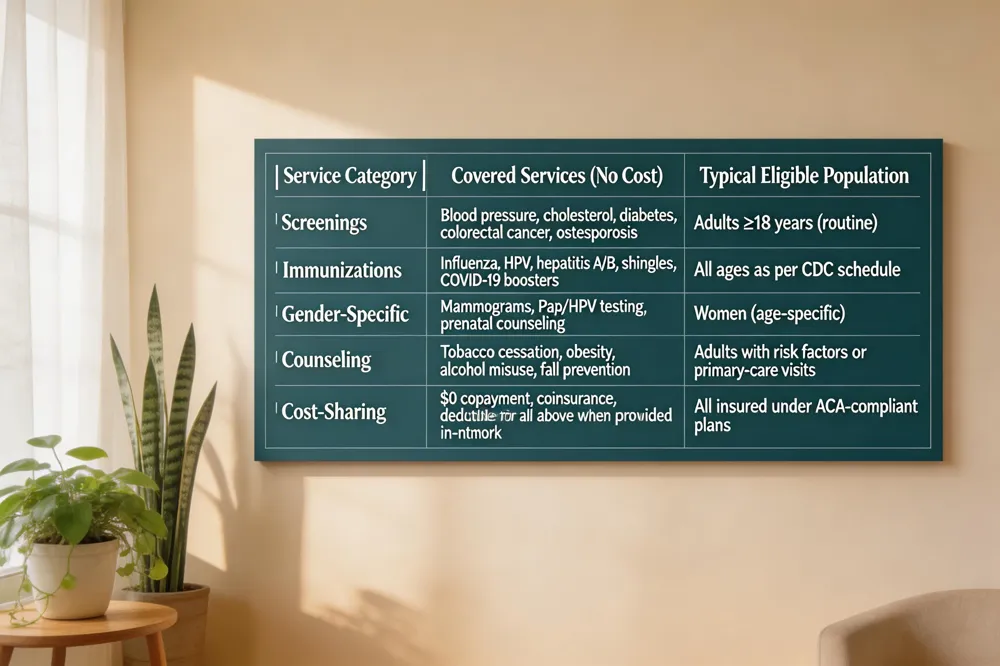 [The Affordable Care Act (ACA) requires most U.S. health plans to cover a comprehensive set of preventive services without any copayment, coinsurance, or deductible, even when the deductible has not been met.https://www.healthcare.gov/coverage/preventive-care-benefits/)
This first‑dollar coverage includes routine screenings—blood pressure, cholesterol, diabetes, colorectal cancer, osteoporosis—and immunizations such as flu, HPV, hepatitis, and shingles. Gender‑specific services (mammograms, Pap tests, prenatal counseling) and counseling for tobacco use, obesity, alcohol misuse, and fall prevention are also covered at no cost when provided by an in‑network provider.
Economic analyses consistently show that investing in preventive care yields high value‑for‑money. Early detection through screenings and vaccinations reduces downstream hospitalizations and expensive chronic‑disease management, delivering cost‑effectiveness and, for certain interventions, net savings (e.g., childhood vaccines, colonoscopies for men aged 60‑64). By eliminating cost‑sharing barriers, the ACA boosts utilization, especially among low‑income populations, and contributes to the CDC‑reported 20 % lower risk of hospital admission for those who receive recommended preventive services. This policy framework underpins a proactive, personalized longevity model that improves health outcomes while curbing long‑term health‑care expenditures.
2. Utilization Gaps and the Real‑World Impact of Preventive Care
| Metric | 2015 | 2020 | % Change |
|---|---|---|---|
| Adults ≥35 y receiving all high‑priority services | 8.5 % | 5.3 % | -38 % |
| Adolescents with preventive‑care visit | 78.7 % (2016‑17) | 69.6 % (2020‑21) | -11.5 % |
| Americans regularly undergoing routine screenings | ~8 % (est.) | — | — |
| Uninsured rate (U.S.) | 12.6 % (2015) | 7.7 % (early 2023) | -38 % |
| Net savings from comprehensive preventive programs (annual) | — | $1.5 billion (avoided costs) | — |
Key Takeaway: Despite ACA gains, utilization remains low, with socioeconomic and pandemic‑related barriers limiting preventive‑care uptake.
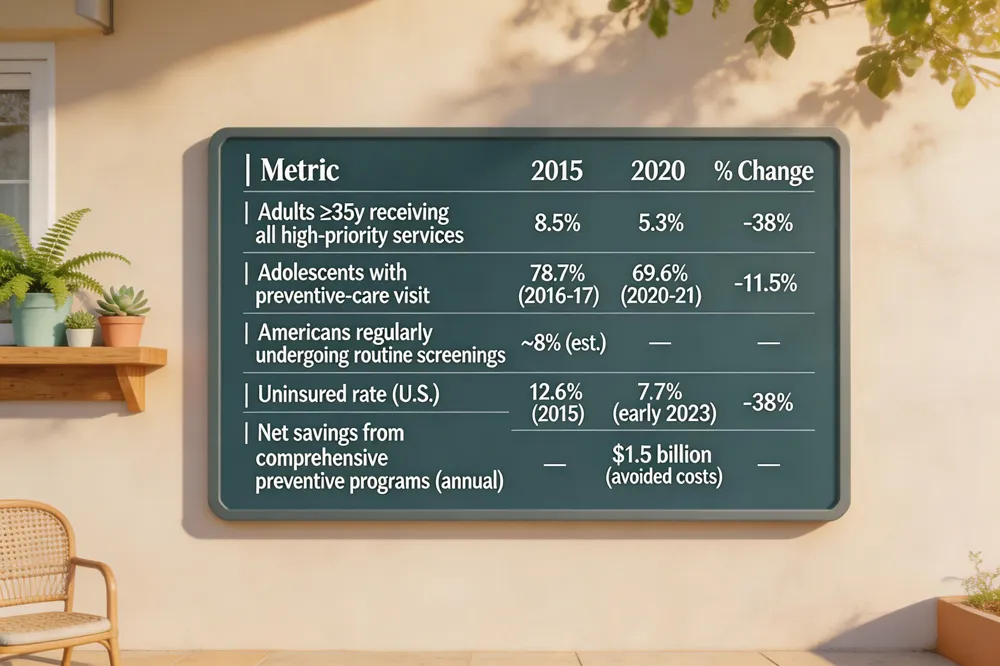 Current statistics on preventive service use reveal a stark under‑utilization in the United States. In 2020 only 5.3 % of adults ≥ 35 years received all high‑priority preventive services, down from 8.5 % in 2015. Adolescents show a similar decline, with preventive‑care visits dropping from 78.7 % (2016‑17) to 69.6 % (2020‑21). National surveys estimate that roughly 8 % of Americans regularly undergo routine screenings, and more than 25 million people still lack full preventive‑care benefits despite the ACA‑driven reduction of the uninsured rate to 7.7 % in early 2023. Electronic‑health‑record data (PCORnet) documented a pandemic‑related dip in service use in 2020, with a gradual rebound that still lags behind pre‑COVID levels for many interventions.
Disparities and barriers are pronounced. Limited awareness of USP‑F guidelines, out‑of‑pocket costs, transportation challenges, and the absence of a regular primary‑care provider all impede access. Socio‑economic inequities mean socially disadvantaged groups receive fewer services, widening the health gradient. The COVID‑19 pandemic amplified these gaps, reducing preventive visits among both adults and adolescents and contributing to missed early detection of chronic disease.
Effectiveness of preventive care in reducing mortality is well documented. Early cancer screening can lower mortality by 15‑20 % (AHRQ, 2008), while routine blood‑pressure and cholesterol checks cut stroke risk by up to 40 % (American Heart Association). Comprehensive preventive programs—including wellness visits, smoking‑cessation counseling, and lifestyle interventions—have generated billions of dollars in net savings, with some analyses estimating $1.5 billion in avoided costs. Tertiary prevention for high‑risk patients can mitigate the $1.5 trillion annual spend on chronic disease care. Together, these data demonstrate that evidence‑based preventive services deliver substantial clinical benefit and economic value, underscoring the urgent need to close utilization gaps and expand population‑wide preventive care.
3. The Prevention Continuum: From Primordial to Tertiary
| Prevention Tier | Core Interventions | Primary Goal |
|---|---|---|
| Primordial | Sugar‑sweetened beverage taxes, fresh‑produce subsidies, walkable‑city design, clean‑air regulations, poverty‑reduction programs | Reduce emergence of risk factors in the population |
| Primary | Immunizations, tobacco‑cessation counseling, physical activity promotion, nutrition guidance, safe‑environment policies | Prevent disease onset in healthy individuals |
| Secondary | Mammograms, colonoscopies, Pap/HPV testing, low‑dose CT for lung cancer, DXA bone‑density scans, post‑event aspirin | Detect subclinical disease early for timely treatment |
| Tertiary | Rehabilitation, chronic‑disease management, diabetes self‑management education, mental‑health support | Minimize long‑term impact of established disease and preserve function |
Integration: Each tier narrows the at‑risk pool, enabling more efficient downstream interventions and extending healthspan.
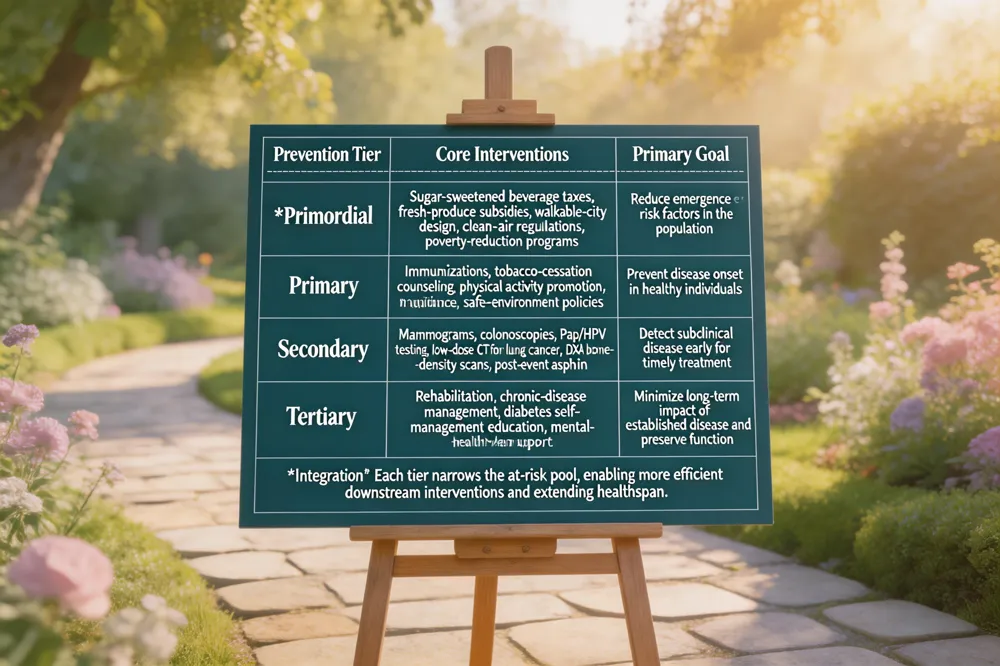 Primordial Prevention – Addresses upstream social and environmental determinants before risk factors develop. Examples include sugary‑beverage taxes, subsidies for fresh produce, walkable‑city design, clean‑air regulations, and poverty‑reduction programs.
Primary Prevention – Acts on healthy individuals to stop disease before it starts. Immunizations, tobacco‑cessation counseling, regular physical activity, balanced nutrition, and safe‑environment policies are core strategies. In a longevity clinic, personalized wellness plans and multi‑omic risk profiling operational these actions.
Secondary Prevention – Detects subclinical disease early. Routine screenings such as mammograms, colonoscopies, Pap smears, low‑dose CT for lung cancer, and DXA bone‑density scans exemplify this tier. Prompt treatment after a cardiovascular event (e.g., low‑dose aspirin) also fits here.
Tertiary Prevention – Minimizes long‑term impact of established disease. Rehabilitation, chronic‑disease management, diabetes self‑management education, and mental‑health support preserve function and reduce readmissions.
Interlocking the Tiers – Primordial measures reduce the pool of at‑risk people, making primary interventions more efficient. Early detection (secondary) catches disease while it is still treatable, feeding into tertiary care that maintains healthspan. Together they create a seamless preventive continuum that supports the Medical Institute of Healthy Aging’s goal of extending healthy life years.
4. Tailored Screening Strategies: Women, Adults, and the General Population
| Population | Screening | Frequency |
|---|---|---|
| Women | Blood pressure, lipid, diabetes | Every 3‑5 years (or more often with risk) |
| Mammography | Age 40‑74 y, every 1‑2 y | |
| Pap/HPV co‑testing | Ages 21‑65 y, every 3 y | |
| Bone‑density (DXA) | Age ≥65 y or younger post‑menopausal with risk | |
| Mental health (depression, anxiety, IPV) | At each well‑woman visit | |
| Adults (General) | Vital signs, cholesterol, blood pressure | Every 3‑5 years |
| Colorectal cancer screening (FIT, colonoscopy) | Ages 45‑75 y, per USPSTF interval | |
| Lung cancer low‑dose CT | Ages 50‑80 y, ≥20 pack‑year smoking history | |
| Immunizations (influenza, COVID‑19 booster, shingles, pneumococcal, HPV) | As recommended by CDC/USPSTF | |
| General Population | Diabetes screening (HbA1c, fasting glucose) | Every 3 years (or sooner with risk) |
| Obesity & lifestyle counseling | At each primary‑care encounter |
Clinical Impact: Structured, risk‑based screening coupled with counseling drives early detection and preventive medication use, supporting cost‑effective longevity care.
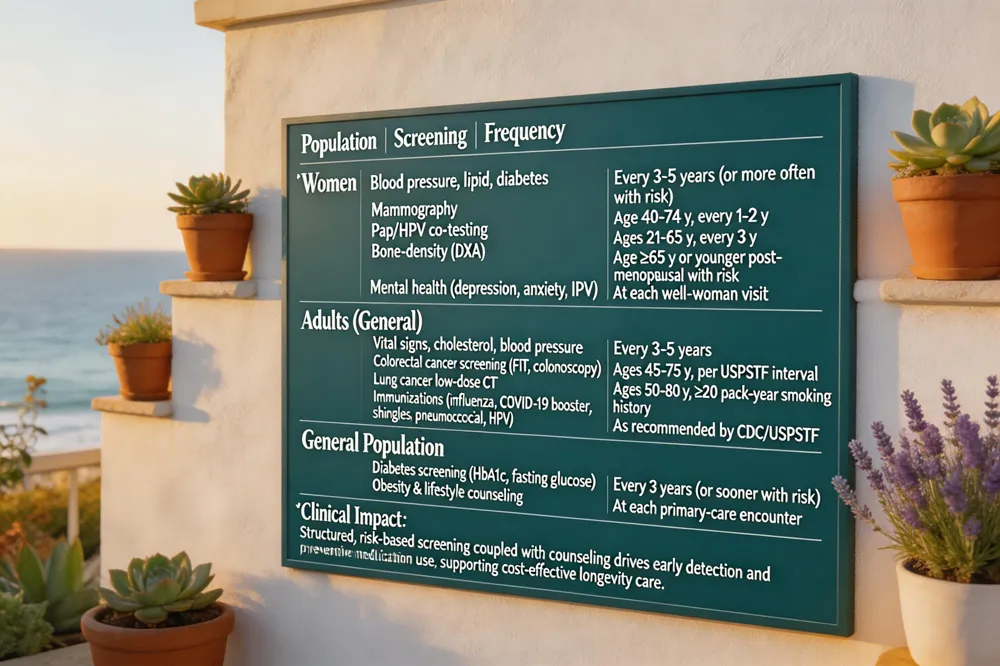 Preventive health screening for women combines age‑ and risk‑based assessments of cardiovascular, metabolic, oncologic, and psychosocial health. Routine blood‑pressure, lipid, and diabetes testing start in early adulthood and repeat every 3‑5 years, with more frequent monitoring for risk factors. Mammography is advised from age 40 (earlier if high‑risk) every 1‑2 years; Pap/HPV co‑testing every 3 years for ages 21‑65; bone‑density scans for women ≥65 y or younger post‑menopausal women with risk. Depression, anxiety, intimate‑partner violence, substance use, and tobacco use screenings occur at each well‑woman visit, alongside immunizations, folic‑acid counseling for pregnancy, and lifestyle guidance.
Adults should schedule comprehensive check‑ups that include vital‑signs, cholesterol, blood‑pressure, and counseling on diet, exercise, and tobacco use. Age‑appropriate cancer screens—colorectal (45‑75 y), breast (40‑74 y), cervical (21‑65 y), lung CT for high‑risk smokers (50‑80 y)—follow USPSTF intervals. Immunizations (influenza, COVID‑19 boosters, shingles, pneumococcal, HPV) are essential. Screening for diabetes, obesity, depression, anxiety, hepatitis C, and family history enables early intervention and, when appropriate, preventive medications such as low‑dose aspirin or statins.
Preventive care examples include annual physicals, blood‑pressure and cholesterol checks, diabetes testing, cancer screenings (mammograms, colonoscopy, Pap, PSA), and full vaccine series. Lifestyle counseling on nutrition, weight, smoking cessation, stress reduction, and responsible alcohol use, disease onset. The Medical Institute of Healthy Aging integrates these services into personalized plans, using multi‑omic biomarkers and digital monitoring to adjust interventions, extend healthspan, and improve quality of life while reducing long‑term healthcare costs.
5. Building a Proactive Longevity Clinic: From Data to Daily Practice
| Clinic Component | Description | Expected Benefit |
|---|---|---|
| Data Integration | Combines clock‑time metrics, multi‑omics biomarkers, wearable data into a unified risk score | Precise, individualized prevention plans |
| Multidisciplinary Team | Geriatricians, molecular biologists, nutritionists, data scientists | Holistic care addressing biological, behavioral, and social determinants |
| Personalized Interventions | Lifestyle optimization, nutraceuticals, senolytics, hormone balancing | Delayed disease onset, improved functional reserve |
| EHR‑Driven Tracking | Real‑time monitoring of interventions, outcomes, and cost‑savings | Scalable documentation, continuous quality improvement |
| Economic Modeling | Projects savings from reduced hospitalizations and chronic‑disease management (e.g., billions if 90 % receive services) | Demonstrates ROI for payers and policymakers |
Bottom Line: Data‑rich, preventive‑focused clinics transform longevity care from reactive treatment to proactive healthspan extension.
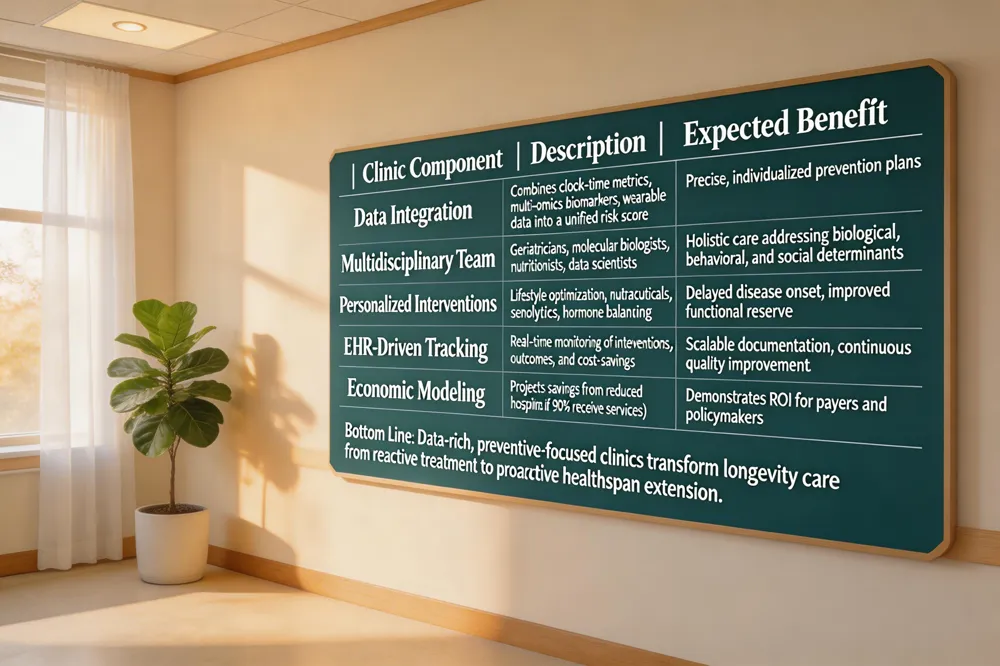 Framework for an effective healthy longevity clinic
An analytical center that integrates clock data, biomarkers, and wearables assesses risk. A team—geriatric physicians, molecular biologists, nutritionists, data scientists—creates individualized prevention plans combining lifestyle optimization, nutraceuticals, and senolytic therapies. EHR enables tracking, modeling, and shows cost‑savings through delayed disease onset and fewer hospitalizations.
Framework for an effective healthy longevity clinic
An analytical center that integrates clock data, biomarkers, and wearables assesses risk. A team—geriatric physicians, molecular biologists, nutritionists, data scientists—creates individualized prevention plans combining lifestyle optimization, nutraceuticals, and senolytic therapies. EHR enables tracking, modeling, and shows cost‑savings through delayed disease onset and fewer hospitalizations.
Shift to preventive care Replacing disease‑focused treatment with proactive prevention lowers chronic disease burden and preserves independence. Routine screenings, lifestyle coaching, and detection, supported by wearables and risk scores, make personalized prevention scalable. The National Prevention Strategy projects billions in savings if 90 % receive preventive services.
Proactive longevity Proactive longevity integrates personalized nutrition, hormone balance, stress management, and therapies to protect function and immune resilience, reducing fatigue, joint pain, and cognitive decline.
Difference between preventive and curative health care Preventive care averts disease through vaccinations, screenings, and counseling; curative care treats manifest illness with surgery, medication, or dialysis. Preventive interventions are less invasive, lower‑cost, and focus on maintenance.
Longevity clinic near me Search “longevity clinic” plus your city or ZIP code; U.S. options including Lifefarm (Raleigh), Oak Health Institute, and the Medical Institute of Healthy Aging in California, offering physician‑led programs and telehealth.
Conclusion: Embracing Prevention for a Healthier Future
Seven evidence‑based preventive strategies—structural practice measures, proportionate universalism, start‑low‑go‑slow prioritization, high‑quality primary‑care continuity, targeted symptomatic‑patient focus, data‑driven risk assessment, and personalized lifestyle‑intervention programs—form the backbone of modern longevity care. Patients should schedule regular wellness visits, embrace recommended screenings and vaccinations, and engage in tailored nutrition, movement, stress‑management and social‑connection plans. Clinicians must embed these practices into routine visits, use electronic health‑record analytics to identify high‑risk individuals, and champion equitable access for socially disadvantaged groups. This approach directly supports the Medical Institute of Healthy Aging’s mission to extend healthspan through proactive, science‑backed, patient‑centered prevention. Together, we can transform aging into a disease‑free journey.