Introduction
The United States is rapidly moving from a reactive, disease‑treatment model to a proactive health‑monitoring paradigm. Remote patient monitoring, wearable biosensors, and AI‑driven analytics now enable clinicians to detect physiologic changes days or weeks before symptoms appear, reducing hospital readmissions by up to 67 % (Proactive Health) and lowering preventable complications (Kaiser Permanente, Mayo Clinic). Cutting‑edge diagnostics—such as point‑of‑care molecular panels, liquid‑biopsy genomic testing, and electronic‑nose breath analysis—provide earlier, more precise disease signals while minimizing invasive procedures. For aging populations, these technologies translate into longer healthspan: early identification of cardiovascular risk, metabolic dysregulation, or neurodegeneration allows timely interventions that can delay organ damage, preserve function, and support longevity‑focused care pathways.
Remote Monitoring & Wearable Health Devices
| Technology | Primary Metric | Clinical Impact | Estimated Cost Savings |
|---|---|---|---|
| Wearable ECG patches | Heart rhythm | Early arrhythmia detection, 67% reduction in readmissions | Up to 15% reduction in avoidable costs |
| Continuous Glucose Monitors (CGM) | Glucose levels | Improved glycemic control, fewer ER visits | Reduced diabetes‑related hospitalizations |
| Bluetooth pulse‑oximeters | Oxygen saturation | Prompt hypoxia alerts, reduced ICU transfers | Lower acute care expenses |
| AI analytics platform | Integrated biometric streams | Pattern‑recognition alerts, rapid decision‑making | Optimized resource allocation |
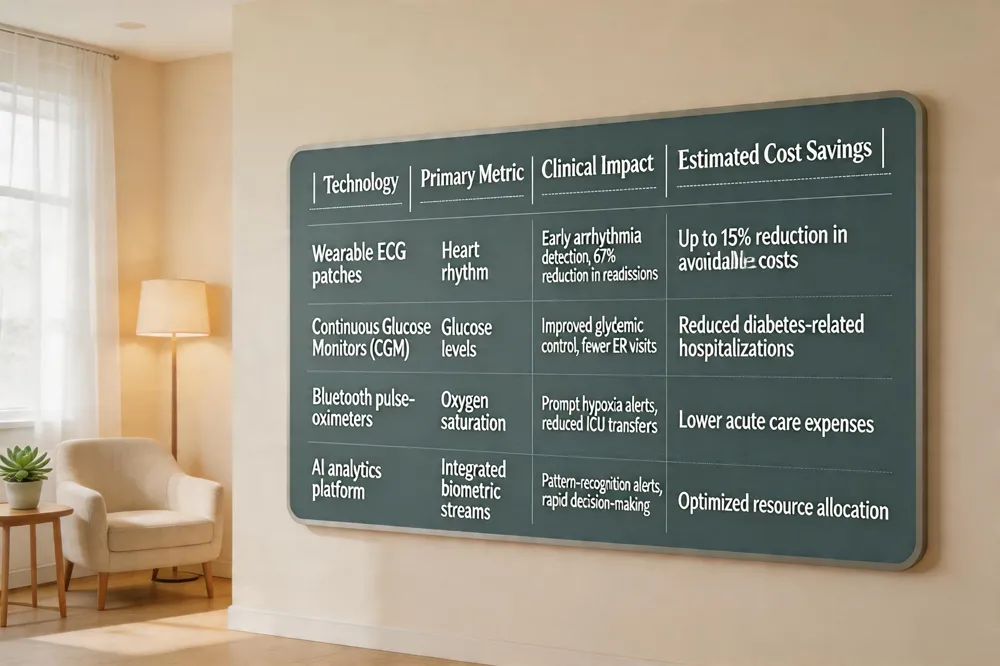 Remote patient monitoring (RPM) programs have become a cornerstone of U.S. preventive care, with Medicare reimbursing RPM services for chronic‑disease management since 2018. By continuously tracking vital signs—heart rate, blood pressure, oxygen saturation, and glucose—through wearable ECG patches, continuous glucose monitors (CGMs), and Bluetooth‑enabled pulse‑oximeters, clinicians can intervene before deterioration becomes clinically evident. AI‑driven analytics platforms aggregate these biometric streams, apply pattern‑recognition algorithms, and flag early warning signs, enabling rapid, data‑based decisions. Real‑world evidence shows that such proactive monitoring reduces hospital readmissions by more than 67 % in certain populations and cuts avoidable costs by up to 15 % through timely resource allocation.
Diagnostic tools in healthcare encompass devices ranging from stethoscopes and handheld blood‑pressure cuffs to sophisticated imaging systems (MRI, CT) and laboratory assays (blood panels, liquid biopsies). They provide the objective data needed for accurate disease detection and monitoring. Proactive health, though requiring upfront investment in screenings and wearable technology, yields net savings by preventing expensive hospitalizations and chronic‑disease complications. Typical diagnostic modalities include imaging, biochemical labs, pathology, and molecular genetic tests, each contributing to a personalized diagnostic profile. Health monitoring therefore includes regular clinical exams, biometric measurements, laboratory analyses, and continuous wearable data collection. Examples of proactive care are routine screenings, AI‑enhanced remote monitoring, personalized nutrition based on multi‑omics, tele‑health check‑ins, and community frailty‑prevention programs—all designed to extend healthspan and improve long‑term outcomes.
AI‑Powered Imaging and Decision Support
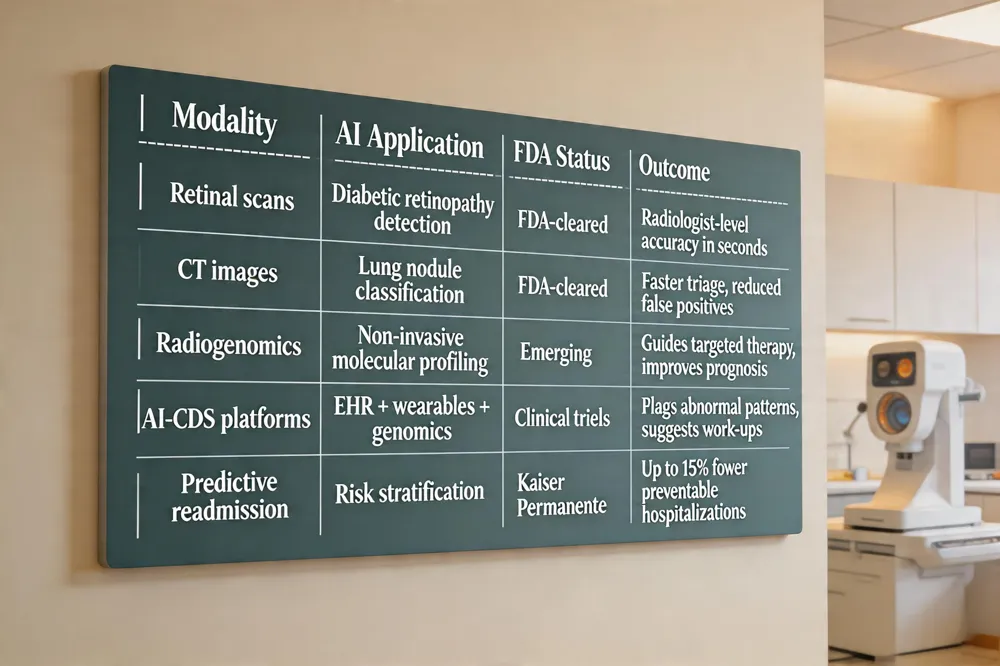
| Modality | AI Application | FDA Status | Outcome |
|---|---|---|---|
| Retinal scans | Diabetic retinopathy detection | FDA‑cleared | Radiologist‑level accuracy in seconds |
| CT images | Lung nodule classification | FDA‑cleared | Faster triage, reduced false positives |
| Radiogenomics (imaging + genomics) | Non‑invasive molecular profiling | Emerging | Guides targeted therapy, improves prognosis |
| Integrated AI‑CDS platforms | EHR + wearables + genomics synthesis | Clinical trials | Flags abnormal patterns, suggests work‑ups, recommends evidence‑based treatment |
| Predictive readmission scores | Risk stratification | Deployed at Kaiser Permanente | Up to 15% fewer preventable hospitalizations |
 Overview
AI‑driven imaging is reshaping U.S. diagnostics. FDA‑cleared algorithms now read retinal scans for diabetic retinopathy and CT images for lung nodules, delivering radiologist‑level accuracy in seconds and expanding access to early detection.
Overview
AI‑driven imaging is reshaping U.S. diagnostics. FDA‑cleared algorithms now read retinal scans for diabetic retinopathy and CT images for lung nodules, delivering radiologist‑level accuracy in seconds and expanding access to early detection.
Radiogenomics By correlating imaging phenotypes with gene‑expression profiles, radiogenomics enables non‑invasive molecular profiling of tumors, guiding targeted therapies and improving prognostic precision.
AI‑enabled clinical decision support Integrated AI‑CDS platforms synthesize EHR data, genomics, and wearable streams to flag abnormal patterns, suggest diagnostic work‑ups, and recommend evidence‑based treatments at the point of care.
Predictive analytics for readmission and disease progression Health systems such as Kaiser Permanente use AI‑powered risk scores to anticipate readmissions and allocate resources, achieving up to 15 % fewer preventable hospitalizations.
Precision medicine, AI and the future of personalized health care
AI merges genomics, biomarkers, imaging, and EHRs into predictive models that tailor prevention and therapy to each individual’s biology, turning health care into a continuously adaptive system that optimizes longevity.
Artificial intelligence in personalized medicine: transforming diagnosis and treatment
Machine‑learning analyzes multimodal data to uncover hidden disease signatures, delivering rapid, accurate diagnoses and real‑time therapeutic recommendations while reducing adverse effects.
What are the cutting‑edge technologies in healthcare?
Key innovations include advanced imaging, robotics, telemedicine, remote monitoring, genomics, IoMT, AI, nanotechnology, and virtual/augmented reality.
What is the #1 predictor of longevity?
VO₂ max is the strongest single predictor of lifespan; higher aerobic capacity markedly lowers early‑death risk.
How much does personalized medicine cost?
In 2022 the average North‑American precision‑medicine treatment cost was ~US$300 k per patient, projected to drop below US$260 k by 2027.
Point‑of‑Care Molecular and Ocular Diagnostics
| Test | Target Condition | Time to Result | Clinical Benefit |
|---|---|---|---|
| AdenoPlus | Adenoviral conjunctivitis | 10 min | Cuts misdiagnosis rate from 50% to <10% |
| Doctor’s Allergy Formula | Up to 60 ocular allergens | ~10 min | Personalized allergen map for avoidance strategies |
| Early Sjögren detection kit | Sjögren syndrome (dry eye) | <15 min | Sensitivity & specificity >80% vs historic 40‑60% |
| Herpes simplex virus ocular test (FDA pending) | HSV ocular infection | 10 min | Rapid treatment initiation |
| IgE allergy tear test (FDA pending) | Ocular allergens | 10 min | Immediate allergy management |
| Rapid PCR/CRISPR respiratory panel | Respiratory pathogens | 15 min | Quick isolation & therapy decisions |
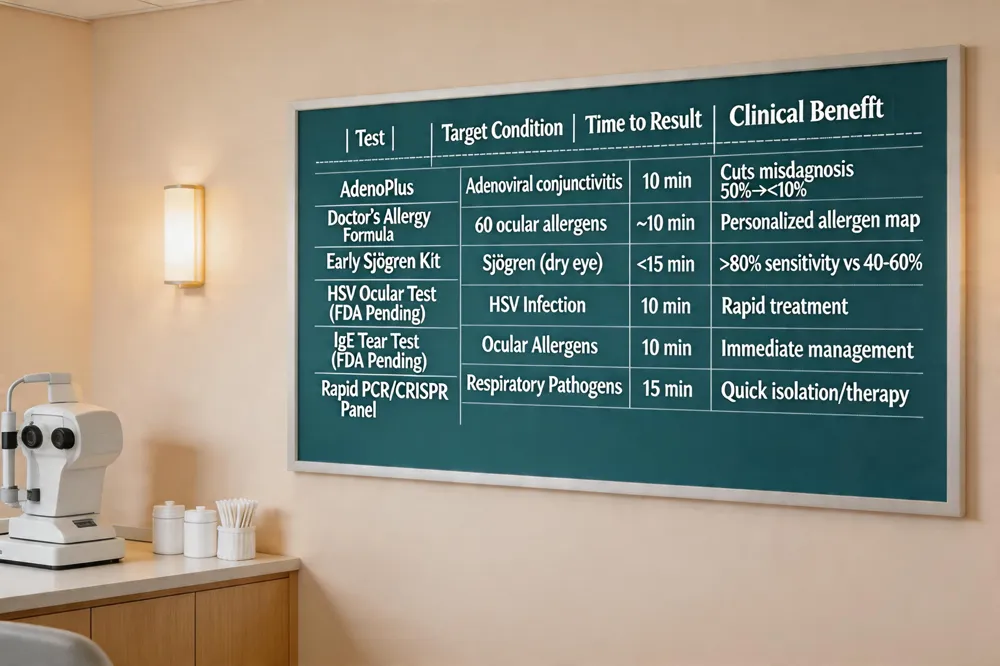 Point‑of‑care diagnostic tools can be seamlessly integrated into busy clinical practices and increase patient confidence in the care provided. AdenoPlus detects adenoviral conjunctivitis from a tear‑film swab in 10 minutes, cutting the 50 % misdiagnosis rate of acute conjunctivitis when clinicians rely solely on signs. Doctor’s Allergy Formula screens up to 60 ocular allergens with a skin‑prick‑type test in ~10 minutes, providing a personalized allergen map within ten minutes and guiding avoidance strategies. Early Sjögren detection enables timely rheumatology referral, raising early‑detection sensitivity and specificity well above the historic 40‑60 % range for the ≈10 % of dry‑eye patients with underlying Sjögren. Most POCT tests are performed by technicians and have billable Medicare codes, ensuring reimbursement for clinicians. Two new POCT ocular diagnostics—herpes simplex virus test and IgE allergy tear test—are nearing FDA approval, as well as rapid PCR and CRISPR‑based kits for respiratory pathogens.
What are personalized diagnostics? Personalized diagnostics tailors testing to an individual’s unique biological profile—genetics, epigenetics, proteomics, and other biomarkers—to detect disease early, guide precise interventions, and support longevity‑focused health optimization.
Who is Proactive Health? Proactive Health is a preventative‑care company that provides at‑home biometric monitoring and daily clinician review, creating personalized health baselines, flagging early warning signs, and reducing ER visits and readmissions through data‑driven, coordinated care.
Proactive vs Reactive Care and Real‑World Impact
| Care Model | Key Features | Cost Impact | Outcome |
|---|---|---|---|
| Proactive | Continuous RPM, regular screenings, lifestyle coaching | Higher upfront spend, reimbursable via Medicare | 67% reduction in readmissions, up to 15% fewer preventable hospitalizations |
| Reactive | Treatment after symptom onset, episodic visits | Higher long‑term expenses, more ER visits | Increased readmission rates, lower quality‑of‑life |
| Hybrid (Proactive + Reactive) | Combines monitoring with targeted interventions | Balanced cost, leverages data‑driven decisions | Improves functional health, extends healthspan |
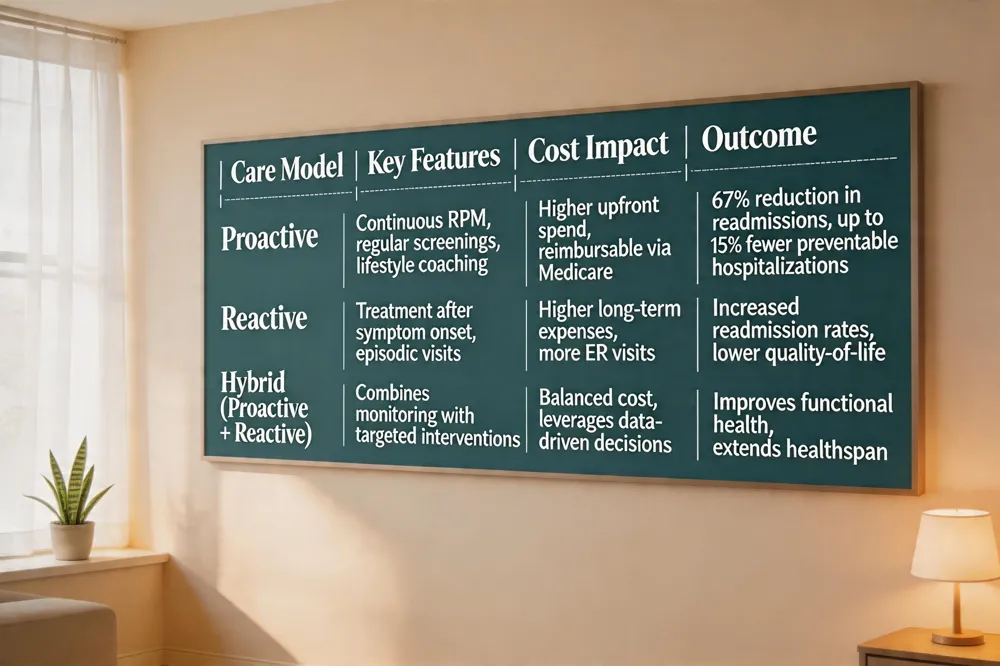 Proactive healthcare emphasizes prevention—regular screenings, vaccinations, personalized lifestyle coaching, and continuous monitoring—to detect risk factors before disease manifests. This model typically incurs lower long‑term costs and yields better quality‑of‑life outcomes than reactive care, which treats symptoms after they appear and often requires expensive interventions, longer hospital stays, and higher readmission rates. Early‑warning systems that aggregate wearable, remote‑monitoring, and AI‑driven analytics have been shown to cut preventable hospitalizations by up to 15% in large health systems. A striking example is Proactive Health’s remote vital‑sign monitoring platform, which achieved a 67% reduction in readmissions in a recent pilot, demonstrating the financial and clinical benefits of continuous biometric surveillance. Preventive services such as RPM, point‑of‑care tests, and telehealth visits are increasingly reimbursable under Medicare and private insurers, supporting broader adoption of proactive strategies.
Proactive vs reactive healthcare Proactive care focuses on preventing illness through early screenings, vaccinations, and personalized lifestyle interventions that keep the body healthy before disease appears. By detecting risk factors early and educating patients on nutrition, exercise, and stress management, it helps maintain optimal health and extends healthspan. Reactive care intervenes after symptoms emerge, treating diseases with medication or surgery, which usually involves higher costs and longer recovery.
Is proactive health worth the cost? Up‑front spending on preventive measures can offset later, expensive treatments, hospitalizations, and chronic‑disease management. The cumulative savings from fewer emergency visits and procedures generally outweigh the initial expense, making proactive health a financially sound investment in long‑term functional health and longevity.
Lifestyle Insights and Longevity Predictors
| Predictor | Description | Influence on Longevity | Intervention |
|---|---|---|---|
| VO₂ max | Maximal oxygen uptake | Strongest single predictor of lifespan; higher VO₂ max lowers early‑death risk | Regular aerobic exercise, interval training |
| 5 P’s (pizza, pasta, excessive animal protein, fried potatoes, pane) | Foods high in refined carbs & saturated fat | Drive obesity, insulin resistance, inflammation → shorter healthspan | Replace with plant‑based, whole‑grain, healthy‑fat foods (Mediterranean diet) |
| ZEUS+ Intelligent Diagnostics System | Advanced imaging tool | Enables early detection of pathologies | Investment in high‑resolution imaging for precise diagnostics |
 The “5 P’s” to avoid for longevity are pizza, pasta, excessive animal protein (especially red meat), fried potatoes, and pane (Italian bread). These foods are high in refined carbs, saturated fat and calorie density, driving obesity, insulin resistance and chronic inflammation; swapping them for plant‑based, whole‑grain and healthy‑fat options supports a Mediterranean‑style diet linked to longer healthspan. The single strongest predictor of longevity is VO₂ max – higher maximal oxygen uptake correlates with lower early‑death risk, and regular aerobic exercise can improve VO₂ max at any age. The most expensive Snap‑On imaging tool is the ZEUS+ Intelligent Diagnostics and Information System, retailing around $11,792. Together, dietary moderation, aerobic conditioning to boost VO₂ max, and access to advanced imaging form a data‑driven strategy for proactive health optimization and extended healthspan.
Liquid Biopsy, Multi‑Omics and Genomic Precision
| Technology | Sample Type | Primary Use Cases | Precision Benefit |
|---|---|---|---|
| Liquid biopsy | Blood (circulating tumor DNA) | Early cancer detection, treatment monitoring | Non‑invasive molecular profiling |
| Multi‑omics (genomics, proteomics, metabolomics) | Tissue / biofluids | Comprehensive disease signature mapping | Tailored therapy selection |
| Genomic precision panels | DNA from blood or tissue | Identify actionable mutations | Guides targeted drug therapy |
| AI‑integrated omics platforms | Multi‑modal data | Predictive risk modeling | Improves preventive strategies and longevity |
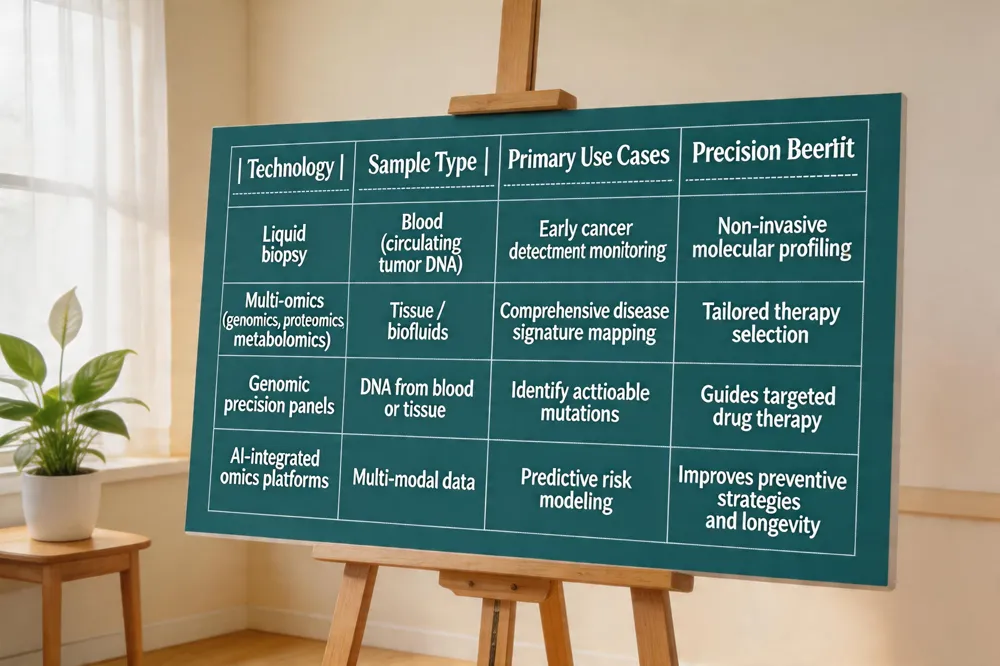 What are the cutting‑edge technologies in healthcare? Key emerging technologies include advanced medical imaging, robotics, minimally invasive procedures, telemedicine, remote monitoring, genomics, personalized medicine, the Internet of Medical Things (IoMT), artificial intelligence, blockchain, nanotechnology, targeted drug delivery, bioinformatics, and virtual reality for mental health care.
Future Horizons: Emerging Technologies and Patient Empowerment
| Emerging Tech | Application | Sensitivity / Specificity | Potential Impact |
|---|---|---|---|
| Electronic noses (e‑noses) | Breath‑based metabolite detection for lung cancer, COPD, Alzheimer’s | Up to 93% sensitivity, ~90% specificity | Early, non‑invasive disease screening |
| Digital‑twin models | Virtual physiological replica integrating genomics, wearables, labs | N/A (simulation accuracy) | Simulate drug effects & lifestyle changes before implementation |
| AI‑driven chatbots/virtual assistants | Symptom triage, appointment scheduling, result translation | N/A (supportive) | Improves patient engagement, reduces administrative burden |
| Continuous wearable analytics platforms | Real‑time streaming of heart‑rate, ECG, glucose, O₂ | N/A (continuous monitoring) | Early deterioration alerts, timely tele‑consults |
| CRISPR‑based rapid PCR kits | Point‑of‑care pathogen detection | High specificity (>95%) | Faster infectious disease management |
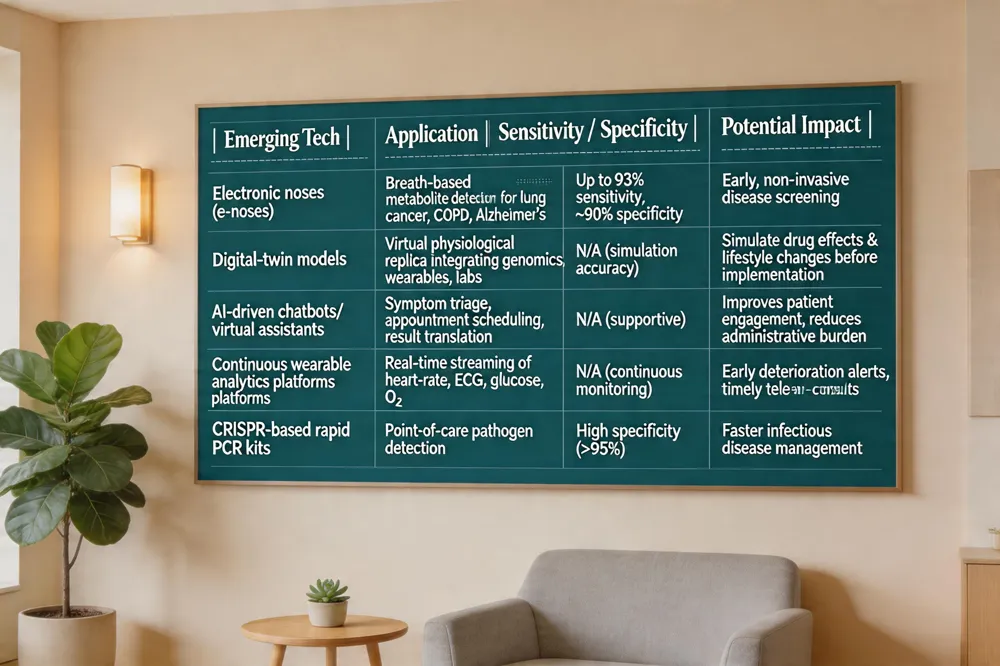 Electronic noses (e‑noses) and breath‑based metabolite sensors are moving from research labs to point‑of‑care devices, detecting volatile organic compounds linked to lung cancer, COPD, Alzheimer’s disease and even metabolic disorders with sensitivities up to 93 % and specificities approaching 90 %. Digital‑twin models create virtual replicas of an individual’s physiology by integrating genomics, wearables, imaging and labs, allowing clinicians to simulate drug effects or lifestyle changes before they are applied. AI‑driven chatbots and virtual health assistants can triage symptoms, schedule appointments and translate test results, but they are not substitutes for professional judgment. Wearable analytics platforms continuously stream heart‑rate, ECG, glucose and oxygen saturation data to cloud‑based risk‑alert engines that flag early deterioration and prompt timely tele‑consults.
Can ChatGPT do a medical diagnosis? ChatGPT in its standard form is not a medical diagnostic tool and should never replace a qualified clinician’s judgment. It can help users understand general health information, clarify terminology, and organize personal health data, but it does not provide definitive diagnoses or treatment plans. OpenAI’s specialized offerings—such as ChatGPT Health, ChatGPT for Healthcare, and ChatGPT for Clinicians—are built with extra privacy safeguards and evidence‑based reasoning to assist patients and providers in interpreting test results or preparing questions for a doctor, yet they are explicitly described as supportive aids, not replacements for professional care. Even these advanced versions are designed to “support, not replace” clinical decision‑making and are not intended to issue formal diagnoses. Always consult a licensed healthcare professional for any medical concerns or diagnostic decisions.
Conclusion
The convergence of six diagnostic breakthroughs—AI‑enhanced imaging, point‑of‑care molecular tests, wearable biosensors, electronic‑nose breath analysis, liquid‑biopsy genomics, and multi‑omics panels—creates a unified, data‑rich ecosystem for early disease detection and personalized intervention. By continuously capturing physiological signals, molecular signatures, and imaging phenotypes, these tools enable clinicians to predict risk, tailor therapies, and monitor response in real time. This proactive, data‑driven approach transforms longevity care from reactive treatment to precise, preventive healthspan optimization, offering the promise of longer, healthier lives for aging populations.